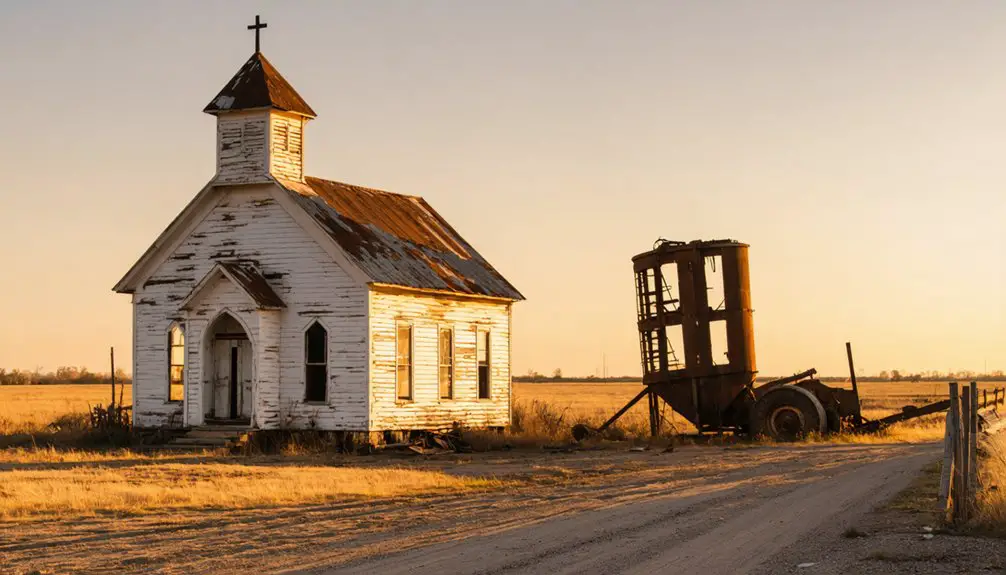
Planning a ghost town road trip to Non, Oklahoma means venturing off the beaten path into the heart of the Great Plains, where Dust Bowl history comes alive through crumbling foundations and weathered structures. You won’t find it on standard maps, so cross-reference county land records and ghost town databases before heading out. Spring and fall offer the best conditions for exploring. Pack smart, stay safe, and there’s far more to this forgotten town’s story than you’d expect.
Key Takeaways
- Non, Oklahoma isn’t on standard maps; cross-reference county land records and RootsWeb’s ghost town database to pinpoint its location before traveling.
- Travel southwest from Tulsa via Highway 66 and rural state roads, using GPS loaded with ghost town data to navigate accurately.
- Expect crumbling foundations, weathered structures, and overgrown pathways across an open Great Plains landscape with no formal preservation or signage.
- Visit during spring or fall for mild weather, thinning vegetation, and ideal photography conditions; avoid summer heat and storms.
- Pack water, offline maps, sturdy boots, a first aid kit, and camera gear, and always inform someone of your planned route.
What Makes Non, Oklahoma a Ghost Town Worth Visiting?
Although Non, Oklahoma may not appear on mainstream travel maps, its quiet obscurity is part of what draws ghost town enthusiasts to seek it out. You’ll find that off-the-radar destinations like Non offer something packaged tourist spots can’t — raw, unfiltered history waiting to be discovered.
Historical preservation efforts across Oklahoma’s ghost towns remind you that these places once held thriving communities, real families, and forgotten dreams.
Non fits within that broader tapestry of abandoned settlements shaped by economic collapse and the brutal Dust Bowl era.
Local legends surrounding places like Non add another layer of intrigue, giving you stories that no museum exhibit can replicate.
If you crave genuine exploration over curated experiences, chasing down Oklahoma’s lesser-known ghost towns delivers exactly the kind of freedom you’re looking for.
Where Exactly Is Non, Oklahoma Located?
Pinning down Non, Oklahoma on a map takes a bit of detective work, since the settlement sits outside the reach of mainstream cartography and state tourism databases. You won’t find it labeled on standard GPS tools, but local legends point toward the rural stretches of central Oklahoma where forgotten communities quietly disappeared after the Dust Bowl era.
Historical preservation efforts rarely captured Non’s exact coordinates, leaving its location shrouded in mystery.
Here’s what you should know before searching:
- Cross-reference county land records for unincorporated settlement references.
- Consult RootsWeb’s Oklahoma ghost town database filtered by county affiliations.
- Connect with local historical societies who maintain off-record community documentation.
Your best navigation tool remains human knowledge — talk to longtime Oklahoma residents who remember the land’s stories firsthand.
Why Did Non, Oklahoma Get Abandoned?
As you explore Non’s empty streets, you’ll find a story common to many Oklahoma ghost towns — economic decline and environmental disaster hit hard and fast.
The Dust Bowl of the 1930s devastated farming infrastructure across the Great Plains, stripping communities like Non of their agricultural lifelines. When the crops failed and the economy collapsed, residents had no choice but to pack up and move on.
Economic Decline Factors
Like many small Oklahoma communities that once dotted the Great Plains, Non likely fell victim to the same devastating forces that emptied dozens of towns across the region during the early-to-mid 20th century. Understanding this economic history helps you appreciate what you’re seeing when you arrive.
Three major factors drove population decline across the region:
- Dust Bowl destruction — 1930s drought and erosion wiped out farming infrastructure, eliminating livelihoods overnight.
- Railroad abandonment — When rail lines rerouted, towns lost their commercial lifelines and residents followed the tracks elsewhere.
- Economic downturns — Broader national depressions pulled investment away from rural communities, accelerating collapse.
These forces didn’t just empty buildings — they erased entire ways of life, leaving behind the quiet ruins you’ll explore today.
Dust Bowl Impact
The Dust Bowl didn’t just bring hard times to Oklahoma — it erased entire communities from the map, and Non was no exception. Through the 1930s, relentless drought and choking black blizzards stripped farmland bare, collapsing the agricultural economy that small towns like Non depended on entirely.
Families packed what they could and left, abandoning homes, businesses, and any sense of permanence they’d built.
What remains today carries real weight for historical preservation efforts across the Great Plains. You’re not just visiting tourist attractions when you walk these grounds — you’re witnessing the physical evidence of one of America’s most devastating environmental disasters.
The Dust Bowl forced a mass exodus that permanently reshaped Oklahoma’s population map, and Non stands as a quiet testimony to that brutal chapter.
How Do You Get to Non, Oklahoma by Road?
If you’re starting your road trip from Tulsa, you’ll head southwest on Highway 66 before connecting to rural state roads that wind through Oklahoma’s abandoned heartland.
Watch for county road markers near documented ghost town clusters, since Non lacks official highway signage and you’ll rely on neighboring landmarks to gauge your position.
Keeping a GPS app loaded with Great Plains ghost town data helps you triangulate Non’s approximate location against verified sites nearby.
Starting Route From Tulsa
Since Non, Oklahoma doesn’t appear in verified state databases or ghost town registries, pinning down a precise driving route from Tulsa proves tricky — but you can still build a rewarding road trip by targeting documented ghost towns in the region.
Head southwest from Tulsa to explore areas rich in local legends and historical architecture. Consider this launching sequence:
- Take US-75 South toward Texanna in McIntosh County, where Dust Bowl-era ruins offer genuine exploration.
- Merge onto I-40 West to access Texola, a documented Route 66 ghost town with abandoned storefronts and deep regional history.
- Navigate State Highway 270 to reach Three Sands in Kay County, connecting verified heritage sites efficiently.
Each stop delivers authentic ghost town experiences without relying on unverified locations.
Highway Access Points
Because Non, Oklahoma doesn’t appear in verified highway maps or state road databases, you won’t find a marked exit or dedicated access route leading to it — but that doesn’t mean your road trip hits a dead end. Instead, redirect your route toward verified ghost towns with real tourist accessibility.
Highway 66 connects you to Texola, while US-177 cuts through Kay County near Three Sands. These corridors support historical preservation efforts with actual ruins, signage, and photographable remnants.
Use GPS tools that filter ghost town databases by county or zip code to pinpoint your next stop. Oklahoma’s rural highway network is surprisingly navigable, and documented sites sit within reasonable driving distance of Tulsa.
You’ll trade a phantom destination for something genuinely worth the miles.
Traveling to Non, Oklahoma puts you in an immediate bind — no verified landmark anchors this location on any state or county road map. Without confirmed archaeological findings or historical significance tied to a physical site, standard navigation fails you completely.
Instead, redirect your instincts toward proven alternatives:
- Cross-reference RootsWeb’s Oklahoma ghost town database by county to identify verified abandoned settlements near your intended route.
- Use Geotab’s interactive ghost town map to pinpoint accessible ruins with documented historical significance across the Great Plains.
- Search BatchGeo’s 4,530-entry ghost town index by zip code to uncover nearby abandoned communities with actual archaeological findings on record.
You deserve real ruins, real roads, and real history — not a phantom destination that wastes your fuel and freedom.
What Will You Find When You Arrive in Non, Oklahoma?
When you arrive in Non, Oklahoma, you’ll find yourself standing in the quiet vastness of the Great Plains, where the wind and open sky tell the story of a community that once was.
Scattered remnants hint at lives built and eventually abandoned, leaving behind a landscape rich with local folklore passed down through generations. You’ll notice how nature has reclaimed what people left behind — crumbling foundations, weathered wood, and overgrown pathways that once buzzed with daily life.
While formal preservation efforts remain limited here, the site’s raw, untouched character gives you an unfiltered connection to Oklahoma’s past. Bring your camera, your curiosity, and a respect for what remains.
Non rewards those willing to look closely and listen to what the silence says.
When Is the Best Time to Visit Non, Oklahoma?
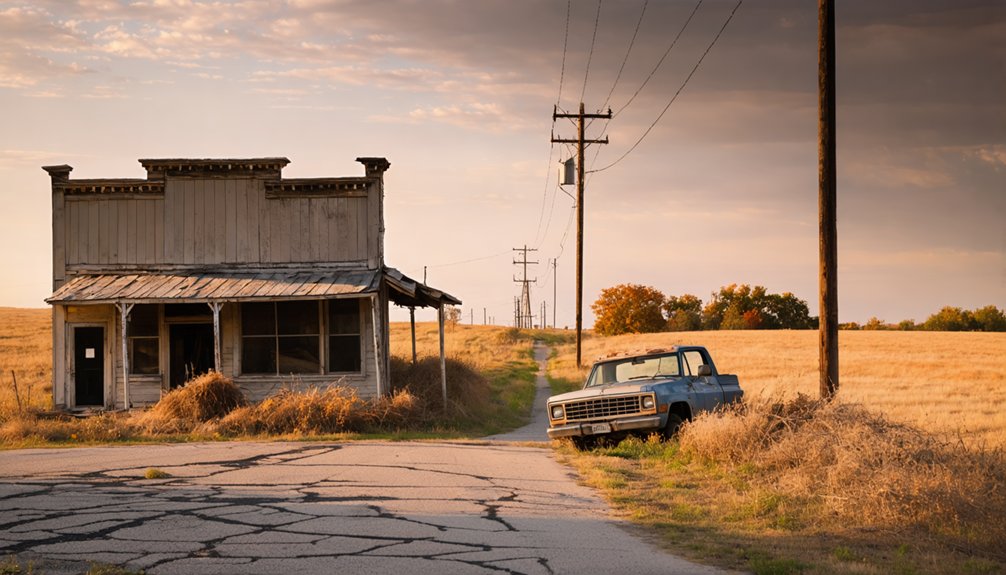
Spring and fall offer the most rewarding conditions for exploring Non, Oklahoma, as mild temperatures and lower humidity make long hours of outdoor wandering far more comfortable. You’ll photograph historical landmarks more clearly without harsh summer glare, and local legends come alive when the landscape feels raw and open.
Spring and fall unlock Non, Oklahoma’s best kept secrets, where mild air and open skies invite unhurried exploration.
Plan your visit around these ideal windows:
- March–May – Wildflowers frame abandoned structures, and cooler mornings give you maximum exploration time before afternoon heat builds.
- September–October – Golden light enhances photography, and thinning vegetation reveals hidden ruins more clearly.
- Avoid July–August – Extreme heat and storms restrict movement, cutting your road trip short before you’ve uncovered everything worth seeing.
Pack light, move freely, and let Oklahoma’s forgotten corners tell their stories on your terms.
What Should You Pack for a Non, Oklahoma Road Trip?
Packing smart makes the difference between a frustrating detour and a seamless ghost town adventure through Non, Oklahoma’s weathered terrain. Bring sturdy boots for guiding through uneven ground around historical artifacts and crumbling foundations.
Layer your clothing since Oklahoma’s temperatures shift dramatically between morning and afternoon. Carry a fully charged camera with extra batteries and memory cards, because photography opportunities at abandoned sites disappear fast in changing light.
Pack a printed map alongside your GPS since rural signal coverage drops unexpectedly. Bring plenty of water, snacks, and a basic first aid kit. Sunscreen and insect repellent are non-negotiable during warmer months.
A notebook helps you document details about historical artifacts you encounter. You’ll travel freer knowing you’ve prepared for every obstacle the road throws your way.
What Ghost Towns Are Near Non, Oklahoma?
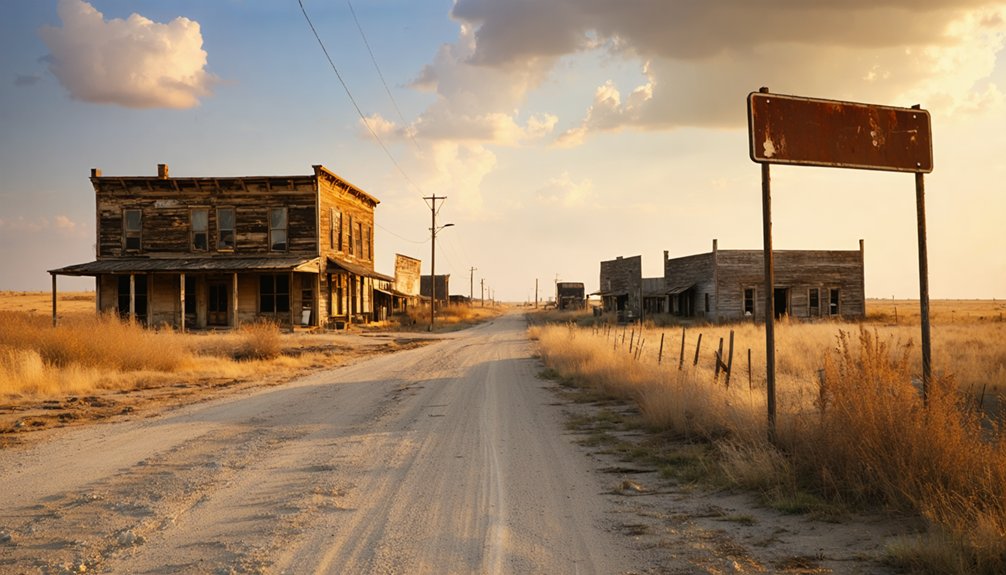
Scattered across Oklahoma’s weathered plains, several documented ghost towns lie within reasonable driving distance of Non, making your road trip even richer with historical stops. Each destination carries its own historical narratives, pulling you deeper into Oklahoma’s abandoned past. Preservation efforts at these sites keep the stories alive for explorers like you:
- Texola – A Route 66 remnant with crumbling storefronts that echo a vanished farming economy.
- Three Sands – A Kay County Dust Bowl survivor where preservation efforts have maintained visible structural ruins.
- Violet Springs – A Logan County settlement offering quiet, photogenic decay and compelling historical narratives tied to early Oklahoma settlement.
Hit these stops strategically, and you’ll transform a single destination drive into a full plains expedition.
How Do You Stay Safe Visiting Non, Oklahoma?
Before you set out for Non, Oklahoma, you’ll want to arm yourself with practical safety knowledge, since visiting remote ghost towns carries real risks that can turn an adventure sour fast. Wear sturdy boots, bring extra water, and never enter structurally compromised buildings, as historical preservation efforts don’t always stabilize every crumbling wall or rotted floor.
Tell someone your exact route and expected return time. Carry a charged phone with offline maps downloaded, since cell service disappears quickly in rural Oklahoma. Local legends about these abandoned places can be entertaining, but don’t let curiosity push you into unsafe terrain after dark.
Pack a first aid kit, stay aware of wildlife, and respect any posted boundaries. Your freedom to explore depends on returning home safely.
Frequently Asked Questions
Is Photography Permitted at Non, Oklahoma’s Abandoned Structures and Ruins?
With 4,531 U.S. ghost towns documented, you’ll find no verified abandoned buildings or photography rules for Non, Oklahoma, as it’s not a confirmed ghost town. Explore verified sites like Texola instead!
Are There Guided Ghost Town Tours Available Near Non, Oklahoma?
You won’t find guided ghost town tours near Non, Oklahoma, as it lacks verified tourist infrastructure. Instead, explore documented sites like Texola or Violet Springs, where historic preservation efforts support engaging, freedom-filled adventures through Oklahoma’s abandoned landscapes.
Can Children Safely Accompany Adults on a Non, Oklahoma Visit?
Since Non, Oklahoma isn’t verified, you can’t safely plan a children’s visit there. Instead, explore documented sites prioritizing historic preservation and wildlife safety—research, prepare, and protect your family at verified Oklahoma ghost towns.
What County Does Non, Oklahoma Fall Within for Legal Purposes?
You can’t pinpoint Non, Oklahoma’s county for legal or historical preservation purposes—it’s undocumented. Explore local legends by visiting verified ghost towns instead, where you’ll uncover real county records and authentic abandoned history.
Are There Entrance Fees or Permits Required to Visit Non, Oklahoma?
Since Non, Oklahoma isn’t a verified ghost town, you’d face no confirmed entrance fees or permits. You’ll still want to respect wildlife safety guidelines and local parking regulations wherever your free-spirited road trip leads you!
References
- https://www.geotab.com/ghost-towns/
- http://sites.rootsweb.com/~oktttp/ghost_towns/ghost_towns.htm
- https://blog.batchgeo.com/ghost-towns/