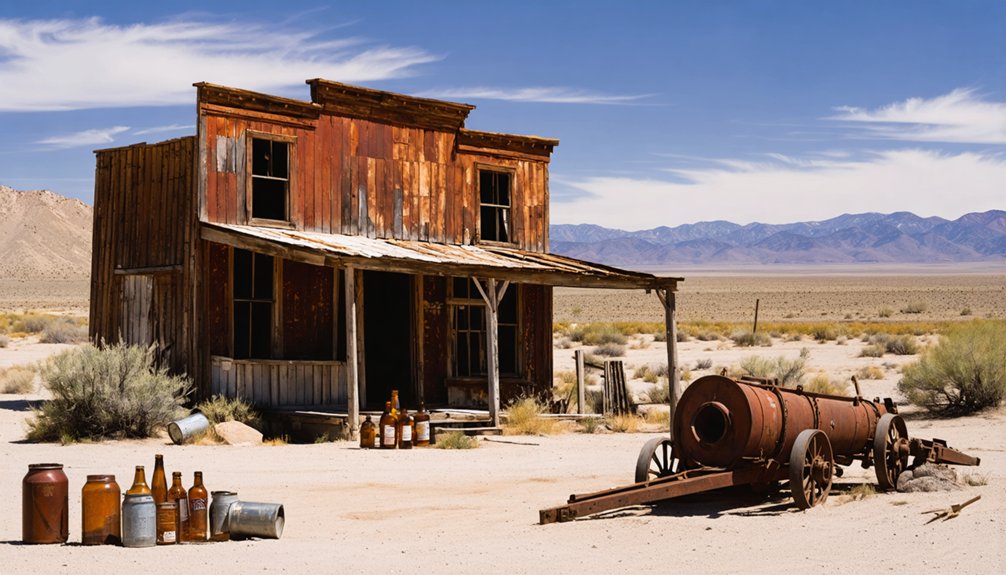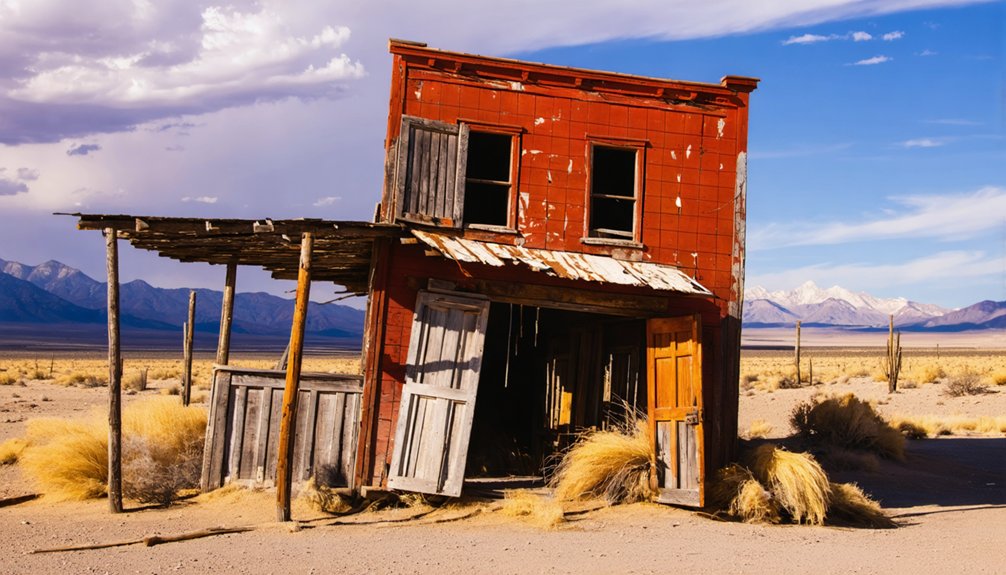
You’ll find Osceola nestled in White Pine County‘s remote backcountry, accessible via unpaved roads requiring high-clearance 4×4 vehicles. This 1870s gold camp produced over $3.5 million in precious metals and pioneered Nevada’s hydraulic mining techniques. Today, weathered stone foundations, massive iron pipes, pioneer cemeteries, and the Lee Marriot home stand among sagebrush-dotted hillsides scarred by mining operations. Pack 72-hour water reserves, spare tires, and GPS backup—cell service is nonexistent. The journey rewards adventurous travelers with authentic Western history and insights into preparation strategies that’ll guarantee your ghost town expedition succeeds.
Key Takeaways
- Osceola is located in remote White Pine County, Nevada, discovered in 1872 and produced over $3.5 million in gold.
- Bring a high-clearance 4×4 vehicle with spare tires, recovery equipment, and 72-hour water reserves for the rugged terrain.
- Explore preserved ruins including the Lee Marriot home, cemetery, massive hydraulic mining pipes, and scattered stone foundations.
- Combine your trip with nearby ghost towns: Ward (20 miles south), Cherry Creek (50 miles north), and Preston (55 miles southwest).
- Travel in pairs, inform others of your route, and avoid mine shafts, toxic air, and rattlesnakes at these remote sites.
Osceola’s Rich Mining Heritage and Historic Significance
When prospectors Joseph Watson and Frank Hicks stumbled upon glittering placer ore in the summer of 1872, they couldn’t have imagined they’d just uncovered one of Nevada’s most remarkable gold districts. Named after the Seminole chief that October, Osceola exploded into a prosperous early mining boom that produced three and a half million dollars in gold.
You’ll discover this wasn’t just another dusty camp—it became Nevada’s first hydraulic mining operation, complete with impressive water infrastructure developments that defied the desert landscape. The monumental Osceola Ditch, completed in 1890 for $108,223, snaked through mountains with wooden flumes and a 633-foot tunnel.
What Remains: Exploring Osceola’s Preserved Sites and Ruins
Though the 1943 fire consumed most of Osceola’s original buildings in a devastating blaze, enough weathered remnants survive to stir your imagination as you walk these empty streets. You’ll discover the Lee Marriot home standing defiant among scattered stone foundations and crumbling brick storefronts.
Among the ashes of 1943, stone walls and scattered foundations whisper stories of Osceola’s defiant past.
The cemetery remains your most accessible destination, where weathered relics mark graves from the mining era—though you’ll need to watch for exposed nails and rotting wood.
Across the hillsides, hydraulic mining operations left their mark through massive pipes, tailings, and gravel deposits stretching up to 200 feet thick. These endangered ruins sit mostly on private property, visible from the road but tantalizingly out of reach.
One stone building hides behind a locked gate, its secrets preserved by isolation and the very remoteness that saved these structures from complete destruction.
Accessing Remote White Pine County Ghost Towns
Beyond Osceola’s weathered remnants, White Pine County stretches across Nevada’s eastern highlands like a constellation of forgotten settlements, each ghost town requiring its own navigation strategy through desert basins and mountain passes. You’ll find Cherry Creek fifty miles north of Ely off U.S. Route 93, while Ward beckons twenty miles south through juniper-dotted slopes leading to beehive ovens and wind-swept cemeteries.
Preston waits fifty-five miles southwest along State Route 318, but Schell Creek Range homesteads demand serious off road driving considerations—high-clearance vehicles essential for rutted tracks through sagebrush wilderness. Seasonal access challenges intensify winter exploration; spring runoff transforms dry washes into impassable barriers.
Navigate these twenty-plus scattered sites with respect: photograph freely, tread lightly, and remember you’re traversing sacred ground where Nevada’s mining dreams turned to dust.
Essential Preparation for Nevada’s Abandoned Mining Camps
Reaching these isolated mining camps demands more than curiosity and a full gas tank. Your high-clearance 4×4 becomes lifeline when sharp canyon rocks threaten tires and steep descents test suspension systems. Vehicle maintenance isn’t optional—it’s survival. Pack spare tires, tow straps, and master off road recovery techniques before venturing into White Pine County’s roadless expanses where cell towers don’t reach.
Prepare for Nevada’s extremes: 72-hour water reserves, layered clothing for 60-degree temperature swings, and GPS backup when satellites fail. These ghost towns won’t coddle you. Mine shafts hide collapse risks and toxic air, while rattlesnakes sun themselves on weathered foundations. Travel paired, never solo. Inform someone of your route through these forsaken camps where help won’t find you—you’ll need to save yourself.
Nearby Ghost Town Destinations Worth the Detour
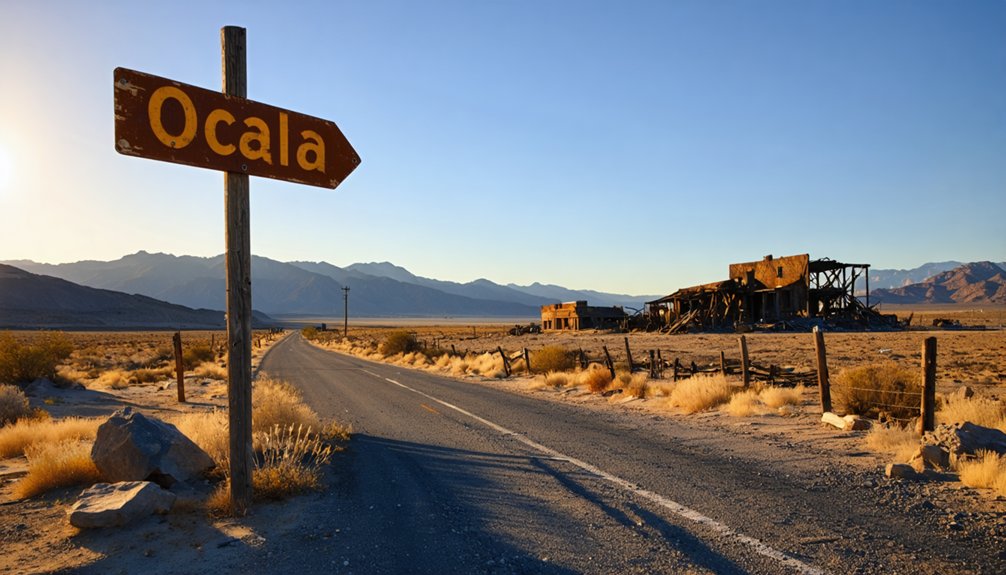
While Ocala anchors your expedition, the surrounding Nevada backcountry conceals dozens of ghost towns where mining fortunes rose and fell within single generations.
The history of dolly varden ghost town is a testament to the fleeting nature of prosperity, with remnants of dilapidated structures standing as silent witnesses to past hopes. As you wander through the crumbling streets, you can almost hear the echoes of miners and their families who once called this isolated place home. Each corner reveals artifacts that tell stories of ambition, struggle, and eventual abandonment in the rugged landscape of Nevada.
Eastern mountain camps like Osceola and Ward showcase weathered structures and pioneer cemeteries against rugged terrain. Palmetto in Esmeralda County offers a 1866-founded boomtown where misnamed Joshua trees now guard crumbling foundations—no visitor accommodations, just raw history.
Pershing County’s Scossa represents Nevada’s last significant mining rush (1931-1937), while Seven Troughs operated when automobiles replaced wagons. Northern Poeville, abandoned since 1880, extends your journey through Washoe County’s high desert.
Each site presents distinct surrounding landscapes: sage-covered valleys, pinyon pine ridges, alkaline flats. These scattered camps demand self-reliance—carry water, fuel, and supplies. Freedom means accepting isolation and embracing Nevada’s unvarnished past.
Frequently Asked Questions
Is Camping Allowed Near Osceola or Other White Pine County Ghost Towns?
You’ll find dispersed camping allowed on nearby BLM lands, though camping regulations require awareness and remote access challenges demand preparation. These isolated ghost towns reward your independent spirit with starlit solitude amid Nevada’s high desert wilderness.
What Photography Restrictions Exist When Visiting Nevada’s Abandoned Mining Sites?
You’ll need permits for commercial shoots and must heed signage requirements at restricted mines. Drone photography restrictions demand FAA certification and park approval. BLM lands may limit filming impacting resources, while trespassing laws protect private historic properties.
Are Guided Tours Available for Osceola and Surrounding Ghost Towns?
Osceola lacks organized guided tours availability, leaving you free to explore independently. However, private tour companies operate throughout White Pine County’s neighboring ghost towns, offering expert-led experiences at Berlin, Belmont, and Nelson’s historic mining sites.
What Wildlife Hazards Should Visitors Expect in Remote Nevada Mining Areas?
You’ll face wildlife encounters including rattlesnakes, rabies-carrying bats, and hantavirus-infected rodents in Nevada’s abandoned mines. Since 1961, 19 deaths occurred here. Watch for terrain hazards near shafts, where mountain lions lurk and snakes hide in ledges.
Can Visitors Legally Collect Mining Artifacts or Souvenirs From Osceola?
No, you can’t legally collect artifacts from Osceola. Ghost town regulations and artifact preservation laws protect historical items on public lands. Federal statutes safeguard Nevada’s mining heritage, making souvenir removal illegal without permits, preserving freedom for future explorers.