Starting in Dodge City, you’ll follow old rail corridors southwest into Gray County, where Old Montezuma’s original 1879 townsite now exists only as farmland and historical markers. Drought, grasshoppers, and isolation killed the first settlement by 1895, but the railroad resurrected the name in 1912 by relocating the town entirely. Pack water, download offline maps, and leave time for nearby ghost towns like Ingalls and Ensign. There’s far more to this story than the highway reveals.
Key Takeaways
- Start your road trip in Dodge City, following former rail corridors through Southwest Kansas toward Old Montezuma’s ghost town site in Gray County.
- Old Montezuma’s site is now farmland with historical markers; no original structures remain, so bring curiosity and imagination to appreciate its history.
- Visit during spring or fall to avoid extreme summer heat and winter weather while enjoying wildflowers or harvest activities in Gray County.
- Pack water, fuel, and offline maps before leaving larger towns, as remote Southwest Kansas roads offer limited services and unreliable cell coverage.
- Combine your visit with nearby ghost towns like Ingalls, Cimarron, and Ensign to explore layered frontier histories shaped by railroads and harsh weather.
What Was Old Montezuma, Kansas?
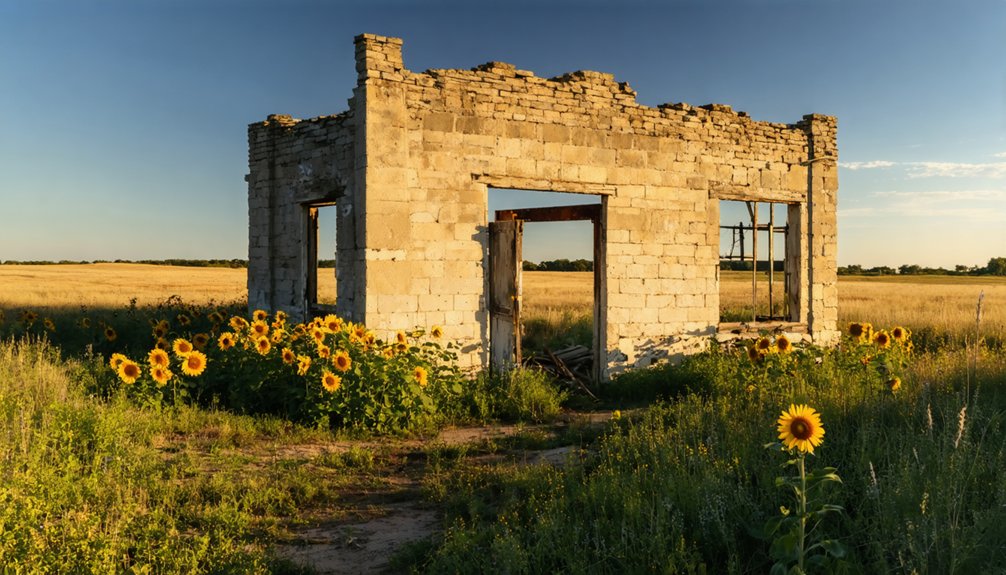
Old Montezuma was a frontier settlement that rose quickly on the Kansas plains, built on ambition and speculation during the land boom of the late 1870s. Founded in 1879 in Gray County, it grew into a genuine community with a bank, general stores, a hotel, a hardware shop, and a post office.
By 1886, more than 100 residents called it home.
But the forces that built Old Montezuma eventually unraveled it. Drought, grasshopper infestations, blizzards, and shifting transportation routes drained its momentum.
Congress officially closed the town in 1895, sealing its fate as a ghost town. When you trace its story today, you’re not just visiting a forgotten place — you’re stepping into a raw chapter of American frontier history that didn’t survive on its own terms.
Why the Original Town Site Was Abandoned
The story of why settlers packed up and left Old Montezuma isn’t a single dramatic disaster — it’s a slow unraveling stitched together from bad luck, brutal weather, and poor geography.
The abandonment of Old Montezuma wasn’t one single blow — it was a slow, grinding unraveling nobody saw coming.
Understanding these abandonment reasons adds real historical significance to your visit.
Several forces pushed the town past the point of recovery:
- Brutal plains conditions — drought, grasshopper infestations, and blizzards wore settlers down relentlessly
- The Cherokee Strip opening — it pulled settlement pressure away, draining Old Montezuma of momentum
- Geographic isolation — the original location sat too far from practical stagecoach routes, strangling commerce
How the Railroad Saved Montezuma From Disappearing
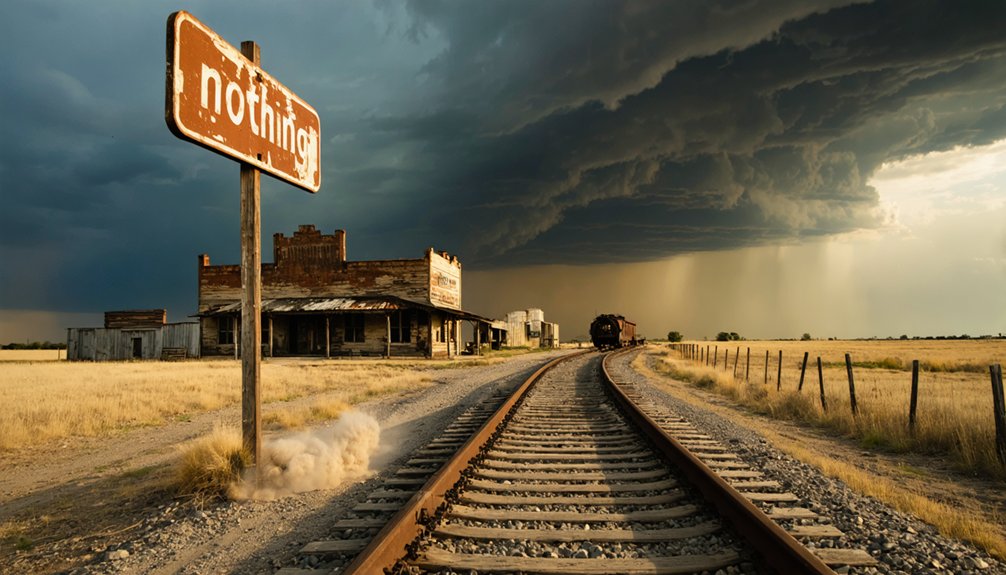
When you trace Montezuma’s survival story, you find the railroad sitting at the center of it.
The Dodge City and Cimarron Valley Railroad laid tracks directly through the community, pulling economic life toward a new location and giving the town a second chance.
Railroad Lines Arrive
Railroad access didn’t just shape Montezuma’s growth — it saved the town from fading into the Kansas plains entirely. Railroad expansion brought new energy, new settlers, and real economic footing to a struggling community.
Three lines defined the transportation impact on Montezuma’s survival:
- The Dodge City and Cimarron Valley Railroad cut directly through the heart of the community.
- The short-lived Dodge City, Montezuma & Trinidad Railway linked Montezuma directly to Dodge City.
- The Atchison, Topeka & Santa Fe Railway platted the current town site in 1912.
Each line represented a lifeline. When you drive through Montezuma today, you’re traveling ground that railroad ambition literally rebuilt.
Without those tracks, you’d be visiting nothing but open prairie and forgotten foundations.
Tracks Spark Relocation
By 1912, railroad ambition had done what struggling settlers and stagecoach routes couldn’t — it pulled Montezuma off its dying original site and planted it somewhere new.
The Atchison, Topeka & Santa Fe Railway platted the current town location that same year, and the tracks influence reshaped everything almost overnight. Residents packed up, businesses relocated, and community development followed the steel rails rather than the old stagecoach memory.
The Dodge City and Cimarron Valley Railroad had already threaded through the heart of the community, making the move feel less like abandonment and more like evolution.
Where the original site faded into farmland and silence, the relocated Montezuma found its footing — proof that a railroad could rescue a town the plains nearly swallowed whole.
Old Montezuma vs. Present-Day Montezuma: What’s the Difference?
Though they share a name, Old Montezuma and present-day Montezuma aren’t the same place. Understanding the distinction sharpens your appreciation of each site’s historical significance and community evolution.
Here’s what sets them apart:
- Old Montezuma was the original 1879 frontier settlement, declared closed by Congress in 1895, now a ghost town reclaimed by farmland.
- Present-day Montezuma was platted in 1912 by the Atchison, Topeka & Santa Fe Railway, built on railroad promise rather than stagecoach speculation.
- The gap between them tells the real story — a community that refused to disappear, trading one identity for another to survive.
When you drive through, you’re crossing two timelines. One faded into the plains; the other kept moving forward.
What You’ll Actually Find at the Old Montezuma Site Today
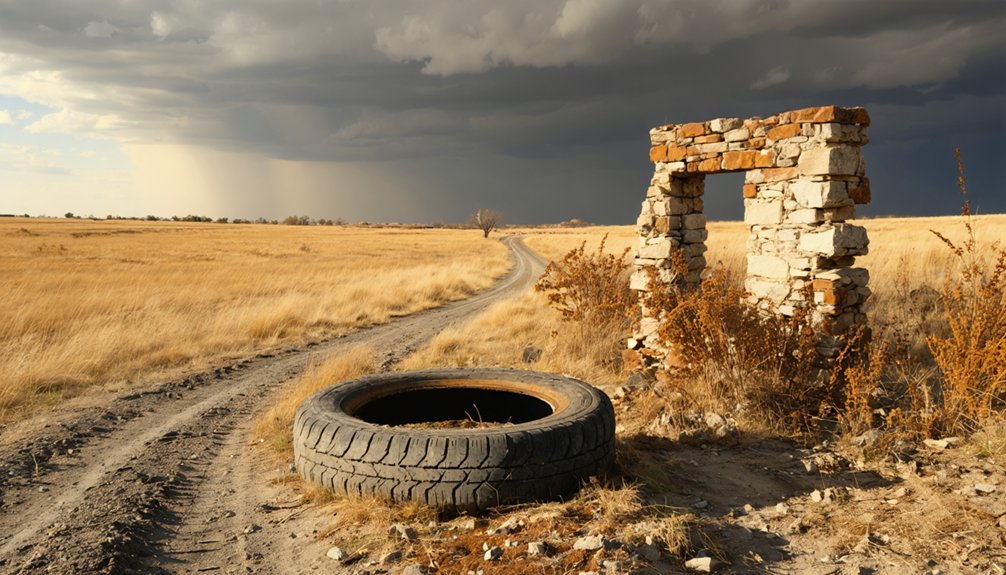
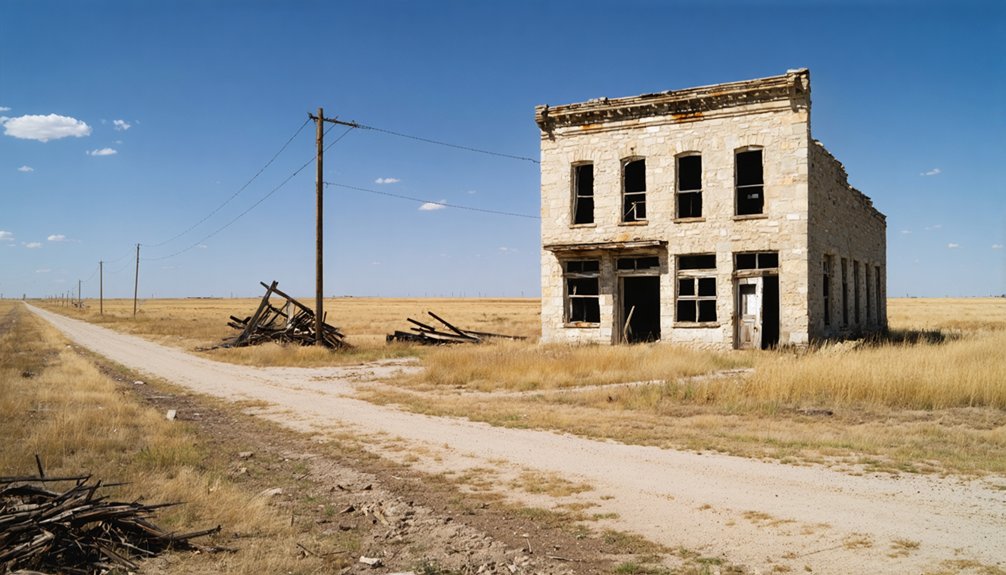
When you arrive at the old Montezuma site, you won’t find crumbling storefronts or remnants of the hotel and bank that once defined this frontier outpost — you’ll find farmland stretching quietly across what were once active streets and lots.
Historical markers offer your best anchor to the past, giving you the context needed to imagine the community that stood here before Congress declared it closed in 1895.
The contrast hits hardest when you drive over to present-day Montezuma, a living town that survived precisely because it had the good sense to pick up and move.
Farmland Covers Former Streets
If you make the drive out to the original Old Montezuma site today, don’t expect crumbling storefronts or weathered saloon signs—the land has moved on without them.
Farming history swallowed the old streets whole, leaving flat, cultivated fields where a frontier town once hummed with commerce and ambition. Ghost town preservation here means imagination, not infrastructure.
What you’re actually standing over:
- Former business lots where hardware shops and general stores once operated
- Residential grid streets now buried beneath crop rows and open Kansas sky
- A post office location that Congress officially shuttered in 1895
You won’t find rope-off ruins or interpretive signs. The plains simply reclaimed what settlers left behind.
Bring your curiosity, your map, and a willingness to read the land itself.
Ghost Town Historical Markers
Even though the farmland tells most of Old Montezuma’s story through silence, you’ll likely find at least one historical marker anchoring the site—a modest roadside sign doing the heavy lifting of context that the landscape itself can’t provide.
These markers connect ghost town legends to documented history, giving you names, dates, and the broader arc of a community that rose during the Kansas boom and faded when transportation patterns shifted.
Historical preservation efforts have kept the story from vanishing entirely, even when the physical structures long since disappeared.
Read the marker carefully. It’ll tell you about the Western Kansas Town and Land Company, the railroad’s role, and Congress closing the town in 1895.
That small sign carries more weight than it looks.
Contrast With Relocated Montezuma
After leaving the historical marker behind, you’ll drive a short distance and find yourself standing in what amounts to a field—flat, windswept, and almost indifferent to the fact that a functioning town once occupied this same ground.
The historical significance here isn’t obvious. It demands imagination.
Compare that silence to present-day Montezuma, platted in 1912 by the Santa Fe Railway just miles away, which actually survived. That contrast defines authentic ghost town experiences:
- Old Montezuma: Farmland reclaimed what drought, grasshoppers, and abandonment left behind
- Relocated Montezuma: Railroad investment gave the community a second life worth living
- Your experience: Standing between both realities, measuring survival against disappearance
One town got a railroad. One didn’t. The plains kept score, and the landscape still shows it.
What Makes Old Montezuma Different From Other Kansas Ghost Towns
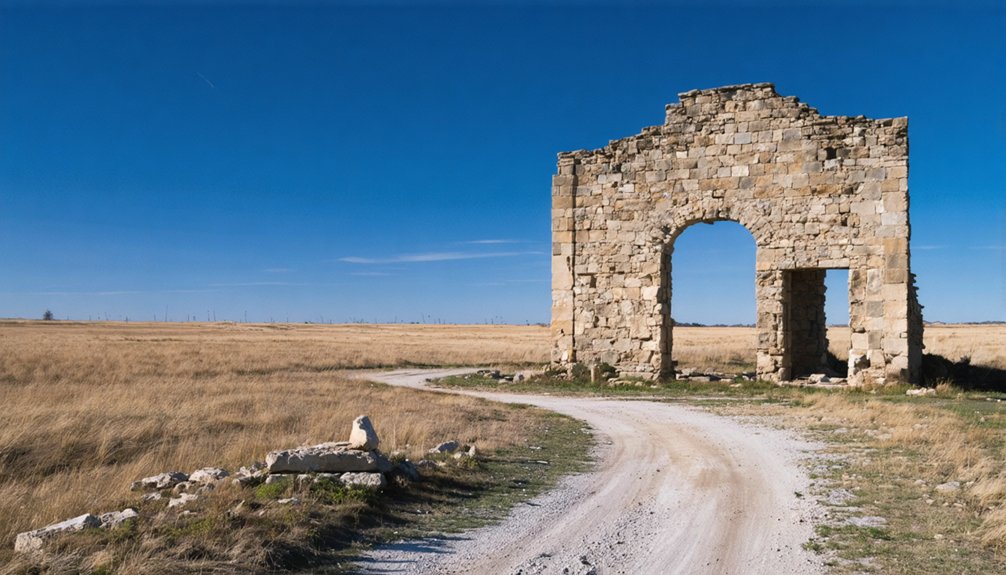
What sets Old Montezuma apart from most Kansas ghost towns is that it didn’t simply die — it split. Most frontier settlements vanished quietly, swallowed by drought, debt, or shifting travel routes.
Old Montezuma followed a different path. When railroad impact reshaped the regional economy, a group of investors didn’t abandon the community — they relocated it entirely.
That decision left behind something rare in Kansas history: a ghost town with a living descendant. You can trace that split yourself, moving between the original frontier settlement site and the town that survived by reinventing itself.
Historical markers and travel routes connect both stories. Old Montezuma represents community decline interrupted by ambition — proof that some towns on the Kansas plains refused to disappear without a fight.
When’s the Best Time to Drive Through Gray County?
Timing matters when you’re crossing the Kansas plains, and Gray County rewards drivers who plan ahead. The best seasons for this road trip are spring and fall, when temperatures stay manageable and the landscape feels alive rather than punishing.
- Spring (April–May): Wildflowers dot the roadsides, skies stay dramatic, and the plains feel wide open.
- Fall (September–October): Harvest activity fills the countryside, light turns golden, and the air carries a sharpness that sharpens the whole drive.
- Summer and winter: Extreme heat and fierce plains blizzards can turn a free-spirited adventure into a survival situation fast.
Check local events in Montezuma before you go, since community gatherings occasionally bring the town’s layered history into sharper focus and give your road trip an unexpected bonus stop.
How to Plan Your Southwest Kansas Ghost Town Drive
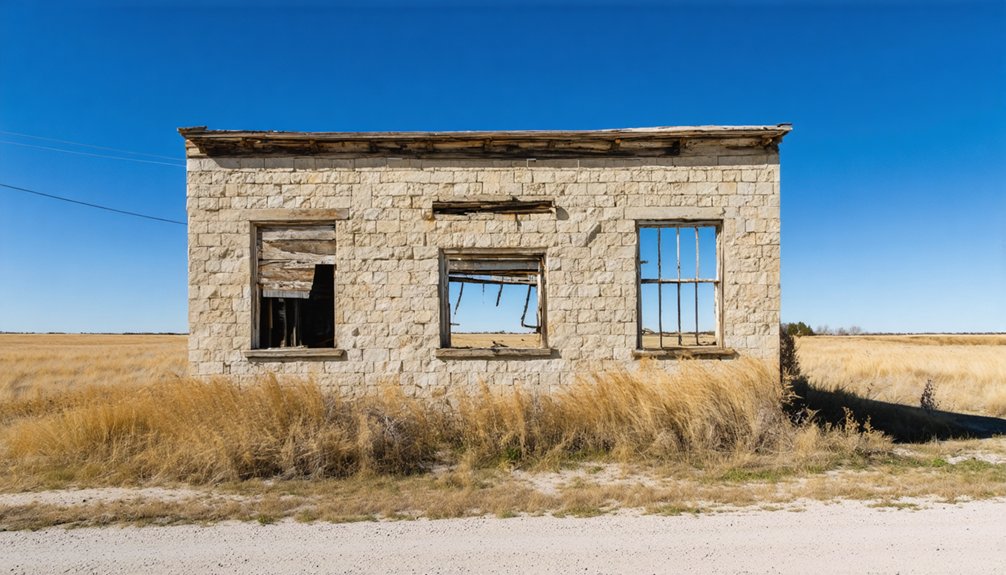
Once you’ve locked in your travel window, the next step is mapping a route that does justice to everything southwest Kansas holds. Start in Dodge City, where railroad history runs deep, then head south toward Gray County along former rail corridors that once defined this region’s fate.
Ghost town exploration rewards the curious traveler who slows down. Pull over where farmland swallows former streets. Contrast Old Montezuma’s abandoned original site against the relocated town that survived by adapting.
Each stop carries real historical significance — failed land companies, broken railroad promises, and resilient settlers who refused to quit.
Pack water, fuel up before leaving larger towns, and download offline maps. Southwest Kansas stretches wide and unforgiving. That openness, though, is exactly what makes this drive feel like genuine freedom.
Nearby Gray County Ghost Towns Worth a Detour
Gray County holds more ghost town stories than most travelers expect. Once you’ve explored Old Montezuma, you’ll find the surrounding plains reward curiosity with ghost town legends hiding just off forgotten roads.
Historical preservation efforts are scattered and uneven here, which makes discovery feel genuinely earned.
Watch for these detour-worthy stops nearby:
- Ingalls – A once-competitive county seat rival with a violent past that still echoes across the landscape
- Cimarron – Offers preserved frontier-era architecture and courthouse history worth your time
- Ensign – A quiet former settlement where railroad dreams faded faster than the grass grew back
Each stop adds another layer to southwest Kansas’s complicated, compelling story. You’re not just driving through emptiness — you’re reading a landscape written by ambition and hard weather.
Frequently Asked Questions
Is There an Entrance Fee to Visit the Old Montezuma Ghost Town Site?
As windswept plains stretch endlessly before you, ghost town fees don’t block your path here. The knowledge doesn’t confirm specific historical preservation charges, so you’ll want to verify current access details locally before visiting.
Are There Any Guided Tours Available for Old Montezuma’s Historical Site?
No formal guided experiences exist for Old Montezuma’s historical significance, but you’ll uncover the site’s raw, untamed story independently. Explore at your own pace, letting the sweeping Kansas plains whisper forgotten tales of frontier dreams and resilience.
Can You Camp Overnight Near the Old Montezuma Ghost Town Area?
Imagine pitching your tent under vast Kansas skies near Gray County’s plains. You’ll want to check camping regulations and watch for local wildlife, as no formal campsite exists directly at Old Montezuma’s ghost town site.
Is the Old Montezuma Site Accessible by Standard Passenger Vehicles?
You can likely reach the old Montezuma site in a standard passenger vehicle, but road conditions on rural Kansas plains can turn rough. Check local routes first, and you’ll navigate history’s open trails freely.
Are There Any Local Museums Dedicated Specifically to Old Montezuma’s History?
“Dig where you stand” — you won’t find a museum dedicated specifically to Old Montezuma, but nearby Gray County resources preserve its historical artifacts and local legends, letting you uncover the town’s forgotten story firsthand.
References
- https://www.youtube.com/watch?v=TMOBag2zLc4
- https://www.cityofmontezumaks.com/history
- https://digging-history.com/2015/02/18/ghost-town-wednesday-santa-fe-kansas/
- https://www.youtube.com/watch?v=wocJ7F-jdrs
- https://www.frrandp.com/2020/06/the-dodge-city-montezuma-trinidad.html
- https://www.facebook.com/wandermorekansas/posts/town-476-of-627-montezuma-kspopulation-975county-grayoriginal-visit-91823-the-or/642297825343617/
- https://coloradosghosttowns.com/Neosho Falls Kansas.html
- https://legendsofkansas.com/everyplace-in-kansas-m/
- https://www.reddit.com/r/kansas/comments/4agf4j/i_run_a_facebook_page_called_kansas_ghost_town/
- https://www.facebook.com/groups/roadsidebarns/posts/1514567191924334/