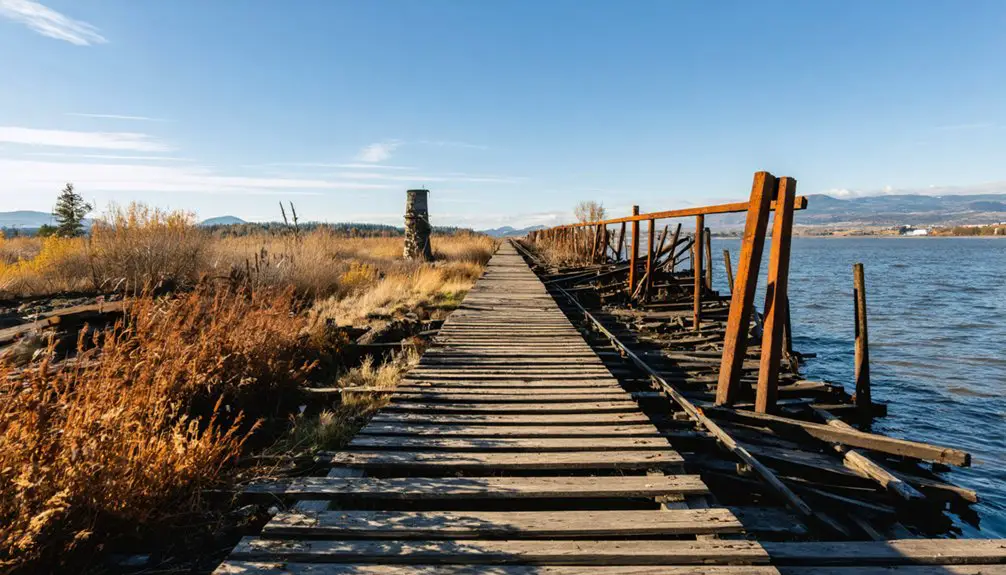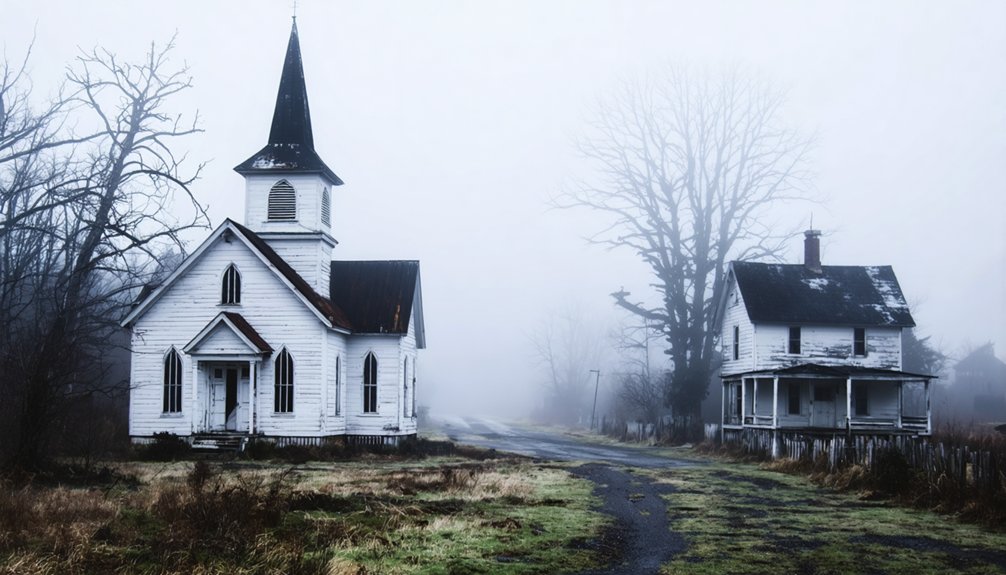
Planning a ghost town road trip to Oysterville, Washington means heading to the northern tip of the Long Beach Peninsula, where a Victorian-era village frozen in time still stands. From Portland, take US-30 northwest, then connect to US-101 north. From Seattle, drive I-5 south, then follow US-12 west to US-101. Only about 20 residents remain among 15 original buildings. Pack your sense of curiosity — there’s far more to this hauntingly preserved town than first meets the eye.
Key Takeaways
- Oysterville sits at the northern tip of Long Beach Peninsula, Washington, featuring 15 preserved Victorian buildings and roughly 20 remaining residents.
- From Portland, take US-30 northwest, cross into Washington, then follow US-101 north and SR-103 through Long Beach to reach Oysterville.
- From Seattle, drive south on I-5, head west on US-12 to Aberdeen, then follow US-101 and SR-103 north to the peninsula.
- Plan two days minimum—one for northern historic villages like Oysterville and one for exploring southern beaches and seafood stops.
- Must-see stops include the 1892 Oysterville Church, historic cemetery, old cannery remnants, and oyster tasting along Willapa Bay.
What Makes Oysterville Washington a Ghost Town Worth Visiting?
Although most ghost towns fade into obscurity, Oysterville, Washington pulls you in with a rare combination of preserved Victorian architecture, rich maritime history, and an almost eerie stillness that few coastal destinations can match.
Once home to 900 residents during the 1870s oyster boom, the town now shelters roughly 20 people among fifteen original 19th-century buildings. That contrast defines its ghost town allure.
At its peak, 900 called Oysterville home. Today, just 20 remain among buildings that refuse to forget.
You’ll walk streets where Pacific County’s government once operated, pass an 1892 church still standing with gothic farmhouse details, and feel coastal history embedded in every weathered plank.
Oysterville isn’t abandoned — it’s preserved. The National Register Historic District designation in 1976 locked in its authenticity.
If you crave exploration without crowds, this quiet peninsula village delivers something genuinely rare.
How Oysterville Went From Boomtown to Ghost Town
When I.A. Clark and R.H. Espy struck oyster gold along Willapa Bay in 1854, Oysterville exploded into a booming maritime hub that shipped shellfish to San Francisco and swelled to 900 residents by the 1870s.
You can almost feel the town’s confidence when you learn it became Pacific County’s seat in 1861, holding political power for over three decades.
Then parasites and pollution ravaged the oyster beds, South Bend residents raided the courthouse in 1893, and Oysterville’s remarkable run collapsed almost overnight.
Oyster Boom Beginnings
Before the silence settled over Oysterville’s weathered streets, this tiny Washington coastal village once roared with the ambition of a full-blown boomtown.
Back in 1854, founders I.A. Clark and R.H. Espy followed an indigenous guide named Nahcotta to the oyster-rich shores of Willapa Bay, and what they discovered changed everything.
Native oysters blanketed the bay floor, and settlers wasted no time launching a thriving oyster harvesting operation that fueled an entire economy.
Ships loaded with shellfish regularly departed for San Francisco, making maritime trade the heartbeat of this remote peninsula community.
By the 1870s, Oysterville’s population hit 900 residents, cementing its reputation as a powerhouse port.
You’re walking into a place that once punched far above its weight on the Pacific coast.
County Seat Lost
The fall from grace hit Oysterville hard and fast. By 1861, the town had claimed the county seat, becoming Pacific County’s political power center.
But nothing lasts forever on the frontier.
In 1893, South Bend residents allegedly raided the courthouse and physically relocated government operations, stripping Oysterville of its county seat status overnight. You can almost picture the chaos — documents hauled away, officials scrambling, a community watching its influence disappear.
The timing couldn’t have been worse. Parasites and pollution had already devastated the oyster beds, gutting the economy that built this place.
Lose your industry and your political power in the same era, and decline becomes inevitable.
What’s left today is a hauntingly beautiful village frozen in time — and that’s exactly worth exploring.
Parasites Sparked Decline
Oysterville’s oyster beds didn’t just slow down — they collapsed. Parasites devastated the native oyster populations that had made this small peninsula town one of Washington’s most prosperous settlements. The parasite impact hit hard and fast, stripping the oyster industry of its lifeblood and leaving harvesters with little to show for their labor.
Pollution compounded the damage, contaminating Willapa Bay’s once-pristine waters. Boats stopped loading. Profits vanished. The town that had shipped oysters to San Francisco by the thousands suddenly had nothing to ship.
You can almost feel the silence that descended after the industry collapsed. Streets that once buzzed with workers and merchants grew eerily quiet. Oysterville didn’t fade gradually — it dropped off the map almost overnight, transforming from boomtown to ghost town in a single generation.
The Historic Buildings That Survived Oysterville’s Decline
As you wander Oysterville’s quiet streets, you’ll find fifteen Victorian-era buildings standing as proud survivors of the town’s dramatic rise and fall.
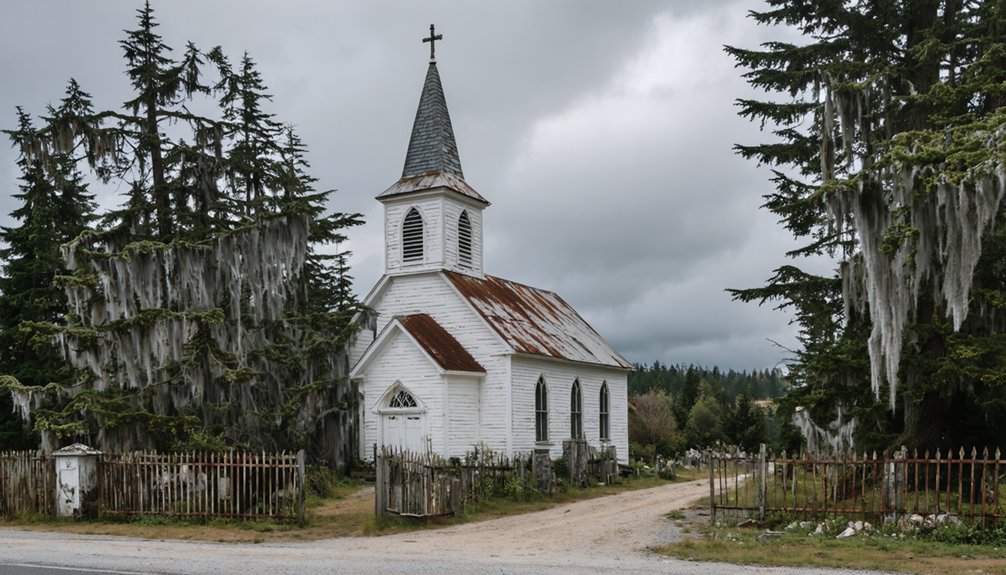
The 1892 Oysterville Church, with its striking gothic farmhouse details, anchors the Historic District and remains the town’s most iconic landmark.
You can also spot the old cannery and courthouse remnants that once powered a bustling Pacific County seat, now frozen in time within a National Register Historic District.
Victorian Architecture Still Standing
Fifteen Victorian-era buildings still stand in Oysterville, defying the quiet decay that claimed so many ghost towns across the Pacific Northwest.
As you walk the village streets, you’ll notice Victorian influences woven into every weathered facade — wood siding, steep rooflines, and ornate trim that speak directly to the 1860s and 1870s boom years.
The architectural details reveal ten historic residences, a courthouse, a cannery, and the striking 1892 church, all earning National Register Historic District status in 1976.
These aren’t reconstructions or museum replicas — they’re authentic survivors.
Running your hand along original timber framing connects you instantly to the oyster harvesters and merchants who built this place.
You’re standing inside a living snapshot of the Pacific Northwest’s earliest maritime industry.
The Iconic 1892 Church
Standing at the heart of Oysterville, the 1892 church commands your attention the moment it comes into view — its gothic farmhouse lines rising sharply against the coastal sky.
Its church architecture tells a story that no history book can fully capture. You’re looking at a structure that outlasted economic collapse, political upheaval, and decades of coastal weather.
Built when Oysterville was already losing its grip on prosperity, the church carries deep historical significance as one of the last standing symbols of a community that once thrived.
Step closer and you’ll notice the period details preserved remarkably well — wood siding, clean angles, and quiet dignity.
This isn’t just a building; it’s a direct connection to the bold settlers who refused to let their town disappear without leaving something behind.
Cannery And Courthouse Remnants
Beyond the church, the cannery and courthouse remnants pull you deeper into Oysterville’s layered past. These structures tell a raw, unfiltered story of boom and collapse that no museum can replicate.
The cannery history here connects directly to the shellfish operations that once shipped oysters to San Francisco markets throughout the 1850s through 1880s.
Walking past its weathered frame, you’re standing where workers packed and processed the harvest that built an entire economy.
The courthouse architecture carries equal weight. This building once anchored Pacific County’s seat of government until 1893, when South Bend residents allegedly raided it and forcibly relocated county operations.
That audacious power grab effectively ended Oysterville’s political influence forever.
Both structures now anchor the National Register Historic District, giving you direct access to authentic 19th-century Northwest history.
How to Get to Oysterville on the Long Beach Peninsula
Reaching Oysterville takes you to the northern tip of the Long Beach Peninsula, a narrow strip of land wedged between Willapa Bay and the Pacific Ocean in southwestern Washington.
From Portland, head northwest on US-30, cross into Washington, and take US-101 north toward the peninsula. From Seattle, drive south on I-5, then head west on US-12 toward Aberdeen before connecting to US-101.
Once on the peninsula, follow SR-103 north through Long Beach and Ocean Park. Oysterville access sits roughly 5 miles beyond Ocean Park, where the road narrows and the landscape quiets.
The scenic routes reward you with sweeping bay views, towering shore pines, and an unmistakable sense that you’re escaping somewhere genuinely off the beaten path.
Follow the signs — you’ll know when you’ve arrived.
What to Do When You Arrive in Oysterville?
Once you step out of the car in Oysterville, the stillness hits you first — no traffic, no crowds, just the salt air and the quiet creak of history.
You’re free to roam at your own pace and soak in everything this coastal ghost town offers.
Here’s what you shouldn’t miss:
- Stroll the historic district — Walk past fifteen Victorian-era buildings, including the iconic 1892 church, and let the architecture tell its story.
- Try oyster tasting — Sample the shellfish that literally built this town and connects you directly to its 1850s maritime roots.
- Discover local art — Small galleries and creative spots scattered nearby reflect the peninsula’s living culture beyond its historic bones.
Oysterville rewards the curious and unhurried traveler.
How to Build a Long Beach Peninsula Trip Around Oysterville
Oysterville sits about 15 miles north of Long Beach and 5 miles from Ocean Park, which makes it a natural anchor for a fuller peninsula adventure.
Start your morning exploring Oysterville attractions — the 1892 church, Victorian homes, and the historic cemetery dating to 1858. Let the historical significance of this former county seat sink in before heading south.
Wander past the 1892 church, Victorian homes, and a cemetery older than the Civil War’s end.
From there, cruise down to Ocean Park for lunch, then continue into Long Beach for its wide-open Pacific shoreline.
You’ll find kite flying, seafood shacks, and beachcombing along the way. The peninsula rewards slow travelers who stop often and linger.
Build two days into your itinerary if you can — one for the northern villages, one for the southern beaches. You won’t regret the extra time.
Frequently Asked Questions
When Is the Best Time of Year to Visit Oysterville?
You’ll find summer’s the best season to visit Oysterville, as weather conditions are mild and inviting. Explore Victorian streets, breathe in coastal air, and uncover this hauntingly beautiful ghost town’s rich maritime history freely.
Are There Any Guided Tours Available in Oysterville?
Oysterville doesn’t offer formal guided tours, but you’ll love exploring it independently! Stroll through guided walking paths, soak up local history, and let the Victorian architecture and iconic 1892 church tell their own enchanting stories.
Is There an Admission Fee to Explore Oysterville’s Historic District?
Like a open book waiting to be read, Oysterville’s historic district won’t cost you a dime! There’s no admission policy fee — you’re free to roam and support historic preservation simply by exploring its timeless Victorian streets.
Can Visitors Attend Services at the Historic Oysterville Church?
You’ll want to check local listings for service times at this iconic 1892 landmark. The church history runs deep here, and attending a service lets you connect with Oysterville’s living, breathing Victorian-era spirit firsthand!
Are There Restaurants or Shops Located Within Oysterville Itself?
You won’t find local cuisine or artisan shops within Oysterville itself — it’s a quiet, historic ghost town with only about 20 residents. Venture to nearby Ocean Park or Long Beach to satisfy your adventurous appetite!
References
- https://www.youtube.com/watch?v=s1BtxBALpLk
- https://pinholeobscura.com/2016/02/26/oysterville-wa/
- https://www.facebook.com/ghosttownsofwashington/posts/oysterville-pacific-county-wa-was-established-and-named-in-1854-by-ja-clark-it-w/1046503284172752/
- https://oysterville.org/about-oysterville/
- https://www.facebook.com/ghosttownsofwashington/posts/oysterville-cemetery-one-of-the-oldest-cemeteries-in-washington-state-began-in-1/983082017181546/
- https://chinookobserver.com/2004/08/03/oystervilles-150th-birthday-the-ghost-streets-of-oysterville/
- https://opwa.com/oysterville/
- https://www.evergreencoastwa.com/visit-oysterville/
- https://revisitwa.org/waypoint/oysterville/
- https://www.interment.net/data/us/wa/pacific/oysterville/index.htm