Planning a ghost town road trip to Packard, Kentucky, requires understanding you’ll face significant obstacles—this remote Whitley County hollow sits on private property with no public access. The landowner has consistently denied entry to curious visitors, leaving only crumbling stone foundations and collapsed structures hidden in the mountain wilderness. You’ll need written permission before attempting any visit, plus GPS devices since cellular service fails in these hollows. Your best approach involves studying archival photographs and connecting with local elders who remember when this coal mining community housed 400 souls before its 1946 abandonment.
Key Takeaways
- Check weather conditions before traveling, as spring rains and winter ice make backcountry routes treacherous in the highlands.
- Use Red Hill Road and Saxton topographic quad for navigation; expect unreliable cellular service in mountain hollows.
- Contact Whitley County records to identify the landowner and obtain written permission before visiting the private property.
- Wear heavy boots and carry emergency supplies due to unstable terrain, overgrown pathways, and long emergency response times.
- Study archival photographs and consult local elders as alternatives, since landowners have denied entry to curious visitors.
Getting to Packard: Directions and Route Planning
Check weather impacts on accessibility before departing—spring rains and winter ice transform these backcountry routes into treacherous passages.
The Louisville and Nashville Railroad once penetrated these highlands, but you’re driving where trains feared to go.
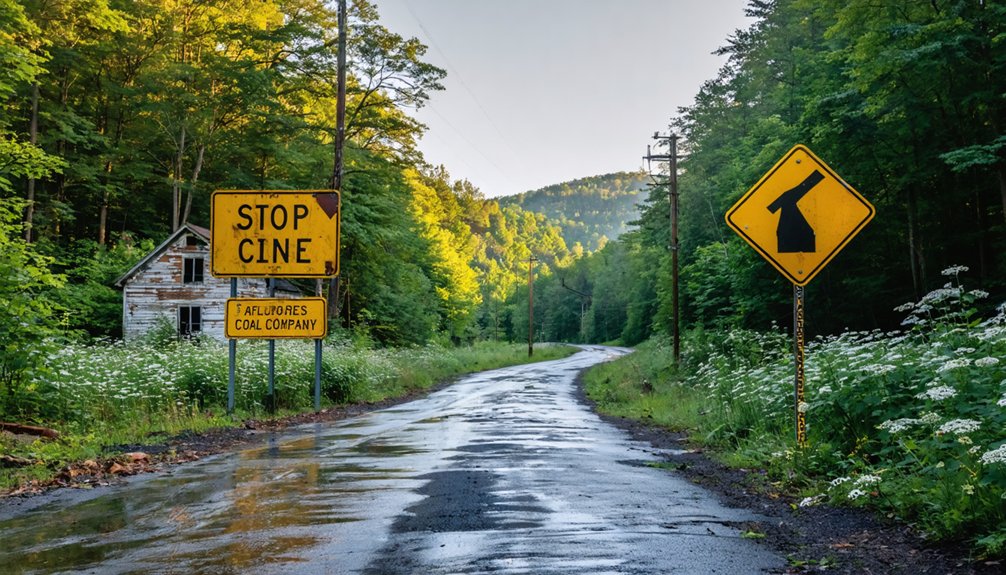
Nearby Red Hill Road and the Saxton topographic quad provide reference points for this remote Whitley County location.
What Remains: Exploring the Physical Site Today
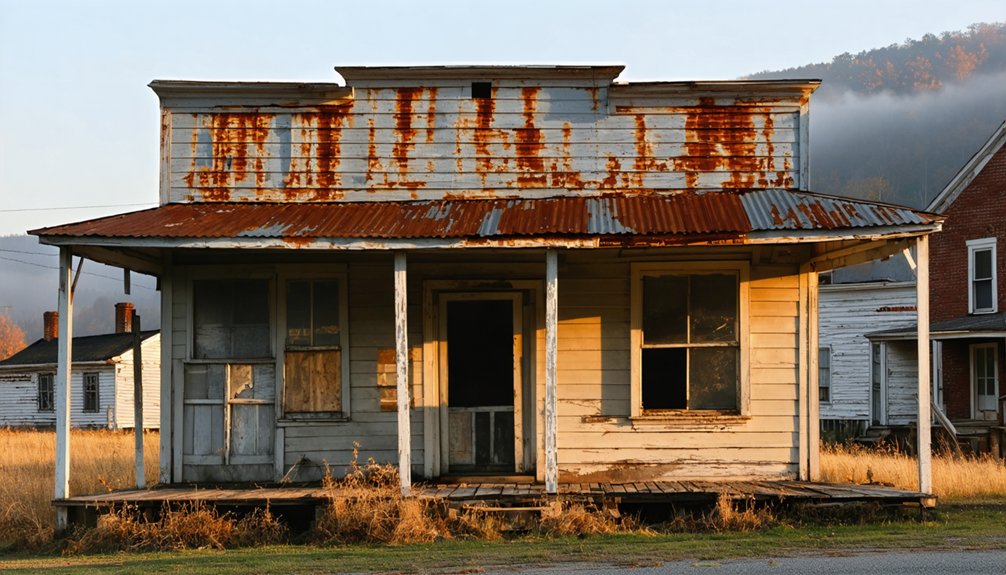
You’ll need to respect that Packard sits on private property with no public access—the landowner has denied entry to curious visitors and urban explorers alike. What little remains are crumbling stone foundations where homes once stood, a collapsed schoolhouse frame in the back hollow, and scattered debris from the company store and doctor’s office that served this coal camp.
If you’re determined to glimpse this ghost town, your best option is studying the rare archival photographs and talking with local elders who remember the site before it vanished into the Kentucky mountains.
Accessing Private Property Ruins
Before you venture to coordinates 36°40′03″N 84°03′21″W:
- Contact Whitley County records to identify the current landowner
- Request written permission documenting your visit
- Bring GPS devices; cellular service is unreliable in mountain hollows
- Wear heavy boots for unstable terrain and overgrown pathways
- Carry emergency supplies—response times stretch long in remote locations
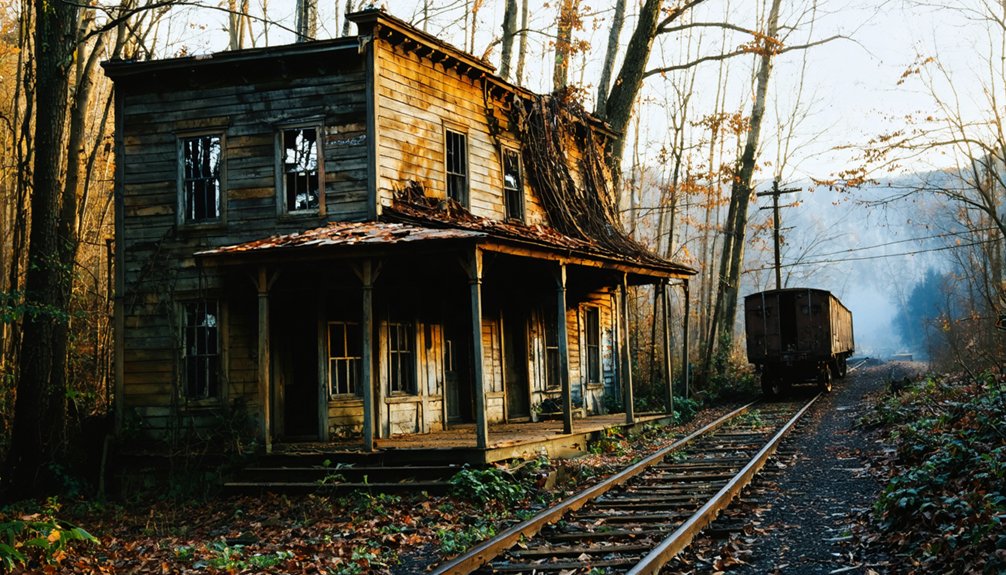
The railroad spur remnants suggest your entry route, though nature’s reclaimed what industry once dominated.
Surviving Structural Evidence
Once you’ve secured permission and navigated the overgrown railway spur, Packard reveals itself as a landscape where nature and history wage a quiet war. You’ll find crumbling residential foundations scattered across the hillside—remnants of 300-700 homes that housed roughly 400 souls.
A few structures still stand, their architectural integrity slowly surrendering to kudzu and time. Look for the Baptist Church foundation among the debris, the schoolhouse ruins at the site’s rear, and the company store’s commercial footprint.
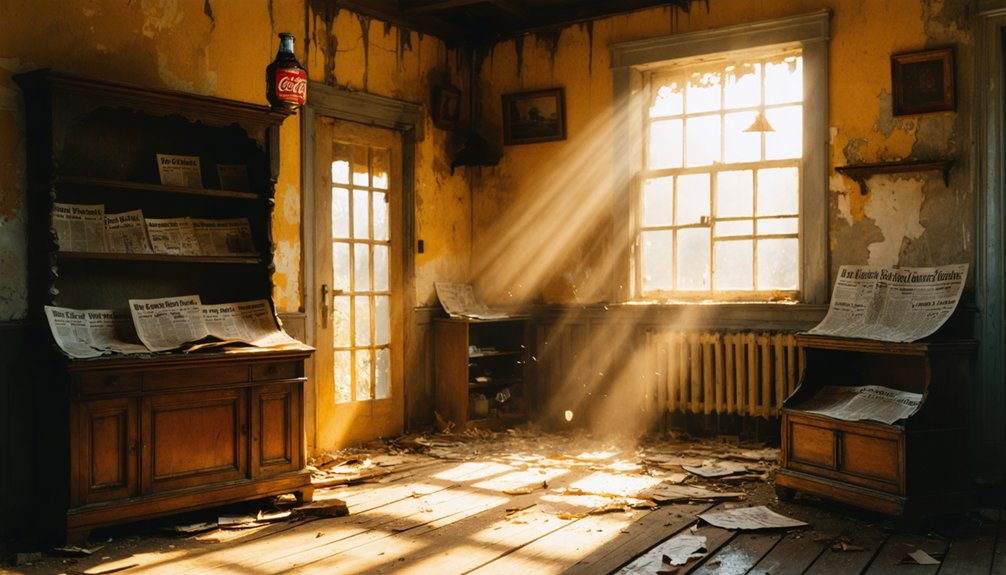
I stumbled upon a 1942 calendar during my visit, its pages yellowed but readable. Coal scrip tokens lie scattered near mine entrances, while the burned tipple site from 1922 marks where industry met disaster. These tangible fragments make Packard’s vanished community feel suddenly, powerfully real.
The Rise and Fall of a Coal Mining Town
Around 1900, the Thomas B. Mahan family carved Packard from Kentucky’s wilderness, naming it after schoolteacher Amelia Packard. You’d have found 400 souls chasing fortune in these dark hollows, where three coal companies extracted black gold from the mountains.
The mining economy decline hit hard when resources dried up by 1946, forcing community relocations that scattered families across Appalachia. What drove them away?
- Company scrip trapped miners in perpetual debt cycles
- The 1922 strike brought National Guardsmen with machine guns
- Inflated company store prices squeezed already meager wages
- Unsafe conditions and isolation wore down workers’ spirits
- Exhausted coal seams meant no future, no choice
Today, you’ll find only crumbling foundations on private land—silent witnesses to dreams that couldn’t outlast the coal.
Life in a Company Town: Stories From Packard’s Past
The company store’s weathered ledgers would’ve told you everything about survival in Packard—every pound of flour, every pair of work boots, every desperate attempt to stretch coal scrip another week. You’d have discovered mining families’ struggles etched in those faded entries: inflated prices two miles from any alternative, scrip system exploitation binding workers to this dark hollow.
Imagine earning paper money redeemable nowhere else, watching your children’s futures mortgaged to Mahan-Jellico’s monopoly. By 1917, desperation drove men to prayer. By 1922, they chose fire—torching the coal tipple rather than endure another payday without real cash. Governor Morrow’s machine gun squads answered their rebellion, but unionization eventually broke the company’s stranglehold.
Freedom came through collective action, though victory proved temporary in these crumbling Cumberland foundations.
Patricia Neal: Hollywood Star Born in Packard

You’ll find it remarkable that this forgotten coal town produced Patricia Neal, born here on January 20, 1926, before her family moved to Tennessee when she was young.
The actress who charmed Gary Cooper in *The Fountainhead* and earned her Oscar for *Hud* spent her earliest days in Packard’s company houses, where her father worked among the miners.
Standing in the overgrown remnants of Main Street today, you’re walking the same ground where a future Academy Award winner took her first steps.
Neal’s Early Life
Before Packard became a forgotten whisper in Kentucky’s coal country, it gave the world one of Hollywood’s most formidable talents. Patricia Neal’s early family upbringing in this remote coal camp shaped the grit that would define her career. Born January 20, 1926, she experienced authentic coal camp life experiences before her family escaped to Knoxville.
Her roots ran deep:
- Father “Coot” Neal managed operations for Southern Coal and Coke
- Mother Eura descended from Dr. Paschal G. Petrey, Packard’s town doctor
- Two siblings shared the cramped company housing
- The isolation forged her fierce independence
- Coal dust and mountain air became her first stage
That hickory-smoked voice you’ll recognize? It started here, among miners’ daughters who’d never imagine one of their own conquering Broadway and Hollywood.
Academy Award Recognition
Academy award recognition for patricia neal didn’t stop there. She survived three strokes in 1965, then roared back with a 1968 Best Actress nomination for *The Subject Was Roses*—proof that grit trumps adversity.
Her mantle also gleamed with BAFTA awards, a Golden Globe, and that early 1947 Tony. Packard’s daughter conquered Hollywood on her own uncompromising terms.
Visiting Responsibly: Access and Property Considerations
While the allure of exploring Packard’s abandoned coal camp remnants might tug at your adventurous spirit, you’ll need to admire this ghost town from a distance. The site remains on private land owned by descendants of the original residents, and local landowner perspectives clearly establish no-trespassing boundaries that demand respect.
Responsible exploration means:
- Observing from public roads like Packard Road without entering private property
- Using drone footage or telephoto lenses for documentation
- Respecting “No Trespassing” signs protecting these historical preservation efforts
- Understanding that abandoned mine structures pose serious collapse dangers
- Supporting research initiatives rather than physical visits
The remote Whitley County hollow location, over 18 miles from transportation hubs, makes emergency response nearly impossible if accidents occur on unstable foundations and open mine shafts.
Nearby Attractions in Whitley County and Beyond

After soaking in Packard’s haunting history, you’ll find Whitley County’s landscape transforms into an outdoor enthusiast’s playground just minutes down the mountain. The Natural Arch Scenic Area beckons with its massive 100-foot-wide rock shelter, accessible via concrete trails that wind through picnic sites and amphitheater spaces.
Push further into the Cumberland Plateau where Big South Fork‘s 125,000 acres offer freedom to roam sandstone gorges and riverside trails. Cumberland Falls crashes through ancient rock while Yahoo Falls provides a quieter escape. Local parks and outdoor recreation options extend to Laurel Lake’s cliff-lined coves and Cumberland River’s lazy float sections.
Scenic overlooks and viewpoints like Devils Jump and Great Gulf Overlook reward your wanderlust with sweeping vistas that’ll make you forget civilization exists beyond these ridgelines.
Frequently Asked Questions
What Should I Bring When Visiting Ghost Towns Like Packard?
Like a pioneer charting unexplored territory, you’ll need essentials for Packard’s wilderness. Bring comfortable shoes for traversing crumbling foundations, pack snacks and water since civilization’s miles away, plus navigation tools, protective gear, and permission documents for private land.
Are There Guided Tours Available for Kentucky Ghost Towns?
Kentucky’s ghost towns typically lack formal guided tours, so you’ll explore through self-guided tours instead. Contact local tourism boards beforehand—they’ll share hidden trails and forgotten stories that’ll lead you to authentic, unscripted adventures off the beaten path.
As you journey through ghost towns to explore in Kentucky, prepare to encounter remnants of a bygone era that tell tales of resilience and change. Each deserted street and crumbling structure serves as a canvas for your imagination, inviting reflections on the lives once lived there. Embrace the mystery and allure of these historic sites, where past and present intertwine in captivating ways.
Can I Metal Detect or Collect Artifacts at Packard?
Packard’s treasures remain locked behind private gates. You can’t legally metal detect or collect artifacts without owner permission—metal detecting regulations and historical preservation concerns protect these sites. Trespassing risks fines and criminal charges, limiting your freedom to explore.
What’s the Best Time of Year to Visit Abandoned Sites?
Visit abandoned sites during late spring through early fall when weather patterns favor exploration. You’ll find seasonal changes from May to October provide clear roads and accessible structures, letting you roam freely without winter’s restrictive snow blocking your adventure.
Are There Accommodations Near Packard for Overnight Stays?
You’ll find nearby lodging options in Bardstown, 20-30 miles from Packard. Choose from charming B&Bs like Jailer’s Inn or modern hotels. Don’t miss local dining recommendations at Toogie’s Table for authentic Kentucky flavor after exploring.