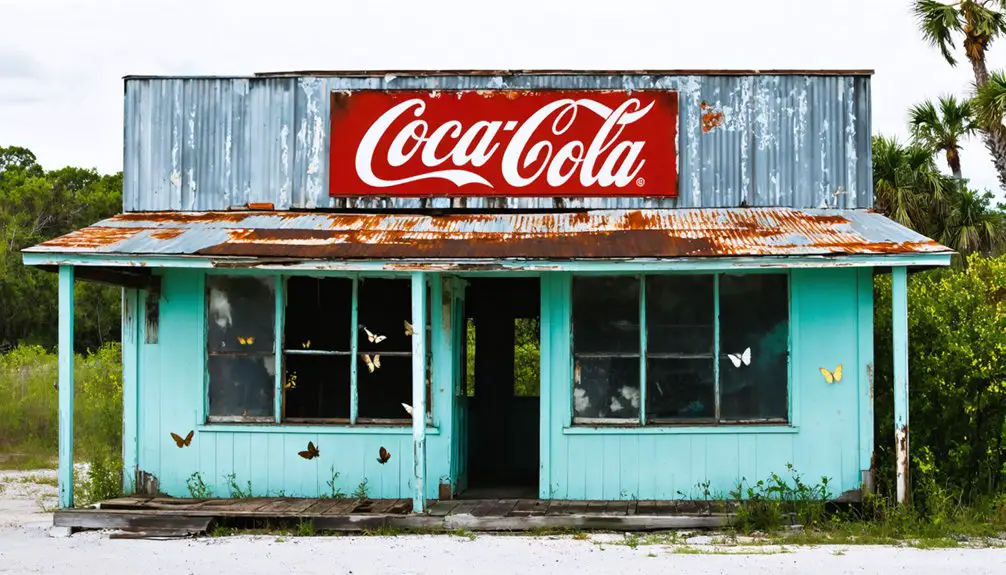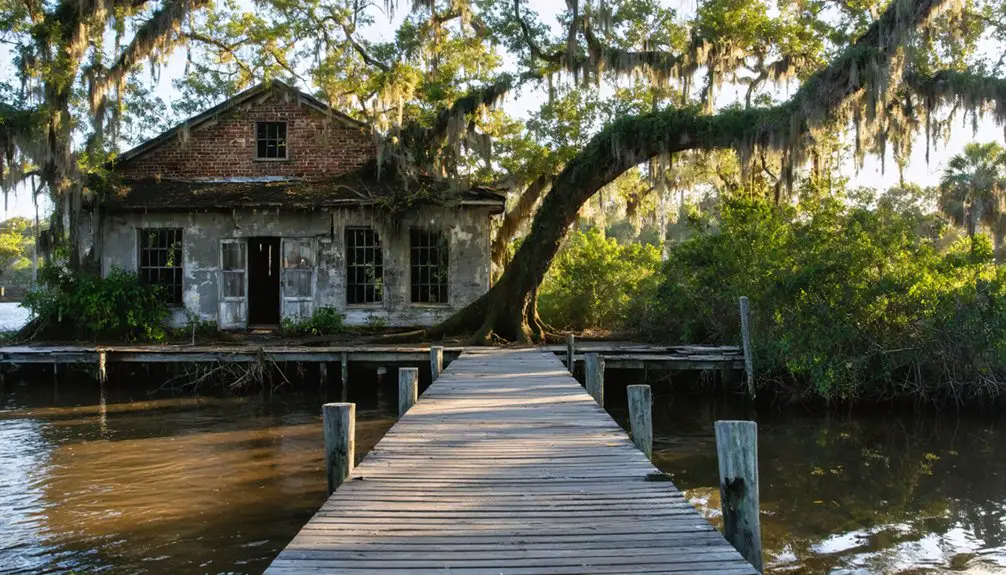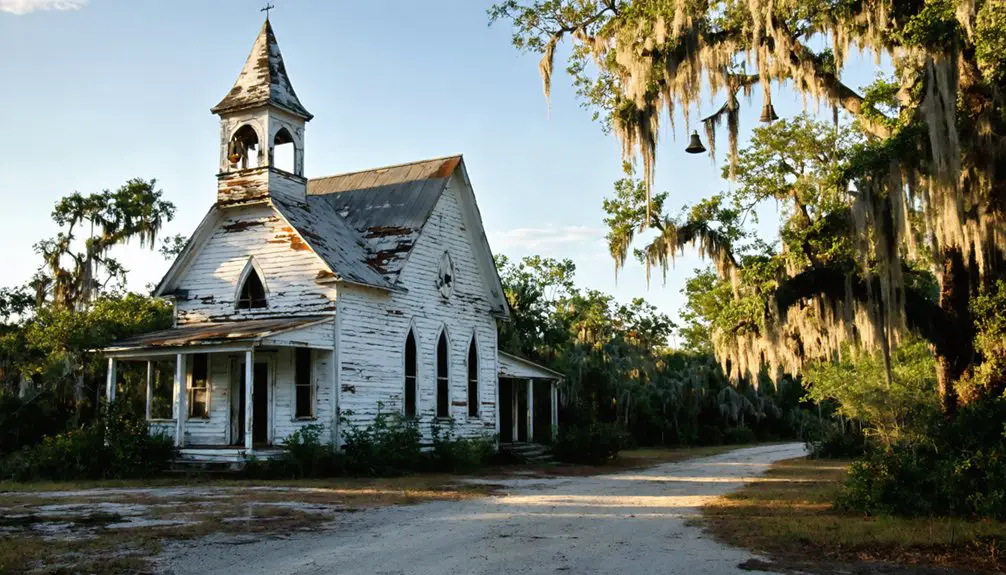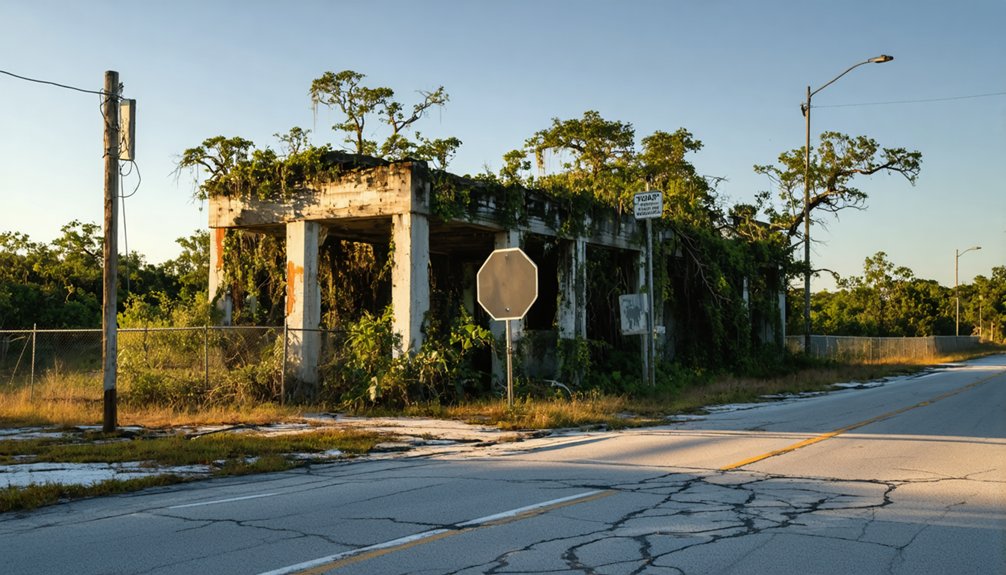
You’ll discover that Palma Sola isn’t quite a ghost town—it’s a living neighborhood where century-old cemetery stones, Spanish Revival mansions from the 1920s land boom, and weekend kayakers occupy the same waterfront streets where 962 pioneers once ran Florida’s most ambitious sawmill operation. Take I-75 Exit 220B to Manatee Avenue West, then follow Palma Sola Scenic Highway past the historic church and cemetery before exploring DeSoto National Memorial and the antebellum Gamble Plantation nearby. The full story of this fascinating settlement awaits your exploration.
Key Takeaways
- Access Palma Sola via I-75 Exit 220B to State Road 64, then follow Palma Sola Scenic Highway through the historic district.
- Visit Palma Sola Community Church and cemetery to see the settlement’s oldest surviving structures and early resident graves.
- Explore 1920s Spanish-style estates and Mediterranean Revival architecture in the Palma Sola Park Historic District.
- Stop at DeSoto National Memorial and Gamble Plantation Historic State Park for broader regional historical context and guided tours.
- Park at Warner’s Bayou Boat Ramp or Palma Sola Park to access waterfront attractions, kayak rentals, and beach amenities.
The Rise and Fall of Florida’s Youngest Boomtown
But freedom from commercial constraints came with consequences. The financial decline of early tourism industry accelerated after a devastating sawmill fire.
Finding What’s Left of the Original Settlement
The physical footprint of Palma Sola’s original settlement clings to the landscape along 75th Street, where the Palma Sola Community Church rises as the settlement’s most substantial survivor.
This historic church preservation effort anchors your exploration of what remains from the 1880s boomtown. Behind it, the cemetery holds graves of Warner family members and New England migrants who chased opportunity to this sawmill town. Cemetery archival research reveals 962 residents once thrived here before the 1886 mill fire ended prosperity.
You’ll find minimal traces at McNeill Point’s former sawmill site and general store foundations. Take State Road 64 west, then north on 75th Street, where Warner’s original homestead plat meets modern Bradenton’s edge, preserving fragments of frontier ambition.
Key Historical Sites You Can Still Visit Today
Beyond Palma Sola’s vanished sawmill core, you’ll discover a constellation of historical sites that illuminate centuries of Gulf Coast settlement. DeSoto National Memorial marks where Spanish exploration began reshaping Native American lands in 1539.
Four centuries of coastal history radiate outward from a single sawmill site that time erased but memory preserved.
Gamble Plantation Historic State Park stands as South Florida’s last antebellum plantation house, revealing agricultural shifts that once dominated this coastal region.
The Florida Maritime Museum and Historic Cortez Fishing Village document how commercial fishing families built their livelihoods when family business declines forced adaptation. You’ll walk actual docks where generations still work the Gulf waters.
Palma Sola Botanical Park preserves the 1993 transformation of county nursery grounds into community space—a living record to citizens reclaiming abandoned agricultural land. Each location offers unrestricted exploration of Florida’s layered past.
Exploring the 1920s Palma Sola Park Historic District
You’ll discover the heart of Palma Sola’s golden age along the winding streets south of Manatee Avenue, where Spanish-style manors from the 1920s land boom still command their landscaped grounds. The stately homes showcase barrel-tile roofs and stucco facades that’ve weathered nearly a century of Gulf Coast storms, their Mediterranean Revival architecture frozen in time from Florida’s most optimistic era.
Start your walking tour near Palma Sola Boulevard, where each block reveals another layer of the district’s architectural story—from original 1920s estates to the Old Florida cottages that fill the spaces between.
Stately 1920s Mansion Architecture
Magnificent Spanish Colonial manors line the tree-shaded streets of Palma Sola Park, their stucco facades and barrel-tile roofs standing as tributes to 1920s architectural ambition. You’ll discover authentic period homes built by pioneering residents, including one commissioned by Thomas Edison’s secretary. These Mediterranean-inspired estates showcase stucco exterior finishes designed to withstand Florida’s demanding climate while maintaining their timeless elegance.
As you wander the winding streets, you’ll spot Victorian influences blending with Spanish Colonial revival vocabulary. Palm trees descended from Edison estate seedlings frame these architectural treasures, while contemporary waterfront mansions occupy premium parcels along the bay. One historic property operated as a finishing school for young ladies before its residential conversion, adding intrigue to your exploration of this remarkably preserved planned community.
Historic District Walking Routes
While most Florida parks close their gates at sunset, Palma Sola welcomes explorers from 8 AM until dusk, giving you ample daylight to traverse its 0.4-mile botanical loop and connecting pathways.
You’ll enter through the archway at 9800 17th Avenue NW, where Palm Alley’s royal palms lead toward interesting architectural details at the main pavilion and Galleria. Your route winds past the Butterfly Garden, gazebo, and bromeliad collection before the Shellrock Rare Fruit Trail extends south into tropical groves.
Cross the bridge to natural pond paths, discovering seasonal flora and fauna through Serenity Garden and Succulent Garden. The wheelchair-accessible circuit loops through thematic collections—showy hibiscus, Shade Garden, Tropical House, Herb Garden, and Children’s Maze—offering unrestricted rambling across grassy areas with your leashed companion.
You’ll find your gateway to this forgotten settlement along State Road 64, the scenic Manatee Avenue West that winds 4.5 miles through Bradenton’s waterfront corridor.
Turn north onto 75th Street and watch for community signage directing you toward Old Palma Sola’s tucked-away neighborhoods, where 1920s-era homes still stand along tree-canopied streets.
For the historic district centerpiece, take Palma Sola Boulevard south from SR 64 to reach the park where preserved residences whisper stories of the original settlers.
Primary Access via SR 64
Reaching Palma Sola starts with State Road 64, a sun-drenched ribbon of asphalt that stretches from the Gulf of Mexico to Florida’s interior heartland. You’ll find freedom on this designated scenic highway, where six miles of causeway connect mainland to island paradise.
Your journey unfolds through three key segments:
- I-75 Access – Exit 220B launches you westward, approximately 10 miles of open road ahead
- Mainland Traverse – Roll through Bradenton’s historic streets, passing US 41 and SR 70 intersections
- Palma Sola Scenic Highway – Beginning at 75th Street West, this coastal stretch delivers panoramic bay views
Water sports availability beckons from every turnout—fishing, sailing, jet skiing await. Scenic highway amenities include strategically placed parks and picnic areas. Your GPS becomes secondary; simply follow the glittering water toward adventure.
Historic District Landmarks Route
The Palma Sola Historic District reveals itself through weathered brick facades and 1920s architecture that frame northwest Bradenton’s oldest neighborhood. You’ll navigate streets where Manatee County’s first settlers carved out lives in the late 1800s, passing preserved pioneer homes that stand as silent witnesses to Florida’s frontier days.
Your route winds through ten acres of what once served as the county nursery, now transformed into botanical gardens at 9800 17th Ave NW. These historic landmarks connect you to the Timucuan Indians and Spanish Conquistadors who preceded the pioneers. Ancient oaks draped in Spanish moss arch over sandy trails, while the former Palma Sola Hotel site marks where travelers once sought respite.
Each structure tells stories of cultural crossroads and untamed beginnings.
Nearby Parking and Amenities
Access to Palma Sola’s ghostly remnants begins along State Road 64 (Manatee Avenue West), where you’ll drive 4.5 miles through Bradenton’s evolving landscape toward the Gulf coast. Turn north at 75th Street following signs to the original community, where street parking serves the historic church and cemetery.
Essential parking locations include:
- Warner’s Bayou Boat Ramp at 5900 Riverview Boulevard—park near the historical marker and launch point
- Palma Sola Park facilities—gateway to 1920s-1930s historic homes preservation efforts
- Causeway Park access—dog friendly beach amenities with swimming areas
Robinson Preserve nearby offers kayak rentals for waterway exploration. The bicycle-pedestrian sidewalk along Route 64’s north side connects these sites, letting you roam freely between remnants of Old Florida’s untouched waterways and vanished general stores.
Nearby Historical Destinations Worth Adding to Your Trip
While Palma Sola’s enigmatic ruins captivate ghost town enthusiasts, Bradenton’s surrounding area harbors a treasure trove of historical sites that transport you through centuries of Florida’s past.
Start your county wide historical exploration at Manatee Village Historical Park, where restored 1800s buildings reveal pioneer life through authentic structures and artifacts—completely free. Venture to De Soto National Memorial‘s 26 acres marking Hernando de Soto’s 1539 landing, where living history demonstrations bring Spanish exploration to life.
Step into Florida’s pioneer past where authentic 1800s structures and Spanish exploration sites await your discovery—admission free.
Gamble Plantation Historic State Park showcases South Florida’s last surviving antebellum mansion, offering guided tours through Civil War-era narratives.
For nearby historical sights beyond conventional museums, wander Old Manatee Historic District‘s self-guided paths among century-old buildings and pioneer burial grounds. These destinations create an immersive historical journey, letting you explore Florida’s layered past on your terms.
Best Time to Visit and What to Bring
Planning your Palma Sola ghost town adventure means timing your visit when Florida’s weather becomes your ally rather than adversary. November through January delivers suitable weather conditions with comfortable 68-77°F temperatures and less humidity than summer’s oppressive peaks. You’ll escape the 89°F scorchers and afternoon thunderstorms that plague warmer months.
As you continue your journey, consider exploring ghost towns near Gardner, where remnants of the past offer a unique glimpse into Florida’s history. These intriguing locations allow for a fascinating blend of exploration and relaxation amidst the scenic backdrops. Each town has its own story, waiting to be uncovered as you wander through the remains.
Your ideal packing essentials include:
- Sun protection gear – UV index 5 demands quality sunscreen and wide-brimmed hats for extended exploration
- Lightweight rain jacket – 70% precipitation probability means sudden showers can interrupt your ghost town wanderings
- Sturdy walking shoes – traversing historical remnants and Robinson Preserve’s trails requires reliable footwear
Pack water bottles for hydration and insect repellent for brushy areas. Winter’s mild temperatures create perfect conditions for unrestricted exploration without weather constraints limiting your freedom.
Frequently Asked Questions
Are There Any Restaurants or Facilities Near the Historic Palma Sola Sites?
You’ll find excellent food options within miles of historic Palma Sola, from waterfront seafood at Beach House to Italian fare at Isola Bella. Public amenities include nearby Palma Sola Botanical Park’s peaceful trails and over 70 independent local restaurants awaiting exploration.
How Long Should I Plan to Spend Exploring the Palma Sola Area?
You’ll lose entire days wandering through local community history and nearby attractions—but realistically, plan 2-4 hours for causeway beaches and botanical gardens, or extend to a full day exploring preserves, kayaking, and discovering this freedom-filled coastal paradise.
Is the Old Cemetery Open to Public Visits Year-Round?
You’ll find the historic Palma Sola Cemetery welcomes visitors year-round without restrictions. There’s no locked gate limiting public accessibility, and visiting hours aren’t posted—you’re free to explore this 1886 burial ground whenever you arrive.
Can I Access the Original Wooden Bridge Remnants to Perico Island?
Like whispers from the past, you’ll spot old wood pilings from the roadside, though limited public access and private property concerns keep you from wandering closer. You can photograph these weathered sentinels from the causeway’s north edge safely.
Are Guided Historical Tours Available for the Palma Sola Community?
No dedicated guided historical tours exist specifically for Palma Sola community. You’ll find private guided tours at nearby Manatee Village Historical Park instead, where docents lead community history discussions about pioneer life through authentic 19th-century structures and settlements.