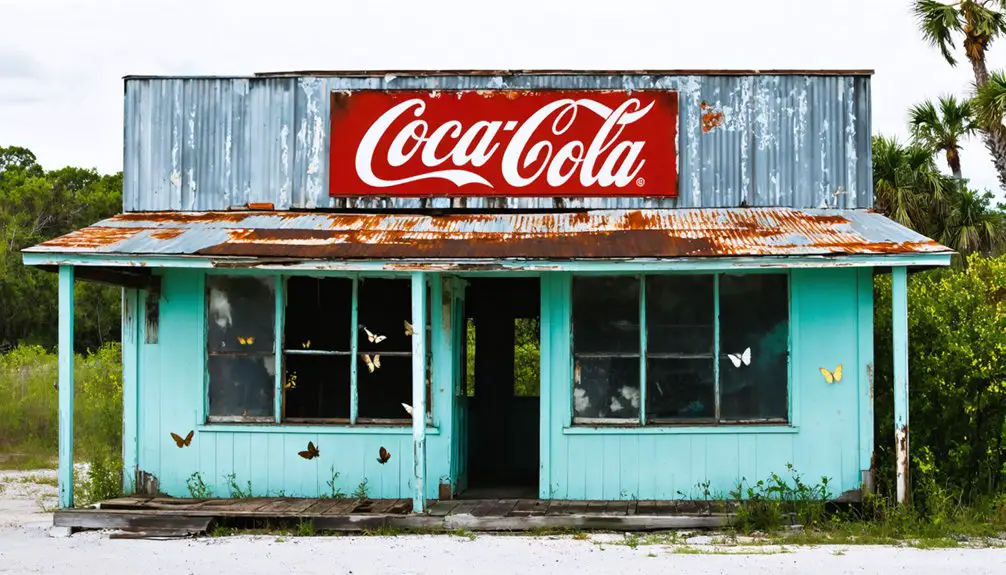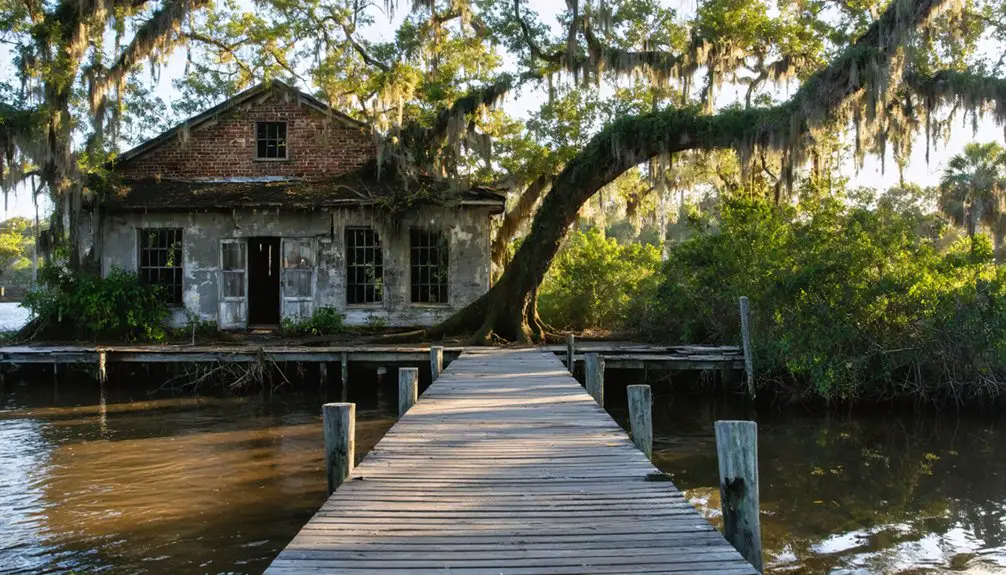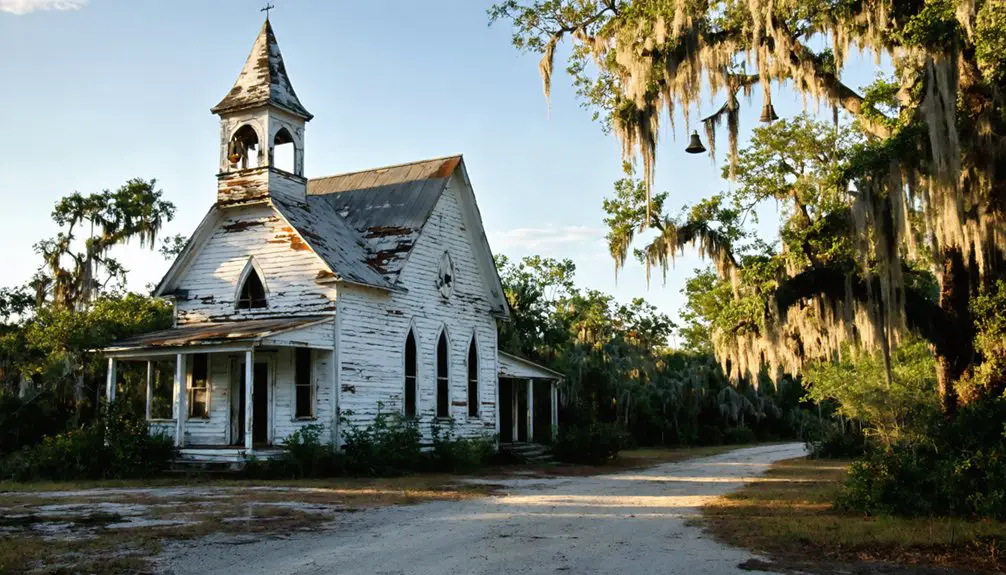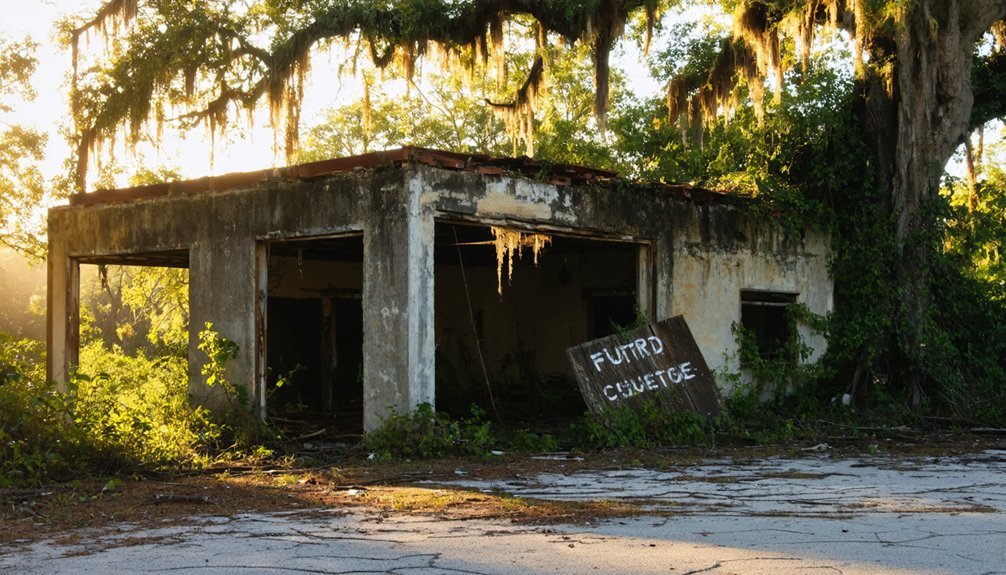
Planning a ghost town road trip to Pittman, Florida means trading modern conveniences for raw historical discovery near Lake Dorr in central Florida. You’ll want topographic maps instead of GPS, since county roads here demand local landmark knowledge. Once a thriving company town from 1910 to 1922, Pittman’s timber-driven economy collapsed and nature quietly swallowed what remained. Cracked foundations and ground depressions are all that’s left — and there’s far more to this forgotten place than first meets the eye.
Key Takeaways
- Pittman, Florida, was a company town from 1910 to 1922, founded near Lake Dorr, now abandoned with only foundations and ground depressions remaining.
- Use Lake Dorr as your primary navigation anchor, carry topographic maps, and reference local landmarks since GPS may fail in this area.
- Contact preservation authorities before visiting to confirm access permissions and understand any restrictions for exploring the protected site.
- Stay on established paths, document findings photographically, and avoid disturbing remnants to protect the site’s archaeological and historical significance.
- The site carries Creek War history from 1836 to 1837, adding military significance that enriches the overall ghost town exploration experience.
What’s Left of Pittman, Florida’s Vanished Company Town?
Where a bustling company town once stood, nature has quietly reclaimed nearly everything. Walking through Pittman today, you’ll find only scattered traces of what thrived between 1910 and 1922.
Economic decline hit hard, and once the timber industry collapsed and agricultural profits dried up, residents simply moved on.
When the timber dried up and the crops stopped paying, there was nothing left to stay for.
Pittman Heritage now lives in fragments — subtle ground depressions, deteriorating foundations, and the surrounding landscape that once supported a functioning frontier community. The site carries protected status, meaning you can explore without worrying about development erasing what little remains.
Lake Dorr serves as your primary geographic anchor when exploring the area. Nature’s gradual reclamation makes structural identification challenging, but that raw, unpolished atmosphere is precisely what draws freedom-seeking travelers to places like this.
How Pittman Went From Frontier Outpost to Overgrown Ruins
George T. Pittman carved this settlement out of raw Florida wilderness in 1883, building something real from nothing near Lake Dorr.
Frontier Life here meant relying on basic commerce, neighbor networks, and whatever the land offered. Murray Thomas ran the first store, anchoring the community’s early economy.
But freedom built on extractive industries is fragile. Economic shifts hit hard after 1920, when timber resources dwindled and Florida’s development momentum pushed south and east.
Company towns like Pittman couldn’t survive when the resource dried up. By 1922, residents had scattered, leaving structures to the vines and soil.
What took decades to build unraveled fast.
Today, nature has nearly finished reclaiming what settlers started, transforming a once-active frontier outpost into quiet, overgrown ruins tucked inside a protected preserve.
The Creek War History That Runs Through Pittman’s Past
Before George Pittman ever staked his claim near Lake Dorr, this stretch of Florida ground witnessed a darker chapter when Jackson County militia marched through Pittman Ferry during the Creek War of 1836-1837, bivouacking there as they pursued Creek warriors westward.
You’ll find the human cost of that conflict written into the local landscape, where the Alberson family — early settlers who called this area home — suffered a devastating attack by Creek warriors that left a permanent mark on the community’s memory.
That memory endures in the name Alberson Reach on the nearby Choctawhatchee River, a quiet geographic reminder that the land beneath Pittman’s ghost town roots was already soaked in the struggles of those who came before.
Creek War Military Operations
Though the town of Pittman carries the name of a 19th-century Kentucky transplant, the land beneath it holds a far older and bloodier story.
Historical accounts from 1836-1837 reveal that Jackson County militia forces marched from Marianna through Campbellton before pushing west toward Pittman Ferry. Their military strategies brought them directly through this territory during Florida’s phase of the Creek War. Soldiers bivouacked here, resting before continuing operations against Creek warriors. The land you’re standing on absorbed the weight of those encampments.
The Alberson family, early settlers nearby, suffered a direct Creek warrior attack, and the Choctawhatchee River still carries their name through Alberson Reach. That waterway quietly honors people who fought to hold their ground on this untamed frontier.
Alberson Family Settler Attack
The Alberson family’s story cuts deeper than most frontier tales you’ll encounter along this stretch of Florida history. Creek warriors attacked this early settler family near the community, leaving wounds that rippled through the entire region.
The Creek warriors’ impact wasn’t simply military — it reshaped how settlers understood survival in this untamed landscape.
Yet the Alberson family’s resilience transformed tragedy into legacy. Their name lives on through Alberson Reach on the Choctawhatchee River, a quiet geographical reminder that early families paid steep prices for the freedoms future generations inherited.
When you trace this road trip route near Pittman, you’re traveling ground where ordinary people faced extraordinary violence and chose to stay anyway. That stubborn persistence defines everything worth remembering about this corner of Florida.
How to Find Pittman Near Lake Dorr
You’ll find the ghost town of Pittman tucked near Lake Dorr in central Florida, where the surrounding landscape serves as your primary geographic anchor when modern maps fall short.
County roads threading through the area will guide you close to the site, though you’ll want to cross-reference local landmarks since little remains to signal you’ve arrived.
Because Pittman now sits within a protected area, you should coordinate access with the managing preservation authorities before you show up expecting open exploration.
Lake Dorr Location Overview
Nestled in central Florida’s lake-dotted landscape, Lake Dorr serves as your primary landmark when searching for the ghost town of Pittman. Its geographic features anchor your navigation through this quiet, forgotten corner of Florida’s history.
Use these four reference points when orienting yourself:
- Lake Dorr’s shoreline marks the original settlement boundary
- Central Florida’s highway system connects you to the surrounding region
- Marion and Lake County borders define the general search area
- Protected preserve boundaries indicate where Pittman’s remnants rest
George T. Pittman chose this lake-rich territory deliberately when he migrated from Kentucky in 1883.
Today, those same waters still shimmer through the trees, whispering stories of a community that once thrived here and quietly disappeared, leaving only nature’s reclamation behind.
Nearby Landmarks And Roads
Finding Pittman requires reading the land like the settlers once did, using a handful of reliable anchors that still stand today.
Lake Dorr serves as your primary landmark significance reference, sitting close enough to orient you without demanding precision GPS coordinates. State Road 19 cuts through this stretch of Ocala National Forest, giving your road trip routes a concrete spine to follow northward.
You’ll notice the forest thickening as pavement gives way to quieter ground.
Watch for Lake Dorr Road branching off toward the water, and you’re fundamentally standing where George Pittman once carved out civilization. The surrounding forest roads feel intentionally unhurried, rewarding drivers who slow down and pay attention.
That instinct, trusting the land itself, is exactly what brought settlers here in 1883.
Reaching Pittman means accepting that the town won’t announce itself the way living communities do. Lake Dorr serves as your anchor point for navigation.
Before exploring, respect the visitor guidelines governing this protected land:
- Confirm current access permissions with preservation authorities managing the site
- Bring topographic maps since digital navigation often fails in remote areas
- Document findings photographically rather than disturbing ground with archaeological significance
- Stay on established paths to protect fragile subsurface historical remnants
The forest has reclaimed nearly everything here.
What remains beneath the soil carries genuine archaeological significance, connecting you to settlers who carved lives from raw Florida wilderness.
You’re not visiting ruins — you’re standing inside a disappeared world that still breathes quietly beneath the palmettos.
What Survives at the Site: and What Nature Has Taken Back
Walking into what remains of Pittman today, you’re stepping into a place where the forest has nearly finished its work of erasure. Nature reclamation has been relentless here — roots crack foundations, vines consume walls, and canopy shade prevents anything man-made from holding its shape for long.
The forest has nearly finished its work here — roots, vines, and shadow erasing everything humanity left behind.
You’ll find structural remnants if you look carefully, but they demand patience. Scattered traces of the town’s commercial infrastructure peek through undergrowth, hinting at the community that once functioned here between roughly 1910 and 1922.
The land doesn’t announce its history; it quietly holds it beneath layers of leaf litter and moss. What nature has taken back, it keeps.
Come prepared to read the landscape slowly, and you’ll leave with a genuine sense of how completely time transforms even the most determined human settlements.
Why Pittman Fits a Pattern of Florida Ghost Towns That Vanished Overnight
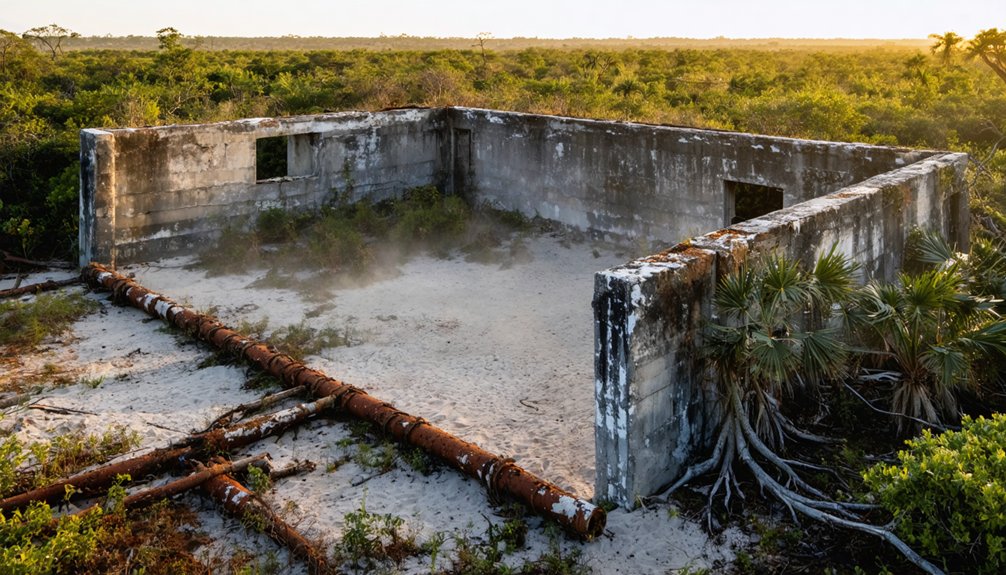
Pittman didn’t vanish in isolation — it dissolved the same way dozens of Florida settlements did, following a pattern so consistent it reads almost like a script. Understanding that regional context deepens your visitor experience considerably.
Ghost towns across Marion, Lake, and Sumter counties share Pittman’s DNA:
- Resource extraction built the community infrastructure
- Economic decline followed resource depletion
- Natural reclamation erased structural evidence
- Archaeological evidence became all that remained
Settlement patterns across northern Florida repeated this cycle relentlessly after the 1920s.
What makes Pittman different is its layered historical significance — military history from the Creek War predates the ghost town itself, giving the site unusual depth.
You’re not just standing where commerce collapsed; you’re standing where Florida’s entire frontier story played out across centuries.
Frequently Asked Questions
Can Visitors Legally Access the Protected Pittman Site Independently?
You’ll need to coordinate with preservation authorities before you independently explore Pittman’s protected grounds. Check visitor guidelines carefully, as access restrictions protect these nostalgic remnants of Florida’s frontier past while honoring your freedom to discover history responsibly.
Are Guided Tours Available for Exploring the Pittman Ghost Town?
No formal guided exploration options exist for Pittman’s ghost town history, but you’ll find that coordinating with preservation authorities managing the protected site can gain access to this hauntingly beautiful, nature-reclaimed piece of Florida’s forgotten past.
What Nearby Amenities Exist for Road Trippers Visiting the Pittman Area?
You’ll find limited gas stations and dining options near Pittman, but that’s part of the charm. The unspoiled area around Lake Dorr keeps the wild, free-spirited atmosphere alive, perfectly suiting your adventurous road-tripping soul.
Is Photography Permitted at the Protected Pittman Historical Site?
Before you jump the gun, check with preservation authorities about photography tips, as Pittman’s protected status may have specific rules. Capturing its historical significance lets you embrace freedom while honoring this hauntingly nostalgic, nature-reclaimed Florida ghost town.
What Is the Best Season to Visit Pittman for Optimal Exploration Conditions?
You’ll find the best weather for exploring Pittman’s ghostly traces in fall or winter, when Florida’s heat retreats. These cooler months let you wander freely, uncovering seasonal events of history etched into nature’s quiet, reclaimed landscape.
References
- https://www.smithsonianmag.com/history/how-history-forgot-rosewood-a-black-town-razed-by-a-white-mob-180981385/
- https://www.emeraldcoastmagazine.com/ghost-towns-of-west-florida/
- https://www.journaloffloridastudies.org/0102ghosttowns.html
- https://www.youtube.com/watch?v=zKzjDvVjvHc
- https://www.youtube.com/watch?v=RJ3Dtb42tJA
- https://www.ghosttowns.com/states/fl/pittman.html
- https://en.wikipedia.org/wiki/List_of_ghost_towns_in_Florida
- https://floridatrailblazer.com/category/ghost-towns/