You’ll find Port William at coordinates 39.45°N, 95.38°W via US Highway 73 and gravel roads near Atchison, though nothing remains except scattered artifacts from the 1860s Kansas Pacific Railway town. Plan your visit for spring or fall when conditions are ideal, and bring GPS devices since cell service vanishes miles before arrival. Pack offline maps, first aid supplies, and weatherproof gear for traversing muddy township roads. The sections ahead reveal the best ghost towns to explore nearby and essential photography techniques.
Key Takeaways
- Access Port William via US Highway 73 and gravel roads near coordinates 39.45°N, 95.38°W, requiring offline maps due to no cell service.
- Visit during spring (April-May) or fall (September-October) for mild weather and better road conditions than winter’s snow and ice.
- Bring GPS, compass, waterproof maps, first aid kit, camera, and camping gear as no structures or facilities remain at the site.
- Expect only scattered artifacts like rusted nails and glass fragments; no buildings, streets, or railroad infrastructure survive today.
- Plan for challenging rural roads that become muddy after rain, with washboard gravel surfaces replacing pavement near the ghost town.
The History of Port William’s Railroad Legacy
While the iron rails that once breathed life into Port William have long since vanished, the town’s story remains inseparably linked to Kansas’s railroad fever of the 1860s.
Port William’s destiny rose and fell with the railroad, its vanished tracks marking the brief fever dream of Kansas’s frontier expansion.
You’ll find this ghost town’s origins tied to the Kansas Pacific Railway‘s ambitious westward push from Kansas City starting in 1863. As the line extended toward Junction City by 1866, Port William emerged as a supply point along the route.
The railroad infrastructure that defined these prairie settlements included roundhouses, water towers, and depot facilities essential for freight operations. Buffalo Bill Cody himself supplied meat to track crews building through this region.
When Congress granted vast land parcels to homesteaders along the mainline, Port William briefly thrived before being bypassed and forgotten—a fate common among Kansas’s railroad towns.
What Remains of Port William Today
When you arrive at the former site of Port William, you’ll find nothing but wheat fields stretching across the landscape where the town once stood. The settlement has vanished completely—no buildings, streets, or structural remnants mark where ferry passengers and settlers once gathered at this Missouri River crossing.
Today’s Port William exists only as farmland, with zero population and no visible traces of its brief four-year existence as an incorporated town.
Scattered Structures and Remnants
Today, Port William exists more as an echo than a destination. You’ll find empty fields where steamboats once docked and settlers gathered for Saturday brawls at William Johnson’s “Fort Williams” cabin. The post office that operated from 1856 to 1860 left no trace, and the famous ferry landing lies obscured beneath decades of Missouri River floods and vegetation.
Your search for buried structures reveals foundation mounds hidden by tree growth and scattered settler artifacts—rusted nails, glass fragments from sod buildings. Those original log cabins were abandoned and repurposed for cattle shelters before disappearing entirely. Even the later Missouri Pacific Railroad infrastructure eight miles from regional hubs has vanished, leaving you to interpret landscape contours and overgrown terrain where this once-notorious river crossing thrived.
Current Population Status
The physical landscape tells only half of Port William’s story—the population data completes its ghost town status. You won’t find Port William on Kansas population lists or census records. This absence speaks volumes—the town maintains zero official residents and lacks recognition as a populated entity. Unlike nearby Wamego’s 4,386 residents or the surrounding Pottawatomie Township’s 720 inhabitants, Port William exists in statistical limbo with unknown population data and minimal community records.
While Pottawatomie County grows at 1.36% annually, reaching 26,876 residents in 2024, Port William remains frozen in abandonment. The township surrounding this ghost town thrives with steady growth since 2010, but Port William itself holds no place in modern demographic tracking—a statistical ghost reflecting its physical reality.
Getting to Port William: Routes and Road Conditions
You’ll find Port William’s ghost town site most easily by heading south from Atchison on US Highway 73, a well-maintained two-lane route that cuts through the rolling farmland of Walnut Township.
After 8-12 miles, you’ll need to shift onto local gravel roads that branch eastward toward the original settlement coordinates near 39.45°N, 95.38°W. These rural township roads remain passable for most vehicles during dry conditions, though they’ll turn muddy and treacherous after Kansas rainstorms.
Primary Highway Access Points
Reaching this forgotten settlement in Atchison County requires traversing a network of modern highways that replaced the old river trails and railroad routes. Your journey begins with US-73, the primary north-south artery slicing through the county.
From there, K-116 offers east-west connectivity across rural landscapes where Port William once thrived near Walnut Township.
These closest highway access points funnel you toward increasingly remote terrain. US-73 intersects K-116 near Atchison, serving as your staging ground before venturing deeper into the countryside. Rural road connections branch off these paved routes, shifting to county-maintained surfaces that lead directly to the site’s coordinates.
You won’t find interstate convenience here—the nearest I-29 lies across the Missouri River. Instead, embrace secondary routes like K-7 from Leavenworth, where pavement eventually gives way to gravel beneath open skies.
Rural Road Conditions
After leaving paved highways behind, gravel surfaces become your constant companion on the approach to Port William’s historical footprint. These township roads wind through open prairie where undependable road maintenance means conditions vary dramatically between visits. You’ll navigate washboard surfaces that rattle your suspension and soft shoulders that demand attention during wet seasons.
Unpredictable weather conditions transform these routes quickly—spring thunderstorms create impassable mud, while summer heat bakes ruts into concrete-hard obstacles. Winter brings drifting snow that erases road boundaries entirely. You’ll want high clearance and all-weather tires as standard equipment.
Cell service disappears miles before arrival, so download offline maps and tell someone your route. This isolation defines ghost town exploration—challenging access preserving what development destroys.
Best Time to Visit Atchison County Ghost Towns
Since Port William stands abandoned year-round with no official tours or facilities, you’re free to explore this Kansas ghost town whenever you choose, though spring and fall offer the most comfortable conditions for wandering through overgrown foundations and forgotten streets.
Optimal visiting windows:
- April through May: Mild temperatures between 55-75°F make hiking comfortable, while spring wildflowers add color to deteriorating homesteads
- September through October: Seasonal weather patterns bring crisp air and vibrant foliage, creating atmospheric backdrops for photography without summer’s oppressive heat
- Winter visits: Possible but challenging—snow reveals structural outlines clearly, though icy roads and freezing conditions demand proper preparation
Regional tourism trends show minimal crowds year-round at Port William, unlike nearby Atchison’s bustling October ghost tours. You’ll likely have these haunting ruins entirely to yourself.
What to Bring on Your Ghost Town Expedition
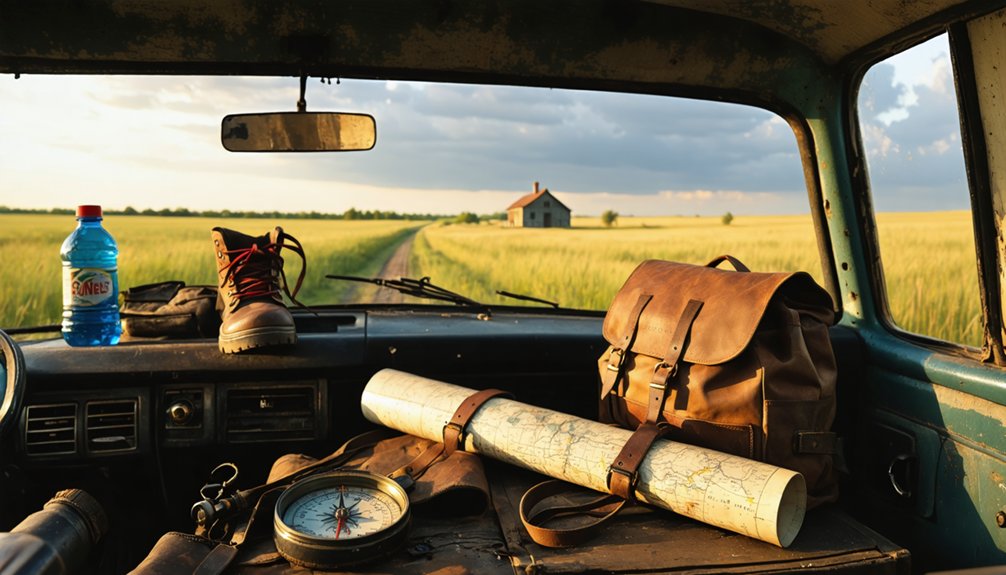
While Port William requires no backcountry camping, approaching this ghost town exploration essentials with proper gear transforms a casual visit into a safe, comfortable adventure. Pack a daypack with navigation tools—your GPS, compass, and waterproof map case—since overgrown trails can confuse even experienced explorers. You’ll need a headlamp with spare batteries for investigating shadowy structures, plus a first aid kit containing blister plasters and painkillers.
For recommended camping equipment if you’re extending your Atchison County exploration, bring quick-dry hiking clothes, wool socks, and a wide-brimmed hat. Water bottles, purification tablets, and a multi-tool prove essential. Don’t forget your camera, sunscreen, and insect repellent. A whistle attached to your pack provides emergency signaling in remote Kansas prairie country where cell service disappears.
Photography Tips for Capturing Abandoned Sites
Once you’ve gathered your exploration gear, you’ll want to capture Port William’s haunting beauty through your camera lens. Before shooting, secure owner authorization to respect private property boundaries—self preservation means avoiding legal troubles that could end your adventure prematurely.
Respect property lines and secure permissions before photographing—legal compliance ensures your exploration continues without unwanted complications or premature endings.
Master these essential techniques for compelling abandoned site photography:
- Work with natural light by shooting on sunny days when rays pierce broken windows, then use long exposures on your tripod to capture dim interiors without harsh flash
- Experiment with dramatic angles by positioning yourself low to the ground or shooting upward to emphasize emptiness and create disorienting perspectives
- Focus on weathered details like discarded books and rusted chairs that tell Port William’s forgotten story
Leave everything undisturbed—crookedness and dust preserve the authentic narrative for future photographers.
Other Extinct Towns to Explore in Atchison County
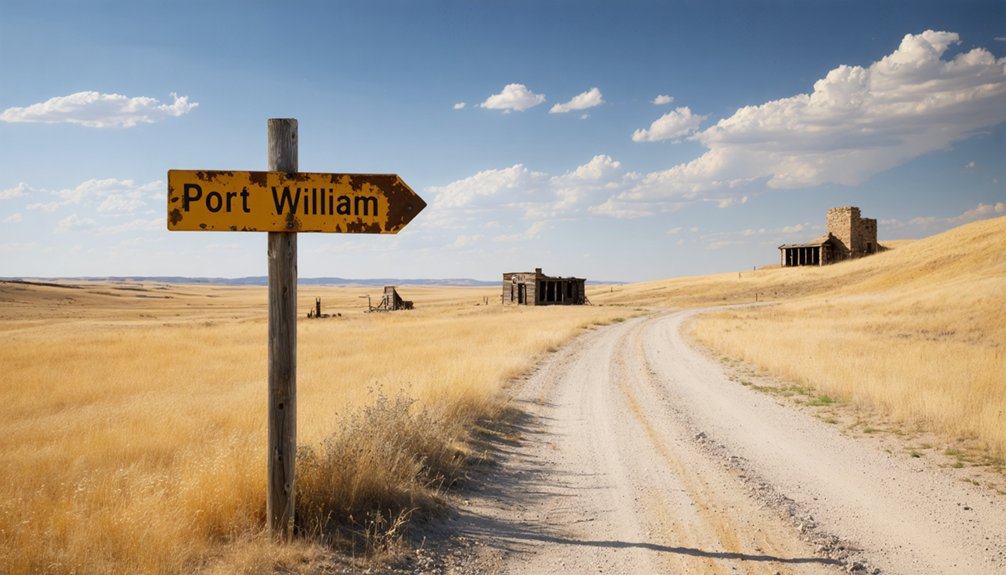
Port William isn’t the only settlement that vanished from Atchison County’s prairie landscape—several neighboring towns met similar fates, each with its own tragic story of ambition and abandonment.
Sumner once rivaled Atchison itself before drought, a devastating 1860 cyclone, and grasshopper plagues erased it completely. Today, you’ll find only briers and cottonwoods where houses once stood.
Lancaster, among the towns founded in 1850s, appeared in promotional newspapers alongside Lawrence and Lecompton but left minimal historical trace.
Pardee Butler’s legacy in Atchison County lives on through the village bearing his name—platted in 1857 by James Brewer. Pardee killed off neighboring Ocena, though neither achieved lasting success.
Arrington operated its post office until 1973; now just a roadside sign marks its existence. Each location offers glimpses into frontier dreams that couldn’t survive Kansas’s harsh realities.
Extending Your Journey: Nearby Kansas Ghost Towns
Your exploration of Atchison County’s vanished settlements can expand into a broader Kansas ghost town adventure, with dozens of abandoned communities scattered across the state’s prairie counties. The freedom of the open road leads you through Kansas prairie landscapes where entire towns vanished, leaving only stone markers and nearby pioneer cemeteries as evidence/memorial/record/testament/reminder of their existence.
Consider these destinations for your extended journey:
- Harper County: Visit Runny Meade’s poignant stone marker reading “We had a good time while it lasted,” fifty miles southwest of Wichita
- Sumner County: Start at Milan for ghost town tours featuring Perth’s railroad ruins and Hunnewell’s flood-devastated remains
- Ellis County: Explore Rome, which boomed to 2,000 residents in 1867 before disappearing completely
Each site offers authentic frontier history without modern constraints.
Respecting Historic Sites and Private Property
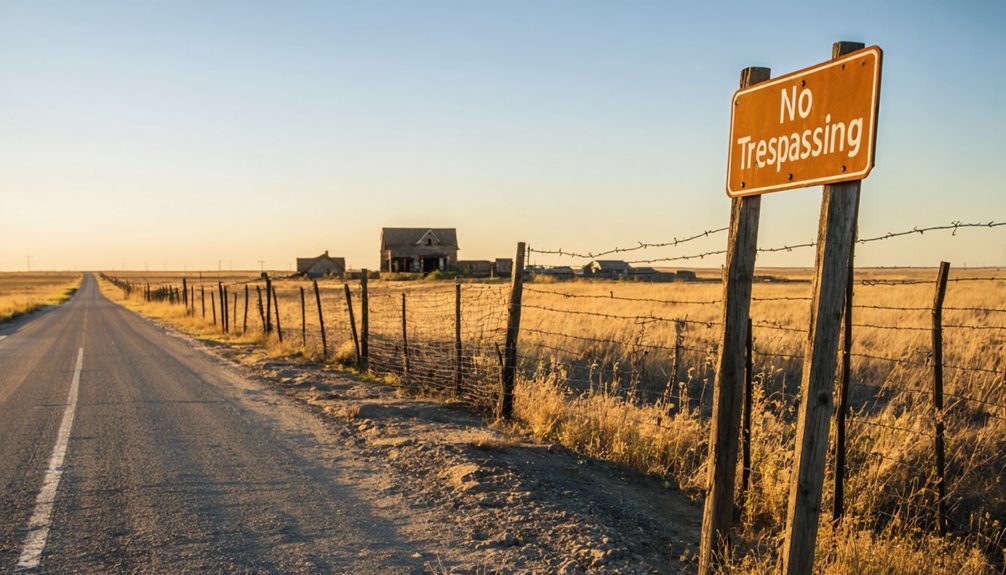
While exploring abandoned settlements across Kansas prairie, you’ll find that many ghost town sites sit on private land where property rights demand your careful attention. Before venturing onto any property, respecting the boundaries of private property safeguards both you and these fragile historic remnants.
Always research land ownership through county records or local historical societies. Obtaining necessary permission from current landowners isn’t just courteous—it’s legally required and often opens doors to insider knowledge about the site’s history.
When you do gain access, tread lightly. Don’t remove artifacts, disturb structures, or leave trash behind. These crumbling foundations and weathered markers represent real communities and real lives. Your respectful exploration guarantees future adventurers can experience the same haunting beauty of Kansas’s forgotten towns.
Frequently Asked Questions
Are There Any Guided Tours Available for Port William and Surrounding Ghost Towns?
No guided tours exist for Port William’s haunted grounds—you’re free to explore independently. Check local tourism information for self-guided routes through Kansas’s 64 ghost towns, where guided tours availability remains nonexistent. Your adventure, your rules.
Can I Camp Overnight Near Port William or in Atchison County?
No designated campgrounds exist in Port William or Atchison County. You’ll need to explore local camping options in distant counties like Ellis or Butler, where you’ll also find nearby hiking trails and primitive sites for your adventure.
What Wildlife or Safety Hazards Should I Expect in Abandoned Town Areas?
You’ll face potential animal encounters with nocturnal rodents carrying hantavirus and rabies-prone wildlife. Debris and unstable structures like crumbling sidewalks and dead trees create falling hazards. Avoid mosquito-heavy areas, don’t disturb droppings, and stay alert while exploring freely.
Are There Any Museums or Visitor Centers Covering Port William’s History?
No dedicated museums exist for Port William’s history. However, you’ll find historical exhibits and cultural heritage preservation efforts at nearby Lansing Historical Society and Museum, which documents local Atchison-area communities including extinct towns.
Do I Need Special Permits to Explore Ghost Town Sites in Kansas?
You’ll need to obtain landowner permission before exploring most ghost town sites, as they’re typically on private property. Respect private property rights by securing written consent first. Public lands may require permits, so check local regulations beforehand.