You’ll find Prairie City’s California Historical Landmark #464 at 1937 Prairie City Road in Folsom, just 500 feet north of Highway 50. This vanished Gold Rush boomtown that exploded to 1,500 residents in 1853 now lies beneath the Prairie Oaks subdivision, with scattered river rocks marking where fortune-seekers once crowded 15 stores and 10 hotels. Visit during spring or fall to explore the marker and nearby Folsom Lake State Recreation Area’s 95 miles of trails, discovering what secrets still remain beneath this transformed landscape.
Key Takeaways
- Prairie City is located at 1937 Prairie City Road in Folsom, 500 feet north of Highway 50 on the east side.
- Visit California Historical Landmark #464 with its 2025 replacement plaque commemorating the 1853 Gold Rush boomtown of 1,500 fortune-seekers.
- Little remains visible today except scattered river rocks; no foundations or structures survive from the original settlement.
- Mormon Island Relocation Cemetery nearby holds twelve relocated pioneers discovered during 1996-1997 highway construction projects.
- Plan visits during spring, fall, or mild summer days; combine with Folsom Lake Recreation Area, Zoo Sanctuary, and Old Folsom District.
The Rise and Fall of a California Gold Rush Boomtown
When gold fever swept through California’s foothills in 1853, Prairie City erupted from bare earth to bustling boomtown in a matter of weeks. You’d have witnessed 1,500 fortune-seekers staking claims along the American River, their canvas tents and frame houses sprawling across virgin prairie. Fifteen stores, ten hotels, and daily stage lines supported miners chasing glittering deposits just beneath their boots.
But freedom’s price came steep. The environmental impacts of mining scarred the landscape—water ditches carved through hillsides, hydraulic operations tearing at riverbanks. Hydraulic mining, invented in 1853, transformed how miners extracted gold from exhausted claims. By 1854, the placer gold vanished, and local economy challenges forced families to abandon their dreams. The post office shuttered in 1866. Within two decades, Prairie City became what you’ll find today: silent foundations buried under river rock, commemorated only by a historical marker.
Today, you’ll find the site marked by a California State Historical Landmark plaque on the east side of Prairie City Road, 500 feet north of State Highway 50, though nothing remains of the original settlement.
What Remains of Prairie City Today
If you drive east along Prairie City Road today, you’ll find nothing but scattered river rocks and a historical marker standing sentinel over ground that swallowed an entire town. The newly restored plaque—installed after thieves stole the 1950 original—marks California Historical Landmark #464, but there’s precious little else to see.
River rocks from early 1900s gold dredging blanket where buildings once stood. Limited archaeological excavations have occurred, mostly when construction crews accidentally unearthed twelve bodies during the 1997 freeway off-ramp project. The lack of town remains is absolute—no foundations, no structures, nothing vertical breaking the horizon.
Just undeveloped land stretching south of US 50, holding its secrets beneath Prairie Oaks subdivision and the untouched earth beyond. The marker sits on Prairie City Road in front of Folsom High School, commemorating a settlement that completely vanished. Yet this vanished settlement once boasted a peak population exceeding 1,000 residents during its Gold Rush heyday.
Finding the California Historical Landmark #464
California Historical Landmark #464 stands at 1937 Prairie City Road in Folsom, positioned 500 feet north of Highway 50 on the road’s east side. You’ll discover the bronze marker commemorating this ghost town’s historical significance, though it’s not the original plaque dedicated in 1950 by the California Centennials Commission. That marker vanished in 2022, highlighting preservation challenges facing remote historical sites.
The replacement plaque you’ll see today was installed December 13, 2025, through efforts by the California Landmark Foundation partnering with Native Daughters and Sons of the Golden West. Standing before this marker, you’re witnessing where 1,500 gold seekers once bustled through fifteen stores and ten boarding houses. Prairie City was established in July 1853 as a mining town and center of trade during California’s gold rush days. The town operated two daily stage lines, connecting miners and merchants to surrounding communities. Now only this bronze record remains, marking ground where fortune-hunters transformed wilderness into civilization before abandoning it entirely.
The Discovery and Relocation of Mormon Island Cemetery
During routine highway construction in 1996, bulldozers bit into earth along the Prairie City Road on-ramp to U.S. Highway 50 and struck something unexpected: human remains. Twelve souls from this forgotten Gold Rush cemetery emerged from their century-old rest, prompting immediate action under Army Corps of Engineers cemetery management protocols.
You’ll find these relocated pioneers now rest at Mormon Island Relocation Cemetery, a five-acre sanctuary created in 1954 when Folsom Lake swallowed entire mining towns. The relocation logistics merged Prairie City’s dead with nearly 500 others—from Old Mormon Island’s 239 graves to Negro Hill’s 36—creating California’s most haunting repository of Gold Country history. The original Mormon Island town, which had grown to over 2,500 residents by 1853, was destroyed by fire in 1856 and never rebuilt. Among the relocated graves was the earliest marked burial of Dr. D.H. McCall from 1850.
Half the cemetery remains undeveloped, waiting for future discoveries as highways continue carving through forgotten burial grounds.
Getting to the Prairie City Historic Site
Your journey to Prairie City begins twenty miles east of downtown Sacramento, where Highway 50 carries you through rolling grasslands dotted with blue oaks.
Take the Prairie City Road exit and head north just a tenth of a mile—you’ll spot California Historical Landmark #464 standing sentinel on the right side of the road.
From this roadside marker, you’re positioned at the heart of what was once a bustling Gold Rush settlement, though nothing visible remains of the town itself except the weathered terrain and the stories it holds. The site is open for self-guided visits during daylight hours, allowing you to explore the historic location at your own pace. Today, the area falls within the Folsom Prairie City Off-Highway Vehicle Recreation Area, where archaeological remnants tell the story of mid-19th century settler life.
Highway 50 Exit Details
Finding Prairie City Road off US Highway 50 marks the first leg of your journey into California’s gold rush past. You’ll spot Exit 25 at mile marker 19.23 near Folsom—eastbound travelers exit directly, while westbound adventurers find their turnoff three-quarters of a mile before the next interchange. The bridge crossing sits in solid condition, ready for your passage.
Once you’ve descended the ramp, head south toward White Rock Road, where the historic site awaits at 13300 White Rock Road in Rancho Cordova. Transportation connectivity proves straightforward: from I-5, follow US 50 East directly to your exit. Nearby fuel access includes a Chevron station just 0.36 miles northwest, plus alternative charging at CAISO EVCS-12. The route channels you toward prairie landscapes where gold seekers once wandered.
Parking and Trail Access
Upon arrival at Prairie City’s main staging area, you’ll discover a well-equipped hub where gold rush history meets modern convenience. The 836-acre recreational landscape welcomes your vehicle for just $5, opening pathways to adventure every day except Wednesdays.
Wheelchair accessible picnic sites dot the shaded terrain, while inclusive trail access connects you to multiple staging areas throughout the property.
Your basecamp features:
- Accessible restrooms with convenient parking at the main staging area
- Barbecue grills and fire pits for authentic outdoor cooking (bring your own wood)
- Loading ramps leading directly to OHV trails from staging zones
- Drinking water and strategically spaced picnic sites for extended exploration
Before departing, call (916) 985-7378 to confirm availability, as special events occasionally transform this historic ground into exclusive gatherings.
Nearby Folsom Attractions
Just fifteen miles northeast of Prairie City, Folsom transforms your ghost town expedition into a multi-day adventure through California’s gold rush corridor. You’ll discover 95 miles of trails at Folsom Lake State Recreation Area, where mountain biking and kayaking await on 75 miles of shoreline. The activities available at Lake Natoma include peaceful canoeing along paved paths overlooking Folsom Powerhouse’s historic bluff.
The exhibits at Folsom City Zoo Sanctuary showcase rescued wolves and mountain lions, while Folsom Prison Museum displays inmate-crafted contraband weapons and a remarkable toothpick ferris wheel. Historic Old Folsom District’s Sutter Street pulls you into Gold Rush-era authenticity with boutiques, wineries, and live concerts at Zittel Family Amphitheater. You’ll find craft fairs and farmers markets celebrating California’s independent spirit through locally-made goods and artisan foods.
Best Times to Visit the Ghost Town Location
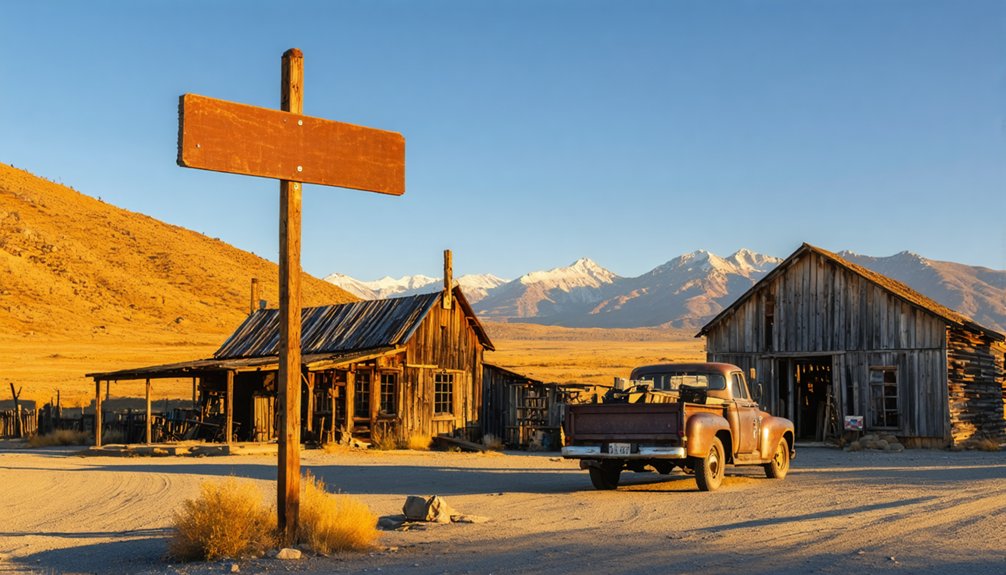
You’ll find Prairie City most welcoming during spring and fall when temperatures hover in the comfortable 60s and 70s, sparing you the scorching triple-digit heat that bakes the Sierra foothills each summer.
If you time your visit for April through early June, wildflowers transform the surrounding grasslands into scattered patches of gold and purple, softening the weathered wood and rusted metal of the ghost town’s remaining structures.
The golden light of October afternoons casts long shadows through empty doorways while cooler air makes exploring the sun-exposed site far more pleasant than the relentless heat of July and August.
Seasonal Weather Considerations
Since Prairie City sits at 3,573 feet elevation in the Sierra Nevada foothills, its weather swings dramatically with the seasons—a factor that’ll make or break your ghost town adventure.
Summer delivers your prime window: 75-88°F highs, extended daylight for exploration, and calm 8 mph winds let you roam freely through crumbling structures. Winter demands serious wet season precautions—temps plunge to 17°F in December, and snow transforms dirt roads into impassable quagmires.
Year round accessibility options depend on:
- Spring soil saturation: Daily staff assessments determine closures based on standing water
- Winter precipitation: January’s 4 inches creates muddy conditions
- Wednesday closures: Plan around weekly maintenance shutdowns
- Fall’s sweet spot: October through early December offers mild temps and reliably dry ground
Choose wisely—your timing determines whether you’re capturing golden-hour photos or stuck behind closure gates.
Avoiding Summer Heat Extremes
While Prairie City‘s elevation shields you from the worst desert heat, timing your visit still separates memorable exploration from miserable endurance. Summer temperatures regularly exceed 100ºF, transforming wooden structures and exposed trails into sweltering obstacles. You’ll want warm weather precautions—dawn arrivals capture Prairie City’s ghostly essence before heat radiates off tin roofs and dust-blown streets.
The park’s 9 AM opening gives you precious morning hours when shadows still cling to abandoned buildings. By planning October through May visits, you’ll explore comfortably through the entire 9-to-5 window. Winter months deliver ideal 70ºF conditions, perfect for photographing weathered facades without squinting through heat shimmer. Avoiding midday crowds becomes easier during cooler seasons, letting you wander Prairie City’s remnants at your own pace, free from both oppressive sun and tourist congestion.
Spring Wildflower Viewing Opportunities
Prairie City’s ghost town remnants gain unexpected vibrancy when Sierra foothill wildflowers carpet the surrounding landscape from mid-March through May. You’ll discover California poppies, lupines, and buttercups transforming abandoned mining sites into natural gardens, while purple owl’s clover fills nearby meadows with color.
As you plan your ghost town road trip, make sure to stop at the preserved structures that tell the stories of those who once thrived in this rugged landscape. Each stop holds a unique glimpse into the past, offering fascinating insights alongside the vibrant wildflower displays. Capturing the essence of the region, these sites invite you to explore the intersection of history and nature.
Peak bloom timing depends on winter precipitation, so check current conditions before you venture out. North Table Mountain Ecological Reserve, just minutes away near Oroville, offers spectacular volcanic tablelands ablaze with goldfields and sky lupine.
Wildflower photography tips for your ghost town exploration:
- Shoot during golden hour when sidelight enhances texture
- Position blooms against weathered structures for compelling contrasts
- Scout nearby scenic overlooks for elevated perspective shots
- Visit midweek to avoid weekend crowds at prime locations
What to See at the Historic Marker
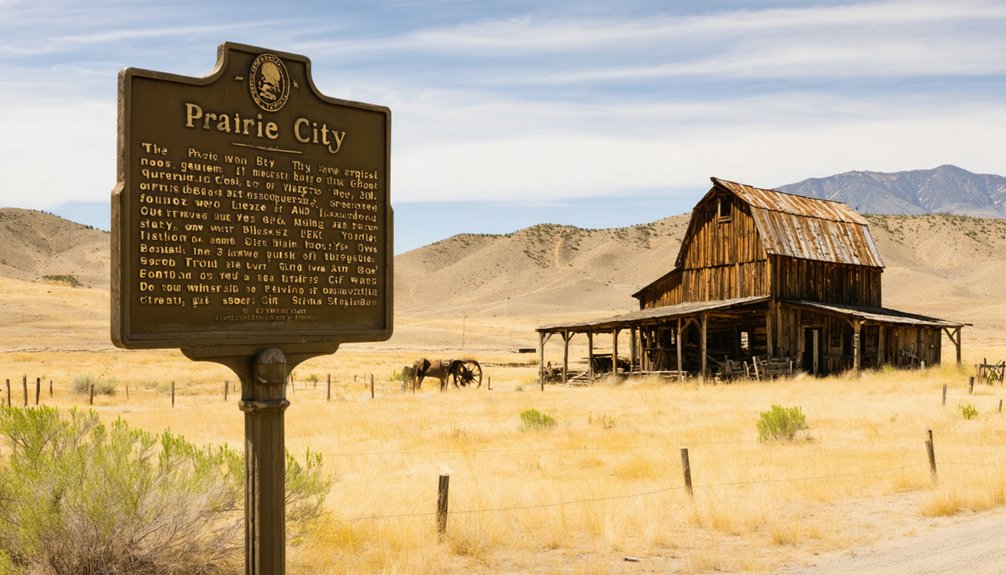
Standing at the corner of Prairie City Road and Highway 50, you’ll find California State Historical Landmark #464—a granite monument that serves as the sole physical record of a Gold Rush community that vanished as quickly as it appeared. The recently restored marker, installed in December 2024 after thieves stole the original 1950 plaque, recounts Prairie City’s explosive rise from empty terrain to a settlement of 1,500 residents within months.
The informative plaque details reveal how fifteen stores, ten boarding houses, and a $50,000 quartz mill materialized here in 1853, then disappeared entirely by 1880. The historical significance of marker extends beyond nostalgia—it commemorates the cemetery discovered beneath Highway 50’s construction, where twelve Gold Rush pioneers were relocated, their stories now preserved in embossed granite.
Exploring Nearby Folsom History Museum
After wandering through Prairie City’s weathered remains, you’ll find the Folsom History Museum just minutes away at 823 Sutter Street, where gold rush costumes and pioneer artifacts bring the region’s past to vivid life.
The museum’s collections extend beyond its permanent displays—their archives hold cemetery interment records and historical documents that connect directly to Prairie City’s vanished population. Schedule an appointment with their research desk to trace the names you spotted on those lonely headstones back through photographs, death records, and microfiche that reveal who these frontier settlers really were.
Museum Exhibits and Artifacts
Though Prairie City offers a compelling glimpse into Gold Rush abandonment, the nearby Folsom History Museum rewards curious travelers with a richer, more extensive look at the region’s past. You’ll discover permanent collection highlights spanning from Indigenous Nisenan settlements through railroad expansion and dam construction. The museum archives research reveals authentic photographs, documents, and artifacts that transform distant history into tangible reality.
Current exhibitions showcase the region’s eccentric character:
- “Peculiar Pieces of the Past” displays oddities like Great Snail Race remnants and Dr. Slaughter’s Pharmacy artifacts
- Blacksmith demonstrations at Folsom Forge bring metalworking traditions to life
- Professor Dolph Gotelli’s Christmas characters and vintage toys capture frontier whimsy
- Railroad influence exhibits and early settler photographs document transformation from wilderness
- Bike the 32-mile American River Trail to Old Sacramento’s waterfront
- Fish for largemouth bass where canyon walls plunge into cobalt depths
- Hike to scenic lake overlooks along Pioneer Express Trail’s ridgelines
- Swim at Beal’s Point beach beneath towering ponderosa pines
- https://landmarkquest.com/omeka/items/show/1004
- https://www.bewilderingstories.com/issue1085/prairie_city_ex.html
- https://folsomtimes.com/prairie-city-landmark-restored-by-community-collaboration/
- https://myfolsom.com/resident-guide/folsom-history/prairie-city/
- https://theclio.com/entry/47197
- https://en.wikipedia.org/wiki/Prairie_City
- https://www.hmdb.org/m.asp?m=254515
- https://www.stylemg.com/2018/12/28/186026/out-of-the-rubble-the-rebirth-of-prairie-city
- https://www.shmoop.com/study-guides/california-gold-rush/timeline.html
- https://www.californiahistoricallandmarks.com/landmarks/chl-464
Knowledgeable volunteers share stories conventional guidebooks miss, making each visit uniquely enlightening.
Cemetery Interment Records Access
Beyond the museum’s curated displays, Folsom’s historical landscape holds stories written in stone and earth—stories that live in cemetery records and burial grounds scattered across the region. You’ll find the Chung Wah Cemetery off-limits to wanderers, its 2.6 acres of burial mounds and brick-lined vaults protected from the vandalism that once ransacked Oak Chan’s resting place.
For accessing cemetery records, you’ll need to venture beyond simple exploration. Coordinating research inquiries through Operations and Collections Director Tyler Tocci at tyler@folsomhistory.org opens archival doors at 823 Sutter Street. The California State Archives holds microfilmed death records, prison registers, and crucial documents spanning counties and decades.
Meanwhile, the Young Wo Cemetery on Forrest Street remains accessible—a California Point of Historical Interest where freedom-seekers can walk among tangible remnants of Folsom’s Chinese community.
Combining Your Trip With Folsom Lake State Recreation Area
While Prairie City’s ghost town ruins whisper tales of Gold Rush dreams gone dusty, Folsom Lake State Recreation Area—just thirty minutes west—pulses with present-day adventure across 18,000 acres of sparkling water and oak-studded hills. Launch from Granite Bay’s boat ramp into morning glass, then carve wakes across the reservoir’s serpentine arms. Water sports rentals outfit your explorations—kayaks for hidden coves, paddleboards for Sierra-view serenity.
Break from history with these liberating pursuits:
Deer emerge from oak woodlands at dusk while hawks circle overhead—nature’s reward for trading ghost towns for living wilderness.
Other Gold Rush Sites Worth Visiting in the Area
Prairie City’s crumbling foundations anchor just one chapter in a constellation of Gold Rush sites scattered across Sacramento County’s oak-studded foothills. You’ll find Rhoads Diggings buried beneath hydraulic mining remnants near Alder Creek, where placer operations once fed Prairie City’s trade networks.
Willow Springs Hill lies within easy reach off Highway 50, its terrain scarred by rock cobbles from water cannons that tore earth from bedrock. Regional transportation routes connect you to Negro Bar—now absorbed into Folsom—where miners worked claims just two miles north.
Mormon Island’s relocated cemetery holds twelve Prairie City skeletons reburied in 1997, their private memorial plaque chronicling stories the wilderness tried to erase. Each site whispers its own version of fortune-seeking freedom.
Frequently Asked Questions
Are There Any Facilities Like Restrooms or Parking at the Historic Marker?
No facilities exist at this roadside marker—you’ll find no restroom facilities or designated parking availability. You’re exploring raw, undeveloped land where freeway shoulder parking becomes your only option. Pack supplies and embrace the rugged, self-sufficient adventure ahead.
Is the Prairie City Ghost Town Site Safe to Visit With Children?
Like a well-worn trail beckoning explorers, the site’s generally safe for kids. You’ll want basic camping safety awareness and wildlife precautions—coyotes roam nearby. Stay alert, embrace your freedom responsibly, and let young adventurers discover history’s whispers.
How Long Should I Plan to Spend at the Prairie City Location?
Your ideal visit duration spans just 15-30 minutes at the roadside marker itself. However, the recommended exploration time extends to 2-3 hours if you’re craving adventure at nearby Prairie City SVRA’s untamed off-road trails.
Can I Metal Detect or Collect Artifacts at the Ghost Town Site?
You can’t metal detect or collect artifacts without explicit permission from Prairie City’s landowner. Local metal detecting laws and artifact preservation guidelines strictly protect ghost towns—trespassing risks felony charges. Explore freely, but leave history untouched for future adventurers.
Are There Guided Tours Available for the Prairie City Historic Area?
Guided tours aren’t offered at Prairie City, leaving you free to explore independently. You’ll need to respect private property considerations while wandering through this authentic ghost town, creating your own adventure through weathered remnants of Gold Rush history.