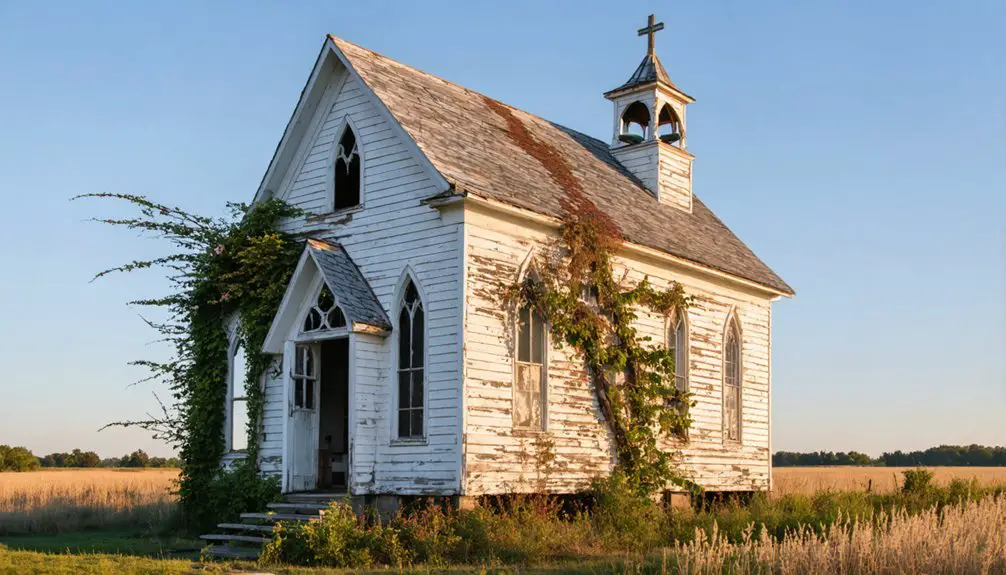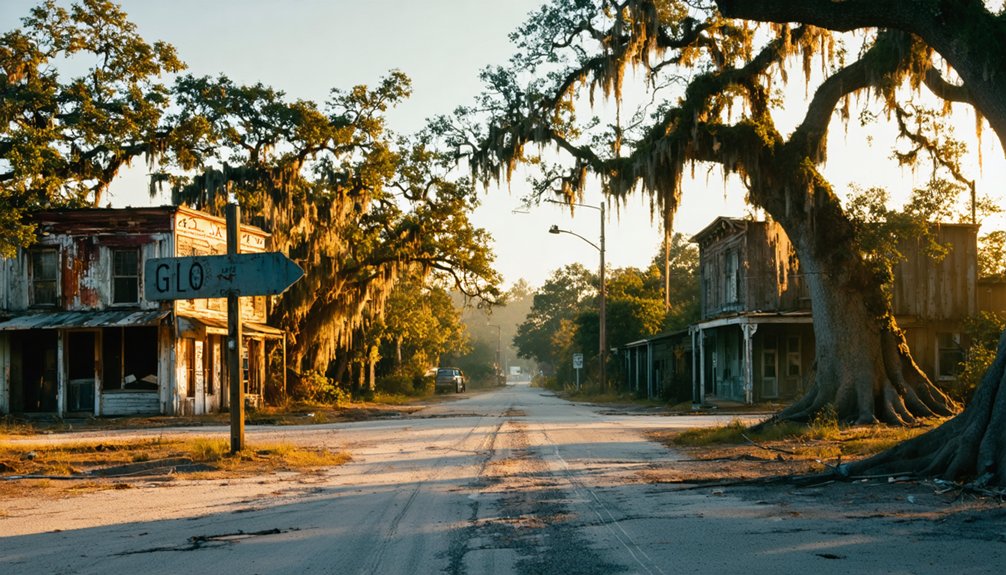
You can’t actually visit Princeton, Mississippi—it’s submerged beneath the Mississippi River between Greenville and the Arkansas border. The once-thriving 1830s cotton port disappeared after the river shifted course, leaving only occasional chimney remnants protruding during droughts. Instead, plan your ghost town adventure around nearby Rodney, where 4,000 residents once thrived, or NASA-evacuated Logtown. Washington County’s riverfront areas and local historians can pinpoint Princeton’s watery grave, though what lies beneath those murky currents holds secrets worth discovering.
Key Takeaways
- Princeton lies submerged beneath the Mississippi River between Greenville and Arkansas, making traditional physical access impossible.
- Consult Greenville historians and riverfront archives to pinpoint Princeton’s approximate underwater location for educational purposes.
- Brick courthouse ruins appeared during the 1954 drought, but continuous river erosion prevents safe underwater archaeological exploration.
- Visit nearby accessible ghost towns like Rodney, Logtown, Gainesville, and Napoleon for authentic Mississippi abandonment experiences.
- Focus on Washington County’s archival records and historical societies since preservation efforts prioritize documentation over site visits.
The Rise and Fall of Princeton: A Mississippi Delta Port Town
When the first white settlers arrived at Cotton Gin Port in 1816, they found only a single Creek Indian named Billy calling this bend in the Tombigbee River home. Led by Reverend Frederick Weaver from Russelville, Alabama, five families transformed this isolated spot into a thriving Upper Tombigbee River port.
You’ll discover that by 1848, this steamboat shipping point reached its peak prosperity, fueled entirely by cotton flowing from plantations following the Chickasaw relocation. The town incorporated in 1838, boasting five residential streets and serving briefly as county seat during the Courthouse Wars.
But the cotton trade decline and racial demographics shifts after 1860 sealed Princeton’s fate. The once-bustling port that survived even the catastrophic 1838 Oronoko steamboat explosion couldn’t withstand changing transportation patterns, ultimately surrendering to ghost town status.
The Tragic Oronoko Steamboat Disaster That Changed Maritime History
On April 12, 1838, the morning stillness along the Tombigbee River shattered when the steamboat Oronoco’s boiler flue collapsed just five minutes after Captain John Crawford ordered the engines stopped. Scalding steam erupted through the vessel anchored opposite Princeton, killing nearly 100 deck passengers who’d been sleeping tightly packed below.
A catastrophic boiler failure aboard the steamboat Oronoco claimed nearly 100 lives in minutes along Alabama’s Tombigbee River.
You’ll find this disaster particularly haunting—victims leaped overboard from burns so severe they’d dive back into the water from agony, ultimately drowning.
This catastrophe, combined with other 1838 explosions claiming 300 lives, forced Congress to act. The Steamboat Act passed that July established America’s first boiler safety regulations.
The Oronoco’s steamboat disaster legacy fundamentally transformed maritime law, proving that even tragedy can chart the course toward safer travel for future adventurers.
What Remains at the Princeton Ghost Town Site Today
Unlike most ghost towns where you can walk crumbling streets and peer through broken windows, Princeton exists in a watery grave beneath the Mississippi River’s murky currents. You won’t find standing structures or interpretive signs marking this forgotten settlement. What remains changes with water levels—during the 1954 drought, hunters discovered brick courthouse remnants breaking the surface, making national headlines.
Occasionally, chimneys protrude from shallow waters, and amateur treasure seekers have recovered champagne bottles and whiskey barrels from exposed mud banks.
The site presents unique historical preservation challenges since underwater archaeological investigation remains virtually impossible here. River erosion continuously destroys what Union flames didn’t finish during the Civil War. You’ll need drought conditions and boat access to glimpse Princeton’s skeletal remains, making this Mississippi’s most elusive ghost town destination.
Getting to Princeton: Routes and Access Points in Washington County
Since Princeton lies submerged beneath the Mississippi River between Greenville and the Arkansas border, you won’t find traditional road access to this drowned settlement. The river claimed this former county seat decades ago, leaving you with limited options for exploration.
Your best approach involves researching Greenville’s riverfront areas and consulting local historians who’ve documented the site’s approximate location. Nearby historical sites in Washington County offer alternative glimpses into the region’s past, though Princeton itself remains unreachable by conventional means.
Preservation efforts focus primarily on archival documentation rather than physical access, as the ghost town rests underwater. You’ll need to embrace this reality: some destinations exist only in historical records, their stories preserved through research rather than firsthand exploration of tangible ruins.
Expanding Your Ghost Town Adventure: Rodney, Logtown, and Beyond
While Princeton may rest beneath the Mississippi’s waters, Mississippi’s ghost town landscape stretches far beyond Washington County’s submerged secrets. You’ll discover remarkable former town significance throughout the state, each location history revealing America’s restless expansion and inevitable decline.
Three Ghost Towns Worth Your Journey:
- Rodney – Once Mississippi’s third-largest port with 4,000 residents, this Federal-style Presbyterian church still stands amid ruins. The Mississippi River shifted two miles west in 1870, killing the town overnight.
- Logtown – NASA evacuated this 2,000-person logging community in the 1960s for Stennis Space Center, leaving concrete foundations and abandoned cemeteries.
- Gainesville & Napoleon – These vanished settlements extend your adventure northward, where rivers and railroads determined who survived and who disappeared.
Each site offers unguarded exploration through authentic American abandonment.
Frequently Asked Questions
Are There Any Guided Tours Available for Princeton Ghost Town?
You won’t find guided tours available for Princeton ghost town—it’s either lost to time or protected by private property restrictions. Your adventure here means charting your own path through Mississippi’s forgotten landscapes, embracing the freedom of independent exploration.
What Safety Precautions Should Visitors Take When Exploring the Levee Area?
The levee demands your utmost respect! Watch out for wildlife lurking in shadows, avoid venturing too close to unstable structures, and never wade through floodwaters. Stay clear of closed areas, report debris weakening slopes, and always wear your PFD near water.
Can Artifacts or Remnants From Princeton Still Be Found at the Site?
You’ll discover crumbling structures and historical markers scattered throughout the site, though most of Princeton lies buried beneath the Mississippi’s shifting waters. During drought conditions, you might spot exposed foundations, bricks, and artifacts emerging from the muddy riverbanks.
What Is the Best Time of Year to Visit Princeton?
Golden leaves frame your journey—visit Princeton during pleasant autumn or mild winters when temperatures hover between 40-70°F. You’ll explore freely without summer’s oppressive heat, discovering hidden remnants along quiet backroads where history whispers through cooler, comfortable air.
Are There Any Fees or Permits Required to Access the Site?
No fees or permits are needed to explore this free historic site. You’ll find limited parking availability near the church ruins, though nearby amenities are scarce—pack your essentials and embrace the raw, untamed adventure ahead.