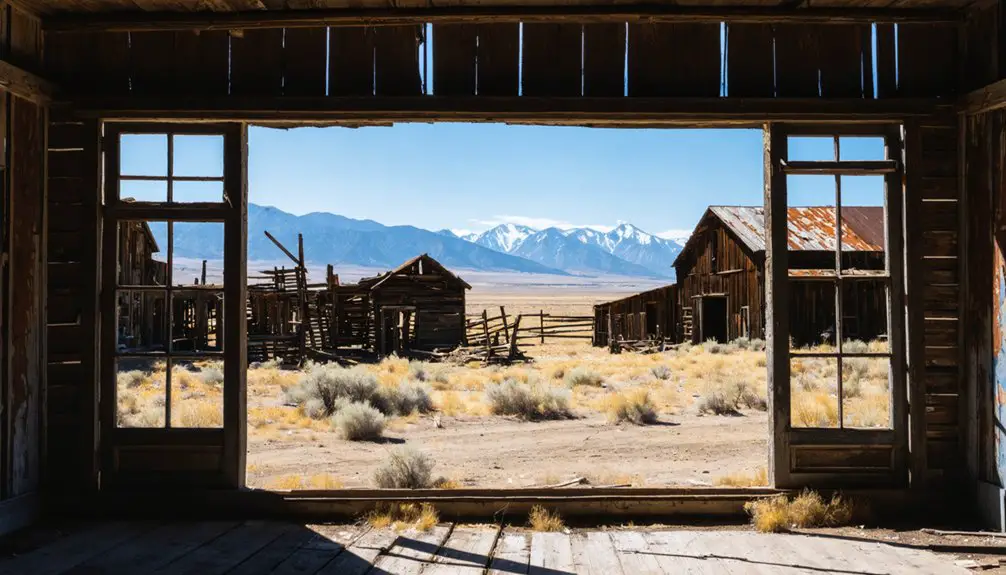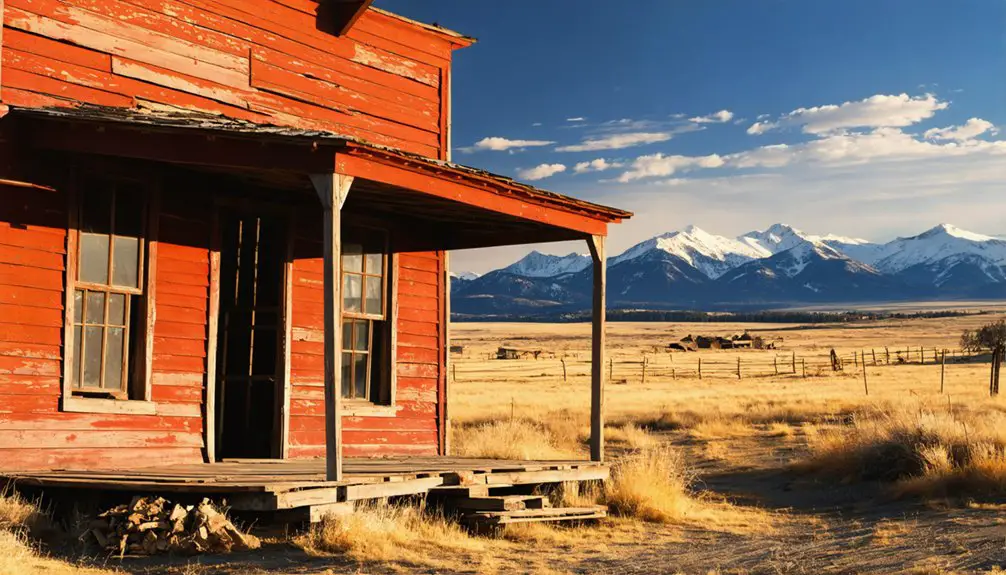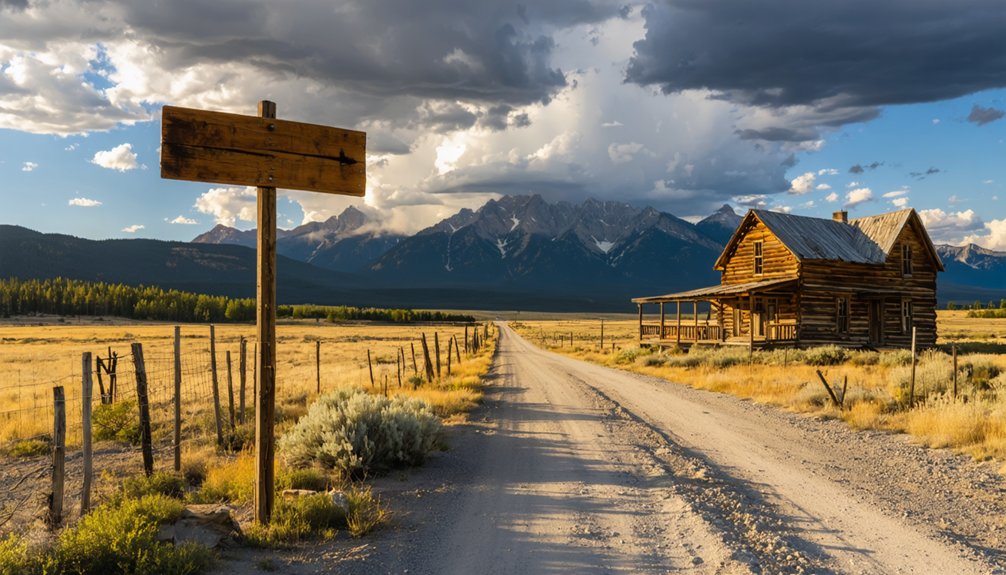
Your Princeton ghost town road trip begins in Philipsburg, where you’ll tackle 11 miles of narrow switchbacks through dense forest to reach this skeletal 1868 silver camp at 5,400 feet. You’ll need high-clearance vehicles, emergency gear, and weatherproof clothing since cell service vanishes in these mountains. Time your visit between late spring and early fall when seasonal roads open, and you’ll discover weather-worn cabins and mining remnants that offer an unvarnished glimpse into Montana’s isolated heritage—just one of 24 ghost towns awaiting exploration throughout Granite County.
Key Takeaways
- Princeton sits 11 miles from Philipsburg via narrow, unimproved mountain roads requiring high-clearance vehicles and seasonal access.
- The ghost town preserves weather-worn cabins and mining remnants from an 1868 silver strike at 5,400 feet elevation.
- Bring navigation tools, emergency gear, weatherproof clothing, food, water, and first-aid supplies due to remote location.
- Use Boulder Creek as your guide through switchbacks and dense forest with no cell service available.
- Explore 24 nearby ghost towns including Granite, Garnet, Bannack, and Virginia City for a complete regional experience.
The Mining History That Built Princeton
When prospectors first struck silver at the junction of Princeton Gulch and Boulder Creek Canyon in 1868, they sparked the creation of what would become one of Montana’s hardscrabble mining settlements. You’ll find this remote spot in Granite County at 5,400 feet elevation, where miners carved 150-foot shafts and 1,000 feet of drifts into the mountainside chasing silver, zinc, and lead veins.
The real grit emerged in 1932 when bosses slashed wages by 10%. Miners refused to accept broken promises, organizing with union assistance and striking until management caved. They restored wages and stopped forcing Christmas Eve shifts—victories that cost manager John Bennett his job.
Getting to Princeton Ghost Town on Boulder Creek
You’ll leave Philipsburg behind and wind your way through 11 miles of mountainous terrain before the rough roads splinter off toward Boulder Creek.
The narrow, unimproved track demands patience as you navigate switchbacks through dense forest, where meeting another vehicle means one of you backs up to find a passing spot. Boulder Creek itself becomes your compass—follow its rush through the valley, and the skeletal remains of Princeton will emerge from the pines where miners once scraped fortune from these hills.
Route From Philipsburg Area
From Philipsburg, the journey to Princeton ghost town carries you sixteen miles northeast through Montana’s rugged Boulder Creek District, where silver dreams once glittered in mountain gulches. Your route overview begins on Montana Highway 10A, tracing the path prospectors followed in 1868.
These primary driving directions reveal a landscape where freedom meant striking it rich:
- Head north from Philipsburg on Highway 10A for ten miles, watching civilization fade into pines and peaks
- Reach Maxville, your midpoint marker where the pavement whispers old timber town stories
- Turn east onto Maxville Road, committing to six miles of backcountry adventure
- Arrive at Princeton’s remains where Boulder Creek Canyon cradles what’s left of fifty miners’ silver ambitions
The total sixteen-mile journey delivers you to Montana’s authentic ghost town remnants.
Traversing Boulder Creek Canyon requires more than just turning your wheel eastward—you’re entering terrain where the waterway dictates everything from road integrity to seasonal passage. Boulder Creek carved this valley through millennia, and today it still commands respect from anyone approaching Princeton’s remains.
Spring snowmelt transforms placid streams into aggressive torrents, making creek crossing conditions treacherous through May. You’ll notice historical water infrastructure—those Northern Pacific tanks weren’t placed randomly.
Summer offers your liberation window when seasonal water flow patterns stabilize, revealing passable routes that winter and spring jealously guard. The creek runs Princeton’s entire length, so watch for washouts where roads parallel the waterway.
High-clearance vehicles aren’t just recommendations here—they’re your insurance policy against becoming another stranded story.
What Remains at the Princeton Mining Camp Today
When you arrive at Princeton today, you’ll find a landscape where time has gently erased most traces of its mining past. A handful of dwellings stand scattered across the mountainside, their simple architectural styles reflecting the practical needs of 19th-century miners rather than any grand design.
Unlike some Montana ghost towns, local restoration efforts haven’t reached Princeton—these structures survive through the care of summer residents who occupy them seasonally.
What awaits your exploration:
- Weather-worn cabins that whisper stories of hardy prospectors who once called this remote camp home
- Crumbling mining remnants scattered throughout the district, monuments to abandoned dreams of striking it rich
- Empty valleys where commercial buildings once bustled, now reclaimed by wilderness
- Authentic decay untouched by tourist development, offering you unfiltered glimpses into Montana’s raw mining heritage
Exploring Nearby Ghost Towns Around Philipsburg
While Princeton offers an unvarnished glimpse into Montana’s isolated mining camps, the Philipsburg area harbors a constellation of ghost towns that paint a fuller picture of the silver boom’s rise and spectacular collapse.
Just three miles east, Granite Ghost Town State Park preserves the most dramatic story—a boomtown of 3,000 souls that hemorrhaged to 140 residents within a year after Congress killed silver prices in 1893. You’ll navigate gravel roads to explore the mine superintendent’s house, union hall ruins, and sprawling silver mill foundations scattered across four elevation levels.
The mining operations diversity across Granite County’s 24 ghost towns reveals both prosperity’s promise and historical preservation challenges, from worn markers to structures slowly reclaimed by wilderness.
Best Times to Visit Montana Ghost Town Sites
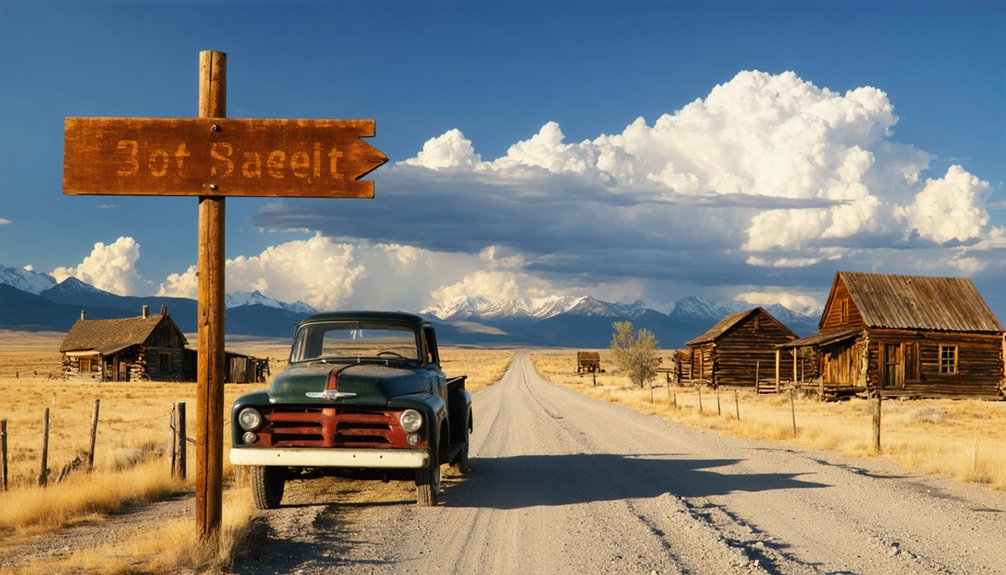
Montana’s ghost town calendar splits decisively between the accessibility of summer months and the atmospheric isolation of winter expeditions. You’ll navigate accessibility challenges differently across seasons, each offering distinct rewards for your independent exploration.
As you delve into the haunted history of Montana’s ghost towns, you’ll uncover tales of miners and settlers who once thrived in these now-silent landscapes. Each abandoned building and weathered artifact holds a story waiting to be revealed, transporting you back to a time when these towns were bustling with life. Embrace the eerie beauty and rich narratives that make each visit a unique adventure in this captivating region.
Optimal visiting windows by season:
- Summer (May-September): Garnet operates 9:30am-4:30pm daily with clear roads and minimal seasonal crowds, perfect for unrestricted vehicle access to remote sites.
- Fall (October-November): Experience Bannack’s Ghost Walk (October 23-24, 2026) before winter closes in, with temperatures cooling to 43°F-58°F and fewer visitors crowding trails.
- Winter (November-April): Reach Garnet only via snowshoe, skis, or snowmobile through heavy snow—rewarding adventurers with potential paranormal encounters at Kelly’s Saloon.
- Spring (April-May): Navigate muddy roads and unpredictable snowmelt for solitary exploration before tourist season begins.
Combining Princeton With Other Regional Attractions
Princeton’s isolated location transforms into a strategic basecamp once you recognize its position within Montana’s densest concentration of ghost towns. Design regional itineraries connecting Granite Ghost Town‘s two-hour walk through preserved mills just sixteen miles southwest, then pivot to Garnet’s windowed structures for afternoon exploration.
Philipsburg’s saloons provide lunch stops between sites, while Elkhorn State Park extends your silver-mining narrative northeast. Virginia City’s live performances add seasonal attractions worth the Madison County drive—gold rush history meets interactive theater.
You’ll traverse mountain passes and open pastures, collecting stories from Mystery Camp at Coloma to the Blaine Mine’s artifacts. Each destination rewards independence-minded travelers who refuse packaged tours, preferring windswept trails and sun-bleached boards documenting Montana’s untamed past.
Essential Supplies for Your Ghost Town Adventure

Before you venture into Princeton’s weathered ruins and sagebrush-dotted landscape, you’ll need to pack strategically for Montana’s unpredictable backcountry conditions.
The remote location demands reliable navigation tools since cell service vanishes miles before you reach the ghost town, and afternoon thunderstorms can sweep across the mountains with little warning.
Your vehicle becomes your lifeline here, so stock it with emergency gear that’ll keep you safe whether you’re exploring crumbling mining structures or traversing rutted forest roads back to civilization.
When cell service fades sixteen miles northeast of Philipsburg, your adventure into Princeton’s remote terrain demands reliable navigation tools beyond your smartphone.
Essential Navigation Arsenal:
- Printed Southwest Montana Ghost Towns Map – Your lifeline when digital screens go dark in Boulder Creek Canyon’s depths, marking every gulch and forgotten trail.
- Gaia GPS with topographic overlays – Download these before departure to track Princeton’s 5,411-foot elevation and surrounding ridgelines without connectivity.
- Compass paired with detailed topo maps – Old-school reliability for orienting yourself at Princeton Gulch’s junction, where geolocation data can’t reach.
- Portable Garmin device – Pre-loaded coordinates guide you confidently along those final six gravel miles on Maxville Road.
Pack redundancy. Embrace analog backups. Your independence depends on preparation, not signal bars.
Weather-Appropriate Clothing Layers
At 5,411 feet where mountain weather shifts faster than you can descend Princeton Gulch, layering becomes survival strategy rather than fashion choice. Summer’s 82-90°F highs demand moisture-wicking base layers beneath lightweight long sleeves, while winter plunges to 12-19°F require thermal underwear and waterproof parkas. Your layering techniques should adapt to each season—spring’s synthetic undershirts handle 38-43°F variability, and fall’s quick-dry shirts move through 71°F afternoons to 44°F evenings.
Master appropriate fabric choices for Princeton’s extremes: fleece mid-layers combat sub-zero temperatures, softshell jackets repel sudden thunderstorms carrying 55% strike risk, and windbreakers shield against persistent southeast winds. Pack convertible pants, neck gaiters, and backup gloves. This ghost town doesn’t forgive unprepared wanderers who underestimate Montana’s temperamental skies.
Safety and Emergency Gear
Remote ghost towns swallow cell signals and strand unprepared visitors hours from help, making your emergency kit the difference between minor inconvenience and genuine crisis.
Pack smart for Princeton’s isolated terrain:
- Jumper cables and tire repair essentials – Dead batteries and punctures won’t derail your adventure when you’ve got the tools for impromptu roadside repairs
- High-visibility warning triangles and LED flares – Alert approaching vehicles while you handle essential vehicle maintenance on deserted mountain roads
- Comprehensive first aid kit with emergency blanket – Treat injuries and stay warm if darkness catches you mid-repair
- Multi-tool, duct tape, and flashlight with spare batteries – MacGyver your way through unexpected breakdowns when the nearest mechanic’s fifty miles away
You’re chasing freedom, not AAA’s service radius.
Frequently Asked Questions
Are There Any Guided Tours Available for Princeton Ghost Town?
No guided tours operate at Princeton Ghost Town—you’ll explore independently through self-guided tours. Unlike some Montana ghost towns offering walking audio tours, Princeton’s remote location means you’ll discover weathered cabins and mining relics at your own adventurous pace.
Is Camping Permitted Near the Princeton Mining Camp Site?
You’ll find camping permitted on surrounding BLM and Forest Service lands near Princeton’s weathered ruins. Campground availability remains limited, but nearby camping options include dispersed sites along forest roads—perfect for adventurers seeking solitude beneath Montana’s star-filled skies.
What Photography Restrictions Exist at Princeton and Surrounding Ghost Towns?
You’ll find minimal restrictions at Princeton’s remote site, but practice cultural sensitivity around historic structures. Respect private property boundaries, avoid disturbing artifacts, and work with natural lighting conditions since permits aren’t typically enforced at abandoned locations.
Are Any Buildings at Princeton Structurally Safe to Enter?
No buildings at Princeton offer verified safe entry. Given the absence of abandoned home inspections and structural integrity concerns at this “time-weathered” site, you’ll want to admire these relics from outside, respecting both safety and the summer residents’ private property.
Do I Need Permits to Visit Princeton Ghost Town?
You don’t need permits to explore Princeton—it’s unmanaged and free to roam. However, respect preservation efforts by leaving artifacts untouched, and follow basic visitor guidelines like packing out trash to protect this vanishing piece of Montana’s frontier history.