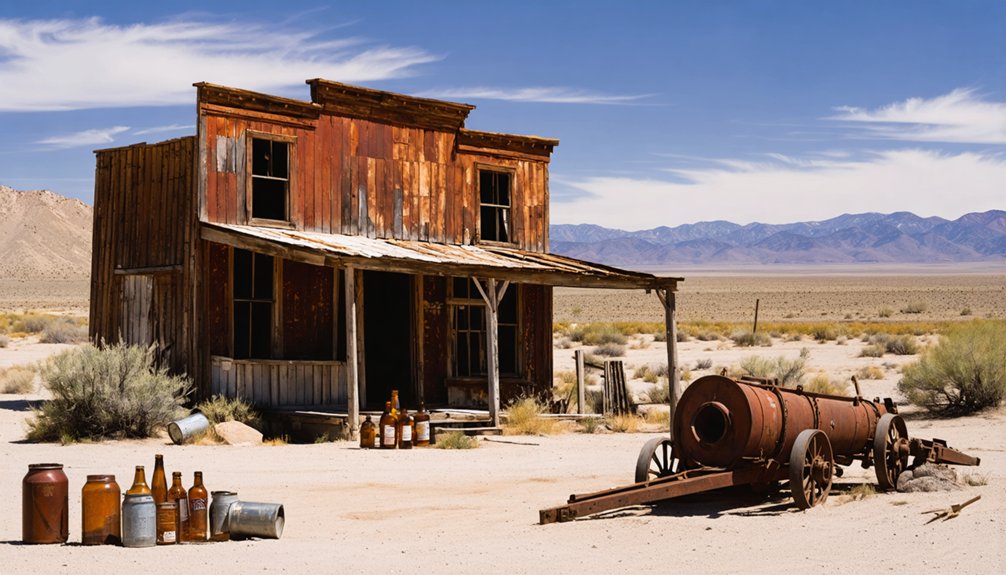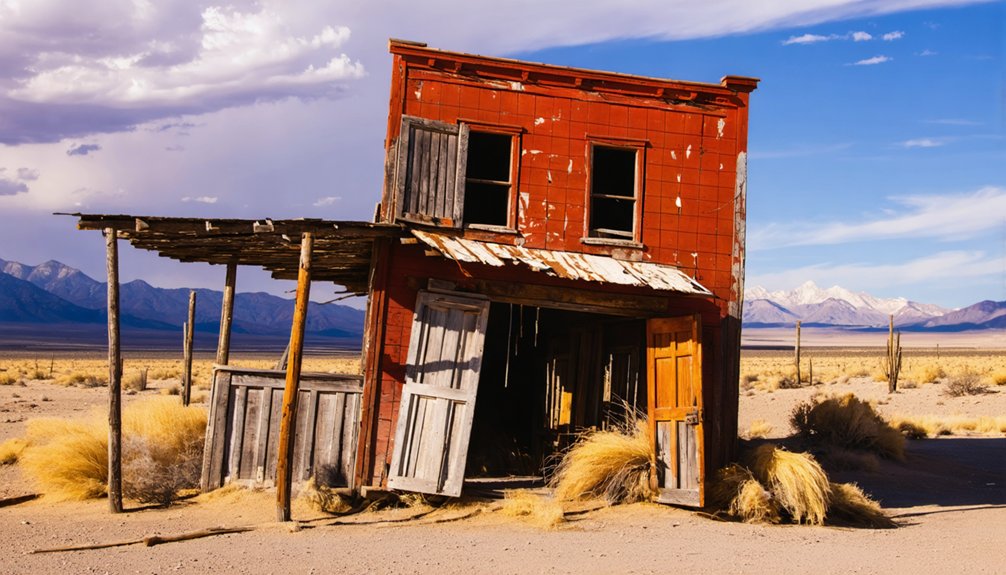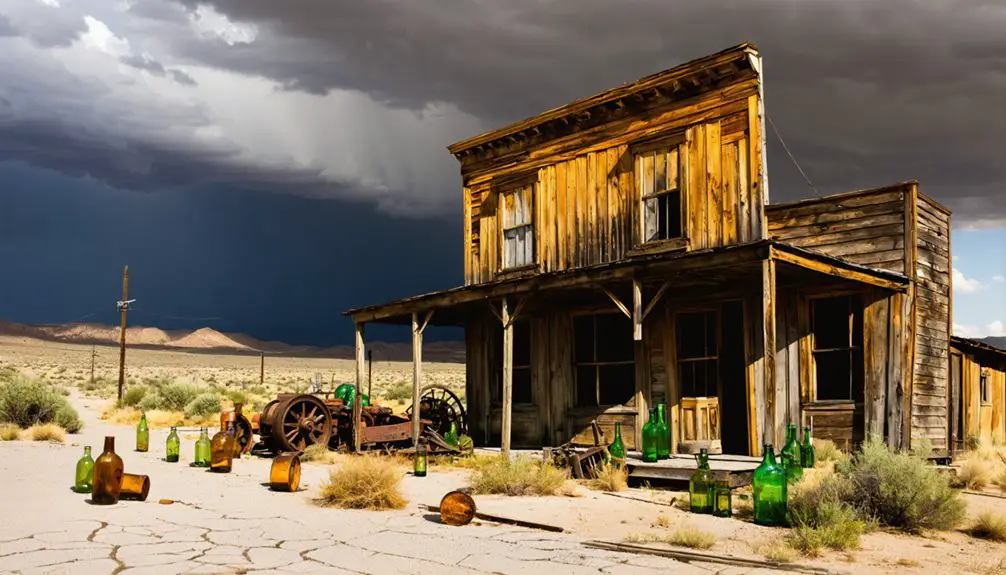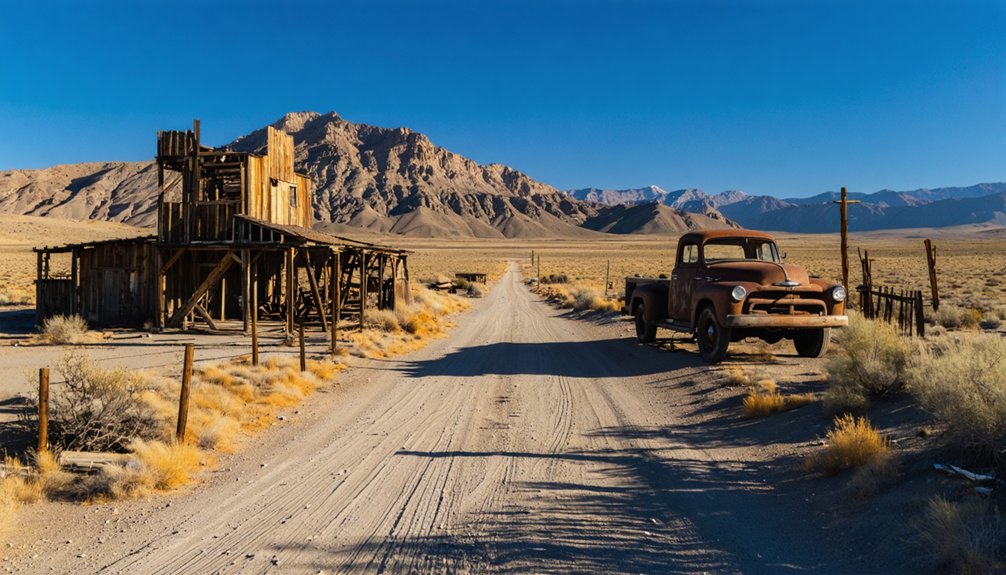
You’ll find Quartz Mountain in Nye County’s remote backcountry at 5,430 feet elevation, accessible via weathered mining roads requiring off-road capability. Navigate using coordinates 39° 02′ 45″ N, 117° 57′ 59″ W and USGS Quartz Mountain quad maps. The San Rafael Mine‘s towering headframe dominates scattered concrete foundations, while Matt Costello’s iron-fenced grave marks where the prospector died in 1926. Pack extra fuel, recovery gear, water, and emergency supplies for this BLM-managed site, where the Broken Hills connection and regional mining history await discovery.
Key Takeaways
- Obtain USGS Quartz Mountain quad maps and use coordinates 39° 02′ 45″ N, 117° 57′ 59″ W to navigate remote Nye County terrain.
- Ensure vehicle has off-road capability for weathered mining roads and pack recovery gear, extra fuel, and backup navigation tools.
- Explore the San Rafael mine headframe, concrete foundations, and Matt Costello’s 1926 grave at the townsite.
- Extend your trip to Broken Hills ghost town, two miles beyond Quartz Mountain, to see additional mining ruins.
- Bring ample water and emergency supplies for this remote BLM-managed location at 5,430 feet elevation.
The Rise and Fall of a Silver-Lead Mining Boom Town
Deep in the remote borderlands where Nye and Mineral Counties meet, silver-lead ore glinted in the desert sun for the first time in 1920. You’ll find this classic tale of natural resource exploitation unfolded slowly until 1925, when quality ore sparked a fevered rush.
By spring 1926, hundreds of prospectors—from Idaho’s panhandle to Mexico—swarmed the district, embodying transient community characteristics that defined Nevada’s mining frontier. E.S. Giles platted the townsite in June 1926, establishing the formal layout of the settlement. Saloons, barbershops, grocery stores, and restaurants opened to serve the bustling mining camp, while the Quartz Mountain Miner newspaper began weekly publication in 1926.
George Wingfield’s rumored backing intensified the frenzy. Buildings salvaged from Rawhide’s ghost town appeared overnight. The San Rafael Consolidated and Quartz Mountain Mines companies consolidated claims, extracting over $300,000 in ore. But freedom’s price came swift—depleted veins forced abandonment by 1930. The post office shuttered in January 1929, and Quartz Mountain joined Nevada’s constellation of forgotten camps.
Getting There: Routes and Road Conditions
How do you reach a ghost town that refuses to appear on modern road maps? You’ll need USGS 7.5-minute Quartz Mountain and Quartz Mountain NW quad maps as your essential guides. The Lodi Mining District’s rugged hills demand serious remote access considerations—expect unpaved routes threading through Nye County’s backcountry at 5,430 feet elevation.
Your journey requires off-road capability and careful planning. These challenging terrain conditions include weathered mining roads that time has nearly reclaimed. Navigate using coordinates 39° 02′ 45″ N, 117° 57′ 59″ W, but verify multiple sources before committing to any track. The USGS 1:24K topographic map Black Mountain, NV provides additional detail for navigating this remote region.
The isolation that once protected silver-lead miners now tests modern adventurers. Pack backup navigation tools, extra fuel, and recovery gear. This isn’t a highway exit destination—it’s an earned discovery where preparation separates explorers from those merely passing through. The mountain’s 80-foot rise from its saddle elevation makes it a modest prominence feature in this desert landscape.
What Remains: Exploring the Townsite and Mining Structures
When you crest the final ridge, that towering headframe commands the valley like a skeletal sentinel—visible for miles before you reach the actual townsite. This monument to 1920s silver-lead extraction still dominates the landscape where Quartz Mountain Mines operated their most productive claim.
Few foundations mark where cafes, barbershops, and general stores once thrived. You’ll find abandoned equipment scattered across the district, rusting reminders of fifteen mines that operated between 1926 and 1930. Historical photographs show buildings that were dismantled and hauled away when the ore ran dry.
Three primary remnants tell Quartz Mountain’s story:
- The massive headframe from San Rafael mine operations
- Scattered concrete foundations throughout the platted townsite
- Matt Costello’s grave, honoring the prospector who died here in 1926
The BLM-managed land preserves this freedom to explore authentic Western heritage. Trucks arrived daily from Fallon during the boom years, delivering essential water, mail, and supplies to sustain the remote mining community. Bring plenty of water and emergency supplies, as one wrong turn on these remote roads can leave you stranded miles from help.
The Broken Hills Connection and Nearby Camps
Just two miles beyond Quartz Mountain’s skeletal headframe, Broken Hills sprawls across the desert floor with an almost imperceptible footprint—a ghost town so thoroughly erased that you’ll question whether hundreds actually lived here during the late 1930s. Foundation stones mark where hotels, saloons, and stores once thrived on mining camp economics, their fortunes tethered to Quartz Mountain’s 1925 boom.
Regional silver lead production peaked between 1935-1940, transforming empty claims staked in 1913 into bustling enterprise.
You’ll find other camps dotting this silver-lead corridor: Galena, established 1863 with boomtown luxuries, and Aspen, a short-lived gold prospect from 1907. BLM fencing now guards Broken Hills’ abandoned pits, but dirt roads still beckon adventurers willing to trace these interconnected mining stories across Nevada’s unforgiving terrain.
Matt Costello’s Prospector’s Grave: A Mining Era Memorial
Near the windswept ruins of Broken Hills, you’ll discover a solitary grave marked by weathered wood and iron—the final resting place of prospector Matt Costello.
His story captures the cruel irony of mining camp life: after decades of poverty, he sold his claim for $1,500 in 1926, only to die at his kitchen table days later before enjoying his fortune. The headstone and fence his friends purchased stand as a haunting memorial to dreams deferred and luck that arrived too late.
Today, while nothing remains of the cabin where Costello spent his final moments, his grave endures as a testament to the prospector’s solitary existence. The last residents departed from Broken Hills by the mid-1950s, leaving behind only scattered remnants of the once-hopeful mining camp.
Costello’s Final Days (1926)
After successfully selling his mining claim in 1926, the elderly prospector Matt Costello retreated to his weathered cabin near Broken Hills, his pockets heavier than they’d been in years. He’d spent decades chasing veins through unforgiving rock, and now financial planning occupied his thoughts—mapping out future prospects he’d never allowed himself to imagine.
Then silence fell. Days passed without word.
When friends finally pushed through his cabin door, they discovered him seated at his table, life’s final claim already staked. The scene told its own stark story:
- No signs of struggle or violence
- Death came quietly in his own refuge
- His plans died with him, unfulfilled
They buried him beside the cabin where he’d made his last stand, marking another soul claimed by Nevada’s relentless frontier. The grave sits within view of the wooden headframe that straddles the long, narrow open stope of the Broken Hills Mine. Today, a replaced wooden marker stands at his grave, testimony to those who’ve remembered the prospector’s solitary end over the decades.
The $1,500 Claim Sale
The windfall arrived when Matt Costello needed it most—$1,500 for a single claim that had consumed years of backbreaking labor in the unforgiving terrain near Broken Hills. You’ll find his prospector biography reads like countless others from that era—decades of poverty, endless hope, and finally, one legitimate strike.
When Quartz Mountain’s 1926 revival sparked interest in surrounding claims, Costello’s property suddenly held value. Claim verification confirmed what the elderly miner had always believed: his ground contained ore worth extracting.
The sale transformed everything overnight. After a lifetime chasing elusive veins through Nevada’s mountains, Costello finally held real money. He celebrated with plans for spending his newfound fortune, sharing dreams with anyone who’d listen.
That joy, however brief, marked his escape from hardship—though fate had darker intentions awaiting just beyond his celebration.
Grave Location and Traditions
Within days of Costello’s celebration, friends discovered his body slumped at the cabin table—a grim end to decades of hardship finally relieved. They buried him steps from where he’d lived, honoring mining era traditions that placed prospectors near their final claims. You’ll find his grave west of Broken Hills Mine, protected by an iron fence—though vandals stole the original headstone.
Today’s wooden marker reads simply “Matt Costello, 1866-1926,” memorial to persistent grave site protection efforts. The cabin’s gone, but the memorial remains:
- Iron fencing shields the lone grave from desert elements
- Wooden replacement marker stands after theft destroyed the original
- Remote location near vanished cabin site preserves mining-era authenticity
This weathered grave embodies the prospector’s solitary struggle—freedom’s ultimate price in Nevada’s unforgiving backcountry.
Peak Years: Life in Quartz Mountain During the 1920s
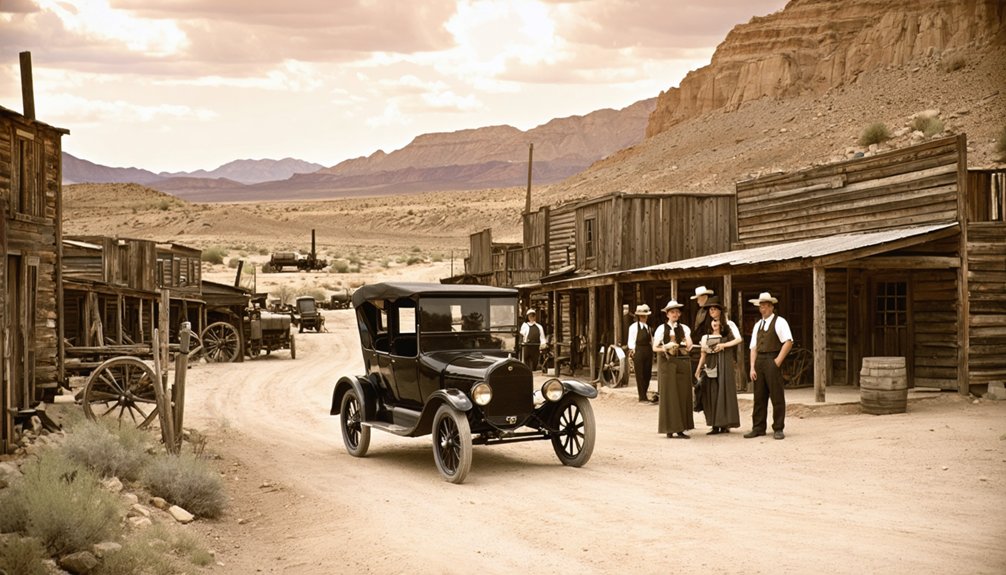
Standing on this windswept plateau, you’ll find it hard to imagine that hundreds of prospectors once crowded these hills during the electric spring of 1926. Within months of the rich ore strike, Quartz Mountain transformed from desert silence into a bustling camp complete with saloons, cafes, an airplane landing strip, and trucks hauling water from Fallon forty miles away.
But the boom that ignited so quickly would burn out even faster—by 1930, the ore veins had surrendered their wealth and the town returned to dust.
The 1926 Mining Boom
Silver-lead ore glinting in the desert sun changed everything for this remote Nevada valley in 1920, though the real stampede wouldn’t arrive for another five years.
When prospectors struck a rich vein in 1925, fortune-seekers flooded in from Mexico to Idaho’s panhandle, driven by prospectors’ motivations fueled by rumors of George Wingfield’s backing.
By spring 1926, the boom exploded with:
- Hundreds of miners staking claims across the district
- Six buildings relocated from Rawhide during the first week alone
- Fifteen companies competing for silver-lead riches between 1926-1930
Mining claims disputes became inevitable as fortune-hunters crowded the hills. The San Rafael mine’s “The Lease” vein alone produced over $300,000, proving some prospectors’ dreams weren’t just desert mirages.
Daily Life and Infrastructure
By June 1926, E.S. Giles had transformed empty desert into a functioning settlement of 500 residents. You’d find six buildings hastily relocated from Rawhide, creating instant residential structures along 440 platted lots. The town straddled the Nye-Mineral County line, offering freedom from conventional governance.
Daily trucks rumbled in from Fallon, hauling precious water and supplies while returning loaded with ore. You’d grab groceries, visit one of four cafes, or catch up on news through the weekly Quartz Mountain Miner.
Social services remained minimal—a post office opened in 1927, barbershops trimmed miners’ beards, and general stores stocked essentials.
An airplane landing strip announced this community’s modern aspirations. Despite lacking local water, residents embraced automobile culture, traversing dusty roads connecting scattered claims across miles of desert territory.
Economic Decline by 1930
The promise of wealth that drew fifteen mining companies to Quartz Mountain between 1926 and 1930 proved as fleeting as desert rain. By 1929, exhausted ore reserves forced operations to cease, and the post office closed on January 15th—a bureaucratic acknowledgment of reality. Dwindling production levels coincided with Nevada’s broader precious metals decline and the Great Depression’s devastating arrival.
You’ll notice the pattern when exploring these ruins: boom turned to bust within three years. The collapse unfolded through:
- Rapid depletion of “The Lease” vein’s rich silver-lead deposits
- Company failures starting immediately after 1926’s peak
- Market pressures driving copper below 5 cents per pound by 1932
The town that once supported hundreds stood deserted by 1930, its buildings abandoned to the elements you’ll encounter today.
Major Mining Companies and Operations
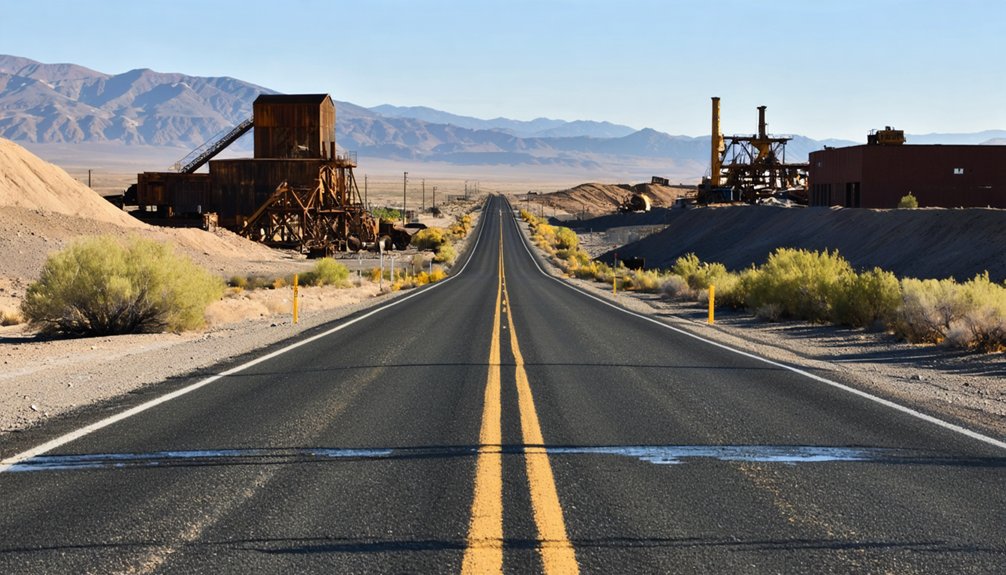
Fortune seekers scoured the Quartz Mountain district after prospectors discovered silver-lead ore in 1920, though serious development wouldn’t ignite for another five years. George Wingfield’s rumored interest in 1925 sparked a stampede of independent prospectors from Idaho to Mexico, each claiming their stake in untamed territory.
Fifteen companies carved their fortunes here between 1926 and 1930. The San Rafael Consolidated Mines Company dominated through consolidated mining operations, merging four separate outfits and extracting over $300,000 from “The Lease” vein. Freight trucks thundered between mine shafts and Fallon, hauling high-grade silver and lead that rivaled Idaho’s legendary Coeur d’Alene district.
Resource depletion impact arrived swiftly—by 1930, exhausted veins forced every operation to abandon their claims, leaving desert winds to reclaim another Nevada boomtown.
Best Practices for Visiting Historic Mining Sites
Planning your expedition to Quartz Mountain requires careful preparation—this remote outpost sits miles from civilization with zero services between you and the desert horizon. You’ll need high-clearance vehicles for rough terrain, though sedans managed these roads in 2013. Pack abundant water and share your itinerary with someone stateside.
Site safety considerations demand vigilance around unstable mine shafts and deteriorating structures. The massive headframe looms across the valley, but admire it from safe distances. Flash floods transform peaceful valleys into torrents—check forecasts before venturing out.
Artifact preservation protects these remnants for future explorers:
- Photograph Matt Costello’s grave (1866-1926) without disturbing the marker
- Respect active mining claims throughout the area
- Leave foundations and artifacts untouched
Travel with partners when possible—freedom thrives alongside smart preparation.
Frequently Asked Questions
What Time of Year Is Best for Visiting Quartz Mountain?
Visit Quartz Mountain during fall or spring when seasonal weather conditions deliver perfect exploring temperatures, tourist crowds vanish into the desert wind, and activities like rockhounding and photography thrive. You’ll experience Nevada’s ghost towns in liberated solitude.
As you take in the tranquil scenery, consider the rich history of ghost towns in Nevada that whisper tales of the past. Each decayed building and forgotten street invites exploration, reminding visitors of the mining booms and busts that once thrived in the region. These remnants of civilization offer a unique glimpse into the state’s diverse heritage, adding a captivating layer to your outdoor adventure.
Are There Any Camping Facilities Near Quartz Mountain?
Unlike bustling modern campgrounds, Quartz Mountain itself offers no camping facilities. However, you’ll find camping availability at nearby Lookout Campground for day use, while alternative camping accommodations exist at Quartz Creek and Old Miner’s Meadow for overnight adventures.
How Far Is Quartz Mountain From the Nearest Gas Station?
The nearest gas station’s several hours away in Fallon, where trucks once hauled supplies. You’ll find the nearest grocery store location there too, but availability of potable water sources remains scarce—pack everything you’ll need for freedom.
Is Cell Phone Service Available in the Area?
Like a pioneer venturing beyond civilization’s reach, you’ll face cell phone coverage limitations at Quartz Mountain. The BLM confirms wireless connectivity issues plague this remote trail, so you’ll experience true disconnection from the digital world.
What Supplies Should I Bring for a Day Trip?
You’ll need essential hiking gear, generous water provisions (at least one gallon per person), sturdy boots, sun protection, emergency supplies, full fuel tank, GPS navigation, and food. Pack out everything—preserve this remote desert freedom for future explorers.
References
- https://nvtami.com/2022/06/29/gabbs-ghost-town-trip/
- https://www.nevadaghosttownsandmininghistory.com/portfolio-2/quartz-mountain
- https://nyecountyhistory.com/quartzmountain.html
- https://www.nvexpeditions.com/nye/quartzmtn.php
- https://www.youtube.com/watch?v=KCRyZ-7Qa80
- https://forgottennevada.org/sites/quartz.html
- https://ronhess.info/docs/report7_history.pdf
- https://www.mininghistoryassociation.org/Journal/MHJ-v8-2001-Tingley-et-al.pdf
- https://nbmg.unr.edu/mining/MiningHistory.html
- https://nevadamining.org/new-history-page/