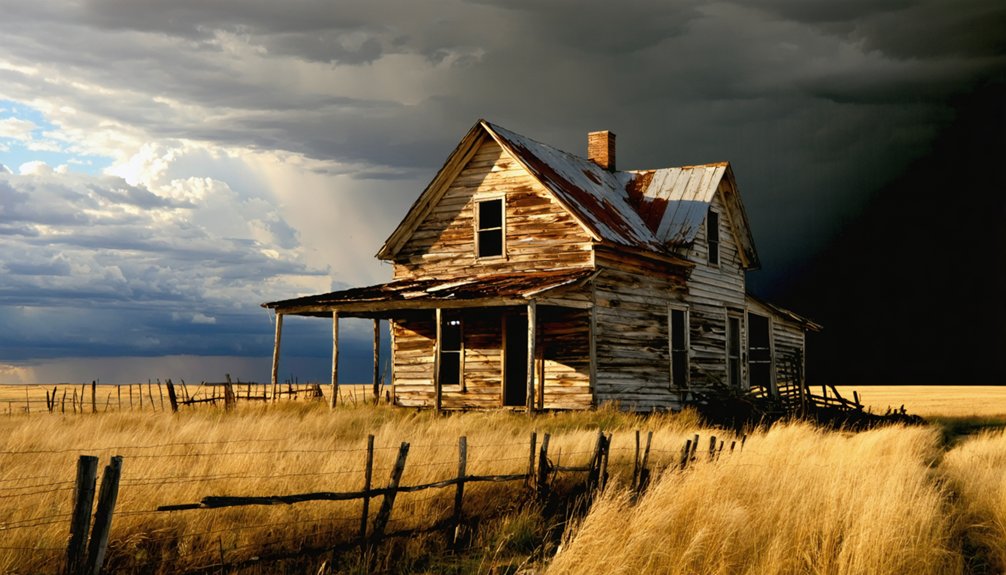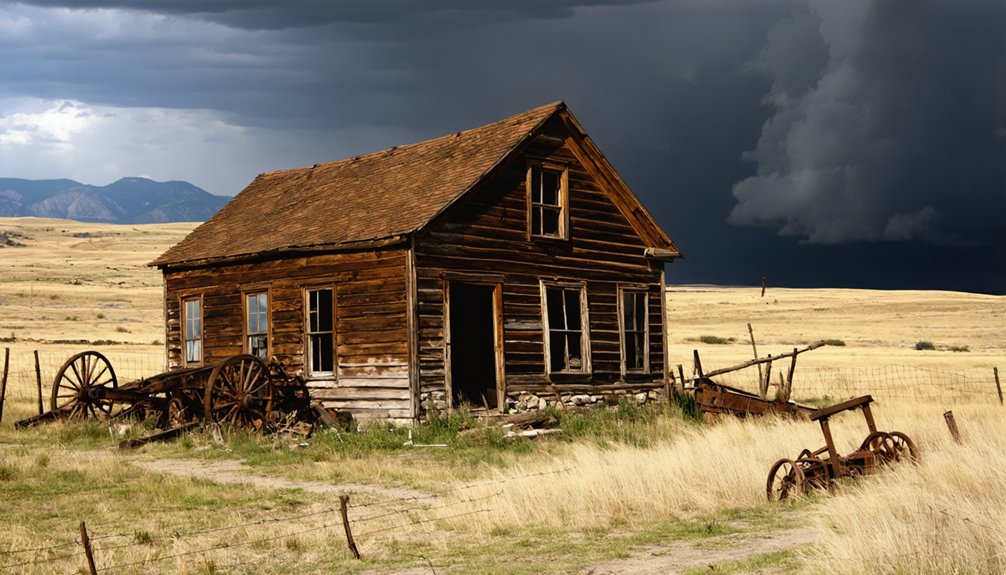
You’ll find Queen Bee’s ruins within Falls Park’s boundaries in Sioux Falls, where weathered quartzite foundations mark the 1879 mill that burned in 1956. Navigate to 43°33′25″N 96°43′19″W off North Phillips Ave, where free parking awaits. The crumbling stone footprints glow beautifully during golden hour, especially in shoulder seasons like May or September. Bring your camera, sturdy boots, and layers for exploring the millraces and architectural remnants that whisper stories of industrial ambition gone bankrupt. The surrounding park holds more hidden narratives worth discovering.
Key Takeaways
- The Queen Bee Mill ruins are located in Falls Park north of downtown Sioux Falls at coordinates 43°33′25″N 96°43′19″W.
- Access the site via E Falls Park Dr off North Phillips Ave with free parking and pedestrian bridges to the ruins.
- Visit during shoulder seasons like early September or May for comfortable temperatures, fewer crowds, and optimal photography conditions.
- Only weathered foundations remain after the 1956 fire, but the National Register site offers 90-minute theatrical performances among ruins.
- Combine your visit with nearby historic sites including the Cathedral of St. Joseph, Pettigrew Home, and USS South Dakota Memorial.
The Rise and Fall of the Queen Bee Mill in Sioux Falls
The ambitious dream of harnessing the Big Sioux River’s power began in August 1879, when construction crews broke ground on an 81-acre site that cost investors $38,000. You’d have marveled at the architectural innovations rising before you—a 104-foot quartzite tower designed to process 1,200 barrels of Dakota spring wheat daily.
By October 1881, the mill’s 800-horsepower turbine roared to life, employing 100 men who believed they’d struck gold.
But freedom from eastern markets proved elusive. The 1881 flood tested that sturdy quartzite, yet insufficient waterpower and scarce high-grade wheat sealed the mill’s fate. Failed economic viability forced bankruptcy by 1883, owing $97,000. The Queen Bee limped through various owners until fire consumed it in 1956, leaving only ghost stories behind.
What Remains at the Historic Site Today
Standing at coordinates 43°33′25″N 96°43′19″W within Falls Park’s boundaries, you’ll find precious little of the Queen Bee’s former glory—just weathered foundations sprawling across two acres where that magnificent quartzite tower once scraped the Dakota sky. The 1956 fire consumed what demolition crews finished by 1961, leaving only stone footprints of the mill and grain elevator that once harnessed the Big Sioux River’s most powerful drop.
Yet these ruins aren’t forgotten relics. Historic preservation measures secured National Register status in 1984, transforming skeletal remains into something unexpectedly alive. You can wander freely through J.W. McKeen’s crumbling architectural vision, attend 90-minute theatrical performances among the foundations, and discover educational opportunities that breathe stories into silent stone—a memorial to industrial dreams that burned too bright.
Getting to Falls Park and the Queen Bee Mill Ruins
North of downtown Sioux Falls, where the Big Sioux River carves its most dramatic statement through pink quartzite ledges, you’ll discover Falls Park waiting at 131 E Falls Park Dr—a 123-acre sanctuary where industrial ghosts mingle with thundering water.
Transportation options couldn’t be simpler: take E Falls Park Dr from North Phillips Ave and follow your instincts toward the roar. Parking availability is generous and completely free, letting you abandon your vehicle without feeding meters or worrying about time limits.
Waze guides modern wanderers to the exact coordinates where Queen Bee Mill‘s seven-story skeleton still haunts the east riverbank. Once you’ve arrived, pedestrian bridges connect you to the ruins, where millraces and crumbling quartzite walls tell stories of flour dust and ambition turned to stone.
Best Time to Visit and What to Bring
Pink quartzite glows differently depending on when you catch it—summer’s harsh noon light bleaches the ancient stone pale, while spring’s gentler rays coax out salmon undertones that photographers dream about. You’ll find Queen Bee most rewarding during shoulder season crowds of early September or May, when temperatures hover in comfortable ranges and you won’t compete with tour buses for parking.
Variable winter conditions can strand you on unmarked roads, so save December through February for heartier expeditions. Pack sturdy boots, plenty of water, and layers—spring mornings start crisp before warming considerably. Bring a decent camera; these ruins photograph spectacularly during golden hour. Wildlife roams closer during cooler months, so binoculars enhance your exploration considerably.
Other Historic Sites to Explore in Sioux Falls
While Queen Bee’s ruins whisper stories of frontier ambition, Sioux Falls proper preserves a richer architectural tapestry where you’ll discover South Dakota’s transformation from territorial outpost to modern city.
The history of Hooker, South Dakota reveals the challenges and triumphs faced by early settlers in the region. As you traverse the landscape, remnants of old homesteads and stories etched into the land illustrate the tenacity of those who sought to carve out a life in this rugged terrain. Alongside these historical sites, vibrant community events celebrate the rich heritage that continues to shape the area’s identity.
The Cathedral of St. Joseph commands your attention with twin towers piercing the skyline—this French Romanesque masterpiece showcases cathedral history through marble interiors and Corinthian columns installed between 1915-1919. Step inside the Pettigrew Home to examine Senator Pettigrew’s personal effects and statehood memorabilia.
The Old Minnehaha County Courthouse‘s quartzite walls house three floors of regional artifacts. Military buffs shouldn’t miss the USS South Dakota Battleship Memorial, displaying actual components from America’s most decorated WWII vessel. These sioux falls landmarks prove the city honors its past without romanticizing frontier hardships.
Frequently Asked Questions
Are There Any Documented Ghost Sightings or Paranormal Reports at the Mill Ruins?
No documented ghost sightings exist at the mill ruins, though paranormal investigations haven’t officially explored the crumbling quartzite foundations. You’ll find only whispered legends of unexplained phenomena—restless energy haunting these forgotten stones where dreams once died.
Can I Take Drone Photography at the Queen Bee Mill Site?
You’ll need FAA Part 107 certification and landowner permission before launching your drone at Queen Bee Mill. Follow drone regulations carefully—they’re restrictive here. For photography tips, golden hour captures those weathered timbers magnificently against South Dakota’s endless sky.
Is the Queen Bee Mill Site Wheelchair Accessible for Visitors?
The Queen Bee Mill site isn’t wheelchair accessible—you’ll encounter uneven terrain, crumbling foundations, and no wheelchair friendly facilities. Accessibility concerns persist throughout the 2.8-mile walking tour, limiting your freedom to explore these historic ruins independently.
Are There Guided Tours Specifically Focused on the Mill’s History?
No guided tours focus exclusively on the mill’s significance or architectural features. However, you’ll find walking tours that include the ruins as one stop, letting you explore the weathered stone foundations and their haunting industrial story independently.
What Nearby Restaurants or Cafes Reflect Sioux Falls’ Historic Character?
You’ll discover Crawford’s Bar & Grill and Phillips Avenue Diner among historic downtown cafes offering authentic local cuisine experiences. These landmarks blend preserved architectural charm with memorable flavors, letting you taste Sioux Falls’ heritage through independent, timeless establishments.