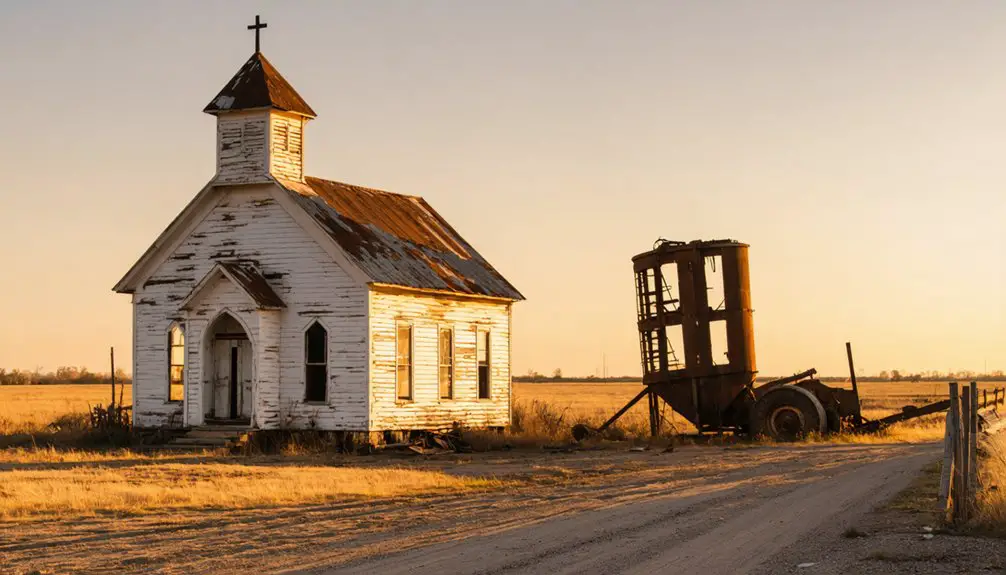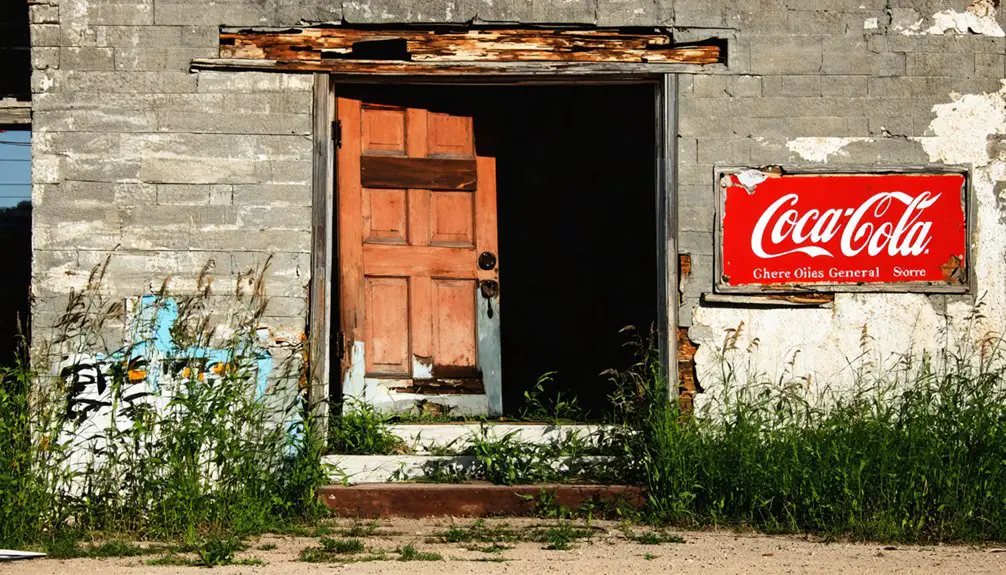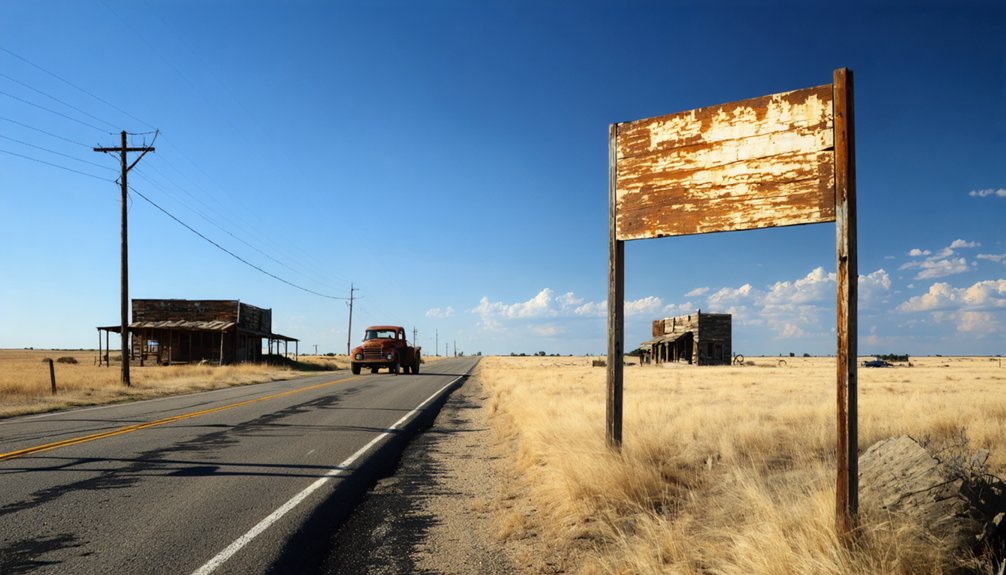
Your Quinlan ghost town adventure begins in Woodward, where you’ll navigate county roads through windswept prairie to discover a weathered 1920s church standing sentinel over vanished dreams. You’ll need N95 respirators, sturdy boots, and permission from landowners before exploring deteriorated structures. Extend your journey to nearby ghost towns like Cedardale and Tangier, then balance the haunting silence with Woodward County’s living history—the Plains Indians & Pioneers Museum and Alabaster Caverns await those seeking deeper connections to Oklahoma’s railroad-era past.
Key Takeaways
- Quinlan sits in Woodward County, accessible via Highway routes and the original railroad corridor through Southern Kansas Railway’s historic path.
- The weathered 1920s church remains Quinlan’s primary structure, featuring wooden pews and architectural details worth photographing and exploring.
- Expand your itinerary to nearby ghost towns including Cedardale, Gerlach, Haskew, and Tangier within the same county road system.
- Pack N95 respirators, cut-resistant gloves, headlamp, first aid kit, and sturdy boots—no equipment resupply exists in rural Oklahoma.
- Visit Plains Indians & Pioneers Museum, Fort Supply Historic District, and Alabaster Caverns State Park for additional historical context.
The Rise and Fall of Quinlan: A Railroad Town’s Story
The screech of iron wheels against steel rails echoed across the empty prairie in 1886 as the Southern Kansas Railway pushed its line southwest from Kiowa, Kansas, into what would become Woodward County.
Quinlan materialized along the Atchison, Topeka and Santa Fe Railroad as a crucial station point, nine miles east of Mooreland. You’d have found a depot bustling with ranch hands, a general store stocked with provisions, and freight cars loaded with county crops bound for distant markets.
The rails promised prosperity—manufactured goods flowing in, agricultural products streaming out through this connected trade corridor. Yet the town demise factors remain shrouded in Oklahoma’s dust-swept archives. While economic decline details elude historical record, Quinlan‘s ghost stands as a reminder of the fragile dreams built alongside those iron roads.
What Remains: Exploring the Church and Historic Structures
When the prairie wind whistles through Quinlan’s skeletal remains, you’ll find precious little standing guard over this forgotten railroad stop—but the weathered church endures.
This clapboard structure from the late 1920s stands unbolted, inviting exploration without barriers. Step inside to discover interior architectural details that speak of simpler times: ten rows of wooden pews flanking a center aisle, each bench accommodating three to four souls. A worn Bible rests on the lectern, pages yellowed by decades of solitude.
Your building condition assessment reveals what time demands—warped boards, faded paint, trees reclaiming the perimeter. Yet thirty worshippers could still gather here, theoretically. Unlike demolished neighbors, this modest sanctuary persists, offering tangible connection to Quinlan’s vanished community. It’s yours to witness, unfenced and unhurried.
Getting There: Routes and Access Points From Woodward
You’ll find two distinct paths leading to Quinlan’s abandoned homesteads from Woodward’s city limits. The original railroad corridor that once ferried settlers and supplies now exists as a faint trace through the grasslands, offering adventurous travelers a glimpse into the town’s commercial lifeline.
Modern highway routes through Woodward County’s maintained road system provide reliable access, though these paved alternatives sacrifice the authentic experience of following the very tracks that built—and eventually abandoned—this frontier settlement.
Historic Rail Path Route
Long before Highway 412 carved its modern path across the Oklahoma plains, two ambitious rail lines etched their iron routes through Woodward County, and understanding these historic corridors reveals the most atmospheric approach to Quinlan’s ghost town ruins.
The railway construction challenges shaped two distinct paths:
- Southern Kansas Railway (1886–87) drove southwest from Kiowa through Quinlan, Mooreland, and Woodward, conquering rolling plains and gypsum hills
- Wichita Falls and Northwestern (1911–12) sliced north-south through western county terrain from Elk City to Forgan
- Agricultural development impacts transformed isolated prairie into thriving grain-shipping communities
- Curtis Hill’s remnant traces mark where iron met earth, visible today along narrow paved roads from Highway 412
You’ll find freedom following these ghosted rail beds through Belva toward Quinlan’s abandoned station.
Alternative Highway Access Options
Multiple asphalt ribbons unfurl northward from Woodward’s compact downtown, each offering distinct gateway experiences to Quinlan’s weathered remnants twenty miles distant. You’ll command US-183’s direct northern thrust through scenic rural landscapes where windswept plains stretch endlessly beneath boundless skies.
Alternatively, OK-47’s curved trajectory sweeps westward before banking toward your destination, revealing flexibility through intersecting county roads. SH-50 carves a southwestern bypass path exceeding twenty miles, threading through open farmland where traffic dissolves into memory.
These highways converge with gravel-shouldered county routes branching toward ghost town clusters—Cedardale twelve miles south, Haskew eight miles toward Freedom’s shadow. Seasonal road conditions demand attention; spring rains transform dusty passages into challenging terrain.
Combine routes strategically: loop US-183 with OK-47 for twenty-five-mile exploration circuits, crafting your sovereign journey through Oklahoma’s forgotten outposts.
Nearby Ghost Towns to Add to Your Itinerary
Woodward County’s ghost towns scatter across the prairie like forgotten whispers of Oklahoma’s pioneer past, each within easy striking distance of Quinlan. These abandoned settlements tell stories of localized decline and shifting regional connectivity that once bound frontier communities together.
Prime destinations for your exploration:
- Cedardale – Twelve miles south of Quinlan, where weathered foundations mark dreams that couldn’t outlast the Dust Bowl’s fury.
- Gerlach – Fourteen miles east of Woodward, its crumbling structures stand as monuments to railroad towns that lost their lifeline.
- Haskew – Eight miles southwest of Freedom, offering solitude among wind-swept ruins.
- Tangier – Seven miles west of Woodward, closest to civilization yet equally forgotten.
A Guide to Treasure in Oklahoma Volume 3 maps these vanished communities, transforming your road trip into an authentic adventure through Oklahoma’s untamed history.
Historical Sites Worth Visiting in Woodward County
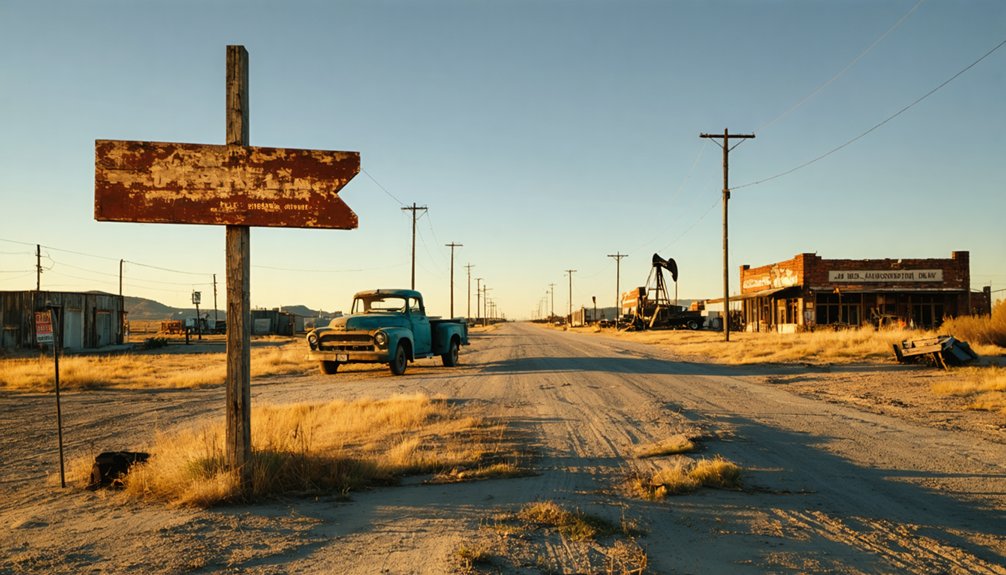
Beyond the windswept ruins and abandoned homesteads lies a different kind of historical treasure—one carefully preserved behind museum walls and marked by official recognition.
Beyond crumbling foundations and weathered homesteads, another history awaits—preserved, protected, and officially honored within museum walls.
You’ll discover the Plains Indians & Pioneers Museum in Woodward, where Native American history and pioneer settlements unfold through engaging exhibits spanning 1966 to present. The Temple Houston sculpture guards stories of territorial justice and frontier courage.
Venture eighteen miles north to Alabaster Caverns State Park, where massive gypsum formations reveal geological secrets older than human memory. Fort Supply Historic District stands witness to military campaigns that shaped this land, while archaeological sites near Mooreland preserve Late Prehistoric Plains Village farming communities from A.D. 800-1400.
At Boiling Springs State Park‘s 820 acres, natural springs still bubble—timeless markers where travelers once watered their horses and cattle.
Best Practices for Exploring Rural Ghost Towns Safely
The wind whispers through Quinlan’s abandoned structures, carrying with it the weight of forgotten decades and the urgency of modern caution.
Before you set foot on crumbling foundations or peer into shadowed doorways, you’ll need more than curiosity—pack your N95 respirator, multiple flashlights, and sturdy boots that can navigate unstable terrain where rotted floorboards hide beneath dust.
Oklahoma’s ghost towns demand respect for both their private ownership and their dangers, from rattlesnakes coiled in cool corners to sudden thunderstorms that transform dirt roads into impassable mud rivers within minutes.
Essential Safety Gear Checklist
Exploring abandoned structures in rural Oklahoma demands more than curiosity—it requires methodical preparation that could mean the difference between a memorable adventure and a dangerous situation. Your protective gear selection starts with understanding what threats lurk in Quinlan’s forgotten buildings. Contamination assessment reveals mold spores, asbestos fibers, and chemical residues that standard clothing can’t stop.
Critical Equipment for Ghost Town Exploration:
- Respiratory protection (N95 minimum) filters airborne hazards in deteriorated structures
- Cut-resistant gloves and sturdy boots shield against rusted metal, broken glass, and exposed nails
- Headlamp with backup batteries keeps both hands free for climbing unstable surfaces
- First aid kit addresses immediate injuries before you reach distant medical facilities
Pack everything before departure—rural Oklahoma offers zero equipment resupply options.
Respect Private Property Boundaries
Weathered “No Trespassing” signs flanking Quinlan’s crumbling entrance aren’t mere suggestions—they’re legal boundaries backed by Oklahoma statutes that classify unauthorized entry as criminal trespass, regardless of how long those buildings have sat empty. You’ll face trespassing penalties including fines up to $1,000 and potential misdemeanor charges if you cross those lines without permission.
That private property signage protects owners’ rights while preserving your freedom to explore legally accessible locations instead. Before you step onto those dusty streets, research ownership records and seek written permission from landowners or their agents. Many ghost town proprietors grant access to respectful visitors who ask first.
This simple courtesy transforms you from potential lawbreaker into welcomed explorer—preserving both the site’s integrity and your clean record for future adventures.
Weather and Wildlife Awareness
Before you set foot on Quinlan’s wind-scoured streets, Oklahoma’s volatile skies demand your full attention—spring thunderheads that build from innocent morning clouds into towering anvils capable of spawning tornadoes within hours. Storm preparedness protocols aren’t suggestions here; they’re survival essentials.
Critical awareness factors:
- Monitor real-time radar for precipitation patterns and approaching systems before departure
- Identify emergency shelters in Grant County communities along your route
- Track seasonal wildlife activity during dawn and dusk when creatures reclaim abandoned structures
- Pack adequate lighting for sudden weather changes that transform prairie landscapes into disorienting darkness
Check seven-day forecasts religiously. When wind gusts exceed thirty miles per hour, debris fields from crumbling buildings become airborne hazards. Freedom means accepting responsibility for your safety in Oklahoma’s unforgiving backcountry.
Frequently Asked Questions
What Amenities Should I Bring When Visiting Remote Quinlan?
You’ll need rechargeable batteries for your flashlights, non-perishable snacks to fuel dusty explorations, plenty of water, sturdy boots, and camping gear. Pack like you’re venturing beyond civilization’s edge—because in Quinlan’s forgotten streets, you truly are.
Can I Camp Overnight Near the Quinlan Ghost Town Site?
You’ll find overnight camping options at facilities within Woodward County near Quinlan’s abandoned streets. While exploring ghost town preservation efforts, you can secure seasonal campsites accommodating large RVs, letting you wake among Oklahoma’s haunting, windswept prairie remnants.
Are the Remaining Structures on Private or Public Land?
The ownership status of structures remains unclear, so you’ll need to respect potential private property boundaries. Before exploring, verify accessibility considerations for visiting through local authorities—trespassing charges could end your freedom-seeking adventure abruptly.
What’s the Best Season to Visit Quinlan and Surrounding Ghost Towns?
“Strike while the iron’s hot”—visit Quinlan during fall when you’ll discover breathtaking autumn foliage, pleasant temperatures for exploring crumbling structures, fewer crowds blocking your path, and nearby local history museums offering shelter from occasional prairie storms.
Do I Need Special Vehicle Equipment for Rural Roads?
You’ll want a high clearance vehicle for traversing rutted, overgrown paths where pavement surrenders to wilderness. Tire chains aren’t typically necessary, but rugged tires and four-wheel drive let you explore these forgotten roads freely and confidently.