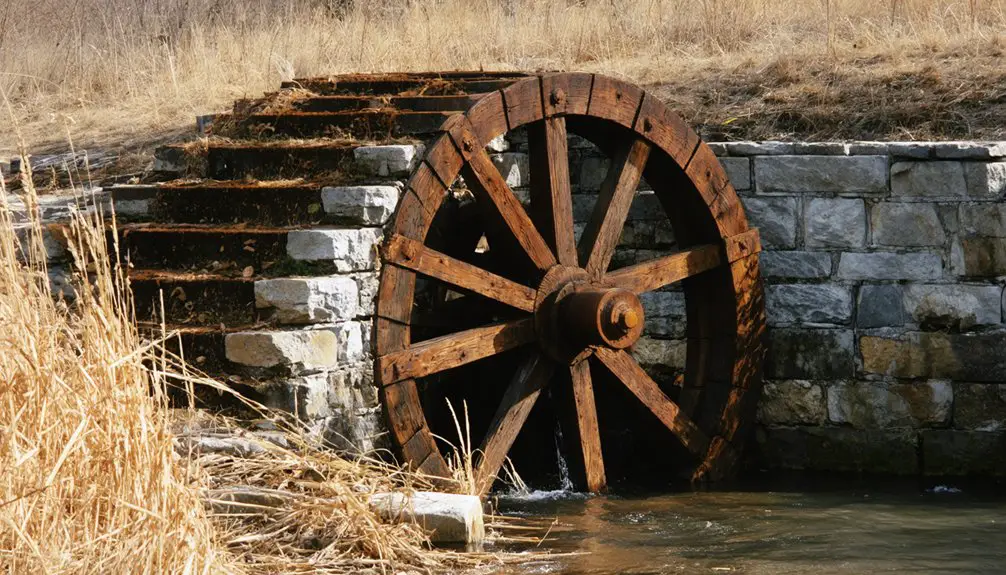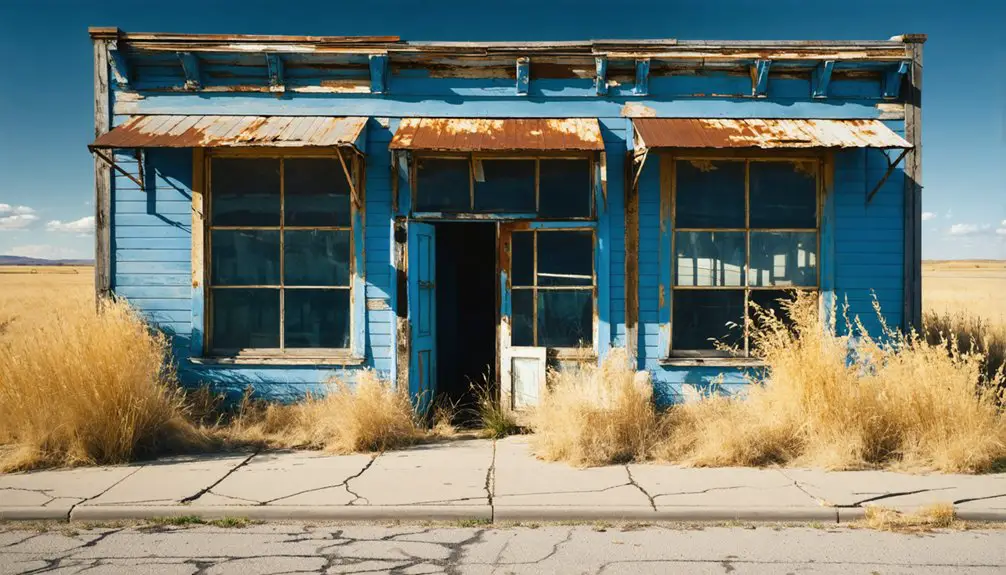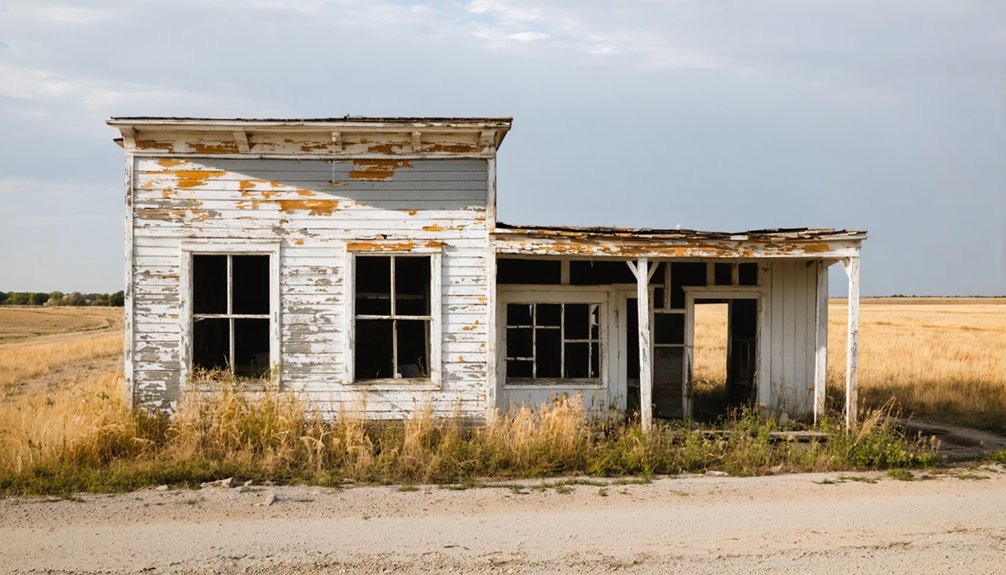
Planning a ghost town road trip to Reamsville, Kansas means trading pavement for gravel and stepping into a place that’s quietly held onto its past since 1878. You’ll find scattered remnants of rural settlement, the legacy of the Old Dutch Mill built in 1882, and a small resident population that keeps it from fully fading away. Pack smart, check road conditions, and bring a good map. There’s far more to this Smith County crossroads than first meets the eye.
Key Takeaways
- Reamsville, originally named Beaver in 1878, was renamed in 1882 alongside the construction of the iconic Old Dutch Mill landmark.
- Navigate gravel roads using a Kansas gazetteer or reliable map, and check local road conditions before departing for Reamsville.
- Visit during late spring or early fall for mild weather, and pack layered clothing including moisture-wicking and wind-resistant gear.
- Bring a camera with manual settings, extra batteries, SD cards, a wide-angle lens, and a tripod for quality documentation.
- Extend your road trip by exploring nearby ghost towns like Germantown, Densmore in Norton County, and Russell Springs in Logan County.
Why Reamsville Stands Out Among Kansas Ghost Towns
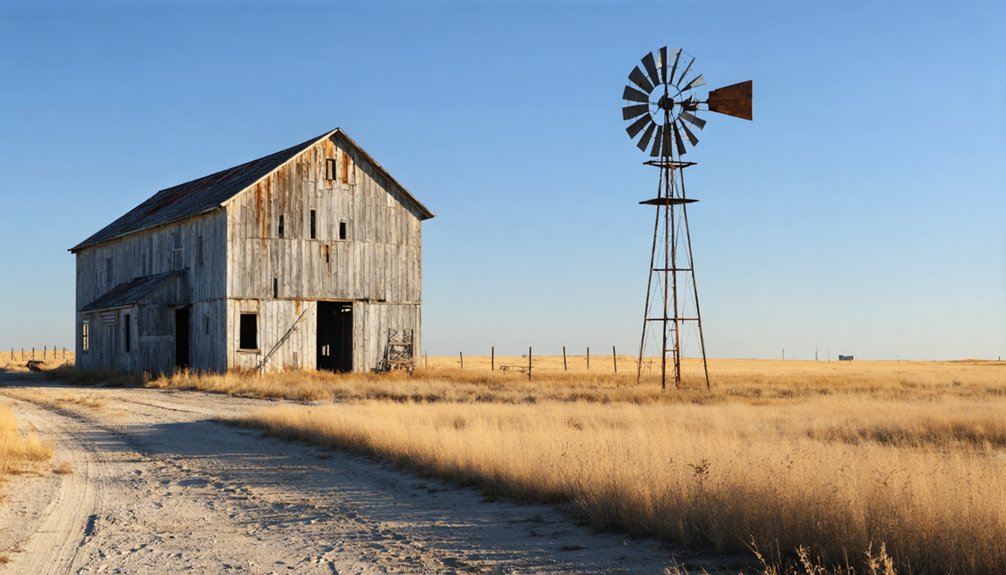
While most Kansas ghost towns fade into nothing more than a weathered cemetery or a crumbling foundation, Reamsville holds its ground a little differently. A small population still calls this Smith County settlement home, making it a semi-ghost town rather than a completely abandoned site.
Reamsville history stretches back to 1878, when it operated under the name Beaver before changing to its current name in 1882. That same year, an Old Dutch Mill was built, becoming one of the most distinctive Kansas landmarks tied to the town’s story.
If you’re drawn to ghost town explorations that offer more than empty fields, Reamsville delivers genuine rural heritage.
It’s a place where history didn’t entirely disappear — it just got quieter.
From Beaver to Reamsville: The Name Change That Stuck
When you dig into Reamsville’s past, you’ll find the town didn’t always carry that name. The community started out as Beaver, a simple rural settlement, until 1882 brought a renaming that permanently reshaped its identity.
That shift from Beaver to Reamsville is one of the small but telling details that makes tracing this ghost town’s history feel like piecing together a forgotten story.
Why Beaver Became Reamsville
Before it carried the name most locals recognize today, this quiet stretch of Smith County went by something far simpler: Beaver. In 1882, that changed — and the Beaver history behind that shift shaped Reamsville significance for generations.
Here’s what you should know:
- The original name, Beaver, reflected early settler naming patterns across rural Kansas.
- The rename to Reamsville happened in 1882, the same year the Old Dutch Mill was built.
- The post office had already been operating since 1878 under the Beaver name.
- Name changes like this often signaled community growth or a desire for distinct identity.
- The new name stuck for over a century, outlasting the post office itself.
That single decision in 1882 quietly defined how history would remember this place.
The 1882 Renaming Story
Something shifted in Smith County in 1882 — and it wasn’t just the name on the post office sign. When Beaver officially became Reamsville, the change carried real name significance for the community taking shape on the Kansas plains.
That same year, locals raised the Old Dutch Mill, anchoring the town’s identity to something tangible and lasting. You can feel that ambition still embedded in the landscape today.
The renaming wasn’t arbitrary — it marked a deliberate step toward building a town legacy worth remembering. Reamsville carried that name forward for decades, keeping its post office open until 1941.
When you visit now, you’re standing where that quiet act of reinvention happened.
The Old Dutch Mill: Built in Reamsville, Now in Smith Center
One of Reamsville’s most tangible connections to history stands miles away from where it was first built. The Old Dutch Mill, constructed in 1882, served as a defining Historic Landmark of the town before its relocation to Smith Center in 1938.
Here’s what you should know before you visit:
- The mill was built the same year Reamsville got its new name
- It operated as a functioning part of the rural community
- Locals moved it to Smith Center to preserve it
- It remains one of the region’s most recognizable historic structures
- You can visit it today as a standalone stop on your road trip
Don’t skip Smith Center — the Old Dutch Mill gives Reamsville’s story a rare, physical landmark you can actually stand beside.
What Still Stands in Reamsville Today
Few ghost towns hold onto even a fraction of their original identity, but Reamsville still manages to keep a small resident population alive in the area. That alone sets it apart from most Kansas ghost towns that have gone completely silent.
Your remnants exploration here will turn up scattered evidence of old rural settlement patterns — the kind that quietly tell the story of a town that once had real momentum.
The mill history adds another layer worth tracing. Though the Old Dutch Mill no longer stands on its original ground, knowing it was built here in 1882 changes how you read the landscape around you.
Reamsville isn’t a museum. It’s a living fragment of the past, and that makes your stop here feel genuinely rewarding.
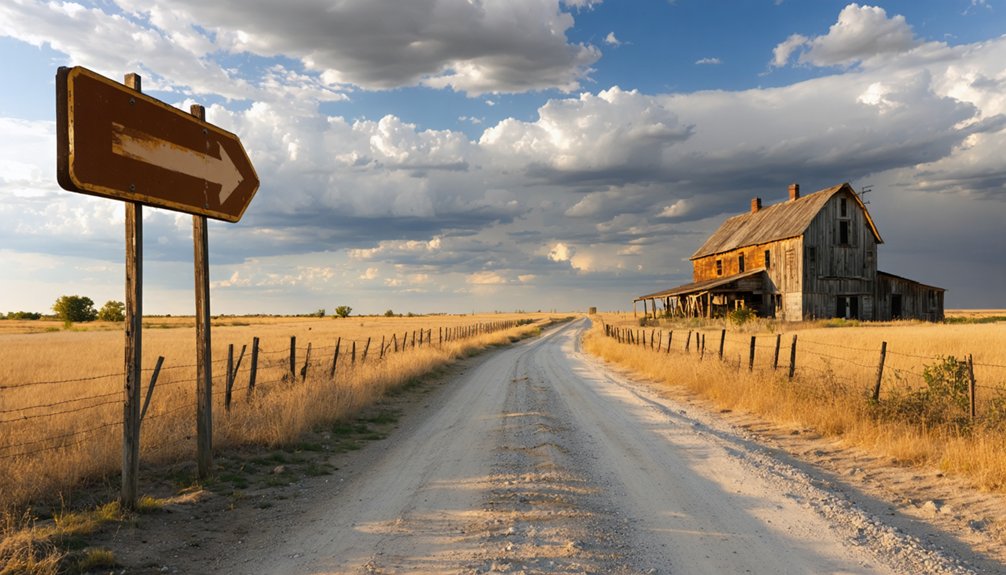
Getting out to Reamsville means trading paved roads for gravel at some point, so you’ll want a Kansas gazetteer or a reliable map app before you head out.
Road conditions can shift fast in rural Smith County, especially after rain, so plan accordingly.
Keep these navigation tips in mind:
- Download offline maps before leaving cell service behind
- Check road conditions locally or through the Kansas county road department
- Allow extra drive time for gravel stretches and scenic routes worth slowing down for
- Pack a physical Kansas gazetteer as a backup
- Watch for unmarked intersections common across northwest Kansas back roads
Embrace the open landscape, trust your map, and treat the drive itself as part of the ghost-town experience.
When to Drive the Smith County Ghost Town Loop
Once you’ve sorted your maps and navigation plan, timing your run through the Smith County ghost town loop matters just as much as knowing which roads to take.
For best visiting conditions, aim for late spring or early fall. April through June gives you mild temperatures, manageable gravel roads, and good visibility before crops grow tall and block rural sightlines.
September and October offer cooler air and golden light that photographs beautifully against old structures.
Seasonal tips worth remembering: avoid late winter when gravel roads turn muddy and unpredictable, and skip midsummer unless you’re comfortable with intense Kansas heat and limited shade.
Weekday drives keep traffic minimal and the experience quieter.
Whatever season you choose, start early to give yourself unhurried time across multiple stops.
What to Pack Before You Drive Out to Reamsville

Before you head out to Reamsville, you’ll want to pack smart since northwest Kansas gravel roads and unpredictable weather can catch you off guard.
Bring a Kansas gazetteer or load an offline map app, because cell service gets thin fast once you’re off the main highways.
You’ll also want layered clothing for shifting temperatures and a camera with extra storage, since the rural landscape and any surviving structures are worth documenting carefully.
Navigation Tools and Maps
Packing 2 key navigation tools before you leave for Reamsville will save you a lot of frustration once you’re on the road.
Cell service gets spotty across Smith County’s rural stretches, so don’t rely solely on live navigation apps. Download offline maps before you leave civilization behind.
Here’s what to bring:
- A Kansas gazetteer or detailed road atlas covering Smith County
- Offline maps downloaded to your phone through Google Maps or Maps.me
- Screenshots of your planned route and key coordinates
- A list of nearby landmarks, including Smith Center, where the Old Dutch Mill was relocated in 1938
- Printed turn-by-turn directions for gravel-road segments
These tools keep you moving confidently across open Kansas terrain without scrambling for a signal at every unmarked crossroad.
Weather-Ready Clothing Essentials
Kansas weather shifts fast, and a ghost-town run through Smith County will expose you to open terrain with very little shelter between stops.
You’ll want clothing layers that adapt to changing weather conditions throughout the day. Start with a moisture-wicking base layer, add a fleece mid-layer, and pack a wind-resistant outer shell. Northwest Kansas winds cut hard even on mild days, so don’t underestimate them.
Wear sturdy, closed-toe shoes for walking overgrown lots or gravel paths around old structures. A wide-brim hat handles both sun and light rain.
Toss a compact rain jacket in your bag regardless of the forecast. Freedom on the road means staying comfortable enough to keep moving, and smart packing keeps you in control of your day.
Camera and Documentation Gear
Once your layers are packed and your boots are ready, turn your attention to documentation gear, because a ghost-town run through Reamsville deserves more than a few blurry phone snapshots.
Pack smart and shoot intentionally. These documentation tips will keep your memories sharp:
- Camera with manual settings — dial in camera settings for flat Kansas light and deep shadow contrast
- Extra batteries and SD cards — remote spots offer zero backup options
- Wide-angle lens — captures sprawling rural landscapes and the Old Dutch Mill’s scale
- Portable tripod — stabilizes low-light interior shots of aging structures
- Notebook or voice recorder — log location details, dates, and observations on the spot
Good documentation transforms a quick stop into a lasting story worth sharing.
Smith County Ghost Towns Near Reamsville Worth the Detour
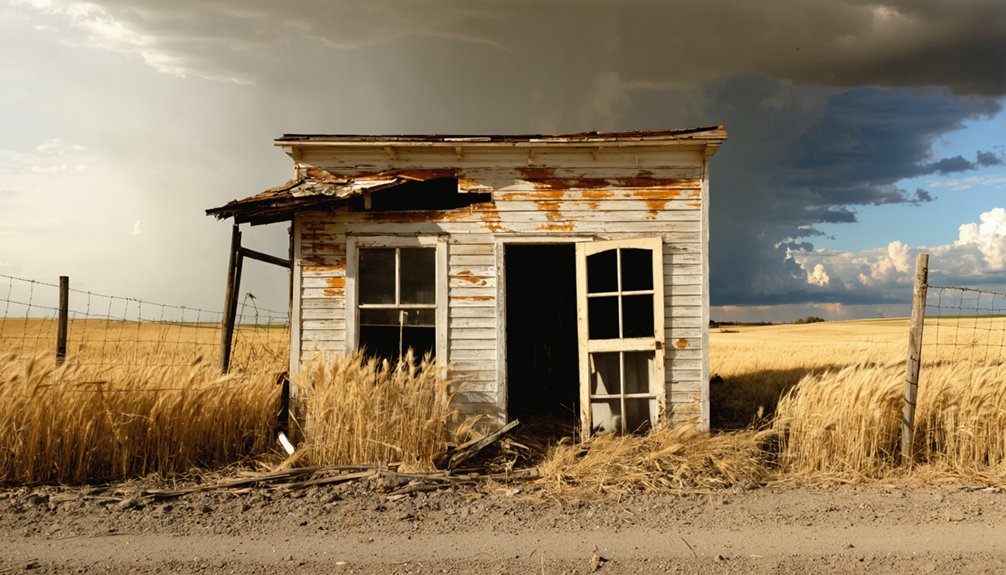
While Reamsville deserves its spot on your Smith County itinerary, the surrounding area rewards explorers willing to add a few extra miles to their route.
Germantown, another Smith County ghost town, has surrendered nearly everything to time except its cemetery, where haunted histories linger quietly among weathered headstones. It’s a sobering contrast to Reamsville’s semi-inhabited status.
Push into neighboring counties and the rural relics multiply.
Push beyond familiar borders and the landscape reveals its secrets — weathered, waiting, and worth every extra mile.
Densmore in Norton County still holds deteriorated buildings and old churches worth photographing.
Russell Springs in Logan County offers a semi-ghost town experience with just enough remaining structure to spark your imagination.
Each stop deepens your understanding of how Kansas settlements rose, struggled, and faded, making the detours absolutely worth your time.
Frequently Asked Questions
Is There a Formal Historic Marker or Sign at Reamsville?
You won’t find a formal historic marker at Reamsville, but don’t let that stop you — the town’s historic significance and local legends live boldly in its landscape, old structures, and the iconic Old Dutch Mill’s story.
Was Reamsville Ever Connected to a Railroad Line?
The available records don’t confirm a railroad connection for this ghost town. Reamsville’s railroad history remains unclear, so you’ll want to dig deeper into Smith County’s regional rail archives before your visit.
Are There Any Graves or Cemeteries Located Near Reamsville?
Curious about cemeteries close by? You’ll find graveyards dotting the surrounding Smith County landscape, each carrying ghost stories and historical significance that’ll deepen your understanding of Reamsville’s rural roots and the communities that once thrived nearby.
Can Visitors Access Reamsville Land or Is It Privately Owned?
You’ll want to respect land ownership when exploring Reamsville’s ghost town accessibility, as much of the area is privately owned. Stick to public roads, observe posted signs, and you’ll still soak in the rural atmosphere.
What Was the Population of Reamsville at Its Peak?
The exact peak population isn’t recorded in available ghost town history, but you’ll find local legends suggest Reamsville once thrived as a bustling rural hub before its long, quiet decline into semi-abandonment captivated curious travelers like you.
References
- https://en.wikipedia.org/wiki/Germantown
- https://legendsofkansas.com/kansas-ghost-town-list/
- https://www.youtube.com/watch?v=KL2CXcc_HxY
- https://www.youtube.com/watch?v=KBXINX0xqnU
- https://www.youtube.com/watch?v=8dtIPX7pIqI
- https://thewanderingpigeon.com/2015/10/03/day-of-kansas-ghost-towns/
- http://kansasghosttowns.blogspot.com/2013/03/a-listing-of-reno-county-dead-towns.html
- https://www.facebook.com/BuildingInThePast/posts/reamsville-smith-county-kansas-old-dutch-wind-mill-1914-1960s-2018reconstructed-/2732555170157982/
- https://en.wikipedia.org/wiki/List_of_ghost_towns_in_Kansas
- https://kansasreflector.com/2023/03/26/ruined-beauty-of-kansas-ghost-towns-and-buildings-splinter-under-weight-of-time/