You’ll need high-clearance 4WD and serious determination to reach Red Lion’s weathered ruins at 8,061 feet in Montana’s Flint Creek Range. Plan your visit between late May and September when the final four-mile stretch of rocky, mining-scarred road becomes passable. Pack bear spray, offline GPS, emergency supplies, and extra water—cell service doesn’t exist here. September offers the sweet spot of fall colors and solitude, though you’ll want to understand the full scope of preparation before attempting this remote backcountry adventure.
Key Takeaways
- High-clearance 4WD vehicle required for final four-mile rocky stretch along North Fork of Flint Creek in Granite County.
- Visit late May through September for accessible routes; September offers fall foliage and fewer crowds.
- Explore stamp mill foundations, tramway towers, and collapsed mine entrances while avoiding unstable ground and toxic gases.
- Red Lion peaked in 1890 with 500 residents after discovering six-foot gold vein; abandoned by 1913.
- Pack paper maps, bear spray, spare tire, water, first-aid kit, and offline GPS for remote backcountry conditions.
Getting to Red Lion: Routes and Road Conditions
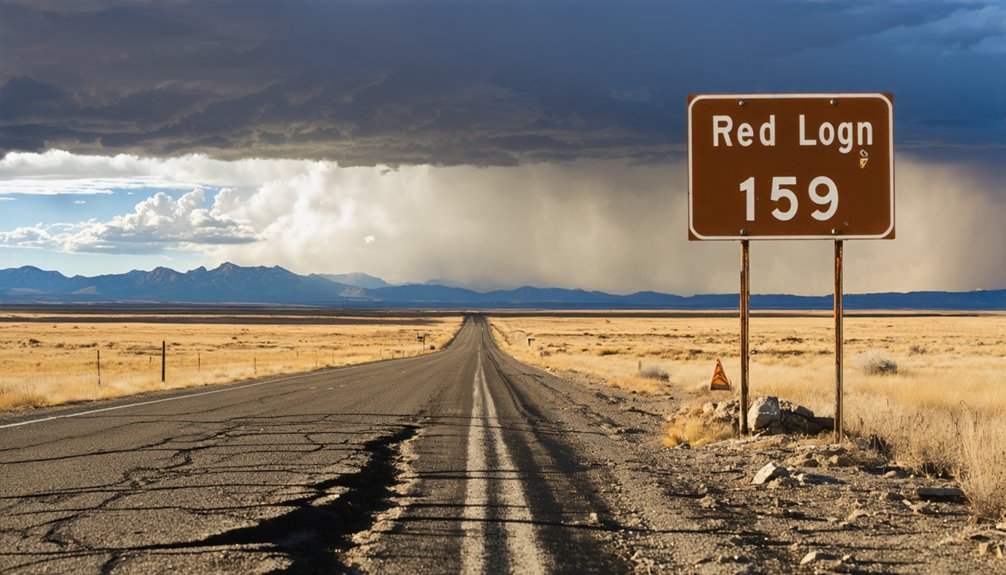
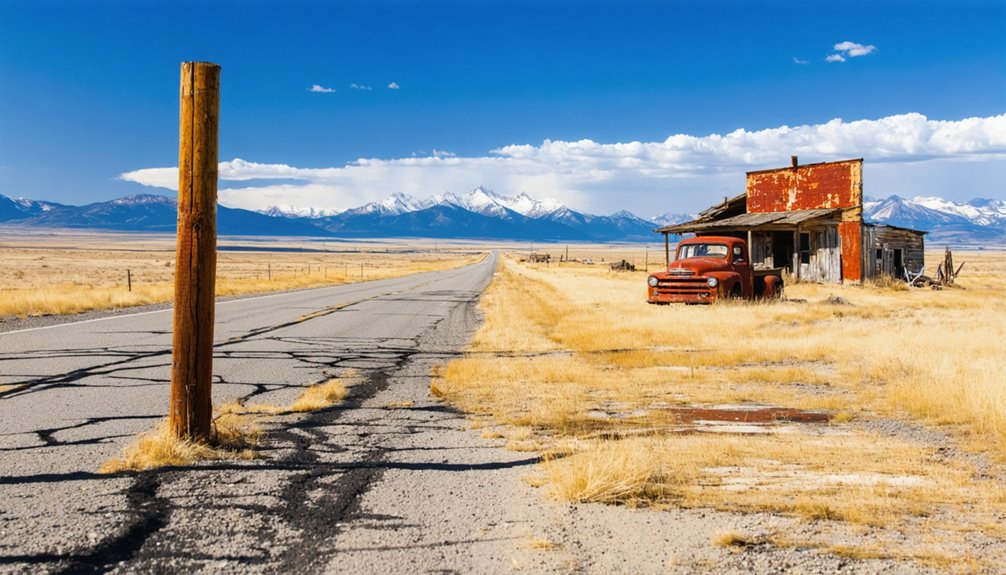
Tucked up the North Fork of Flint Creek in Granite County, Red Lion makes you work for the visit—and that’s exactly what keeps it authentic. You’ll start on Discovery Basin Road from Georgetown Lake, continuing past the North Fork crossing before turning right beyond Cable Campground. The real adventure begins on that final four-mile stretch—remote mining roads demanding a high-clearance 4WD, especially where the grade steepens toward the mountain ridge.
These aren’t your groomed tourist routes. Expect rocky, uneven surfaces shaped by decades of mining activity. Seasonal accessibility challenges mean timing matters: summer’s your sweet spot, while spring mud and winter snow render the route impassable. Fuel up beforehand, pack spare tools, and don’t count on cell signal. The narrow, winding approach rewards preparation.
Best Times to Visit This Montana Mining Camp
You’ll find Red Lion’s rugged roads most accessible from late May through September, when snowmelt clears the backcountry routes and temperatures hover in the pleasant 60s to 70s.
September stands out as the sweet spot—you’ll dodge July’s peak crowds and mosquitoes while catching the first golden sweep of fall colors across the surrounding hills.
Winter transforms these mining roads into impassable snow corridors, so unless you’re equipped for serious backcountry travel, save this ghost town adventure for warmer months.
Summer Access and Weather
Summer transforms Red Lion into an accessible mountain retreat, though you’ll want to time your visit between late June and early September when snow finally releases its grip on the Discovery Basin road. Your standard two-wheel drive vehicle will handle the four-mile journey north on North Fork Flint Creek road, where scenic vistas unfold around every ridge curve.
Mild mountain temperatures—typically 60-75°F—make exploring the scattered log cabin ruins and towering tramway structures genuinely comfortable. You’ll appreciate those extended daylight hours, giving you freedom to trace the old tram line’s 3,800-foot path upward without rushing.
Winter’s harsh conditions completely block access here, transforming this outdoor recreation paradise into an impassable snowbound fortress until summer liberates the high country once again.
Fall Colors and Crowds
As September arrives in the high country around Red Lion, the mountainsides ignite with color—aspens and cottonwoods blaze golden yellow against dark evergreens, while scattered willows add crimson accents along creek beds. You’ll find peak fall foliage viewing from mid-September through early October, when reduced tourism crowds make exploration genuinely liberating.
Prime nearby routes include:
- Eagle Creek Road – sweeping aspen stands framing Gardner River Canyon
- U.S. Route 89 – Paradise Valley’s cottonwoods backed by rugged peaks
- Going-to-the-Sun Road – brilliant tamarack gold in Glacier National Park
- Seeley-Swan Valley corridor – winding larch-lined lakes on Highway 83
You’ll enjoy shoulder-season lodge prices, crisp hiking weather, and increased wildlife activity. Late September delivers stunning colors before areas like Silver Gate empty out, leaving open roads and quiet trails entirely yours.
Winter Road Conditions
Avalanche dangers increase dramatically on steeper approaches, particularly after heavy snowfall or rapid temperature changes. If you’re determined to visit during winter months, you’ll need proper backcountry equipment and avalanche awareness training.
Most adventurers wisely wait until late May or June, when melting snow finally reopens access and reduces risks, letting you explore Red Lion’s ruins safely.
What Remains: Exploring the Historic Structures
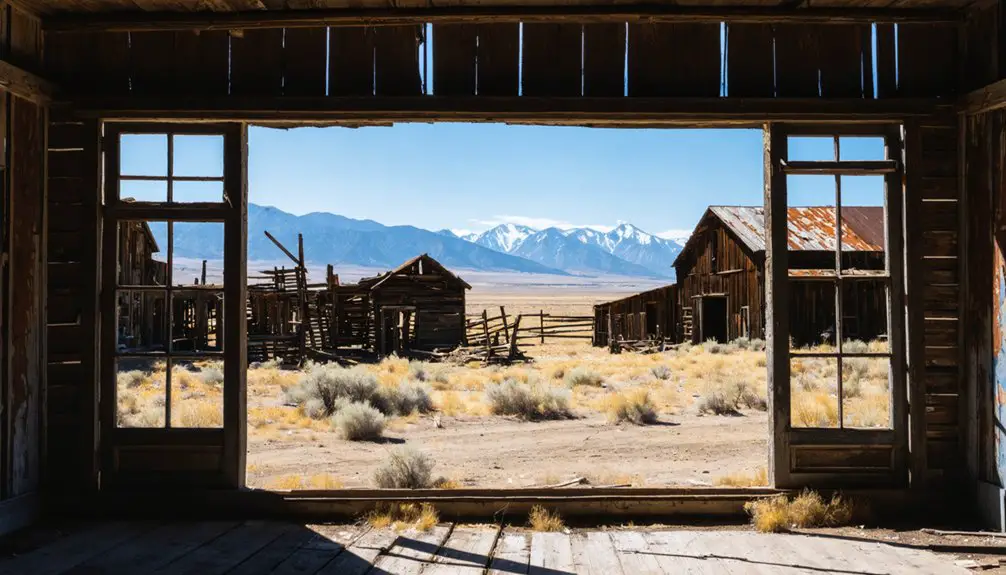
You’ll spot the sturdy stone foundations of the old stamp mill first—massive blocks that once supported machinery processing ore from that incredible six-foot gold vein.
Above the mill site, wooden tramway towers still climb the mountainside, marking the 3,800-foot route that carried ore down from mines perched at 8,061 feet.
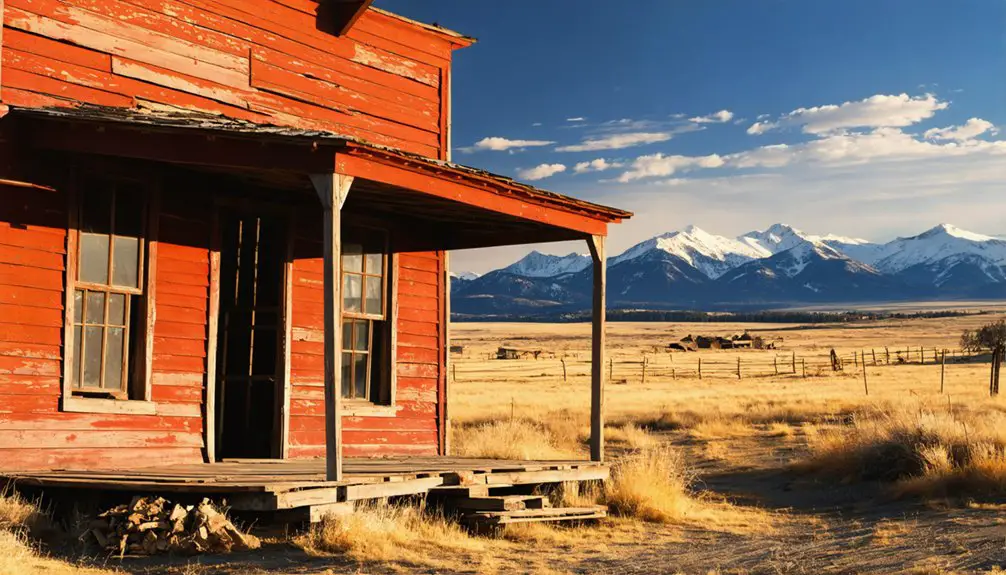
Near the collapsed mine entrances, you can trace the camp’s layout through scattered cabin ruins where 500 residents once lived during Red Lion’s glory years between 1902 and 1908.
Mill Foundations and Equipment
Two massive mill foundations anchor the hillside at Red Lion, their weathered stone bases marking where nearly 200 men once processed ore around the clock. You’ll discover remnants of stamp mill operations scattered across both sites—the late 1890s structure and its early 1900s successor that ran simultaneously during peak production.
The vintage machinery tells stories of 24-hour operations:
- Stamp mill components from the six-month night-and-day run following the six-foot vein discovery
- Iron frameworks where workers processed Hannah mine’s gold, iron, and copper
- Stone bases requiring no structural renovations despite a century of abandonment
- Equipment fragments connecting to 1902–1908’s most productive years
These foundations represent more than ruins—they’re blueprints of ambition, showing exactly where determined prospectors built their fortune-seeking empire before 1913’s inevitable decline.
Tramway System Remnants
Beyond the mill foundations, a network of tram line remnants stretches across Red Lion’s hillsides, tracing the arteries that once pumped ore from mine to processing center. You’ll spot concrete tower bases at regular intervals, their spacing revealing the unique transportation engineering that defied Montana’s rugged terrain.
Cable routing channels cut into rock faces still mark where steel ropes hauled buckets between stations.
Follow the original pathways to terminal sites where loading operations once hummed with 200 miners’ activity. The blacksmith shop and boarding house foundations cluster nearby—remnants of the 500-person town that supported this mountain operation.
Environmental preservation challenges are evident: decades of weather have scattered metal fragments and buried foundations, leaving you to piece together this industrial puzzle yourself.
Mine Entrance Locations
While most of Red Lion’s mine entrances have collapsed or been deliberately sealed for safety, several portals remain identifiable along the ridge above the mill site. You’ll need to trek uphill from the old foundations to spot these historic mine shaft locations where 200 miners once extracted gold during peak operations.
Mine exploration risks you should know:
- Unstable ground surrounds collapsed portals—test every step
- Toxic gases accumulate in sealed shafts even after decades
- Rotted timber supports can fail without warning
- Hidden vertical shafts lie concealed beneath brush and debris
Keep your distance and photograph from safe vantage points. The real treasure here isn’t what’s underground—it’s standing where those 1887 prospectors stood, imagining their determination as they carved these passages into solid rock.
The Rise and Fall of Red Lion’s Mining Operations
The story of Red Lion begins with a glittering promise in 1875, when prospectors first discovered gold in the rugged mountains near Philipsburg. You’ll find the real action kicked off in 1887, when miners struck the main vein, followed by the Walkers’ six-foot gold discovery in 1890. That’s when Red Lion roared to life—ore running the mill day and night for six months straight.
By 1902–1908, you’re looking at peak production with 200 miners working alongside nearly 200 mill workers. A 3,800-foot tramway hauled ore down from 8,061 feet elevation, though equipment maintenance at that altitude presented constant resource extraction challenges.
Four additional mines—Hannah, Modoc, American Flag, and Golden Eagle—joined the bonanza. Then it all vanished. By 1913, the veins had played out, leaving only ruins.
Essential Gear and Supplies for Your Trip

Before you head into Red Lion’s windswept ruins, you’ll need more than enthusiasm—Montana’s backcountry demands respect and preparation. Smart packing strategies start with layered clothing for unpredictable weather shifts, sturdy boots for crumbling foundations, and waterproof gear for sudden storms.
Your gear checklists should prioritize these essentials:
- Navigation tools: Paper maps and offline GPS for cell-free zones
- Bear safety: Accessible bear spray and noise-makers for wildlife encounters
- Vehicle backup: Spare tire, emergency kit, and breakdown supplies
- Survival basics: Water bottles, non-perishable snacks, first-aid kit, and headlamp
Pack bear spray within arm’s reach—not buried in your backpack. Store food properly, carry emergency communication devices, and maintain a well-stocked vehicle kit. Independence means self-reliance when you’re miles from civilization.
Nearby Ghost Towns Worth Adding to Your Itinerary
While Red Lion anchors your journey, you’ll find Montana’s most compelling ghost towns clustered within a two-hour radius of each other. Marysville’s remarkably intact mining structures in Lewis and Clark County reveal what boomtown prosperity looked like before the gold ran dry, with skeletal stamp mills still standing against mountain backdrops.
Castle Town and Elkhorn, both accessible from the Pioneer Scenic Byway, reward drivers with weathered false-front buildings where you can peer through sagging doorframes into miners’ abandoned lives.
Castle and Elkhorn Towns
If you’re already making the trek to Red Lion, Castle Town deserves a spot on your itinerary—it’s one of Montana’s most accessible and well-preserved silver camps. The Hensley family history runs deep here, with brothers developing the Cumberland mine after Lafe traced silver-carbonated ore upstream in 1885.
Castle preservation efforts by current landowners mean you’ll find:
- Several original structures standing—cabins, businesses, and the schoolhouse
- Stone foundations marking where 2,000 residents once lived
- Forest Service Road 211 cutting straight through town
- Clear views from public roads (though surrounding land’s private)
Castle peaked at 2,000 souls with 14 saloons before the 1893 silver crash emptied it overnight. You’ll need permission for close-up exploration, but the drive alone rewards.
Marysville’s Preserved Mining Heritage
Twenty-five miles northwest of Helena, Marysville sprawls across mountainsides just four miles below the Continental Divide, offering ghost town enthusiasts a rare find: a mining settlement where you can still walk among dozens of original structures from the 1880s-1920s. Tommy Cruse’s legendary Drumlummon Mine once pulled $30 million from these hills, transforming Marysville into what was reported as the world’s richest gold district by 1900.
You’ll discover authentic cultural heritage impacts everywhere—from the cemetery holding Belmont Mine disaster victims to weathered buildings that housed 4,000 residents during the peak boom. Historic preservation efforts here mean minimal reconstruction, giving you unfiltered access to Montana’s mining past. The 150-ton mill ruins and surviving storefronts create a “sidewalk of history” you can explore freely, without crowds or restrictions.
Photography Tips for Capturing Red Lion’s History
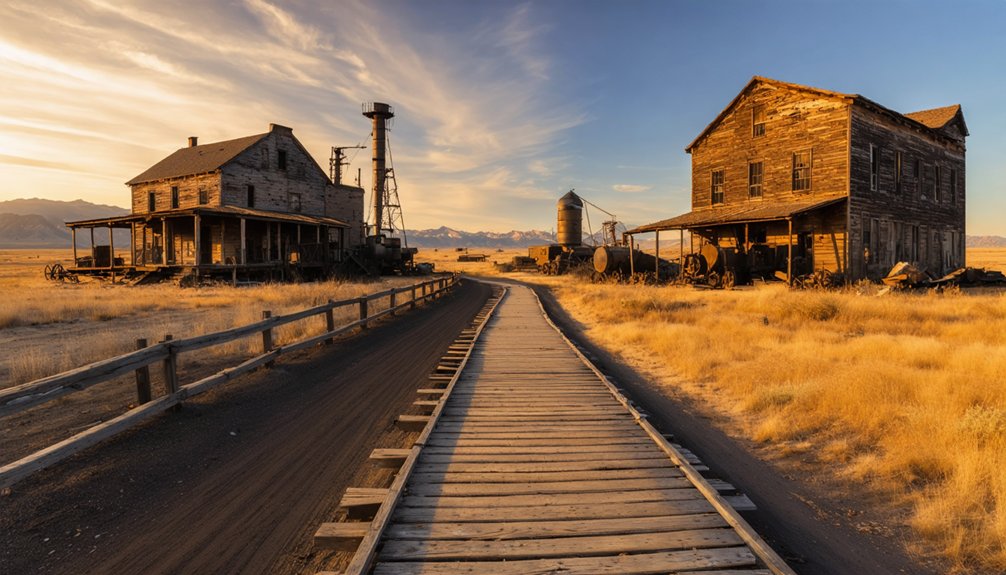
Capturing Red Lion’s haunting beauty demands more than just pointing your camera at crumbling walls. You’ll need strategic timing and composition to immortalize these 1890s remnants properly.
Golden hour transforms the Red Lion stamp mill into amber-lit poetry, while overcast skies reveal ore details without harsh shadows washing out equipment preservation evidence. Position yourself low to emphasize the six-foot gold vein outcrops that started it all in 1875.
Essential shooting techniques:
- Use tramway paths as leading lines toward mill ruins
- Frame isolated cabins against Castle Mountains backdrop
- Shoot at f/8-f/11 for sharp structural depth
- Apply polarizing filters on metallic ore surfaces
Pack your wide-angle 16-35mm lens and sturdy tripod. The 3,800-foot tramway and Hannah mine won’t photograph themselves, and these fragments won’t last forever.
Safety Considerations and Private Property Boundaries
Your stunning Red Lion photographs won’t mean much if you’re nursing a twisted ankle three miles from your vehicle—or worse, facing trespassing charges. Ghost towns aren’t theme parks; many sit on private land where unauthorized entry violates property rights. Check BLM guidelines and respect boundary markers—respecting landowner rights protects everyone’s access.
Pack essentials: extra water, first aid kit, bear spray, and layered clothing. Maintain 100 yards from bears, 25 from mountain goats. Travel in groups of three minimum, making noise around blind corners. Carry vehicle recovery gear and avoid using historic structures as winch anchors—maintaining historic integrity means leaving towers and buildings untouched.
Check distance to nearest EMS; trips over 30 minutes out require an Advanced First Aider. Freedom means responsibility.
Where to Stay: Lodging Options Near Granite County
After traversing rutted mountain roads and photographing weathered mining structures, you’ll want more than a sleeping bag on rocky ground.
Granite Lodge delivers authentic Montana hospitality with luxury lodging amenities that’ll soothe your adventure-weary bones. Their all-inclusive setup means you’re fueled for tomorrow’s explorations, while comfort bikes let you roam the property freely.
Elite rooms feature private balconies overlooking Rock Creek Valley’s grasslands—perfect for sunrise coffee after ghost town adventures.
Consider these accommodation tiers:
- Elite Rooms (Sharps, Springfield) – 397 sq feet with king beds and valley views
- Premium Rooms (Winchester, Remington, Appaloosa) – 396 sq feet, ground-level accessibility
- Classic Rooms (Colt, Derringer) – 315 sq feet, combinable for families
- Alternative Options – Copperhead Lodge, vacation rentals, Philipsburg hotels
Ranch activity options complement your ghost town explorations perfectly.
Understanding Red Lion’s Place in Montana’s Gold Rush Legacy
While prospectors were still celebrating strikes at Bannack and Virginia City in the 1860s, Montana’s gold fever spread like wildfire through every promising gulch and mountain range.
Montana’s gold fever spread like wildfire through every promising gulch and mountain range during the legendary 1860s rushes.
Red Lion’s 1887 discovery came later than those legendary rushes, but its location context at 8,061 feet in Granite County placed it squarely within Montana’s richest mining corridor.
You’ll find Red Lion’s story mirrors the cultural influences that shaped every Montana boomtown—that intoxicating cycle of sudden wealth, frantic development, and inevitable decline.
When the Walkers struck that six-foot vein in 1890, Red Lion exploded from wilderness to a 500-person camp with two mills running day and night.
Frequently Asked Questions
Can I Legally Take Artifacts or Minerals From the Red Lion Site?
You can’t legally take artifacts due to historical artifact preservation laws, and mineral harvesting regulations require permits on public lands. Even ghost towns have rules protecting their heritage, so photograph your discoveries instead of pocketing them.
Are There Guided Tours Available for Red Lion Ghost Town?
No guided tours availability exists for Red Lion—you’re like a lone prospector charting unexplored territory. Local interest in preserving town remains minimal, so you’ll discover this forgotten settlement independently, embracing true freedom through self-guided exploration.
What Cell Phone Coverage Can I Expect in the Red Lion Area?
You’ll face limited signal strength and intermittent connectivity in Red Lion’s remote terrain. Verizon offers your best shot, but don’t count on reliable service. Download maps beforehand—this ghost town sits beyond civilization’s digital reach.
Is Red Lion Suitable for Visiting With Young Children?
Red Lion isn’t ideal for young children. Accessibility for families proves challenging with rough terrain and abandoned structures, while safety considerations for children include unstable buildings, wildlife encounters, and zero emergency services in this remote location requiring constant supervision.
Were There Any Famous Outlaws or Notable Figures Associated With Red Lion?
Red Lion’s records don’t reveal specific famous outlaws, though notorious cattle rustlers operated throughout Montana’s remote valleys during its era. Prominent mining tycoons likely passed through, but the town’s isolation kept it off major outlaw routes unlike nearby settlements.