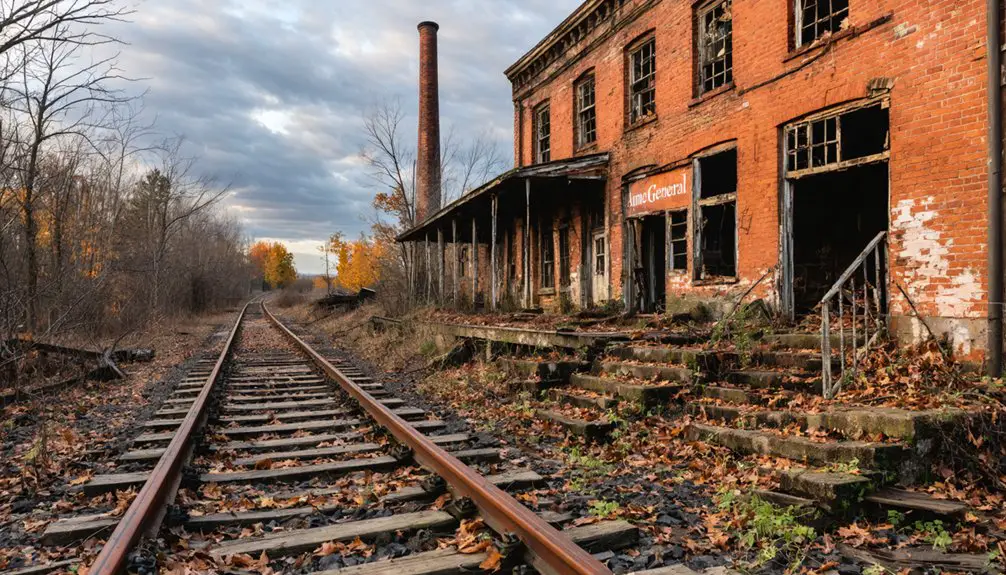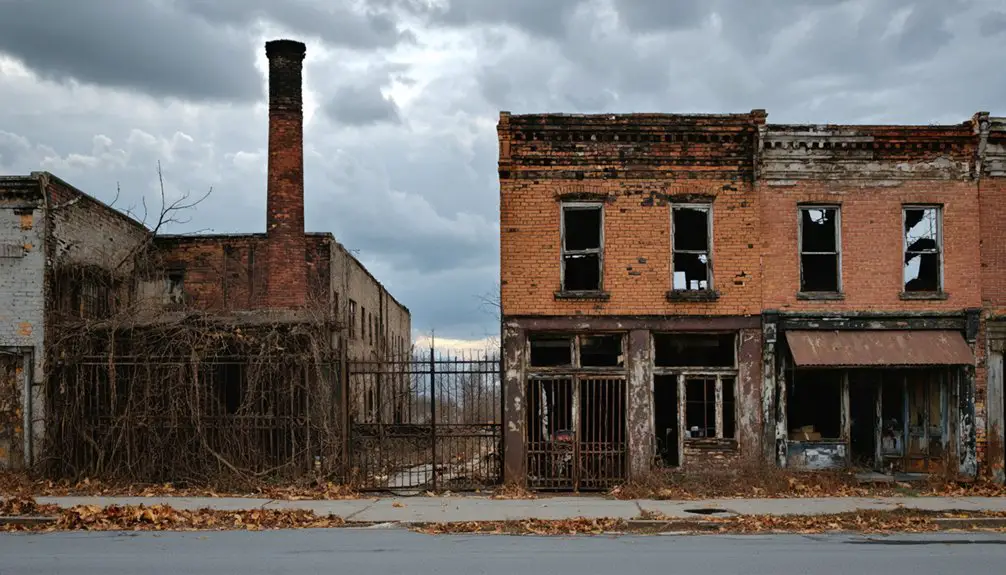
You’ll find Reed scattered across Pennsylvania’s anthracite coal region, where 19th-century mining operations left behind a haunting landscape of abandoned structures and extraction sites. Your road trip should prioritize safety, as underground coal fires still burn beneath seemingly solid ground, creating toxic vents and sinkholes reaching 900°F. Plan your visit during cooler months when steam plumes are more visible, and bring protective gear for exploring unstable terrain. The journey connects multiple historic mining towns along Pennsylvania’s Ghost Town Trail, where you’ll discover preserved furnaces, copper tunnels, and graffiti-covered remnants that tell stories of industrial ambition and environmental consequences.
Key Takeaways
- Reed showcases Pennsylvania’s coal mining heritage with preserved 19th-century structures, furnaces, and the Ghost Town Trail connecting historic sites.
- The underground coal fire burning since 1962 creates dramatic steam vents, sinkholes, and graffiti-covered Route 61 sections.
- Extreme caution is essential due to 900°F temperatures, toxic gases, unstable ground, and unmarked mine shafts throughout the area.
- Monitor oxygen levels, avoid closed structures, stay clear of ground cracks, and never venture near active steam vents or sinkholes.
- Access the Ghost Town Trail from Minersville Borough, located in Pennsylvania’s coal country region near historic mining operations.
Understanding Reed’s Industrial Mining Heritage
Deep in Pennsylvania’s coal country, the story of Reed begins with Thomas Reed’s 1783 log cabin and sawmill, a modest frontier outpost along the trail connecting Sunbury and Reading. Everything changed when Necho Allen discovered coal nearby in 1799, transforming this timbering settlement into a mining powerhouse.
Thomas’s son Jacob opened the area’s first anthracite operation in 1818, tapping into mineral wealth that would fuel America’s industrial revolution.
You’re standing where immigrants from England, Wales, Germany, and Ireland once converged, bringing their expertise to extract the world’s largest anthracite reserves. By 1831, the community’s historical significance warranted official incorporation as Minersville Borough. The population swelled beyond 9,000 by 1931, driven entirely by coal’s black gold beneath your feet.
What Makes Reed a Unique Ghost Town Destination
You’ll find Reed’s distinction lies in its raw, unvarnished preservation of Pennsylvania’s coal mining past—structures and artifacts remain frozen in time, offering an authentic glimpse into industrial Appalachia.
The terrain itself tells a story of extraction and abandonment, where unstable ground, collapsed mine shafts, and rusting equipment create both danger and intrigue for adventurous visitors. Unlike sanitized historical sites, Reed demands respect and caution as you navigate its hazardous landscape, making every discovery feel earned rather than curated.
Industrial Mining Heritage Preserved
Reed’s industrial mining heritage sets it apart from typical Pennsylvania ghost towns through its remarkable concentration of preserved 19th and early 20th-century operations spanning multiple mining industries. You’ll discover Eliza Furnace’s 1845 hot blast operation alongside Claghorn’s ambitious but short-lived coal town, while Reed Hill’s copper mining tunnels reveal the region’s diverse extraction history. These sites showcase industrial preservation efforts that maintain structures in arrested decay—you can still spot original furnishings and copper veins on tunnel walls.
The Ghost Town Trail, established in 1991 on the former Ebensburg and Black Lick Railroad corridor, connects these remnants along Blacklick Creek. Community restoration initiatives have transformed mining remains into accessible historical sites without sanitizing their authentic decay, letting you experience Pennsylvania’s industrial past firsthand rather than through polished museum displays.
Hazardous Terrain and Features
Beneath the quiet forests where Reed once stood, an underground inferno has burned since 1962, transforming this ghost town into one of Pennsylvania’s most dangerous—and fascinating—destinations. The fire behavior here defies conventional understanding—it rages across 400 acres at temperatures exceeding 900 degrees Fahrenheit, creating sinkholes up to 150 feet deep that swallow the landscape without warning.
You’ll find streets cracked and overgrown, with wildflowers blooming over warm ground that betrays the hellfire below. The environmental damage is staggering: toxic carbon monoxide vents, sulfur-laden air, and steam plumes mark where earth collapses into burning caverns. Former Route 61’s graffiti-covered asphalt once attracted adventurers before being buried under dirt mounds in 2020, though satellite imagery still reveals this scarred record/chronicle/account/documentation to nature’s fury.
Safety Considerations When Visiting Abandoned Mine Sites
Before you explore Reed’s haunting remnants, understand that abandoned mines harbor deadly threats beneath seemingly solid ground. Pennsylvania’s pre-1977 mining operations left behind unmarked vertical shafts plunging hundreds of feet deep, invisible pockets of toxic gases, and terrain where the earth can suddenly collapse under your weight.
You’re walking through a landscape where 1.4 million Pennsylvanians live within a mile of these hazards, and dozens are injured or killed annually at sites just like this one.
Hidden Shafts and Collapses
The abandoned coal mines threading beneath Western Pennsylvania’s surface create a deadly maze where ground cover often measures less than 50 feet thick—barely enough to support the weight of soil, roads, and buildings above. Reed’s landscape conceals open shafts plunging hundreds of feet downward, their deteriorating caps and collars failing without warning.
Sinkhole formation processes accelerate where false caps collapse into vertical drops, as seen when Elizabeth Pollard fell to her death in Unity Township’s sudden cavity. You’ll encounter high walls surrounding shaft openings, particularly treacherous for exploration. While remediation crews deploy thousands of tons of crushed rock as mine collapse prevention strategies, dozens of vulnerable sites remain unaddressed.
The Eastern Middle Anthracite field’s fractured strata connects surface pits to deep underground chambers—terrain that demands constant vigilance.
Toxic Gas Exposure Risks
Invisible killers seep from Reed’s abandoned mine openings year-round, releasing methane and carbon dioxide that transform seemingly safe exploration zones into death traps. You won’t smell or see these gases before they strike—carbon dioxide displaces oxygen in basements and low-lying areas, causing unconsciousness within thirty minutes at concentrations above 2,000 ppm.
Benzene leaks create toxic chemical soups that attack your bone marrow and nervous system. Federal agencies managing monitoring abandoned mines face centuries-long backlogs, leaving thousands of hazards unmarked. While mitigation strategies exist, Reed’s remote locations receive minimal oversight.
Test oxygen levels before entering structures near mine sites—readings below 19.5% demand immediate evacuation. Your adventurous spirit shouldn’t cost you your life in Pennsylvania’s coal country.
Unstable Ground and Erosion
Beyond the invisible threats lurking in Reed’s air, the ground itself betrays visitors at abandoned mine sites. Uncovered subsurface voids create sudden collapses beneath your boots, while eroded waste pile slopes shift without warning. You’re walking on fractured earth where mining operations permanently disrupted natural stability.
Critical ground hazards you’ll encounter:
- Open pit walls forming sheer cliff drops that crumble unexpectedly
- Subsidence craters appearing suddenly as underground chambers collapse
- Waste piles containing contaminated materials that slide downslope during rain
- Hidden mine shafts concealed by decades of vegetation growth
Deep gullies carve through properties, separating unstable terrain into isolated danger zones. Nature’s reclamation remains incomplete here—thinly vegetated mounds mask treacherous footing. Children face particular vulnerability to these hazards, making constant vigilance essential during exploration.
How to Get to Reed and Nearby Attractions
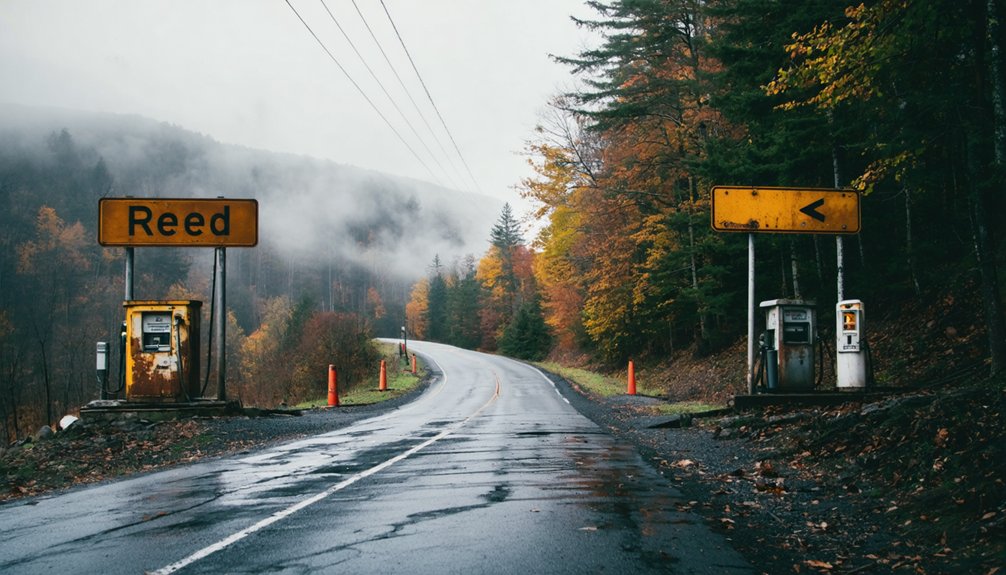
Nestled along the historic Ghost Town Trail in Western Pennsylvania, Reed serves as one of several abandoned coal mining settlements you’ll encounter on this 36-mile journey through industrial history. You can access the trail system through multiple trailheads, with Dilltown (PA Route 403) and Vintondale offering convenient parking, restrooms, and pavilions.
The Heshbon access point at PA Route 259 provides another gateway to explore this region’s forgotten communities. For overnight stays, you’ll find nearby accommodations in Ebensburg and along U.S. Route 422. Transportation options include driving to any trailhead, then hiking or cycling the flat railroad grades between ghost towns.
The trail’s year-round accessibility gives you freedom to plan spontaneous adventures. Pack essentials—cell service remains unreliable in these remote areas.
Best Time of Year to Explore Central Pennsylvania Ghost Towns
Timing your ghost town exploration can transform a pleasant outing into an unforgettable adventure through Central Pennsylvania’s abandoned coal and oil communities. Seasonal weather conditions dramatically affect accessibility and atmosphere at sites like Centralia, Pithole, and Eckley Miners’ Village.
Optimal visiting periods:
- Spring (April-May) – Mild 50-65°F temperatures with emerging foliage create comfortable hiking conditions and reduced crowds for off season visitor experiences
- Summer (June-August) – Peak access with daily tours at $9.50, though heat intensifies Centralia’s underground fire fumes
- Fall (September-October) – Vibrant autumn colors enhance mowed streets and 45-60°F weather perfect for unrestricted exploration
- Winter – Limited tours require reservations; snow obscures trails and 20°F temperatures challenge outdoor adventures
Spring and fall offer the sweet spot between accessibility and solitude.
What to Bring for Your Reed Exploration Adventure

What separates a frustrating scramble through brambles from a rewarding historical discovery? Your gear selection. Reed’s navigational challenges demand GPS with offline maps—cell signals vanish among these Pennsylvania valleys. Pack printed topographic maps showing geological formations near Tulpehocken Creek, where fort foundations hide beneath centuries of sediment.
You’ll need waterproof boots for muddy creek crossings and a metal detector for tracing 1739 property lines. Bring binoculars to scan distant farmland for stone house remnants. Layer clothing for unpredictable weather, and don’t skip the high-visibility vest when walking Route 22’s shoulders.
Essential items: first aid kit, two liters of water, tick repellent, and a headlamp for exploring wooded hollows. Document everything—camera, notebook, compass. This isn’t tourist territory; self-reliance unveils Reed’s secrets.
Combining Reed With Other Pennsylvania Ghost Town Stops
Reed’s isolation becomes less formidable when you thread it into a broader ghost town circuit across Pennsylvania’s diverse regions. You’ll maximize your adventure by clustering visits strategically:
- Ghost Town Trail Hub – Base yourself near the 53.3-mile trail connecting Saylor Park to Ebensburg, exploring Claghorn’s 1917 three-arch bridge and coal tipple ruins while natural landscape features tell mining stories.
- Indiana County Circuit – Visit Lackawanna No. 3, Shanktown, and Sidney—all within driving distance where on site interpretive signage illuminates coal heritage.
- Central Pennsylvania Loop – Combine Pandamonia in Tuscarora State Forest with Scotia’s Carnegie mining history for varied terrain.
- Western Cluster – Explore Yellow Dog Village’s mysterious 26-building complex alongside the Abandoned PA Turnpike for automotive-era ghost towns.
Each route offers distinct landscapes and freedom to wander forgotten communities.
Documenting Your Visit: Photography Tips and Regulations
While Pennsylvania’s ghost towns offer haunting visuals that beg to be captured, you’ll need to balance your creative vision with legal boundaries and ethical considerations.
Morning sessions provide ideal lighting for documenting Reed’s weathered structures, but adopt a nuanced approach that goes beyond typical “ruin porn.” Frame buildings within their neighborhood context to reveal the stories behind abandonment rather than exploiting decay for shock value.
Stay on public roads and sidewalks to remain legal—venturing into off-limits areas requires explicit permission. Respect these sites as more than photo opportunities; they’re remnants of communities where people lived and worked. Avoid blocking access points, and never disturb surfaces or resources. By respecting subjects with emotional care and historical dignity, you’ll create meaningful documentation that honors Reed’s forgotten past.
Frequently Asked Questions
Are Overnight Camping or Multi-Day Stays Permitted on Reed Property?
🏕 You’ll find camping regulations apply to state park properties, not private Reed land. Before pitching your tent, verify property ownership status—ghost towns often mix public access with private holdings requiring permission for overnight stays.
What Local Accommodations Exist Near Reed for Ghost Town Tourists?
You’ll find cozy local bed and breakfasts scattered throughout the Poconos region, plus nearby camping sites at Reeds Gap State Park. Chain hotels like Holiday Inn Express and vacation rentals through Airbnb offer comfortable basecamp options for your ghost town exploration.
Can Visitors Legally Remove Artifacts or Souvenirs From the Site?
No, you can’t legally remove artifacts—fines reach $5,000 for violations. Pennsylvania’s Act 54 protects sites with historical significance, while preservation guidelines classify Reed’s 50+ year-old relics as protected cultural resources requiring leave-no-trace principles during your exploration.
Are Guided Tours Available or Must Exploration Be Self-Directed?
You’ll find Reed’s exploration is entirely self-directed—there aren’t organized guided tours. The abandoned town relies on community involvement for preservation, giving you complete freedom to wander and discover its haunting remnants at your own adventurous pace.
What Cell Phone Coverage Exists for Emergency Communication at Reed?
Better safe than sorry—you’ll find strong cell signal strength around Reed, with AT&T and Verizon providing 100% coverage. Your emergency call capability remains solid, though satellite backup’s emerging for remote ghost town exploration beyond conventional networks.