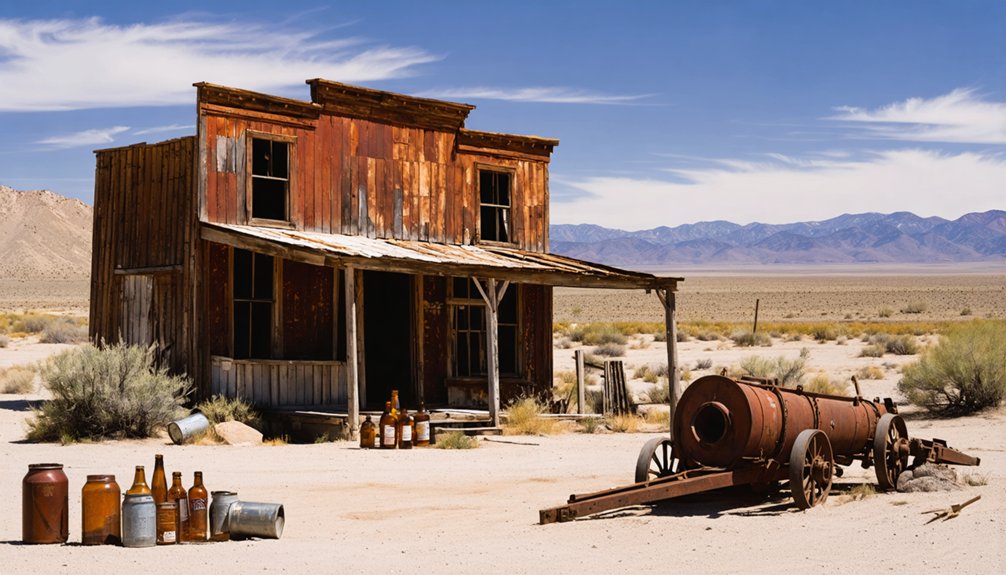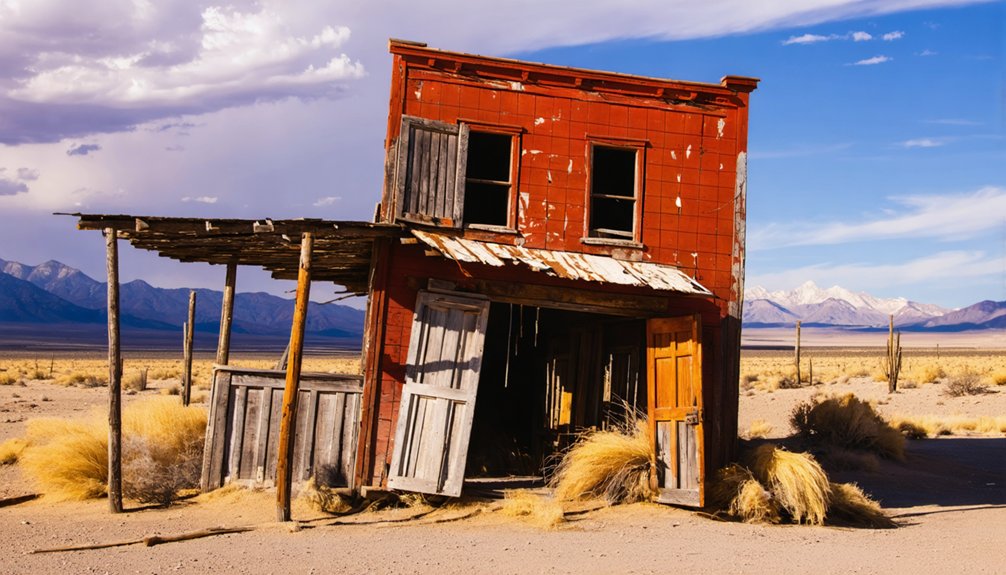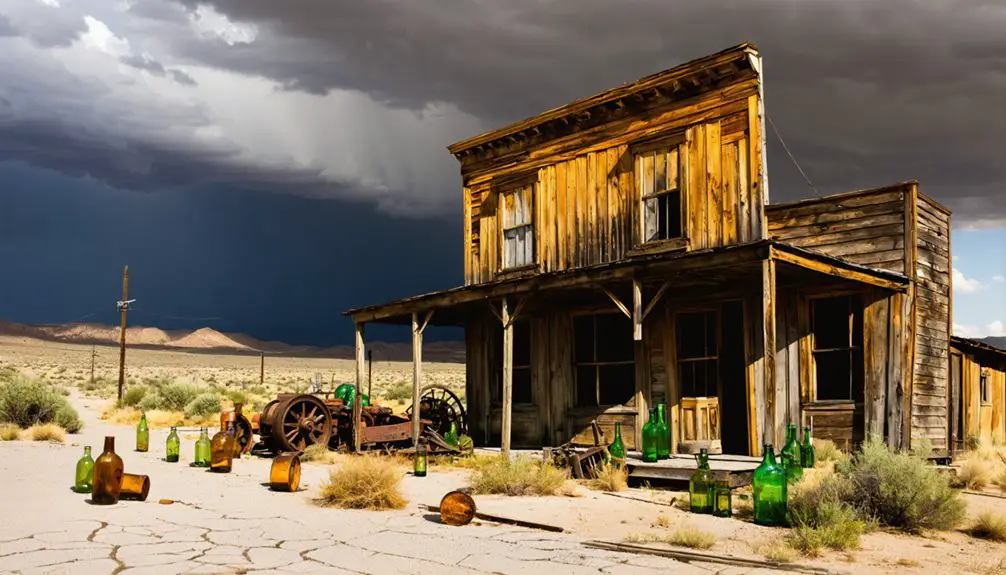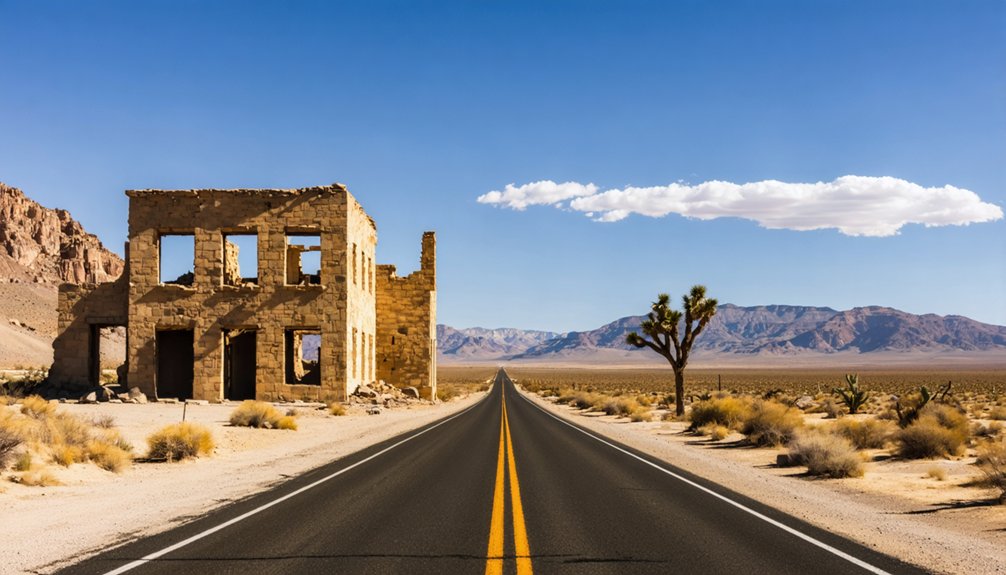
Planning a ghost town road trip to Rhyolite, Nevada starts with a 4-hour drive northwest from Las Vegas along US-95. You’ll find haunting ruins like the crumbling Cook Bank, the iconic Bottle House, and a preserved 1908 Railroad Depot waiting in the Bullfrog Hills. Visit in fall or spring for the best conditions. Pack extra water, offline maps, and your camera. There’s far more to this fascinating desert destination than you’d expect.
Key Takeaways
- Rhyolite is approximately 120 miles northwest of Las Vegas, a 4-hour drive via US-95 North through the Mojave Desert.
- Visit during fall or spring for ideal temperatures, avoiding summer heat that regularly exceeds 100°F.
- Key landmarks include the three-story Cook Bank ruins, 1908 Railroad Depot, and the unique 50,000-bottle Bottle House.
- Pack water, a tire repair kit, offline maps, and extra fuel, as cell service and gas stations are scarce.
- Shoot early morning or late afternoon for optimal golden hour lighting across Rhyolite’s photogenic ruins and desert landscapes.
What Made Rhyolite Nevada’s Wildest Boomtown?
When gold was discovered in the Bullfrog Hills on August 4, 1904, nobody could’ve predicted that a two-tent mining camp would explode into a city of 10,000 people within just three years. That’s the raw power of a gold rush.
Within six months, Rhyolite boasted 50 saloons, 35 gambling tables, 16 restaurants, and its own newspaper.
Within six months, Rhyolite had 50 saloons, 35 gambling tables, 16 restaurants — and already its own newspaper.
Two power plants kept electricity running throughout town. You’d have found barbers, bathhouses, banks, and a red-light district — everything a frontier boomtown needed to thrive.
At its peak, Rhyolite produced over $1 million in gold, a mining legacy worth roughly $27 million today.
It wasn’t just a camp — it was civilization carved straight out of the Nevada desert by sheer human ambition.
How to Get to Rhyolite From Las Vegas
Reaching Rhyolite from Las Vegas is a straightforward 4-hour drive covering roughly 120 miles northwest through some of Nevada’s most striking desert scenery.
You’ll head out on US-95 North, one of Nevada’s most rewarding scenic routes, cutting through open Mojave landscape before turning toward Beatty, your gateway town to the ghost town.
Road conditions are generally excellent on the main highway, though the final stretch into the Bullfrog Hills becomes unpaved, so check conditions before heading out. A standard vehicle handles the route comfortably in dry weather.
Beatty itself offers fuel, food, and last-minute supplies, making it a smart pit stop. From there, you’re just minutes away from stepping into one of the American West’s most haunting and unforgettable abandoned cities.
The Best Time of Year to Visit Rhyolite
You’ll get the most out of your Rhyolite visit by planning your trip during the fall or spring, when mild temperatures make exploring the ruins comfortable and photography conditions are ideal.
Summer heat in this Nevada desert basin can be brutal, pushing temperatures well above 100°F and turning a leisurely ghost town wander into a survival exercise.
If winter’s your only option, bundle up, since desert nights drop sharply, but you’ll likely have the haunting landscape almost entirely to yourself.
Ideal Visiting Seasons
Four seasons shape the Rhyolite experience, but not all of them work in your favor.
For the best visiting tips, plan around the desert’s temperamental climate and align your seasonal activities accordingly.
- Fall (Sept–Nov): Crisp air, golden light, perfect photography conditions
- Winter (Dec–Feb): Cool and quiet, occasional frost, fewer crowds
- Spring (Mar–May): Wildflowers bloom, mild temperatures, ideal hiking weather
- Summer (Jun–Aug): Brutal heat exceeds 100°F, potentially dangerous without preparation
- Year-round access: The site stays open, but your comfort depends on your timing
You’re free to show up anytime, but smart travelers respect the Mojave’s rules.
Skip summer unless you’re an early riser willing to explore before 9 a.m.
Fall and spring reward you most generously.
Weather Considerations for Visitors
Timing your visit to Rhyolite can make or break the experience. The Mojave Desert’s weather patterns shift dramatically between seasons, so you’ll want to plan strategically.
Spring (March through May) and fall (September through November) offer the most comfortable conditions, with mild temperatures perfect for exploring ruins and capturing stunning photographs.
Summer visits are risky. Temperature fluctuations between dawn and midday can swing from pleasant to dangerously hot, often exceeding 110°F by afternoon. You’ll drain your water supply faster than you’d expect while wandering exposed terrain.
Winter brings cooler, manageable days but occasionally freezing nights. Pack layers if you’re adventuring between December and February.
Whatever season you choose, arrive early morning when light is golden, shadows are dramatic, and desert heat hasn’t yet claimed the day.
The Ruins and Landmarks You Can’t Miss at Rhyolite
Rhyolite’s ruins feel frozen in time, offering some of the most striking remnants of any ghost town in the American West.
Rhyolite stands suspended in desert silence, its crumbling walls preserving the raw, timeless soul of the American West.
You’ll discover ghost town architecture and historical artifacts that tell a raw, unfiltered story of boom and bust.
Don’t miss these landmarks:
- John S. Cook Bank – Three stories of crumbling walls, Rhyolite’s most photographed structure
- Railroad Depot – An impressive 1908 station still standing against the desert skyline
- Bottle House – Built from 50,000 glass bottles, completely rehabilitated
- Old Jail – A partial remnant that hints at Rhyolite’s wilder days
- Broadway Mercantile Store – A ghostly shell of the town’s commercial heart
Walk freely through these open-air ruins with no admission fees required.
How to Get the Best Photos at Rhyolite
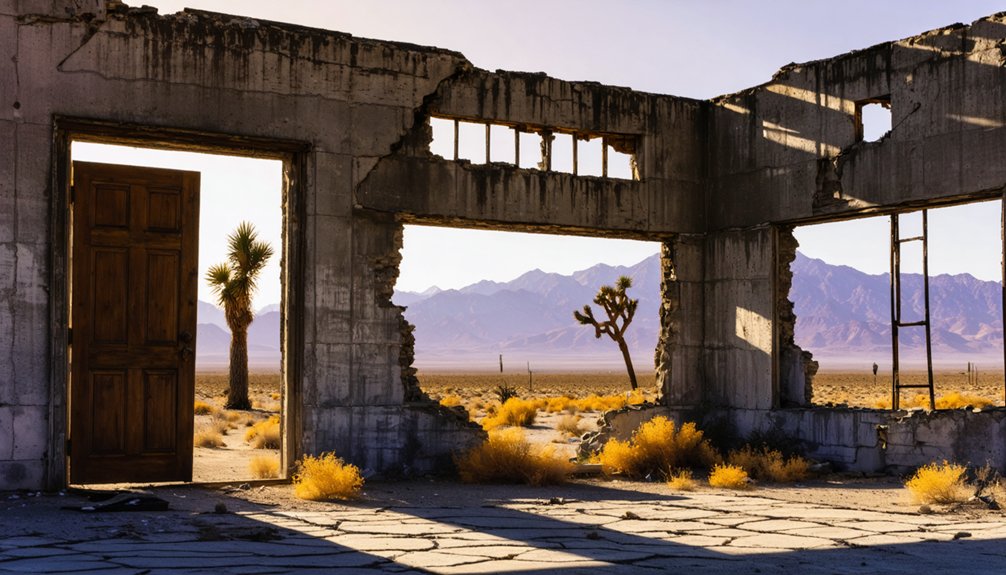
Once you’ve mapped out the landmarks worth exploring, capturing them well becomes the next rewarding challenge.
Rhyolite rewards photographers who arrive early or stay late, since golden hour light transforms the Cook Bank ruins and train depot into something almost cinematic. Use composition techniques like leading lines along crumbling walls or framing distant desert mountains through broken doorways.
The Bottle House offers unique texture that pairs beautifully with wide-angle shots. Midday harsh sun flattens detail, so plan your photography tips strategy around softer morning or late afternoon light.
Bring a tripod for long exposures that emphasize dramatic skies. Since Rhyolite sits on open federal land, you’re free to move around structures and find unconventional angles that standard tourist shots always miss.
What to Pack Before Driving Out to Rhyolite
Before you hit the Nevada highways toward this remote ghost town, packing smart can mean the difference between a great adventure and a dangerous one.
You’ll want to bring essential desert survival gear—think extra water, sunscreen, and a first aid kit—alongside your camera equipment to capture Rhyolite’s iconic ruins in their best light.
Don’t forget reliable navigation tools and road supplies, since cell service is spotty and the nearest help is a long drive away.
Essential Desert Survival Gear
Heading out to a ghost town sitting 120 miles northwest of Las Vegas means you’re driving deep into Mojave Desert territory, where summer temperatures regularly crack 110°F and the nearest help could be an hour away.
Smart desert hydration starts before you leave — pack more water than you think you’ll need. Solid sun protection keeps heat exhaustion from cutting your adventure short.
Toss these essentials into your vehicle before rolling out:
- Water – minimum one gallon per person daily
- Sunscreen and UV-blocking sunglasses – desert glare is relentless
- Wide-brim hat – shade you can carry anywhere
- First aid kit – handle minor emergencies independently
- Jumper cables and basic tools – remote breakdowns happen on forgotten roads
Freedom tastes better when you’re prepared for it.
Camera And Photography Equipment
Rhyolite rewards photographers with 3 distinct subjects worth planning your kit around — the crumbling three-story Cook Bank facade, the skeletal train depot, and the quirky Bottle House, each demanding different focal lengths and lighting conditions.
Pack a wide-angle lens for sweeping ruins and a telephoto for isolating architectural details. Your camera settings should favor golden hour shooting — early morning and late afternoon light transforms these weathered structures dramatically.
Bring extra batteries, since desert cold drains power fast. A sturdy tripod lets you capture long exposures of star trails above the ruins after dark.
Photography tips worth remembering: shoot the Cook Bank facing east at sunrise, and frame the Bottle House against the open sky for maximum visual impact. A polarizing filter cuts desert glare beautifully.
Getting to Rhyolite means traversing roughly 120 miles of Nevada desert northwest of Las Vegas — a four-hour drive that rewards preparation.
Cell service disappears fast once you leave the highway, so solid navigation tips and road safety habits keep your adventure on track.
Pack these essentials before rolling out:
- Offline maps downloaded to your phone or a dedicated GPS device
- Paper maps as a reliable backup when technology fails
- Extra fuel since gas stations thin out considerably near Death Valley
- Tire repair kit and jumper cables for remote roadside emergencies
- Plenty of water — at least one gallon per person daily
You’re heading into open desert, so own that freedom responsibly and arrive ready for anything.
Death Valley and Bullfrog Hills: Best Stops Near Rhyolite
While Rhyolite itself is the star of the show, the surrounding landscape offers just as much to explore.
Death Valley’s eastern boundary sits just minutes away, delivering dramatic scenic views that stretch across salt flats and rugged canyon walls. You’ll feel the raw power of the Mojave desert as you drive through one of Earth’s most extreme environments.
The Bullfrog Hills carry their own historical significance, having sheltered the miners and dreamers who built Rhyolite almost overnight.
The Bullfrog Hills witnessed the rise of Rhyolite, sheltering the bold miners who chased fortunes in the desert.
Hiking through these sun-baked ridges connects you to that restless spirit of the 1904 gold rush era. You’re walking the same terrain where fortunes were chased and lost.
Together, these destinations transform a single ghost town visit into a full desert adventure worth every mile.
Frequently Asked Questions
Is Camping Allowed Overnight at the Rhyolite Ghost Town Site?
The knowledge doesn’t confirm camping at Rhyolite, but since it’s BLM land, you’ll want to check their camping regulations and secure any required overnight permits before you pitch your tent under Nevada’s starlit desert sky!
Are Pets Permitted When Visiting Rhyolite’s Ruins and Trails?
Rhyolite’s wild desert is your pet’s playground! You’re welcome to bring them, but practice trail etiquette and prioritize pet safety—keep them leashed on sun-scorched trails and carry plenty of water for both of you.
Can You Legally Take Rocks or Artifacts From Rhyolite?
You can’t legally take rocks or artifacts from Rhyolite. The Bureau of Land Management strictly prohibits rock collecting and removal of items to guarantee historical preservation, keeping this remarkable ghost town intact for future freedom-seeking explorers like you.
Is Rhyolite Accessible for Visitors With Mobility or Wheelchair Limitations?
Rhyolite’s mobility access is limited, but you’ll find some wheelchair routes along flatter terrain near the ruins. You’re exploring an unpaved desert site, so bring sturdy equipment and embrace the rugged, untamed freedom this ghostly landscape offers!
Are Guided Tours of Rhyolite Available for Booking in Advance?
Rhyolite doesn’t officially offer guided tour options or formal booking procedures, but you’re free to explore independently. With 8,000 peak residents, this fascinating ghost town welcomes self-guided adventurers year-round at absolutely no cost!
References
- https://nvtami.com/2025/01/27/rhyolite-ghost-town-nevadas-diamond-in-the-desert/
- https://www.legendsofamerica.com/nv-rhyolite/
- https://travelnevada.com/ghost-town/rhyolite-ghost-town/
- https://en.wikipedia.org/wiki/Rhyolite
- https://vegasghosts.com/rhyolite-nevada-ghost-town/
- https://www.exploratography.com/blog-nv/rhyolite-nevada
- https://www.youtube.com/watch?v=GWfjpHpblVg