You’ll find Roslyn 80 miles east of Seattle in the Cascade Mountains, where abandoned coal mines and 26 ethnic cemeteries preserve the legacy of immigrants from 24 nations who extracted nearly 2 million tons of coal annually. Start at the historic downtown’s century-old saloons, then explore the hillside burial grounds with headstones in multiple languages. The 1892 disaster memorial and Mount Olivette Cemetery tell powerful stories of sacrifice and community that shaped this authentic frontier town’s remarkable transformation.
Key Takeaways
- Visit 26 historic ethnic cemeteries representing 24 nations, showcasing Roslyn’s diverse immigrant mining heritage and unique cultural history.
- Explore authentic frontier buildings from the 1880s coal boom era, many preserved by artists who revitalized the town.
- Learn about tragic mining disasters at memorial sites, including the 1892 explosion that killed 45 miners in Washington’s worst coal disaster.
- Experience a transformed ghost town where population declined from 4,000 to 1,000 after mines closed in the 1960s.
- Discover how diesel locomotives replacing steam engines devastated this coal mining community that once produced 2 million tons annually.
The Rich Coal Mining Heritage of Roslyn
When prospectors discovered vast coal deposits beneath the Cascade foothills in 1886, they set in motion the creation of one of Washington’s most remarkable mining towns. You’ll find Roslyn’s heritage written in its 26 ethnic cemeteries, where Italian, Polish, Serbian, and Croatian immigrants rest alongside Scottish and Irish miners.
The Northern Pacific Coal Company brought 300 black miners as strikebreakers during the 1888 strike, yet initial tensions dissolved into cooperation—these newcomers helped build a vibrant social life that made Roslyn 22% black by 1900. At its peak, miners extracted nearly 2 million tons annually, fueling steam engines across the Cascades.
Labor union struggles shaped this community’s character, forging bonds between diverse workers who shared dangerous underground conditions and dreams of better lives. The town weathered devastating challenges, from mining accidents to severe typhoid epidemics in the 1890s that plagued the community until fresh water arrived from the Cle Elum River in 1901. In 1976, William Craven became the first black mayor in Washington state history, a testament to Roslyn’s remarkable legacy of integration.
Tragic Mining Disasters That Shaped the Community
The dangerous reality behind Roslyn’s prosperity struck with devastating force at 1:45 p.m. on May 10, 1892. A gas pocket ignited in Northern Pacific Coal Company’s No. 1 mine, killing 45 miners in Washington state’s worst coal-mine disaster.
Deficient ventilation allowed fire and toxic gases to claim those who survived the initial blast, creating 29 widows and 91 orphans. This significant community impact prompted investigations revealing ongoing safety concerns that mine operators had ignored. Despite coroner’s findings citing inadequate ventilation, the company settled claims for merely $1,000 per widow.
Tragedy struck again on October 3, 1909, when Mine No. 4 exploded, claiming 10 more lives. These disasters epitomized the 50,000 American coal miners killed between 1870-1914, reminding you that freedom often came at an unbearable cost. The community’s coal mining operations had begun when first coal was mined in 1884, establishing the industry that would define Roslyn for generations. The last Roslyn coal mine finally closed its doors in 1962, ending nearly eight decades of mining operations that had built the community but claimed so many lives.
A Melting Pot of 24 Nations Underground
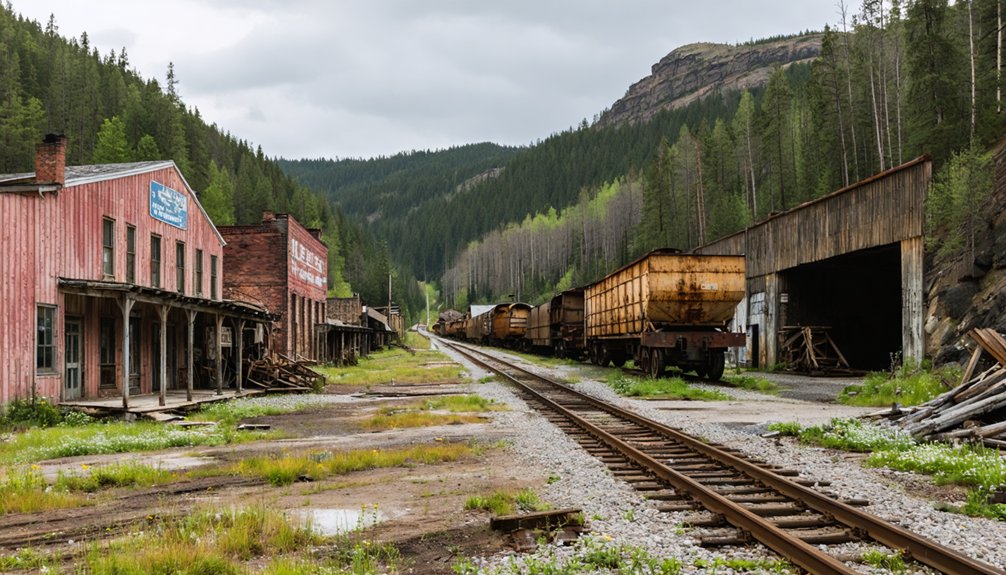
Beneath Roslyn’s darkened coal tunnels, immigrants from at least 24 nations swung their pickaxes side by side, creating one of the Pacific Northwest’s most ethnically diverse communities. Founded in 1886, this coal town attracted workers from Italy, Poland, Germany, Lithuania, Slovenia, Scotland, Serbia, Croatia, England, and Ireland. African Americans recruited from midwestern states in 1888 and Chinese immigrants contributed to this extraordinary cultural mosaic, despite facing fractious ethnic rivalries and violence.
Walking through the 15-acre cemetery complex today, you’ll witness multicultural mining traditions preserved in stone:
- 26 separate burial grounds divided by nationality and fraternal lodge
- Mount Olivette section reserved for Black residents
- Triple-ring symbols marking Independent Order of Oddfellows graves
- Weathered headstones inscribed in multiple languages telling immigrant stories
Many fraternal organizations provided essential health insurance and disability benefits to miners and their families, funded through modest monthly fees that gave members crucial financial protection in this dangerous occupation. The 1892 mining disaster claimed 45 miners’ lives and left an indelible mark on this close-knit community.
From Boom to Bust to Artistic Renaissance
The mines that once produced nearly 2 million tons of coal annually began shutting down in the 1920s as diesel locomotives replaced steam engines, and by the 1930s Roslyn had plummeted from 4,000 residents to near ghost town status.
The empty storefronts and weathered mining buildings sat quietly for decades until the 1970s, when artists and counterculture seekers discovered the town’s authentic frontier character and affordable real estate. This unlikely renaissance breathed new life into Roslyn’s brick-lined streets, transforming it from a dying coal camp into a living museum where you’ll find both immigrant descendants and creative newcomers preserving its remarkable past. The town’s name itself can cause confusion, as Roslyn appears on Wikipedia’s disambiguation pages for multiple locations sharing the same name. The newcomers—craftsmen and artisans drawn by the town’s small-town appeal—have been accepted by the community, working alongside longtime residents to build a city park and establish a food co-op.
Coal Mining Era Decline
By 1886, Northern Pacific Coal Company had launched mining operations in Roslyn with a modest crew of 18 miners, but the town’s fortunes would soon explode. Within four years, the population surged past 4,000 souls, with production hitting nearly 2 million tons annually by 1910.
Then came the technological advancements that sealed Roslyn’s fate—diesel engines replacing coal-fired locomotives throughout the 1920s, triggering catastrophic economic disruption.
The descent unfolded through stark markers:
- Mines shuttering one by one during the 1920s as demand evaporated
- The devastating 1892 explosion claiming 45 miners in Washington’s deadliest mining disaster
- Population plummeting from 4,000 to barely 1,000 by 1960
- Final mine closures in 1963, leaving vast coal seams abandoned underground
Most residents fled, transforming this once-thriving community into haunting ghost town territory.
Yet salvation emerged from an unexpected quarter—the mid-1970s saw artists and creative professionals discovering Roslyn’s affordable historic buildings, breathing new life into abandoned structures and gradually rehabilitating the ghost town into a quirky artistic enclave. The Northern Pacific Coal Company, established in 1889, had set the foundation for what would become both the town’s greatest prosperity and its eventual transformation into the cultural destination it is today.
The history of Roslyn, Washington ghost town reveals layers of resilience and reinvention. As artists flocked to its historic charm, they found inspiration in the remnants of the past, transforming derelict spaces into vibrant studios and galleries. This revival not only rejuvenated the local economy but also cultivated a unique community that celebrated its rich heritage while embracing modern creativity.
1970s Cultural Transformation
Immigrants from over twenty countries flooded into Roslyn after 1886, transforming this remote mountain outpost into Washington’s most culturally diverse boomtown. Italian, Polish, German, Lithuanian, Slovenian, Scottish, Serbian, Croatian, English, and Irish miners arrived to fuel the coal rush, establishing vibrant social halls and powerful labor unions. You’ll find their legacy preserved in twenty-six individual ethnic and lodge cemeteries—testaments to traditions maintained against all odds.
When mines closed in 1963, the town could’ve died. Instead, community-driven preservation efforts sparked a renaissance. Roslyn earned National Historic Landmark status in 1978, then leveraged Northern Exposure’s pop culture spotlight to reinvent itself. Today, you’ll experience diverse cultural celebrations like the Coal Miners’ Festival and Black Pioneers Picnic, where forestry and tourism sustain this artist-filled mountain retreat.
Must-See Historic Landmarks and Attractions
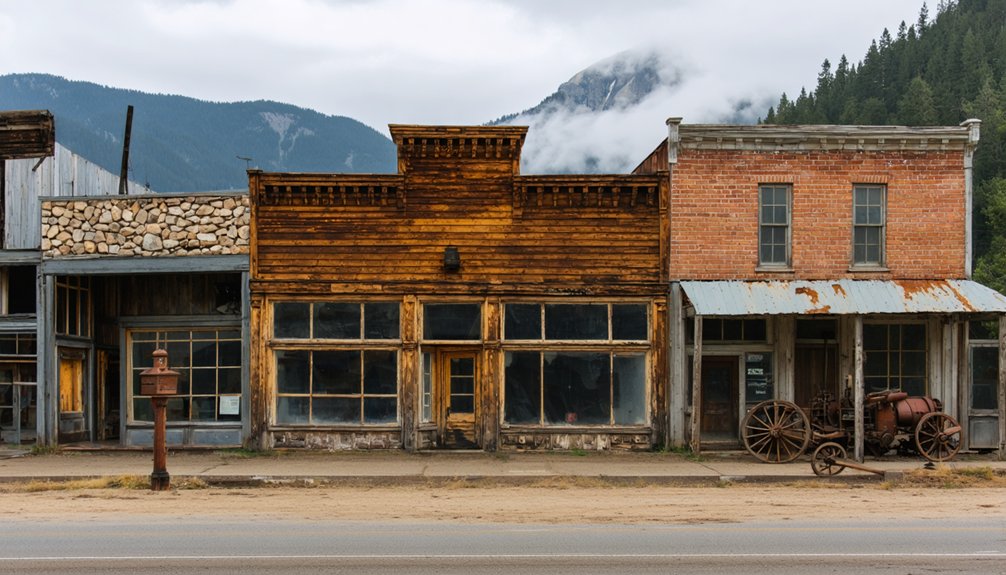
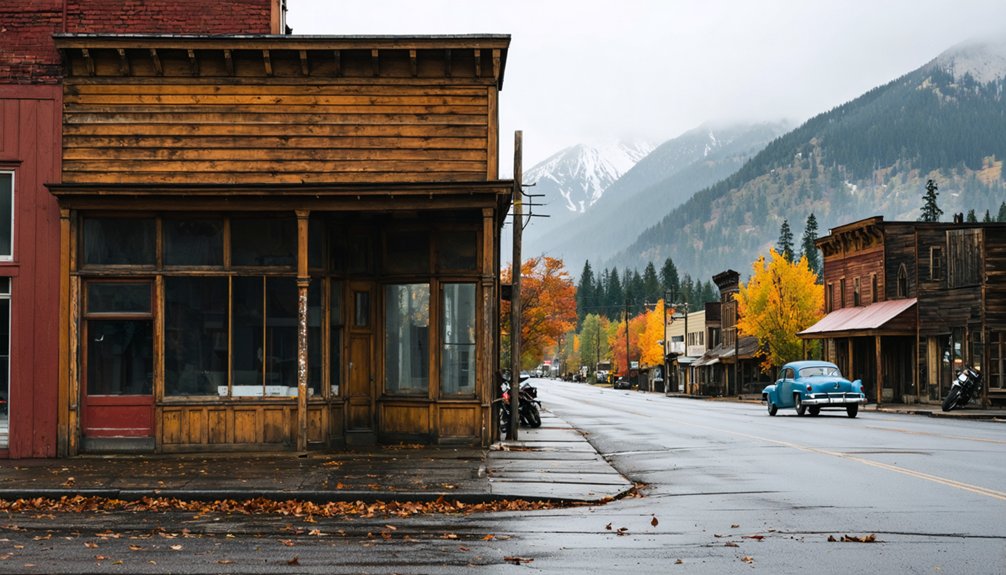
Your exploration of Roslyn’s historic treasures begins at the weathered storefronts along Pennsylvania Avenue, where the original mining company store anchors the National Historic District.
Above town, Cemetery Hill‘s 26 ethnically divided burial grounds sprawl across the hillside—a solemn commemoration to the diverse nationalities that descended into the coal mines below.
At the heart of it all, the Brick Saloon‘s legendary 23-foot running water spittoon has been collecting the debris of frontier life since 1889, making it Washington’s oldest continuously operating bar.
Historic Mining Company Store
Standing at the corner of First and Pennsylvania Avenues, the block-long brick Northwestern Improvement Company Store commands attention as Roslyn’s most impressive architectural survivor from the coal mining era. Built in 1889 after fire destroyed the original wooden structures, this fortress-like building showcases architectural features typical of 1920s western frontier commercial design.
The Northern Pacific Railroad‘s subsidiary operated this massive supply hub where miners purchased everything from lanterns to furniture—all deducted directly from their paychecks.
What You’ll Experience:
- The haunting Roslyn Miners’ Memorial statue standing guard outside, listing names of those who perished underground
- A time capsule sealed within the memorial, awaiting discovery in 2046
- The national historic landmark designation recognizing this 1.8-acre treasure
- Recognition from Northern Exposure fans as KBHR radio station’s filming location
Cemetery Hill and Headstones
A short walk uphill from downtown brings you to one of America’s most poignant chronicles of immigration and industrial sacrifice—a sprawling 15-acre woodland where 26 separate cemeteries sit side by side, their 5,000 graves representing 24 different nationalities.
You’ll discover mesmerizing burial configurations shaped by steep terrain: terraced concrete levels, ornate iron fences protecting plots from wildlife, and sections oriented by ethnicity—Croatian graves on the hillside, Polish facing their community church, Lithuanian plots shaded beneath towering pines.
The unique headstone iconography tells stark truths: marble markers bearing deceased photos from the 1800s, mass burials from the 1892 explosion that killed 45 miners, countless infant graves marking brutal mortality rates. Each ethnic section maintained its own perpetual care fund, creating this remarkable mosaic of immigrant dreams and sacrifices.
Brick Tavern’s Famous Spittoon
When you push through the heavy door at 100 W Pennsylvania Ave, the first thing you’ll notice isn’t the century-old back bar shipped from England or the massive stone fireplace—it’s the peculiar 23-foot trough running beneath the bar’s footrest, water still trickling through after 120 years of continuous use.
This operational spittoon tells Roslyn’s gritty mining story through original construction materials and long standing operational history:
- Running water flows continuously, washing tobacco juice from one end to the other since 1889
- Italian immigrants John Buffo and Peter Giovanni designed this practical solution for coal miners’ habits
- 45,000 bricks from Gunther Mill rebuilt the tavern in 1898, preserving this unique sanitation system
- The trough remains fully functional, making it one of America’s most distinctive historic tavern features
You’re standing where miners once stood—unfiltered and authentic.
Exploring the 25 Ethnic Cemeteries on the Hill
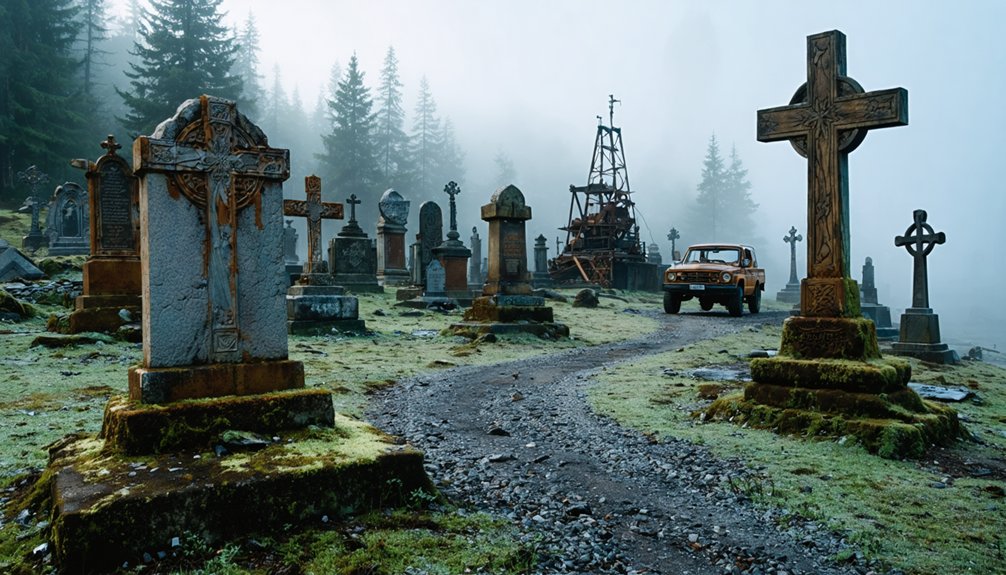
High on a wooded hillside above Roslyn, 26 separate cemeteries sprawl across 15 acres in a mosaic of cultural memory. You’ll discover 5,000 graves representing 24 nationalities—Croatian, Polish, Lithuanian, African American, and more—each section preserving unique burial practices of coal miners who settled here in 1887.
The Croatian plots stretch in smooth lawns along the main avenue, while Lithuanian graves shelter beneath encroaching pines. Polish headstones face north toward their community church. At Mt. Olivet, over 300 Black miners and descendants rest on terraced hillsides under ancient trees, their symbolic grave markers telling stories of the 1888 strike that brought them west. Marble headstones bear faded photographs, memorializing victims of the 1892 and 1909 mine explosions that shaped this mountain town’s defiant spirit.
Getting There and Making the Most of Your Visit
Nestled 85 miles east of Seattle in the Cascade foothills, Roslyn beckons as an ideal day trip from the metropolitan bustle. Navigate WA-970 E from Cle Elum, or choose the scenic Mountain Loop Highway for a memorable approach through mountain terrain.
Escape Seattle’s urban energy with an 85-mile eastward journey into Cascade foothill charm and mountain-framed discovery.
Your self-guided exploration reveals:
- Original brick storefronts along Pennsylvania Avenue, where the 1889 Brick Saloon pours drinks in Washington’s oldest bar
- Contemporary cultural offerings at Smith Exhibits gallery, showcasing Northwest artists’ works in mixed media and sculpture
- Monthly Last Friday Art and Music Walk, transforming historic streets into evening celebrations
- Local seasonal events like Moosefest, honoring the town’s television legacy alongside authentic mining heritage
The Roslyn Museum contextualizes your wanderings with mining photographs and artifacts, while farmers’ markets and independent shops balance history with present-day robustness.
Frequently Asked Questions
Are There Hotels or Lodging Options Available in Roslyn for Overnight Stays?
You’ll find excellent overnight options in Roslyn, from charming bed & breakfasts like Huckleberry House to boutique hotels and vacation rentals. Nearby Cle Elum offers additional choices, including campgrounds if you’re seeking an outdoor adventure experience.
What Are the Best Months to Visit Roslyn for Weather and Events?
July offers sun-soaked freedom at 80°F, while fall delivers your best shoulder season visits—fewer crowds, comfortable weather considerations. Winter transforms Roslyn into snowy celebration mode with Winterfest and holiday events, though you’ll face mountain pass closures.
Is Roslyn Family-Friendly for Visiting With Children?
Roslyn’s absolutely family-friendly! You’ll discover child-friendly amenities like scavenger hunts at the museum and ceramic painting. Family-friendly attractions include a dog-welcoming vintage theater, interactive toy shops, nostalgic candy stores, and easy-access mining trails perfect for adventure-seeking kids.
How Long Should I Plan to Spend Exploring Roslyn?
Plan 4-6 hours to experience Roslyn’s historical significance through its coal mining heritage and cemetery complex. You’ll want extra time to savor the scenic landscapes, explore authentic storefronts, and embrace the town’s alluring Old West atmosphere.
Are the Historic Cemeteries Accessible Year-Round or Seasonally Closed?
The gates stand open year-round, welcoming your wandering spirit. You’ll find no cemetery hours or seasonal closures restricting your visit. Cemetery policies simply ask for respect as you explore these historic grounds whenever adventure calls.
References
- https://westernmininghistory.com/towns/washington/roslyn/
- https://wanderlustandlipstick.com/blogs/theflyingsalmon/2012/08/27/history-hollywood-miners-druids-in-roslyn-washington/
- https://blackdiamondhistory.wordpress.com/2023/10/07/roslyn-they-came-from-24-nations-to-mine-the-black-diamond/
- https://www.historylink.org/file/9239
- https://talesfromthebackroad.com/roslyn-washington/
- https://en.wikipedia.org/wiki/Roslyn
- https://forterra.org/projects/roslyn/
- https://blackpast.org/african-american-history/roslyn-washington/
- http://www.ghosttownsusa.com/roslyn.htm
- https://www.nbcrightnow.com/news/roslyn-coal-miners-make-washington-history/article_408ffc74-d729-11ee-9ce9-c362ee10289b.html