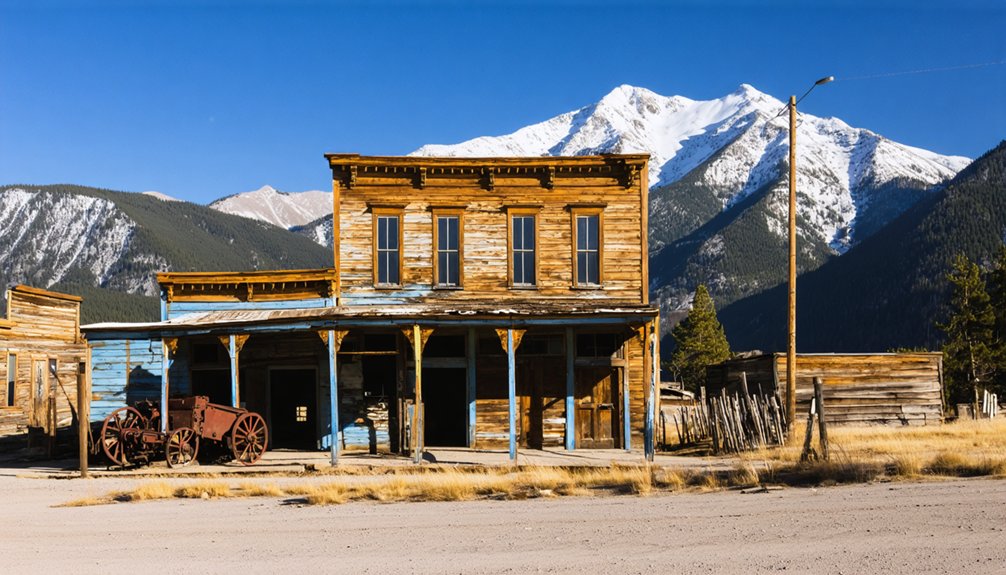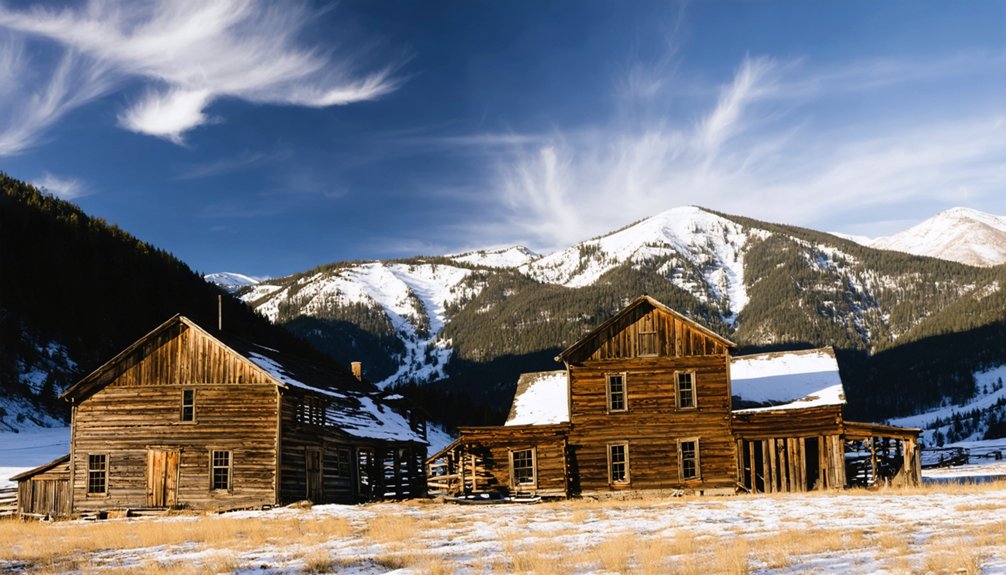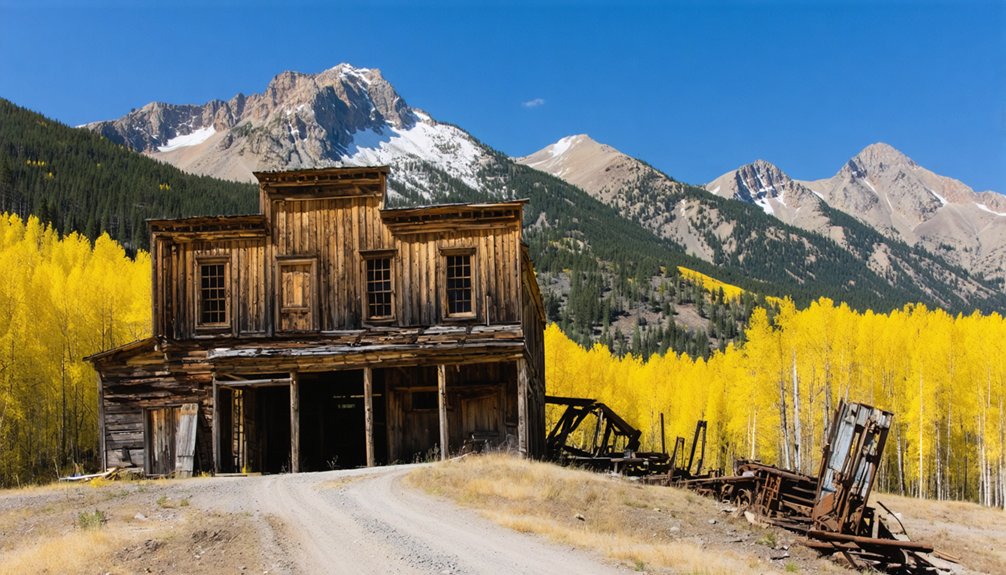
You’ll find Russell Gulch perched at 9,150 feet, reachable via the notorious Oh My God Road—a 12.23-kilometer route with hairpin switchbacks and 12% grades best tackled in summer or early fall. Plan for 4WD capability, bring layers for unpredictable mountain weather, and arrive early to photograph weathered cabins in golden-hour light. The ghost town rewards adventurers with mining relics, a Continental Divide cemetery vista, and surprisingly, an art gallery amid the ruins. Combine your visit with nearby Central City and Nevadaville for a complete backcountry experience into Colorado’s authentic frontier past.
Key Takeaways
- The 12.23-kilometer Oh My God Road from Idaho Springs gains 2,000 feet through hairpin switchbacks and 12% grades requiring 4WD.
- Summer and early fall offer ideal conditions with clear skies and 60-70°F temperatures; avoid spring mud and winter ice.
- Explore weathered 1860s buildings, mining artifacts, dangerous marked shafts, and a cemetery with Continental Divide views at 9,150 feet.
- Recent construction rerouted sections near coordinates 39.77202, -105.51628; concrete barricades block some original trail segments indefinitely.
- Central City sits 2 miles northeast and Idaho Springs 5 miles south for supply access and nearby ghost town exploration.
The Gold Rush Origins of Russell Gulch
But Russell’s persistence paid off. In June 1859, he struck free gold just miles upstream.
His mining techniques evolved quickly as placer deposits gave way to vein gold, attracting 900 miners by September and 2,500 residents by 1860.
You’ll find the trailhead to Russell Gulch just off I-70 in Idaho Springs, where the infamous Oh My God Road begins its 12.23-kilometer climb through Virginia Canyon. The mostly unpaved route gains nearly 2,000 feet as it snakes past abandoned gold mines and ghost towns, with hairpin switchbacks that’ll have you white-knuckling the wheel at 12% grades.
Your timing matters—summer offers the smoothest ride on dry, packed dirt, while spring and winter transform those same curves into icy gauntlets that can shut down the road entirely.
Route Options and Access
Three distinct routes wind their way to Russell Gulch, but the most legendary is the infamous Oh My God Road—a white-knuckle 8.5-mile stretch of dirt and gravel that earned its name from the exclamations of terrified passengers clutching their armrests.
Your route planning begins at I-70’s exit 240 in Idaho Springs, where you’ll navigate through town via 13th Avenue and Virginia Street before hitting County Road 279.
Recent road maintenance has rerouted the path near coordinates 39.77202, -105.51628—watch for the hard left turn after 500-600 feet heading west. The gate at Waypoint 6 remains accessible, though concrete barricades now block the old section.
No unlicensed vehicles allowed, but there aren’t seasonal closures restricting your adventure.
Road Conditions and Safety
When tackling the Oh My God Road, expect a partly-paved ascent that twists and climbs through historic mining country before surrendering to all-dirt surfaces as you venture deeper into the backcountry. Vehicle selection matters—no unlicensed rigs allowed, and you’ll want clearance for unpredictable conditions.
Heavy traffic demands constant vigilance on narrow passes. Inclement weather preparation isn’t optional; check with Arapaho National Forest’s Clear Creek Ranger District before departure, as snow can trigger over-snow restrictions.
Watch for rerouted sections near coordinates 39.77202, -105.51628—travel west 500-600 feet, then make a hard left. Old sections are barricaded with concrete blocks. Gates near Waypoint 6 have locked unpredictably since 2017.
Construction around Idaho Springs complicates access, requiring residential street detours. The Scott Lancaster Trail segment remains closed indefinitely for I-70 utility work.
Best Seasons to Drive
The Oh My God Road demands seasonal respect—summer and early fall deliver your best window for adventure. From mid-June through August, you’ll navigate this historic route under clear skies with temperatures in the 60s and 70s at Russell Gulch’s 9,150-foot elevation. Launch early on summer mornings to beat seasonal crowds and capture that perfect golden-hour light on weathered cabins.
September and October gift you shoulder season flexibility—fewer vehicles, cooler temps, and aspen groves blazing gold against mountain backdrops. Weekdays trump weekends for solitude.
Spring’s mud season (March to mid-June) throws unpredictable storms and postholing snow at you, while winter transforms the road into a hazardous gamble. Check forecasts religiously; early October snows can surprise. Stick to daylight hours always—darkness and this terrain don’t mix.
What’s Left to Explore in This Mountain Ghost Town
Perched at 9,150 feet in Colorado’s Front Range, Russell Gulch spreads across a broad mountain valley where weathered buildings stand sentinel among scattered mining relics and crumbling foundations. The eerie atmosphere pulls you into this frozen moment of 19th-century frontier life, where decaying buildings create exceptional photo opportunities against dramatic mountain backdrops.
You’ll discover:
- Mining artifacts scattered throughout—railcars, ore buckets, and tools left exactly where miners abandoned them
- Hollow commercial structures standing amid vanished neighbors, their weathered walls evidence to boom-and-bust cycles
- Dangerous mineshafts marked by rusted equipment, requiring careful distance
- Brian O’Donnell’s art gallery, offering unexpected culture amid the ruins
From the cemetery, you’ll catch stunning westward views stretching to the Continental Divide, Georgetown, and Loveland Pass—particularly breathtaking at sunset.
Mining Heritage and Historic Landmarks
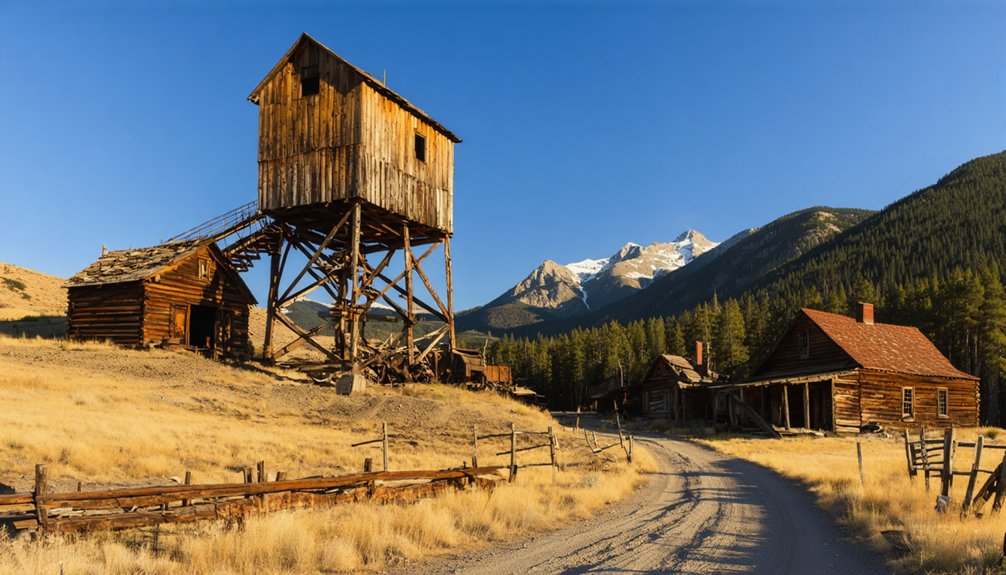
Gold fever transformed Russell Gulch from empty wilderness into a thriving mining camp within months of William Green Russell’s June 1859 discovery. You’ll find the historic significance etched into every weathered beam and crumbling foundation at this 9,150-foot elevation site.
The two-story red brick schoolhouse still stands proud among the ruins, showcasing the town architecture that replaced original log cabins. Explore the IOOF Hall, Federal Hall, and Success Meeker mine buildings marked with faded lettering. Wander past tailings piles, mine shafts, and rusted equipment—railcars and ore buckets frozen in time.
The cemetery holds stories of those who chased fortune here. You’ll discover scattered foundations, old saloons, and a preserved mule barn. Each relic speaks to the independence and grit that defined this “Equal Opportunity” mining community.
Unusual Attractions: Disc Golf Among the Ruins
Tucked at 9,150 feet among Russell Gulch‘s abandoned cabins and rusted mining equipment, you’ll find Colorado’s most surreal disc golf experience. Brian O’Donnell transformed this ghost town into a 20-hole course in 2003, where you’ll thread shots between century-old structures, navigate around active mining claims, and aim for baskets positioned near historic mine entrances.
The course demands both technical skill and respect for history—miss your line, and your disc might land in a marshy gulch or worse, trigger a three-stroke penalty for hitting a neighboring property.
Colorado’s Most Unique Course
At 9,150 feet elevation, Russell Gulch’s disc golf course transforms 18 acres of genuine mining ruins into Colorado’s most unusual sporting venue. You’ll navigate 20 holes where crumbling buildings serve as both obstacles and hazards—hit them directly, and you’re adding penalty strokes. The course challenges demand precision as you thread discs through mandatory tree gates and dodge dry-pond hazards.
What Makes This Layout Legendary:
- Ghost town gauntlet – Holes 10-16 wind through authentic 1800s mining structures
- Technical feats galore – Navigate out-of-bounds mining claims and marshy terrain between holes 9-13
- Rusted relics everywhere – Abandoned vehicles and machinery create natural obstacles
- Compact but complex – 17 holes under 300 feet requiring finesse over power
Players rated scenery 4.8/5 stars—there’s nowhere else quite like it.
Playing Through Mining History
When William Greeneberry Russell struck placer gold here in spring 1859, he couldn’t have imagined disc golfers would someday navigate through what remained of his discovery. You’ll throw past the two-story red brick schoolhouse, weave around rusted ore buckets, and aim for baskets near tailings piles from operations like the Sun and Moon Mine. The dramatic landscape challenges match the altitude—nearly two miles above sea level where oxygen runs thin and discs fly unpredictably.
Unique mining artifacts turn every hole into an obstacle course. That’s a genuine mule barn foundation on hole seven. Those weathered timber frames once housed the miners who extracted $35,000 weekly during boom times. Watch your footing near abandoned shafts, and don’t retrieve discs from marked mining claims. You’re playing through authentic history.
Best Times to Visit and What to Bring
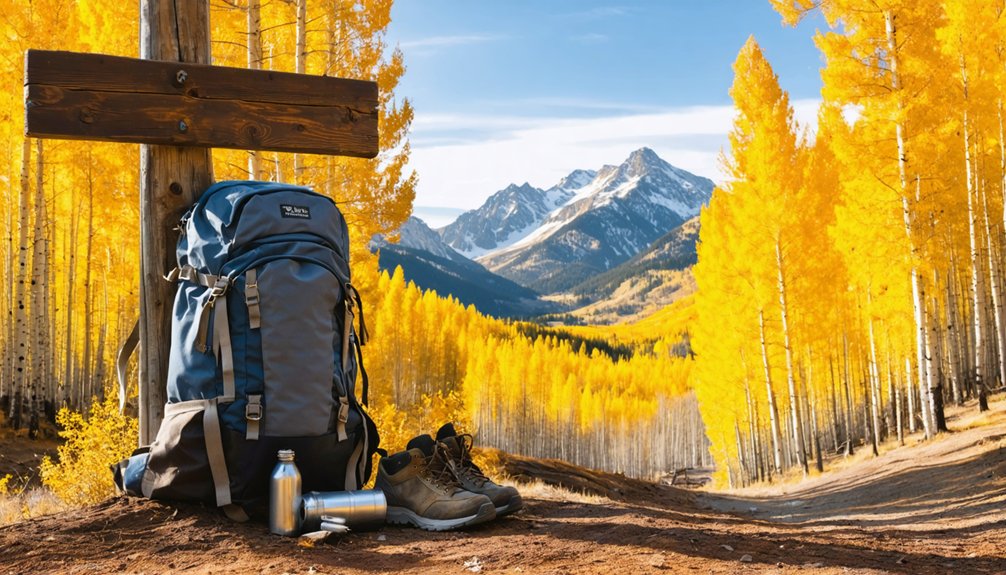
Planning your Russell Gulch adventure means targeting the sweet spot between May and September, when mountain roads shake off their winter ice and the high country opens for business. Key weather metrics reveal July’s warmth (78°F highs) but eleven rainy days, while June and September balance comfortable temperatures with just five rainy days each.
Your pre-trip planning essentials include:
- High-clearance vehicle with supplementary fuel—gas stations vanish after Idaho Springs on this 13.6-mile backcountry route
- Layered clothing for 48°F mornings that’ll climb into the 70s by afternoon
- Sturdy boots for traversing uneven terrain around crumbling structures
- Ample water and snacks since you’re venturing 9,150 feet into genuine remoteness
Weekday mornings deliver the ultimate freedom: empty trails, golden light, and history that’s yours alone.
Combining Russell Gulch With Nearby Ghost Towns
Russell Gulch transforms from solitary destination into basecamp when you realize Central City gleams just two miles northeast and Idaho Springs anchors the valley five miles south. You’ll craft multi-town itineraries that maximize your freedom, threading between 9,150-foot elevations and canyon routes within a compact 10-mile radius.
Oh My God Road delivers backcountry trail trips northward from Idaho Springs, demanding 4WD grit, while gentler 2WD routes sweep you toward Central City’s casino-lined streets. Nevadaville’s freshwater spring hides nearby, adding another pin to your Gilpin County exploration.
Spend mornings photographing Russell Gulch‘s disc golf course and mining relics, then descend Virginia Canyon Road for afternoon wanderings through Idaho Springs’ historic core. This clustering of ghost towns rewards your adventurous spirit with efficient, immersive Colorado history.
As you continue your journey, consider exploring ghost towns in Colorado, where crumbling structures and silent streets tell tales of the past. Each deserted settlement offers a glimpse into the lives of pioneers, promising a blend of history and adventure. With every step, you’ll uncover the stories hidden in the rustic landscape, connecting you deeper to the rich heritage of this remarkable state.
Frequently Asked Questions
Are There Any Restaurants or Gas Stations in Russell Gulch?
Russell Gulch lacks restaurants and gas stations—you’ll need to fuel up beforehand and pack supplies. While historical signage information marks old structures, nearby lodging options in Idaho Springs offer dining. This ghost town rewards adventurous spirits seeking authentic Colorado freedom.
Is Camping Allowed Near the Ghost Town Ruins?
You can’t camp near Russell Gulch’s ruins—private property blocks access everywhere. Coincidentally, nearby federal lands offer dispersed camping with strict campfire restrictions and fourteen-day limits. You’ll need to check seasonal weather conditions and current fire bans before exploring alternative sites.
Do I Need a Four-Wheel Drive Vehicle to Reach Russell Gulch?
Yes, you’ll need four-wheel drive with moderate clearance for Russell Gulch’s rugged terrain. Road conditions vary remarkably, though there aren’t seasonal closures. Oh-My-God Road’s accessible by two-wheel-drive when dry, offering you alternative access routes.
Are the Old Mine Shafts Safe to Explore?
No, don’t explore them. Colorado’s recorded 11 mine fatalities prove the dangers. You’ll face structural integrity concerns like collapsing timbers and potential hazards including 15-foot shafts, poisonous gases, and hidden water-filled pits with sheer walls.
Is There a Fee to Visit Russell Gulch?
No, you won’t pay anything to explore Russell Gulch Cemetery’s historical significance. The site’s completely free during daylight hours. While visitor amenities are minimal, you’ll find authentic Western history without commercialization—just pure, unfiltered adventure.