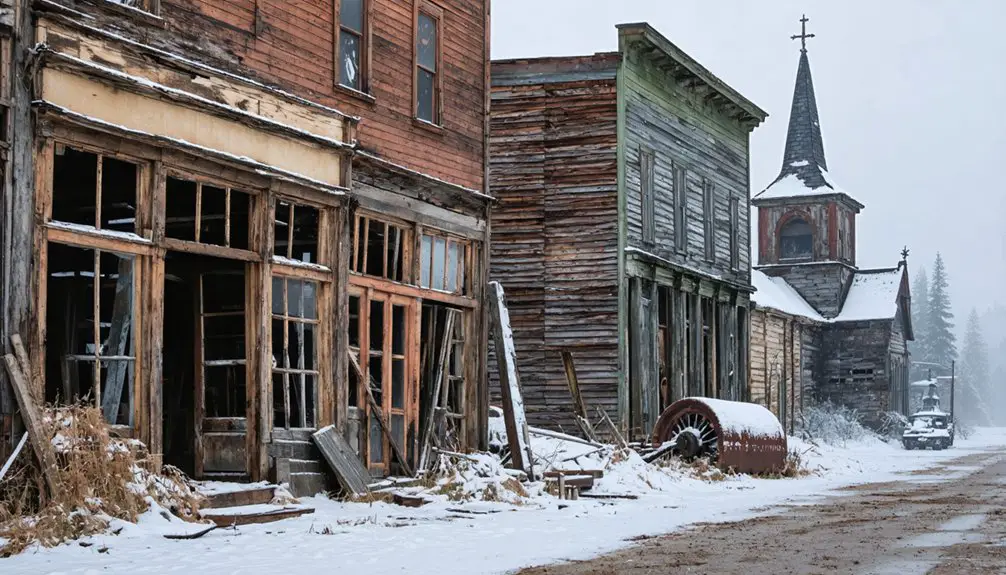
You’ll struggle to find Rutherford on any map—this forgotten ghost town along the New River Gorge has been swallowed by time and overgrowth, leaving only scattered foundations and rusted remnants where a coal boomtown once thrived. Unlike its preserved neighbor Thurmond, Rutherford received no restoration efforts, making exploration a genuine adventure through untamed wilderness where nature’s reclaimed what railroads and miners once dominated. The town’s complete disappearance tells a darker story about Appalachian communities that couldn’t survive economic collapse.
Key Takeaways
- Rutherford is not a ghost town in West Virginia; you may be thinking of Thurmond, a preserved coal boomtown.
- Thurmond peaked in 1910, handling more freight revenue than Cincinnati with 150-200 workers operating around the clock.
- The National Park Service restored over 20 buildings, including the 1902 depot and 1917 National Bank.
- Access requires commitment via seasonal Amtrak service or driving into steep gorge terrain with only five residents remaining.
- New River Gorge National Park surrounds Thurmond, featuring the 876-foot-high bridge and multiple scenic overlooks.
The Rise and Fall of a Railroad Boomtown
In 1873, Captain William D. Thurmond claimed 73 acres along the Chesapeake & Ohio Railway mainline, unknowingly triggering an economic boom and bust cycle that would define this remote settlement.
One man’s land claim in 1873 unknowingly set in motion decades of prosperity followed by inevitable decline.
You’ll discover how transportation shaped everything—the railroad transformed Thurmond into a powerhouse handling more freight revenue than Cincinnati by 1910, with 150-200 men working round-the-clock operations.
But the impact of transportation shifts proved ruthless. When roads arrived in 1917 and diesel locomotives replaced steam engines by 1949, Thurmond’s purpose vanished overnight. The town that once processed $4.8 million in annual freight and served 95,000 passengers couldn’t survive without its railroad monopoly.
Today, five residents remain among buildings owned by the National Park Service—a stark reminder of transportation’s make-or-break power.
Wild West Virginia: Tales of Outlaws and Lawmen
The collapse of Thurmond’s railroad economy left desperate men searching for opportunities, and not all of them chose honest work. West Virginia’s wild reputation reached its peak during the Paint Creek Cabin Creek strike conflicts, when martial law descended twice in 1912-1913 and the National Guard controlled entire counties.
Violence wasn’t limited to labor wars. The Mingo County bandit raid of August 1914 turned deadly when outlaws murdered three company employees and stole $12,500. Sheriff Greenway Hatfield assembled over 200 men for a bloody confrontation that left twelve dead.
You’ll find these mountains once knew frontier justice—posses, martial law, and shootouts that rivaled anything Wyoming or Texas produced. Freedom here came with consequences, and lawmen answered violence with overwhelming force.
What You Can See Today in Thurmond
Standing frozen in its 1920s heyday, Thurmond offers something rare—an authentic coal boomtown preserved rather than demolished. You’ll explore National Park Service restorations that saved over 20 buildings from decay, including the 1902 railroad depot turned visitor center. The preserved coal era architecture tells stories without sanitization—walk past the 1917 National Bank, former hotels, and the towering 1925 coaling structure that once processed more coal than Cincinnati.
CSX trains still rumble through daily on active tracks, adding authenticity to your wandering. Follow the walking tour past abandoned coke ovens and mining remnants, then venture to the Lower End where empty houses surrender to nature. Information signs explain what happened here without government-speak. With only five residents remaining, you’re witnessing preservation, not recreation.
Getting There and Exploring the Ghost Town
Reaching Thurmond requires commitment—this ghost town doesn’t accommodate casual drive-bys. You’ll arrive by rail, following the same Chesapeake & Ohio tracks that birthed this settlement in 1873. Today’s Amtrak offers summer seasonal access, stopping at the restored depot where the National Park Service operates a visitor center.
The history of rutherford ghost town is steeped in stories of its former residents and the challenges they faced. Visitors can explore the remnants of the past, with structures that tell tales of a once-thriving community. As you wander through the area, it’s easy to imagine the bustling life that filled the streets long ago.
The terrain here doesn’t forgive wanderers—steep gorge walls keep you channeled alongside active tracks. Those rails still carry freight, demanding strict pedestrian safety cautions. Don’t walk on them, no matter how iconic the shot.
Explore the preserved buildings the NPS has stabilized since 2003. You’ll find empty facades, overgrown hillsides, and the stubborn presence of four remaining residents who’ve refused abandonment. This isn’t manufactured nostalgia—it’s authentic remoteness that once made Thurmond perfect for outlaws.
Nearby Attractions in New River Gorge National Park
While Thurmond’s isolation defines its character, you’ll find the surrounding New River Gorge National Park bursting with accessible wonders. The iconic New River Gorge Bridge soars 876 feet above the water—brave the catwalk tours twenty-five feet below the deck for unfiltered vertigo and river views. Multiple overlook viewpoints frame the gorge from both rim and depths, with Grandview’s perch offering the most commanding vistas from 1,400 feet up.
Endless Wall Trail delivers unobscured perspectives along dramatic sandstone cliffs, while Sandstone Falls spreads 1,500 feet wide across the river’s southern reach. Drive thirty minutes to Babcock State Park’s photogenic Glade Creek Grist Mill, or tackle Grandview’s 3.2-mile rim trail. Each destination rewards your exploration with West Virginia’s raw, undomesticated beauty.
Frequently Asked Questions
Are There Any Accommodations Available for Overnight Stays in Thurmond?
You won’t find accommodations for long term stays directly in Thurmond, but nearby towns offer seasonal lodging availability. Check Oak Hill’s Comfort Inn or explore VRBO’s 206 rentals—cabins and historic guesthouses provide your best freedom-seeking options.
What Are the Operating Hours for the Seasonal Visitor Center?
The seasonal visitor center schedule runs 10 AM to 5 PM daily from Memorial Day through Labor Day. Visitor center operating hours shift to weekends only during September and October, then close for winter’s quiet embrace.
Is There Cell Phone Service Available in the Ghost Town?
Cell signal strength practically vanishes into Rutherford’s wilderness. You’ll find wireless carrier coverage extremely spotty or nonexistent in this remote ghost town. Bring offline maps and embrace disconnection—it’s part of your authentic backcountry adventure and total escape from civilization.
Are Pets Allowed on the Walking Tour of Main Street?
Specific pet policies for Rutherford’s Main Street walking tour aren’t documented, but you’ll find most ghost town explorations welcome leashed companions. Check current visitor guidelines beforehand—these abandoned streets typically offer freedom to roam with your four-legged adventurer.
What Dining Options Exist Near Thurmond for Visitors?
You’ll discover dining options in surrounding areas ranging from chain favorites to independent gems like Heart of Gold Diner. The variety of local cuisine spans Southern comfort food to pizza, with 33 dog-friendly spots nearby welcoming your adventure.