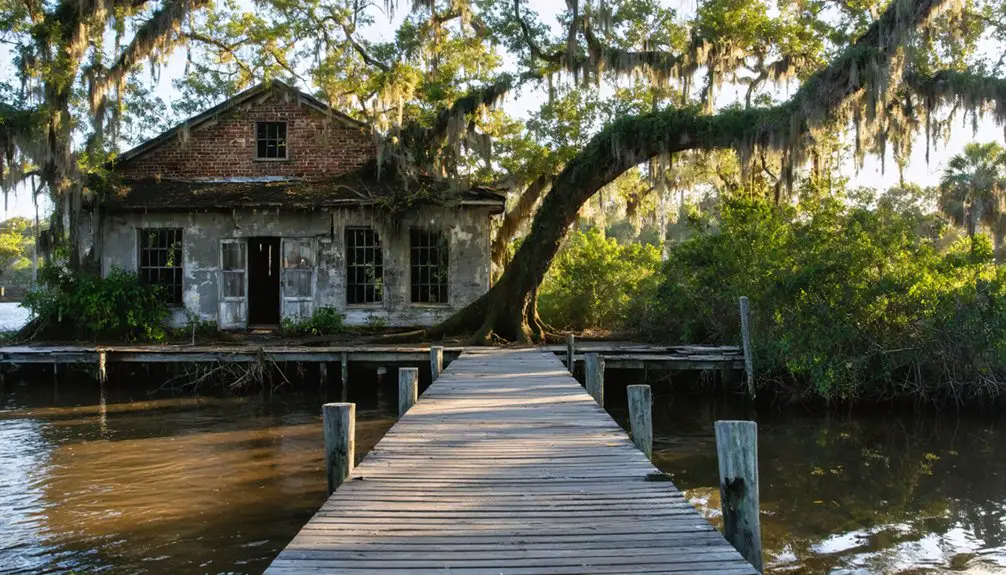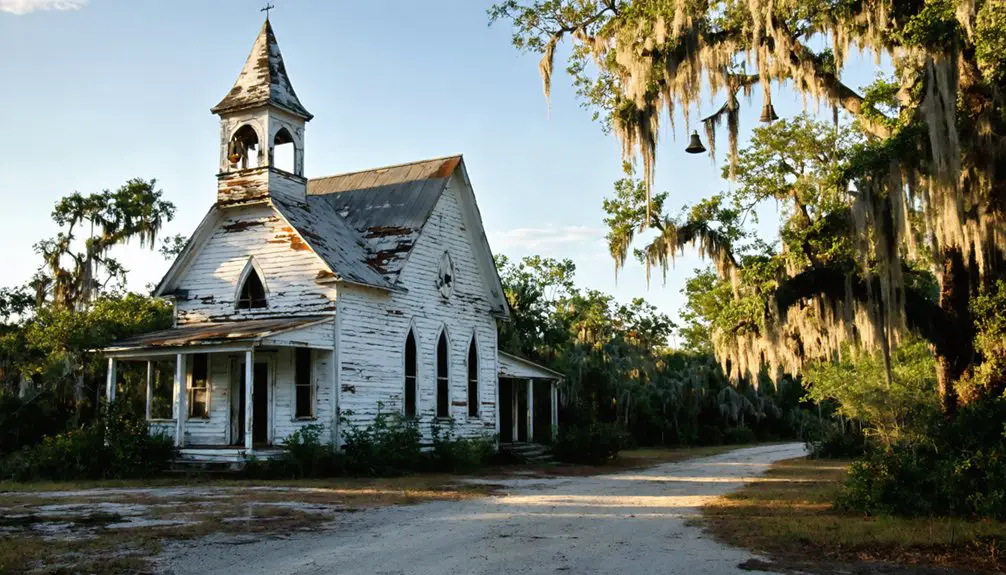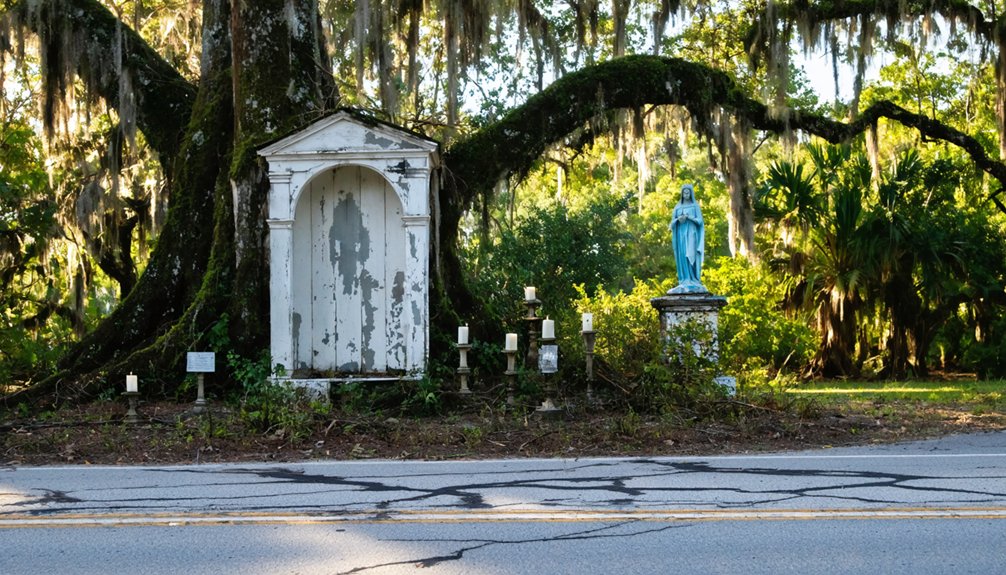
You’ll find this hauntingly beautiful site about 3 miles southeast of Lake Wales in central Florida, accessible via Saint Anne Shrine Road off State Road 17. Founded by French Canadian Catholics in 1920, the shrine once drew thousands of pilgrims seeking miraculous healings before its abandonment in the 1940s. Today, weathered stone grottos and steps leading nowhere stand as silent witnesses to this forgotten sanctuary. The drive takes you through Polk County’s quiet landscapes to coordinates 27° 52′ 36.09″ N, 81° 29′ 18.27″ W, where the full story of faith, miracles, and decline awaits your discovery.
Key Takeaways
- Saint Anne Shrine is located 3 miles southeast of Lake Wales, accessible via Saint Anne Shrine Road off State Road 17.
- The site features weathered ruins including a stone grotto, front steps, and remnants of the 1920s white stone chapel.
- Founded in 1920 by French Canadian Catholics, the shrine drew thousands of pilgrims until World War II ended visits.
- The chapel was demolished in the 1950s after desanctification, with most artifacts and records now vanished.
- Limited public transportation available; driving is recommended, with coordinates 27° 52′ 36.09″ N, 81° 29′ 18.27″ W in Polk County.
The History Behind This Sacred Florida Settlement
Around 1920, a group of French Canadian Catholics ventured south from their frozen homeland to establish an unlikely sanctuary in central Florida’s scrubland. Napoleon Pelletier led these winter refugees to Lake St. Anne, six miles east of Lake Wales, where they’d create St. Anne des Lacs—a 15-acre spiritual retreat honoring the Virgin Mary’s mother.
The cultural traditions of the founding community drew inspiration from European healing shrines at Lourdes and Sainte-Anne-de-Beaupré. They built an unusual white stone chapel, transforming rare Florida materials into preserved architectural elements that echoed their northern heritage.
Artist Francis Marsollier arrived in 1926, seeking healing for his tubercular son. After the boy’s miraculous recovery in the lake’s waters, Marsollier fulfilled his vow by creating elaborate murals, sculptures, and grottos that would define this sacred settlement.
What Remains at the Abandoned Shrine Today
The French Canadian dream that flourished here for decades has crumbled into scattered stone and fading memory. You’ll find weathered remnants where devoted pilgrims once gathered—the stone grotto still stands near the shoreline, while front steps lead nowhere after the chapel’s unique architecture was demolished in the 1950s. Most artifacts and records have vanished: the Saint Anne statue, relics of the True Cross, and even a thorn from Christ’s Crown disappeared without trace.
What you can still discover today:
- Sacred Heart monument rising from the lakeside, though its crowning statue is gone
- Napoleon Pelletier’s grave marker at the grotto’s edge, empty since his body returned to Canada in 1970
- Three-foot white cross marking where the altar once stood among the trees
The Diocese owns this forgotten sanctuary but rarely maintains it.
Finding Saint Annes Shrine: Directions and Access
Tucked along the shores of a quiet lake in central Florida, Saint Anne’s Shrine hides approximately 3 miles southeast of Lake Wales’ city center, accessible via Saint Anne Shrine Road off State Road 17 (Scenic Highway). You’ll find the most direct driving directions involve taking US 27 to Lake Wales, then heading east on State Road 60 before turning south.
The shrine sits near Holy Spirit Catholic Church at coordinates 27° 52′ 36.09″ N, 81° 29′ 18.27″ W in Polk County. Public transportation options remain limited—Winter Haven Area Transit operates bus service connecting Lake Wales to neighboring communities, though you’ll need your own vehicle for the final approach. For pilots seeking adventure, Lake Wales Municipal Airport lies just 2 miles west of downtown, offering an unconventional arrival point.
The Golden Age of Pilgrimages and Miraculous Healings
The shrine’s first organized pilgrimage in 1928 sparked a golden era that would see thousands of faithful converge on this remote Florida sanctuary, their cars lining the narrow road as they sought miraculous cures from St. Anne’s waters.
You’d witness throngs of pilgrims gathering twice yearly—in February for Our Lady of Lourdes and in July for the Feast of St. Anne—while reports of healings spread like wildfire through French Canadian communities, transforming Napoleon Pelletier’s humble thanksgiving into an international destination.
This fervent period would flourish for nearly two decades until World War II’s arrival in 1941 kept Canadian visitors home, severing the lifeline that sustained the shrine’s remarkable draw.
First Pilgrimage 1928 Launch
By 1928, word of miraculous healings at Saint Anne Lake had spread far beyond Florida’s borders, prompting organizers to establish formal pilgrimage seasons that would transform the tranquil lakeside into one of the South’s most visited devotional sites. The devotion of Canadian pilgrims proved particularly strong, as they journeyed southward seeking the miraculous lake waters that promised healing and spiritual renewal.
Two annual pilgrimages anchored the sacred calendar:
- February gathering honoring Our Lady of Lourdes, coinciding with the Virgin Mary’s apparition anniversary in France
- July celebration dedicated to the Feast of St. Anne, venerating the shrine’s patron saint
- Stations of the cross winding through oak hammocks, where elaborate statuaries guided contemplative walks
These organized devotions drew inspiration from Saint Anne de Beaupré and Lourdes, establishing Florida’s own pilgrimage tradition.
Thousands Seek Miraculous Cures
As pilgrims descended upon Saint Anne’s Shrine throughout the late 1920s and 1930s, they arrived bearing afflictions and departed—according to hundreds of testimonies—carrying miracles. You’d find thousands gathering for the February Lourdes apparition anniversary and July’s feast of St. Anne, transforming this Isle of Cuba corner into international pilgrimage ground.
Canadian supporters helped establish monuments—a Lourdes grotto replica, St. Christopher’s towering presence, St. Therese’s fountain—while artist Marsollier crafted murals and sculptures celebrating miraculous recoveries. The Diocese of St. Augustine designated it an official mission during peak years. Pilgrims left behind crutches, braces, and orthopedic boots as gratitude tokens, their 296 pages of documented spiritual healings attracting seekers from distant shores to this South Main and Middle intersection.
World War II Ends Era
While Saint Anne’s Shrine basked in its golden age throughout the 1930s—its grottos echoing with prayers in French and English, its walls adorned with Marsollier’s triumphant murals of healing—storm clouds gathered across the Atlantic that would ultimately seal the sanctuary’s fate.
When America entered World War II, everything changed:
- Snow-covered Canadian homes remained occupied through long winters as pilgrims abandoned their southern migrations
- Empty pathways wound past silent grottos where healing waters once drew desperate believers
- Dust settled on Marsollier’s sacred relics as years passed without devotees
The postwar visitation downturn proved permanent. Canadian faithful never returned, even after victory. Combined with a changing religious landscape and mounting commercialization concerns from St. Anne residents, the shrine’s sacred purpose dissolved into obsolescence.
Why This Holy Site Was Abandoned
Napoleon Pelletier’s death in March 1942 marked the beginning of Saint Anne’s Shrine‘s slow descent into obscurity. Without his devoted stewardship, the sacred site lost its guiding vision.
You’ll find that multiple forces converged to seal its fate: Canadian pilgrims stopped making their annual winter pilgrimages during wartime, cutting off essential funding from Catholic sources up north. Community tensions escalated as locals grew increasingly frustrated with the endless stream of visitors disrupting their neighborhood peace.
Commercial interests clashed with the shrine’s spiritual purpose, raising concerns about over-commercialization that tarnished its authenticity. By the early 1960s, the Catholic Diocese of Orlando deemed the property obsolete, ultimately desanctifying and demolishing the church. Today, you’re free to explore what remains of this forgotten sanctuary.
Best Time to Visit the Ruins
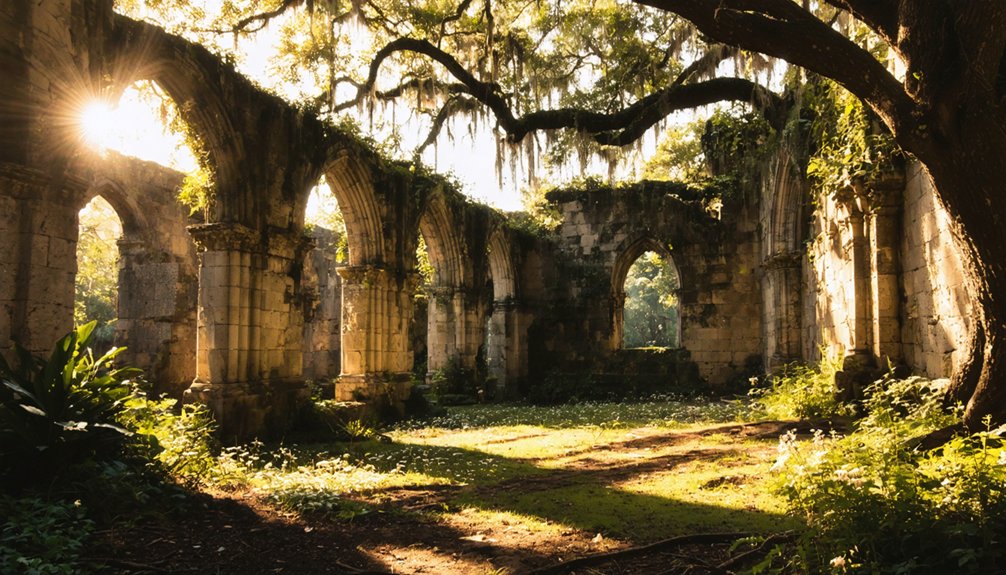
The ruins of Saint Anne’s Shrine reveal their haunting beauty most generously during Florida’s dry season, stretching from November through April. These ideal visitation timeframes spare you from hurricane threats and oppressive heat while offering comfortable temperatures for unrestricted exploration.
Seasonal weather considerations matter here—summer thunderstorms transform stone paths into slip hazards, and overgrowth obscures the site’s forgotten corners.
Plan your escape around these conditions:
- Dawn arrivals on weekdays guarantee solitary communion with crumbling walls and weathered statues
- Spring months (March-April) frame the lakeside grotto with blooming native flora
- Post-sunset access allows evening rituals beneath darkening skies without crowds
You’ll find the grounds accessible year-round without fees or restrictions, but autumn through early spring delivers the clearest trails and most profound atmosphere for your pilgrimage.
What to Expect When You Arrive
Six miles east of Lake Wales, a white cross pierces the roadside canopy along Highway 60, marking your gateway to Saint Anne’s Shrine.
Pull off at St. Anne Shrine Road, park near the cross, and walk 25 yards through grass toward weathered stone rising from the earth. The 40-foot Lourdes grotto replica commands immediate attention—its tiled altar still intact, accessible via a stone bridge spanning a moat.
Beyond it, a crystal lake stretches beneath cathedral trees, encircled by a mile-long loop trail. Visitor reflections echo through remnant shrines and a solitary grave near the grotto. The spiritual atmosphere persists despite abandonment, with fresh flowers marking recent prayers.
Local residents maintain basic upkeep, preserving this serene retreat where stone baptistry steps descend into memory.
Photography Tips for Capturing the Grotto
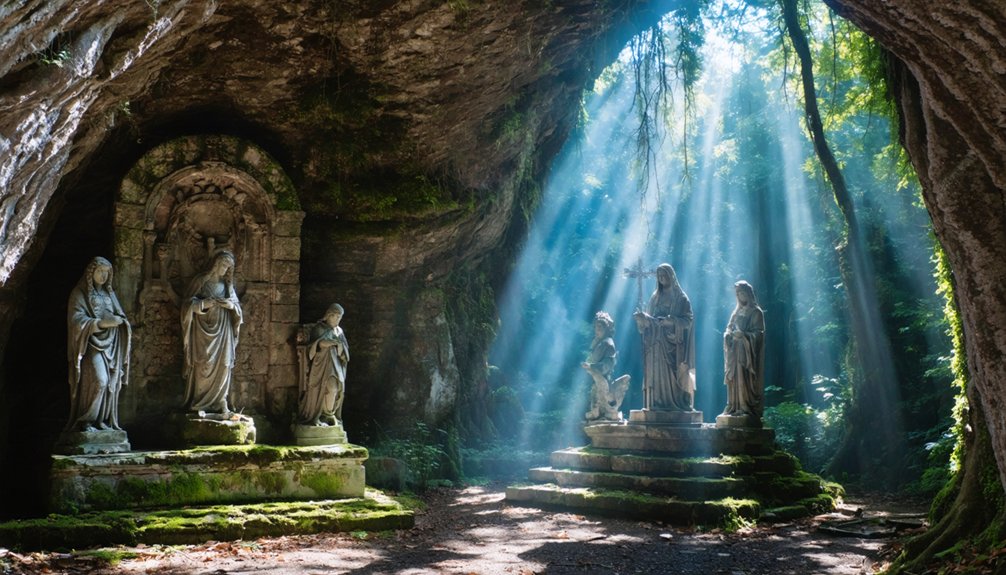
When golden hour light filters through the cathedral canopy, your camera will capture Saint Anne’s Grotto at its most ethereal. Master these composition techniques and lighting considerations to document this weathered sanctuary:
- Frame the 40-foot stone structure with the moat bridge in your foreground, creating layers that draw viewers into the scene while St. Anne Lake shimmers behind the tiled altar.
- Position yourself low near the bridge for an upward perspective that emphasizes the grotto’s towering presence against filtered woodland light, mimicking Lourdes’ dramatic scale.
- Shoot during overcast conditions or dawn to avoid harsh contrasts on weathered stone textures, letting natural lake reflections enhance the shrine’s mystical atmosphere.
Respect the private property boundaries while capturing what time hasn’t claimed.
Nearby Attractions to Complete Your Road Trip
After exploring Saint Anne’s Shrine’s mysterious grounds, you’ll find Lake Wales offers compelling stops that enhance your ghost town adventure. Bok Tower Gardens beckons with Frederick Law Olmsted Jr.’s landscaped masterpiece and its historic Singing Tower, while Lake Kissimmee State Park provides trails through Florida’s wild heartland just minutes away.
As you continue your exploration, don’t miss the unique ghost town attractions in Liverpool, which offer an intriguing glimpse into the city’s past. From abandoned buildings to historic sites, each location tells a haunting story that adds depth to your journey. Make sure to capture the eerie beauty of these remnants as you venture through this fascinating landscape.
These attractions transform a simple shrine visit into a full day of discovery, blending the area’s spiritual history with natural beauty and outdoor exploration.
Historic Lake Wales Sites
The historic downtown district of Lake Wales beckons travelers with its charming blend of 1920s architecture and vibrant community spirit, offering an authentic glimpse into Old Florida culture just minutes from Saint Annes Shrine.
Market Plaza anchors the district between Park Avenue and Stuart Avenue, where you’ll discover downtown shopping experiences among specialty boutiques and antique stores.
The Lake Wales History Museum occupies the 1928 Atlantic Coast Line Railroad depot, offering free admission to exhibits curated by director Bartholomew Delcamp.
Must-see historical treasures:
- A 1,020-year-old prehistoric dugout canoe stretching 21 feet, discovered in Lake Hancock
- Original train master’s desk overlooking the Florida Midland Railroad displays
- English-style garden courtyards with trellis swings hosting community events and gatherings
The Lake Wales Little Theatre, one of Florida’s oldest playhouses, presents year-round performances celebrating local artistic independence.
Bok Tower Gardens Visit
Rising majestically from Iron Mountain, Florida’s highest point at 298 feet, Bok Tower Gardens crowns your ghost town road trip with 130 acres of horticultural splendor just twenty minutes from Saint Annes Shrine. The 205-foot art deco carillon tower delivers concerts that echo through Olmsted-designed landscapes, while koi-filled ponds and native habitats offer wildlife photography opportunities at every turn.
Wander the Pine Ridge Trail through identified plant species, explore the newly opened Children’s Garden, or marvel at eight-foot Victoria Water Lilies. The 20-room Pinewood Estate reveals 1930s luxury worth the 3-4 hour exploration. Open year-round from 8 a.m. to 6 p.m., this National Historic Landmark welcomes you and your leashed dog to roam freely through gardens, trails, and history.
Local State Park Exploration
Picture yourself:
- Tracking bobcats and river otters through longleaf pine forests
- Spotting over 100 migratory bird species along ancient sand ridges
- Wandering through landscapes unchanged since prehistoric Florida
These preserves require no entrance fees, letting you explore untamed terrain that contrasts sharply with abandoned ghost towns.
Frequently Asked Questions
Are There Restroom Facilities Available at Saint Annes Shrine?
The forgotten stones whisper of bygone devotion, yet no public restrooms await you here. You’ll find handicapped accessibility limited and picnicking options sparse at this abandoned shrine, so plan ahead before exploring these hauntingly beautiful, weathered ruins freely.
Is Camping or Overnight Parking Permitted on the Shrine Property?
Overnight accommodations aren’t available at Saint Anne’s Shrine, and parking policies don’t explicitly permit camping on the property. You’ll find the spacious driveway accommodates day visits, but you’ll need nearby alternatives for extended stays or overnight parking.
Can I Bring My Dog to Visit the Shrine Ruins?
You can bring your dog since St. Anne’s Shrine closed in 2019 without active restrictions. However, leashed dogs allowed policies vary on surrounding private property. Research nearby dog friendly attractions and respect neighboring landowners’ boundaries during your exploration.
Is There an Admission Fee to Visit Saint Annes Shrine?
No admission fee’s required—you’re free to explore Saint Anne’s Shrine anytime during operating hours. While donation options exist to support site preservation, there’s no charge to wander these historic ruins and sacred grounds at your leisure.
Are Guided Tours Available for the Abandoned Shrine Site?
No scheduled group tours operate at this abandoned site. You’re free to explore independently through self-guided tours, wandering the weathered grotto and stone steps at your own pace without formal interpretation or commercial tour operators.