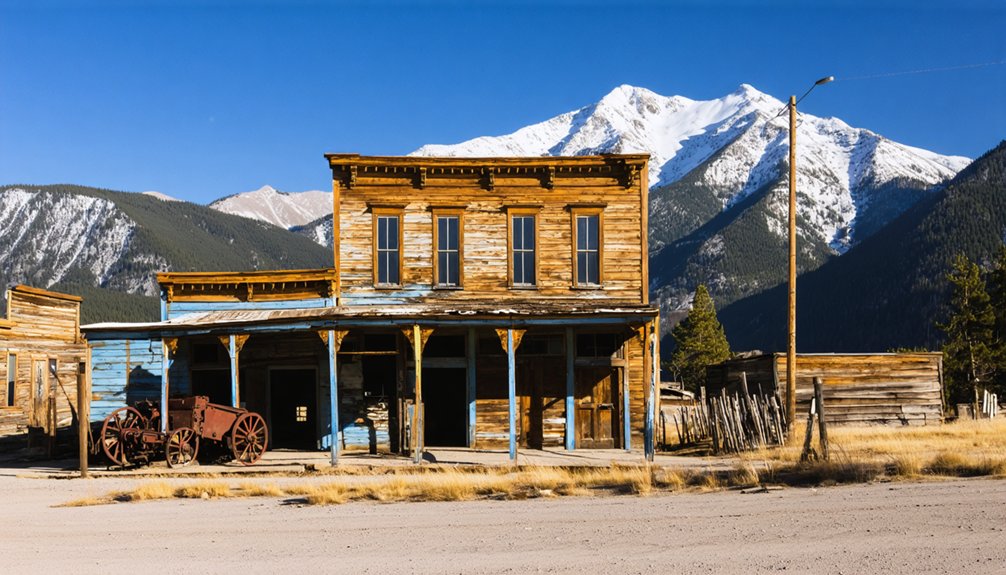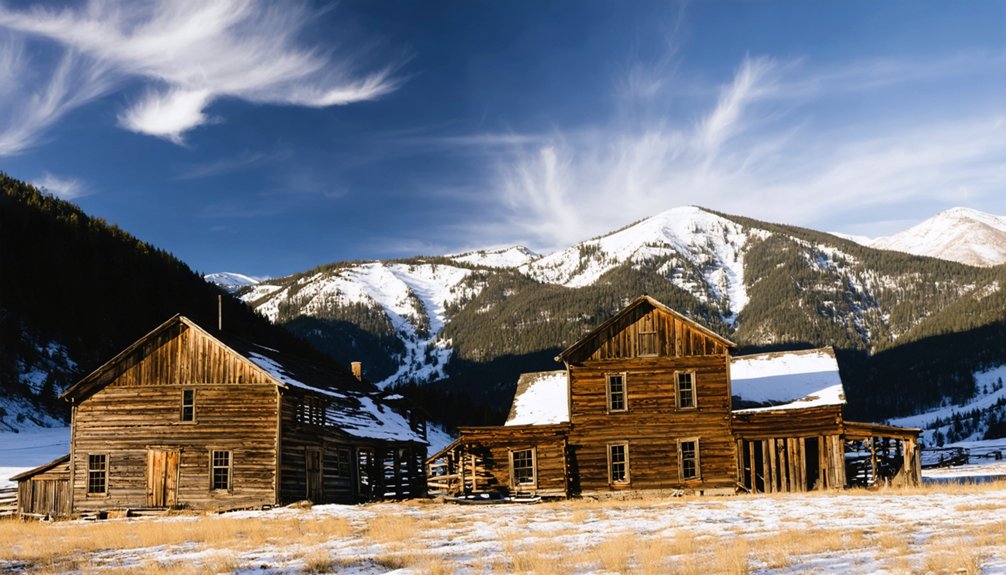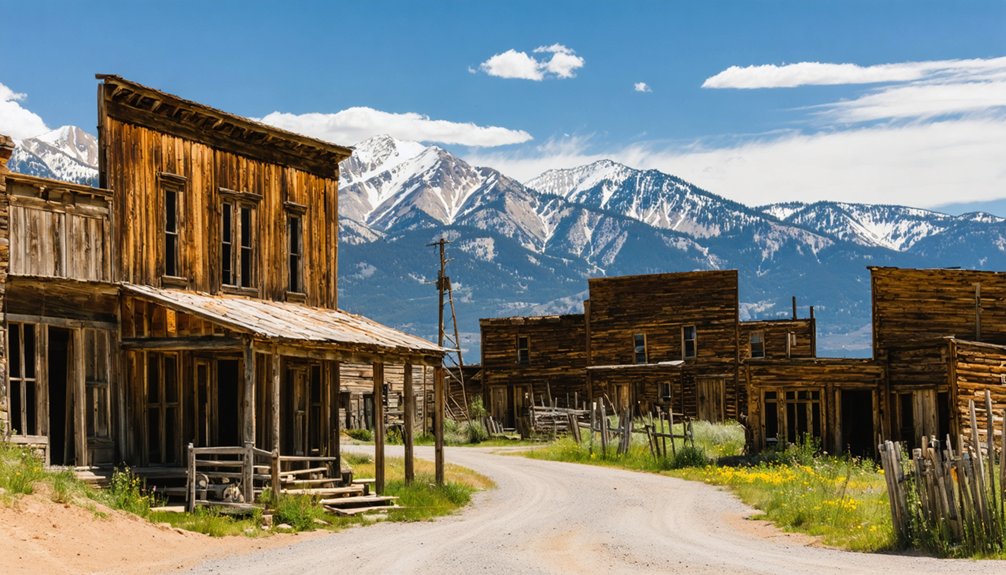
You’ll need high-clearance 4WD to reach Tomboy at 11,509 feet, where 2,000 miners once played tennis amid the clouds, while Alta’s easier route takes 2WD vehicles to Tesla’s first AC-powered mine site. Plan for Telluride as your base, timing visits between late June and September when snowmelt clears the passes. These ghost towns cling to ridges between 8,000 and 12,000 feet, offering million-dollar ore processing ruins and alpine scenery that rewards careful preparation with unforgettable high-altitude exploration.
Key Takeaways
- San Miguel County offers two premier ghost towns: Tomboy at 11,509 feet and Alta, both showcasing Colorado’s mining heritage from the 1870s-1940s.
- Alta is accessible six miles south of Telluride via 2WD-suitable roads, while Tomboy requires high-clearance 4WD vehicles for steep, rocky terrain.
- Tomboy features extensive infrastructure including miners’ cabins, schoolhouse, YMCA, and stunning views of Telluride and Bridal Veil Falls below.
- Alta showcases the world’s first Tesla AC-powered mine, a 1939 boardinghouse, and two-mile aerial tramway descending 1,800 feet to Ophir Loop.
- Plan for high-altitude exploration between 8,000-12,000 feet with weather-appropriate gear and vehicle capabilities matching challenging mountain road conditions.
Understanding San Miguel County’s Mining Heritage and Early Settlements
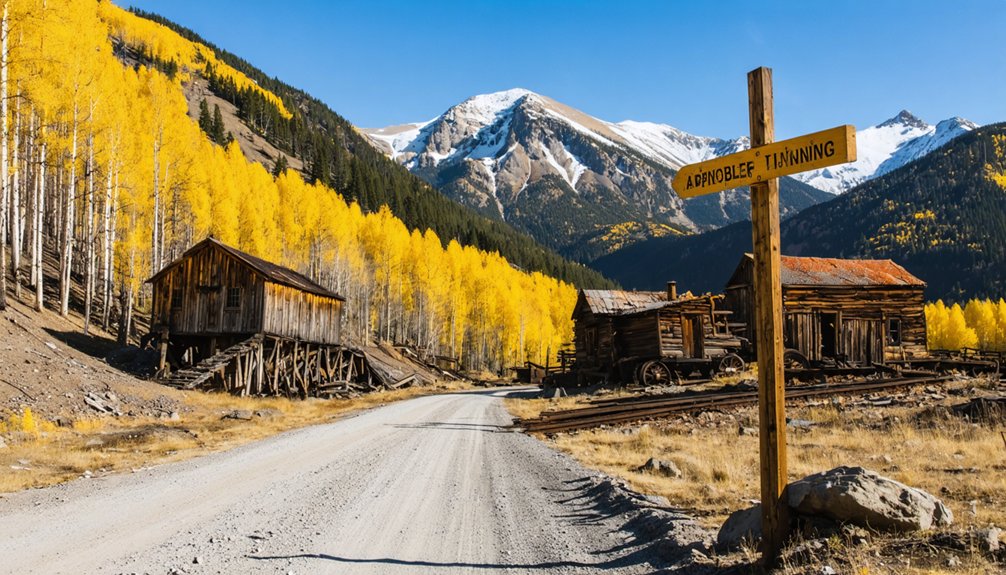
When prospectors first pushed into San Miguel County‘s rugged terrain in the early 1870s, they weren’t merely chasing rumors—they were staking claims on what would become some of Colorado’s richest mineral grounds. Linnard Remine started placer mining in 1872 on Ute Reservation land, and by summer 1875, over 300 men worked the San Miguel River.
The mining evolution accelerated rapidly after the Utes ceded four million acres in 1873. John Fallon’s 1874 discovery of rich gold ore in Marshall Basin sparked the Telluride District boom, while Ophir’s silver deposits shipped by 1878. Transportation challenges forced miners to haul ore over Ophir Pass to Silverton‘s smelter, driving the need for infrastructure that would transform these remote camps into thriving—if temporary—communities.
Tomboy Ghost Town: A High-Altitude Mining Marvel at 11,509 Feet
When you stand among Tomboy’s weathered ruins at 11,509 feet, it’s staggering to imagine 900 to 2,000 people once called this windswept basin home, supported by a general store, school, YMCA, and even tennis courts.
The crumbling foundations of miner cabins and twenty miles of nearby tunnels reveal the massive scale of operations that made this one of Telluride’s top three producers.
In summer, wildflowers blanket the north hillside where elk and marmots now roam paths once traveled by daily stagecoaches carrying mail and miners.
Peak Population and Infrastructure
At its zenith between 1895 and 1910, Tomboy sustained anywhere from 900 to 2,000 souls at 11,509 feet—a population density that defied both logic and oxygen levels. You’ll find this wasn’t some ramshackle tent camp. The operation built a complete town: miners’ cabins scattered across Savage Basin, a general store stocked with essentials, even a schoolhouse where children learned arithmetic in thin air. Population size fluctuations demanded flexible housing density accommodation—cabins expanded and contracted with mining fortunes.
What’s truly remarkable? They constructed tennis courts and a YMCA at nearly 12,000 feet. Daily stagecoach service connected this alpine outpost to civilization below. The Rothschilds valued the operation at $2 million in 1897, evidence of its phenomenal gold, silver, and zinc production that justified building an entire self-sufficient community where most wouldn’t survive a week.
Scenic Views and Wildlife
Standing at 11,509 feet where oxygen thins and perspective shifts, you’ll witness mountain scenery that transforms Tomboy from mere historical curiosity into visual spectacle. Dramatic viewpoints reveal Telluride sprawled in the valley below while the 365-foot Bridal Veil Falls cascades down distant cliffsides.
July and August paint northern hillsides with wildflower blankets against stark alpine rock.
What awaits your exploration:
- Abundant marmots chirp their distinctive high-pitched warnings throughout the ghost town
- Panoramic mountain vistas stretching across Savage Basin’s rugged terrain
- Rocky alpine landscape framing mining relics and weathered building remnants
- Wildlife observation opportunities as “whistle pigs” scurry between stone foundations
- Summer-blooming wildflowers softening the harsh elevation’s rocky character
These high-country residents retreat harmlessly into their rock pile fortresses, adding living character to abandoned human infrastructure.
Alta Ghost Town: The Company Town That Survived Until 1948
At 11,800 feet between Telluride and Rico, Alta became the world’s first mine to harness Tesla’s AC power system, abandoning coal-hauling pack mules for electric innovation that transformed its operations.
You’ll find remnants of an ambitious company town where a two-mile aerial tramway once plunged 1,800 feet to Ophir Loop, connecting mill buildings that processed over $2 million in ore.
The boardinghouse still stands—built in 1939 from salvaged St. Louis mine materials—a tribute to the engineers and miners who carved civilization into this extreme alpine landscape until fire ended operations in 1948.
Mining Operations and Infrastructure
The discovery of the Alta vein in 1877 launched what would become one of Colorado’s most technically sophisticated mining operations, perched improbably at 11,800 feet where winter snows buried buildings to their rooflines. You’ll find remnants of a mining complex that pushed technological boundaries, becoming the world’s first to harness Tesla’s AC transmission system—transforming remote transportation logistics from exhausting 4-mile mule hauls of coal into efficient electrical power.
Key infrastructure innovations you can trace:
- 9,000-foot Black Hawk tunnel penetrating Silver Mountain to intersect multiple veins
- Aerial tramway connecting the Gold King Mine to processing facilities below
- 20-stamp Bessie mill (1898) that dramatically increased ore output
- Innovative power generation plant eliminating coal dependency
- Alta mill producing over $2 million through the 1940s
The complex generated over $5 million before the devastating 1948 fire ended operations.
Town Layout and Amenities
Unlike sprawling mining camps that grew haphazardly across Colorado’s peaks, Alta developed as a deliberate company town—compact, functional, and clinging to an 11,800-foot shelf where winter snows routinely buried structures to their rooflines.
You’ll find the essentials scattered across the townsite: a general store where store merchandise offerings ranged from mining supplies to canned goods, a schoolhouse for the few dozen children, and a recreation hall where workers escaped the mountain’s crushing isolation.
The 1939 boardinghouse—constructed from salvaged materials—dominated worker housing, its boardinghouse accommodations serving the steady flow of single miners. Above it all sat “Snob Hill,” where bankers and owners watched their operation from heated homes while crews below wrestled frozen ground. No church, no post office—just what kept ore flowing and bodies functional.
Historic Mining Infrastructure and Mills Worth Exploring
When you explore San Miguel’s remote mountain terrain, you’ll discover mining infrastructure that transformed these peaks into one of America’s top 25 gold-producing districts. The Liberty Bell, Smuggler, and Tomboy mines dominated production here, each supporting mining camps that housed hundreds of workers.
Mining camps clinging to these remote peaks once housed hundreds of workers extracting riches from America’s premier gold-producing districts.
You’ll find abandoned mill facilities scattered throughout the valley, including the historic arrastras from 1879 where miners first attempted processing silver ore.
Notable Infrastructure to Explore:
- Old mining equipment at the Grand View Mine and Atlantic Cable Group sites
- Remnants of the 1890 hydroelectric plant at Ames
- Mining camp ruins at Tomboy and Smuggler locations
- Failed smelter foundations from 1883
- Original arrastra milling sites predating the Ophir Pass ore-shipping route
The district’s silver-to-gold ratio of 3:1 drove intermittent operations through 1948.
Getting There: Routes and Access to Remote Ghost Town Sites
Reaching San Miguel’s ghost towns demands careful route planning, as these abandoned mining sites perch between 8,000 and 12,000 feet along weathered mountain roads. You’ll find Alta six miles south of Telluride—turn left on Alta Lakes Road and follow four miles to the townsite, where 2WD vehicles handle the main route just fine.
Tomboy demands more respect: start at Oak Street’s north end, but remember county rules prohibit unlicensed OHVs on the first 2.5 miles. Road conditions deteriorate beyond Tomboy’s camp, where loose rock and steep grades challenge even experienced drivers.
Navigate private land access carefully around Alta’s townsite, though surrounding Forest Service land remains open. Season matters too—snow blocks these high-altitude routes until May, closing them again by October.
What to See: Remaining Structures and Scenic Attractions
Once you arrive at these weathered settlements, the real reward begins—ghost towns that reveal themselves through standing structures and alpine vistas that mining operations could never quite tame.
Unmissable Sights:
- Alta’s original buildings stand defiantly at 11,800 feet, offering panoramic vistas of Mount Wilson that’ll stop you cold
- Tomboy’s scattered remnants at 11,509 feet where marmots now claim what once housed 1,000 miners—bring your camera for wildflower season
- Ames Power Plant’s 1880 engineering marvel still perches at 8,721 feet, a lasting legacy to human ingenuity in harsh terrain
- Placerville’s weathered structures tell stories through peeling paint and sagging beams along the San Miguel River
- Pandora’s ghostly foundations require imagination—little survives, but the mining structures’ footprints remain visible
Each site demands different terrain navigation and offers unique photographic opportunities.
Preparing for High-Elevation Exploration and Safety Considerations
Anyone who’s gasped for breath at 11,000 feet knows that Colorado’s ghost towns don’t just test your vehicle—they test your body. San Miguel’s 8,750-foot elevation demands respect, with Mountain Village climbing past 10,000 feet where oxygen drops 30% below sea level.
Start your acclimatization before arrival—spend 1-2 nights at intermediate elevations. Watch for headaches and nausea within 6-24 hours, signs you’re pushing too hard. The elevation hydration requirements double what you’d drink at sea level; dry mountain air strips moisture relentlessly.
Pack acetazolamide for rapid ascents, and don’t underestimate temperature variations. Summer storms drop readings fast, while year-round snow threatens exposed passes like Imogene at 12,590 feet. If symptoms worsen, descend immediately. Your freedom depends on respecting these mountains’ power.
Best Times to Visit and Wildlife Viewing Opportunities
Timing transforms everything in San Miguel’s high country. Seasonal variations dictate not just accessibility but the entire character of your ghost town experience. Late May through October represents your operational window, when roads become passable and the San Juans reveal their full spectrum.
Your ideal exploration windows:
- Late September to early October — Aspen foliage blazes gold against weathered mining structures while crowds vanish
- Early May — Pre-festival season solitude meets snowmelt-fed waterfalls
- August through October — Peak conditions for 4WD access with minimal tourist interference
- Summer mornings — Wildflower meadows frame historic cabins in perfect light
- Fall shifts — Wildlife activity intensifies as elk and deer prepare for winter
Winter seals these elevations entirely. Plan accordingly, embrace unpredictability, and you’ll have these ghost towns largely to yourself.
Frequently Asked Questions
Are There Camping Facilities Near the Tomboy and Alta Ghost Towns?
No dedicated campgrounds exist at either ghost town, but you’ll find dispersed camping possibilities along access roads. Consider nearby lodging options in Telluride as your base, then explore local hiking trails leading to these high-elevation historic sites.
Do I Need a 4WD Vehicle to Access These Ghost Towns?
Alta welcomes 2WD cars to its ghost town site, but Tomboy demands different machinery—you’ll need high clearance vehicles with 4WD capability. These remote access points aren’t recommendations; they’re requirements for conquering steep, rocky terrain safely.
Can I Explore Inside the Remaining Structures at These Sites?
You’ll find Animas Forks offers safe interior exploration of nine stabilized structures, while Alta and Tomboy require external viewing only. Obtain necessary permits beforehand and respect private property boundaries—these high-altitude ruins demand your responsible adventure spirit.
Are There Guided Tours Available for the Ghost Town Locations?
Yes, you’ll find guided walking tours exploring Telluride’s haunted history and half-day jeep excursions to Alta and Tomboy ghost towns. Several operators offer private group tours, letting you customize your adventure through these high-mountain mining relics.
Is There Cell Phone Service at These High-Elevation Ghost Town Sites?
Don’t expect connectivity—you’ll face serious cell phone coverage limitations at these remote sites. AT&T offers your best shot at 73.9% county coverage, but unreliable connectivity remains reality. Download maps offline before venturing into these mountain sanctuaries.