Sand Cut sits deep inside Mojave Trails National Monument along one of the desert’s oldest travel corridors, and most road-trippers never find it. You’ll follow Cadiz Road off State Route 62 into raw, unpaved terrain where Charles Chubbic once built a 1,600-acre limestone empire that thrived, collapsed, and emptied out by 1954. What’s left are crumbling foundations, ghost town artifacts, and a silence that feels earned. Keep going, and the full story of this forgotten desert kingdom comes into focus.
Key Takeaways
- Sand Cut, located in Mojave Trails National Monument, is accessible via Cadiz Road off California State Route 62, requiring a high-clearance vehicle.
- Pack essential supplies including water, fuel, a spare tire, sturdy boots, a first aid kit, and a paper map for navigation.
- Explore Chubbic townsite’s crumbling foundations and ghost town artifacts, remnants of a limestone mining community that collapsed by 1954.
- Inform someone of your route and return time, as the area lacks cell service and presents remote desert hazards.
- Follow Leave No Trace principles, stay on designated paths, and observe wildlife from a distance to preserve the desert environment.
Why Sand Cut Is One of the Mojave’s Most Overlooked Stops
Although it sits along one of the Mojave’s oldest travel corridors, Sand Cut remains largely invisible to modern drivers rushing between Los Angeles and Phoenix on faster, paved alternatives.
Cadiz Road once carried travelers through this raw desert stretch, connecting cities long before newer highways erased its relevance. Today, that obscurity works in your favor.
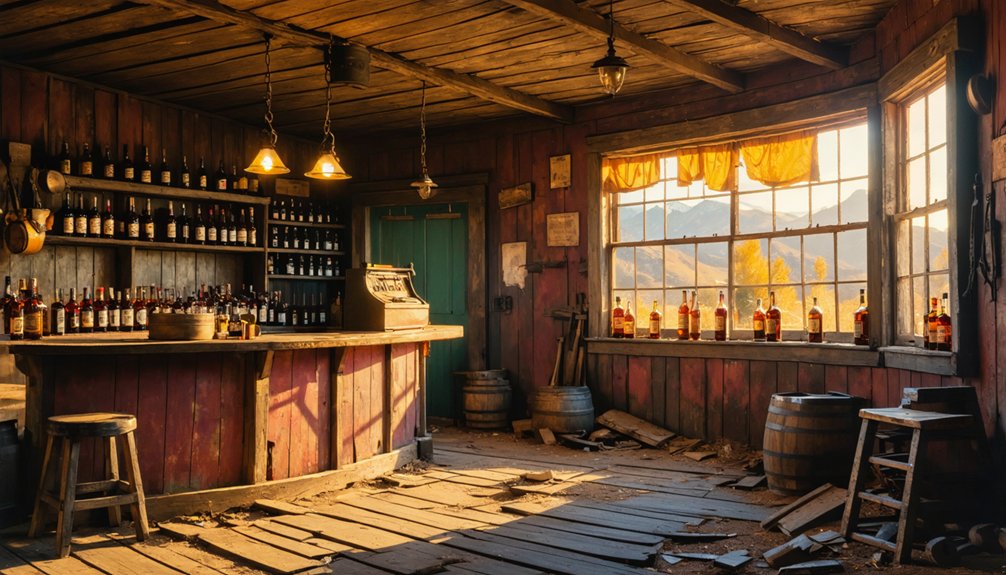
Sand Cut sits within Mojave Trails National Monument, quietly holding hidden treasures that rewarding explorers discover: ghost town foundations, bullet-scarred walls, and the echo of local legends tied to Chubbic’s vanished limestone community.
You won’t find crowds here. You’ll find silence, crumbling evidence of lives once lived, and Cadiz Dunes stretching beyond.
Freedom-seekers who leave the interstate behind are the ones who actually find this place.
The Rise and Fall of Chubbic’s Limestone Empire
When Charles Chubbic purchased a 1,600-acre limestone claim in 1922, he didn’t just stake a mining operation—he planted the seed of an entire community in the Mojave Desert.
The limestone extraction operation grew fast, drawing workers and families to a settlement that soon outpaced neighboring railroad towns. The Chubbic economy hummed around a cement mill, fueling a legitimate mining boom that lasted decades.
At its peak, Chubbic’s cement mill drove a thriving desert economy that left neighboring railroad towns in the dust.
But prosperity proved fragile. When a single West Coast company patented Miracle lime and captured the market, demand for Chubbic’s product collapsed.
The mill shut down in 1951, the mines closed permanently in 1954, and the town emptied almost overnight.
What’s left is a ghost town reduced to scattered foundations—quiet proof that even the most ambitious desert ventures can vanish completely.
How to Reach Sand Cut Along Cadiz Road
Leaving Chubbic’s crumbled foundations behind, you’ll trace the same desert corridor that once carried miners, supplies, and ambition deep into the Mojave.
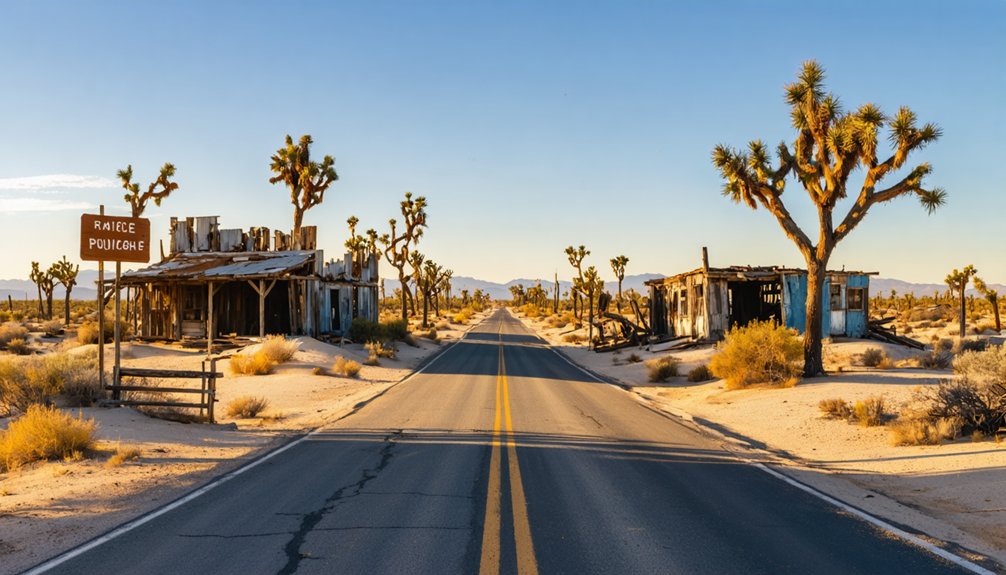
Sand Cut access begins along Cadiz Road, reached via California State Route 62. This former main artery between Los Angeles and Phoenix now sees little traffic, reclaimed by silence and open sky.
Cadiz Road navigation demands preparation. Expect unpaved stretches through Mojave Trails National Monument, where modern conveniences disappear and raw desert takes over.
Travel during daylight — the terrain is remote, unforgiving, and starkly beautiful. No crowds compete for your attention here.
The road rewards the self-sufficient traveler. Every mile west pulls you deeper into landscapes shaped by geology, ambition, and abandonment, delivering you finally to the windswept edges of Cadiz Dunes.
What’s Left to See at the Chubbic Townsite?
Silence dominates the Chubbic townsite now, but the desert floor still holds evidence of what stood here. You’ll find Chubbic foundations scattered across the landscape, their concrete edges crumbling yet unmistakable against the pale Mojave soil.
These remnants once anchored homes where mine workers and their families lived, far from any railroad line.
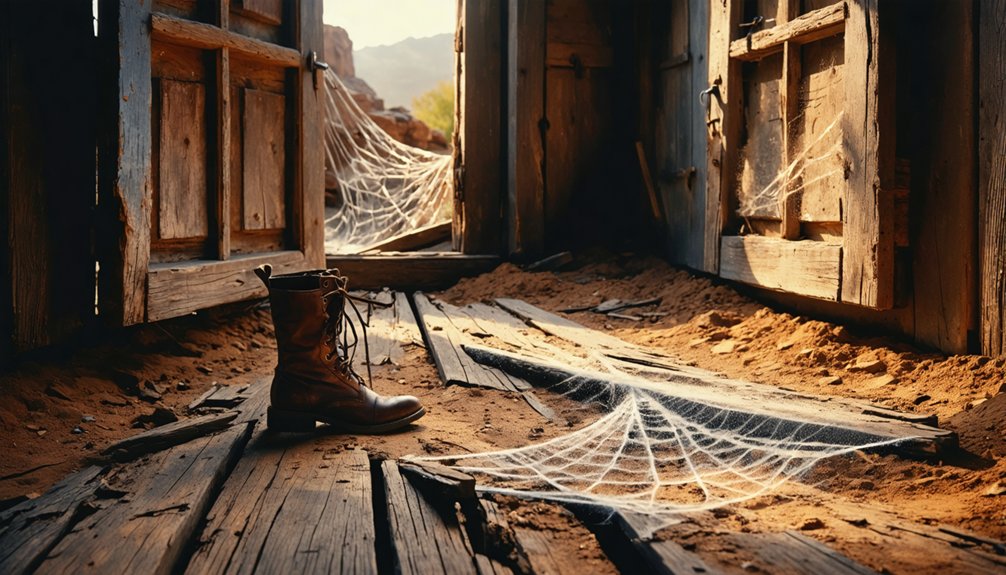
Walk carefully through the site and you’ll spot ghost town artifacts embedded in the earth — debris, fragments, and structures riddled with bullet holes left by decades of desert wanderers.
The cement mill that operated until 1951 is gone, but its absence speaks loudly. You’re standing where a self-sufficient community once thrived, then quietly disappeared after the mines closed in 1954.
The desert reclaimed it, but it didn’t erase everything.
Cadiz Dunes: The Hardest-to-Reach Sand in the Mojave
Beyond the Chubbic foundations, Cadiz Road pushes deeper into the Mojave toward one of its most isolated rewards: the Cadiz Dunes. Few visitors ever make it this far, and that’s exactly the point. The road’s remoteness filters out the casual traveler, leaving the dunes almost entirely yours.
Your sand exploration here feels genuinely uncharted. These aren’t groomed or signposted — they’re raw Mojave, shaped by desert winds across open terrain within Mojave Trails National Monument. The silence is absolute, the scale humbling.
Getting here demands preparation: enough fuel, water, and daylight to navigate unpaved stretches without backup nearby.
But if you’re chasing real desert freedom — untouched landscape far from crowds — the Cadiz Dunes deliver something most people never find.
More Mojave Ghost Towns Worth the Detour
If Sand Cut and Chubbic have sparked your appetite for Mojave ghost towns, two others deserve a spot on your radar.
Calico, abandoned in the mid-1890s after silver prices collapsed, sat forgotten for decades before being restored in the 1950s into the living museum you can walk through today.
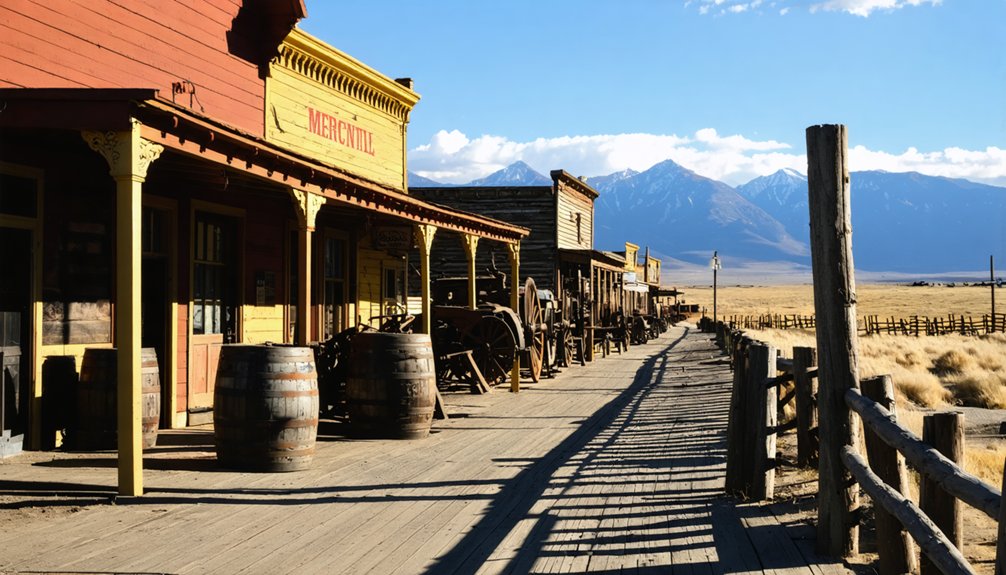
Bodie tells a wilder story — its gold deposits formed some 10 million years ago, and when the boom finally hit in 1878, it erupted into one of California’s most notorious boomtowns, now frozen in a state of what preservationists call “arrested decay.”
Calico’s Silver Mining Legacy
While Chubbic faded quietly into the desert floor, Calico burned bright and fast—a classic boom-and-bust story written in silver.
Calico history reads like a fever dream: prospectors flooded the Mojave in the 1880s, chasing rich silver veins buried beneath sun-baked hills. At its peak, the town bustled with miners, saloons, and ambition.
Then silver’s value collapsed in the mid-1890s, and Calico emptied almost overnight. The desert reclaimed it for decades until Walter Knott—of Knott’s Berry Farm fame—restored it during the 1950s, preserving what time nearly erased.
Silver mining shaped this corner of the Mojave more than any other force. When you roll through the region, Calico stands as a vivid reminder that fortune here was always temporary, always conditional.
Bodie’s Boom-And-Bust Story
Calico’s silver story had a twin—rawer, colder, and set at higher elevation.
Bodie history begins with gold deposits formed roughly 10 million years ago, but the real rush didn’t ignite until 1878. You’d have found a lawless, wind-battered settlement perched above 8,000 feet, where mining challenges weren’t just geological—they were brutal winters, supply shortages, and violence woven into daily life.
At its peak, Bodie held nearly 10,000 residents and dozens of operating mines. Then the ore thinned, fires swept through, and people simply left.
Today, California preserves it in a state of “arrested decay,” meaning you’ll walk streets frozen mid-collapse. If you crave unfiltered frontier history before reaching Sand Cut, Bodie delivers it without apology.
The Best Season to Drive Cadiz Road
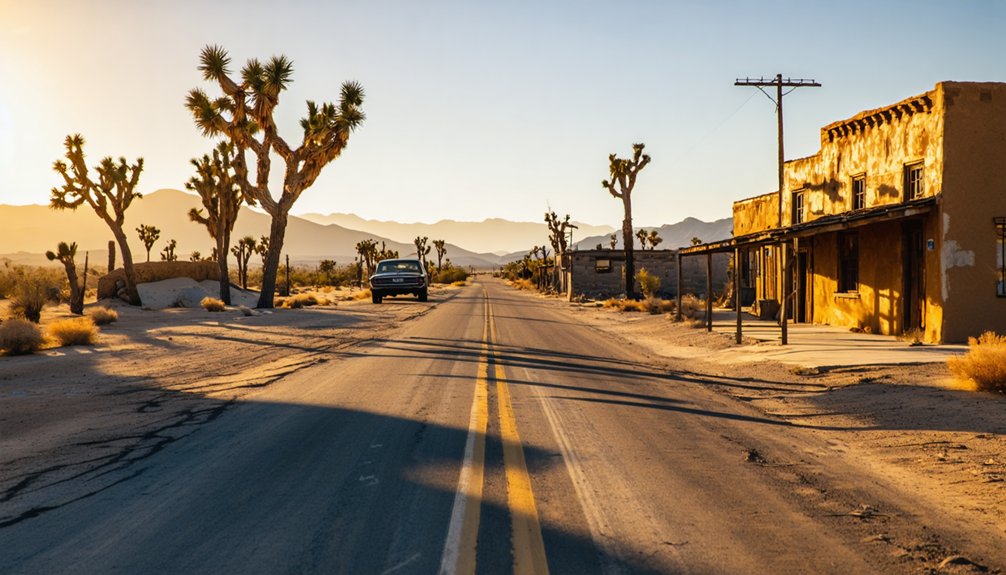
Timing your drive along Cadiz Road can make or break the experience. The Mojave Desert’s seasonal weather swings between brutal extremes, so choose wisely. Spring and fall offer the sweetest windows — mild temperatures let you linger at Chubbic’s foundations without the punishing summer heat that turns asphalt into a frying pan.
Winter brings cold nights and occasional road hazards, but crisp air sharpens every desert vista.
Among the best driving tips: avoid July and August entirely. Midday temperatures routinely exceed 110°F, threatening both you and your vehicle on this remote, unpaved stretch. Start early in the morning regardless of season, carry extra water, and tell someone your route.
Cadiz Road rewards the prepared traveler with raw desert freedom — ghost town silence, shifting dunes, and unfiltered Mojave solitude.
What to Bring Before You Drive Out to Cadiz Road
Preparation separates a memorable desert expedition from a dangerous one. Cadiz Road’s remoteness demands you treat ghost town essentials as non-negotiables. Pack extra water — at least a gallon per person — plus fuel, a spare tire, and a paper map since cell service vanishes quickly out here.
Desert safety means anticipating what can go wrong before it does. Bring sun protection, sturdy boots for walking Chubbic’s scattered foundations, and a first aid kit. A high-clearance vehicle handles the unpaved stretches far better than a standard sedan.
Tell someone your route and expected return time. The Mojave doesn’t forgive carelessness, but it rewards those who respect its terms. Arrive prepared, and you’ll leave with stories worth telling.
Frequently Asked Questions
Is a Permit Required to Visit Mojave Trails National Monument?
You don’t need a permit to explore Mojave Trails National Monument. Follow Visiting Guidelines, respect the land’s wild freedom, and you’ll uncover haunting desert history without bureaucratic barriers slowing your adventurous spirit.
Are There Any Restroom Facilities Available Along Cadiz Road?
You won’t find restroom locations along remote Cadiz Road, so plan ahead with essential travel tips. Embrace the freedom of this untamed desert, but come prepared — nature’s your only option out here.
Can You Camp Overnight Near the Chubbic Ghost Town Site?
Over 70 years after Chubbic’s 1954 closure, you can camp near this ghost town history gem! Check Mojave Trails National Monument’s camping regulations first—you’ll sleep where mine workers’ foundations still echo forgotten freedom beneath desert stars.
Is the Cadiz Road Route Suitable for Standard Passenger Vehicles?
Cadiz Road conditions can challenge standard passenger vehicles on unpaved stretches. You’ll want vehicle recommendations leaning toward high-clearance options. Embrace the freedom of these historic desert trails, but prepare your ride wisely before venturing out.
Are Guided Tours Available for Exploring Sand Cut and Chubbic?
Like a book without a guide, Sand Cut’s ghost town history unfolds on your own terms. No official guided tours exist, so you’ll chase local legends freely, exploring Chubbic’s forgotten foundations independently beneath the vast Mojave sky.
References
- https://www.youtube.com/watch?v=ayo71ydx44M
- https://www.truewestmagazine.com/article/the-bad-man-from-bodie/
- https://www.youtube.com/watch?v=nIQACrbRm5I
- https://www.visitmammoth.com/blogs/history-and-geology-bodie-ghost-town/
- https://www.desertusa.com/desert-nevada/nevada-ghost-towns1.html