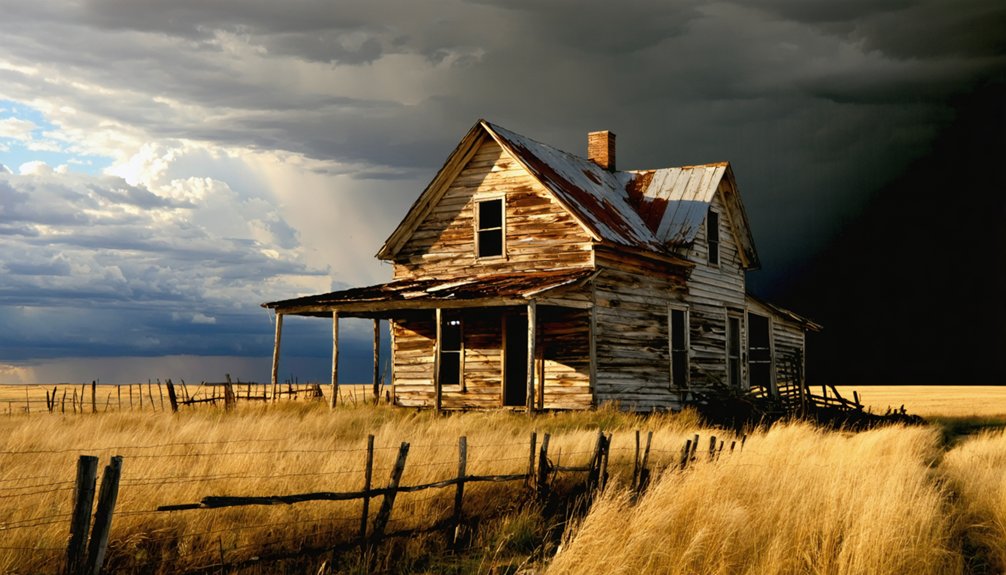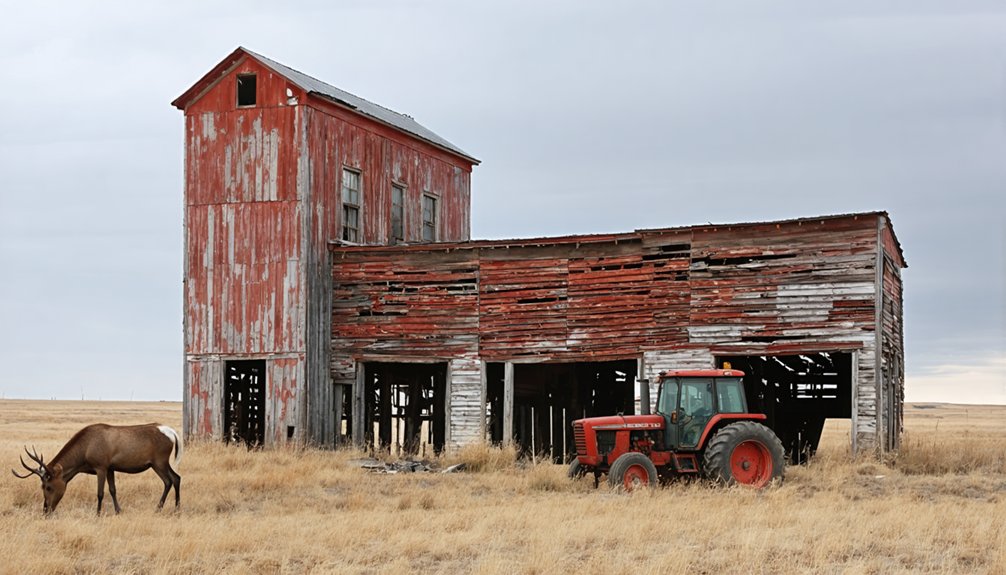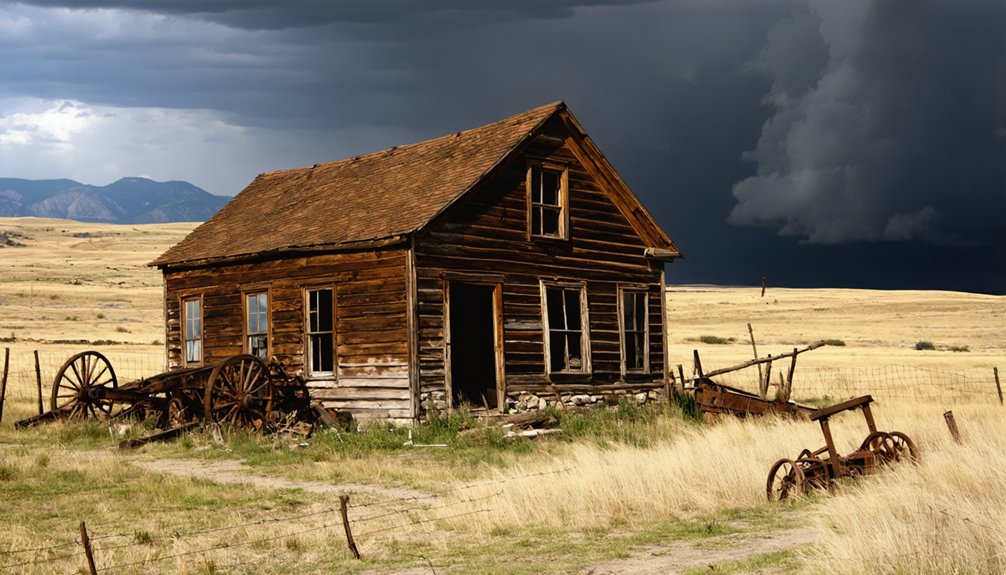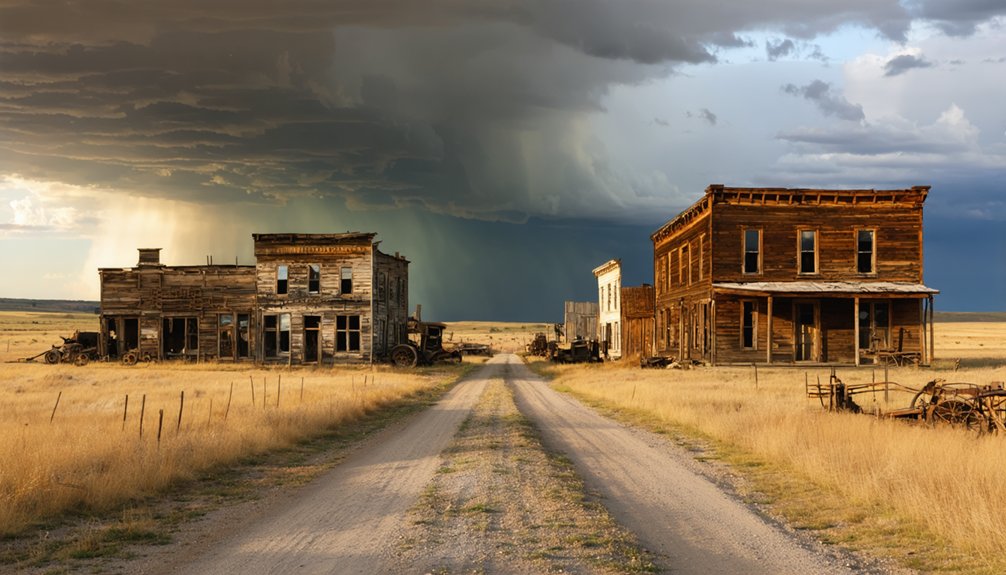
Your ghost town road trip to Saratoga, South Dakota begins seventeen miles north of Hot Springs along Route 385, where weathered foundations of grand mineral bath hotels rise from prairie grass. You’ll explore the iconic collapsing church structure with its defiant steeple, walk among scattered foundation stones, and photograph authentic frontier decay untouched by restoration efforts. Spring and fall offer ideal conditions for discovery, while the route connects you to over 600 documented Black Hills ghost towns. The windswept ruins reveal stories that transformed South Dakota’s spa dreams into haunting remnants of America’s untamed past.
Key Takeaways
- Saratoga lies along Route 385 in the Northern Black Hills, featuring weathered mineral bath hotel foundations and a collapsing church structure.
- Visit during spring, summer, or fall for optimal access; winter snow makes the remote site inaccessible.
- The abandoned townsite showcases authentic frontier decay with scattered foundation stones, prairie dog colonies, and untouched architectural remnants.
- Combine Saratoga with nearby ghost towns like Rochford, Pactola, and Spokane accessible via the Mickelson Trailhead.
- Bring photography equipment to capture the iconic church steeple and weathered platforms where grand resorts once operated.
The Rise and Fall of Saratoga’s Mineral Bath Empire
Long before white settlers dreamed of building bathhouse empires in the Black Hills, Indigenous peoples—including the Lakota and Cheyenne—had been soaking in the Fall River Basin’s thermal waters for centuries. This indigenous influence shaped the region’s identity as a healing destination.
The Lakota and Cheyenne transformed these thermal waters into sacred healing grounds long before bathhouses rose from the earth.
By 1881, Dr. R.D. Jennings opened the Black Hills Spa, launching decades of prosperity. Grand resorts like the Minnekahta Hotel (1886) and the 1913 Open Air Plunge attracted affluent travelers seeking waters rich in magnesium and calcium. The Dakota Hot Springs Co. constructed the Hot Springs Hotel and Minnekahta Bath House in 1890, adding to the area’s growing reputation.
But rural isolation, economic decline, and shifting travel patterns doomed the empire. The Hot Springs Hotel closed in 1963, leaving crumbling structures overtaken by trees.
You’ll find redemption in the modern spa restoration: Moccasin Springs reopened in 2019, honoring history while reviving this once-abandoned sanctuary. Located on 1829 Minnekahta Avenue, the facility welcomes guests year-round for therapeutic soaks in the historic mineral waters.
What Remains Standing in Modern-Day Saratoga
You’ll find little more than weathered foundations where Saratoga’s grand mineral bath hotel once promised healing waters to hopeful visitors. The most striking remnant is a partially collapsed church structure, its skeletal frame standing as a symbol/tribute to the community that gathered here over a century ago.
These crumbling stone footings and the church’s deteriorating walls are all that remain of a town that briefly flourished on dreams of therapeutic springs and frontier prosperity. Like other ghost towns in the region, some sites have reverted to pasture land while others still maintain standing structures in various states of decay. Nearby Conata now serves as home to dozens of prairie dogs that have taken over the abandoned townsite.
The Collapsing Church Structure
Three-quarters of a century after the blast, St. Mary’s stands as a haunting record to destruction. You’ll find the steeple—still clutching its belfry and cross—piercing the prairie sky while everything around it crumbled to dust. The remnant foundation details tell stories of vanished walls and collapsed dreams, with architectural restoration challenges rendering reconstruction impossible.
What you’ll witness:
- The defiant steeple reaches skyward from rubble, a lone survivor watching over six graves
- Scattered foundation stones mark where worshippers once gathered, now reclaimed by prairie grass
- Empty air where walls once stood, creating an eerie open-air cathedral beneath South Dakota’s endless sky
This isn’t preserved history—it’s raw, unvarnished reality. You’re free to walk among the ruins, touch the stones, and contemplate how quickly permanence becomes memory. The structure reflects the weathering of time, yet its backbone remains standing—a testament to the enduring spirit of those who built it. Unlike the Cathedral of St. Joseph with its twin towers with conical roofs visible across Sioux Falls, St. Mary’s offers no grand vista—only intimate proximity to loss.
Hotel and Bath Foundations
Beyond the church ruins, Saratoga’s commercial heart lies exposed to the elements—concrete foundations and stone remnants that once anchored a hotel and bathhouse complex. You’ll discover weathered platforms where travelers once sought lodging and mineral water treatments that drew visitors to this frontier outpost. These crumbling foundations showcase classic ghost town characteristics: nature reclaiming man-made structures, prairie grass threading through fractured concrete, and limestone blocks scattered like forgotten puzzle pieces.
While architecture preservation efforts remain minimal here, the site’s untouched decay offers you an authentic glimpse into South Dakota’s abandoned past. Walk carefully among the ruins—each weathered stone tells stories of entrepreneurial dreams that couldn’t outlast economic shifts. The therapeutic tradition of soaking in hot springs once attracted visitors seeking mineral water cures throughout the frontier West. You’re free to explore this open-air museum where western ambition met its inevitable end.
Mapping Your Route Through the Black Hills Ghost Towns
When planning your Black Hills ghost town adventure, Route 385 serves as your primary artery through this mineral-rich corridor where abandoned settlements cluster along the historic Range 3 East belt. You’ll discover authentic mining community history along this route, passing Spokane near Iron Mountain Road, Galena in Vanocker Canyon, and Rochford accessible from Highway 44. Early maps often misrepresented these locations, but USGS revisions reveal the true scope of ghost town infrastructure.
Route 385 cuts through the mineral-rich Range 3 East belt where authentic Black Hills mining settlements cluster along forgotten corridors.
Your journey opens up genuine freedom to explore:
- Mining waste piles marking forgotten sites like Hornblend and Blue Lead guide you to lost settlements
- Foundation remnants hidden in forest clearings await discovery near electrical cuts and creek beds
- Over 600 documented ghost towns scatter throughout the Black Hills, offering endless exploration possibilities
Coordinate these landmarks carefully—many sites require trail hiking and respectful boundary awareness. Along the way, you can photograph the Galena schoolhouse, which remains intact from the town’s boom during the 1876 Black Hills Gold Rush. Remember that adhering to regulations and respecting private property boundaries is essential when exploring these historic sites.
The Famous Collapsing Church and Hotel Ruins
Among the weathered landmarks dotting your Black Hills ghost town route, several church and hotel ruins stand as haunting monuments to frontier faith and ambition.
You’ll discover stone foundations buried in overgrowth where miners once gathered for communion, their makeshift sanctuaries built from gold prospect materials.
The Harmony Friends Church displays unique architectural styles reflecting Quaker settlers’ pioneer resourcefulness, its sturdy backbone enduring despite falling gutters.
Near Groton, Trinity Church’s 1884 Carpenter Gothic design represents South Dakota’s sole surviving Upjohn structure—deconsecrated but National Register-listed.
These sites often border forgotten cemetery markers where early homesteaders rest, some graves still receiving fresh flowers from descendants who navigate remote access roads.
On the Crow Creek Reservation, the crumbling Immaculate Conception Mission in Stephan stands as a remnant of the federal boarding school era, its abandoned dormitories awaiting demolition.
Each crumbling wall tells stories of communities that refused to surrender their spiritual anchors despite harsh frontier realities.
Five More Abandoned Towns Worth Adding to Your Journey
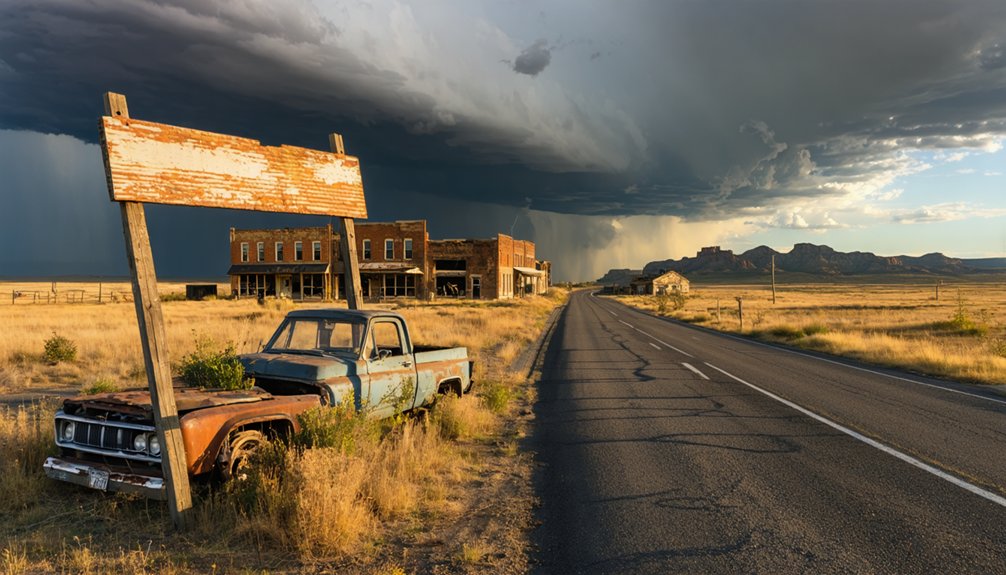
Your South Dakota ghost town expedition expands dramatically when you venture beyond the Black Hills corridor into the windswept prairie, where five additional abandoned settlements await discovery. Okaton operates as one of the region’s unique family owned attractions, combining authentic decay with roadside nostalgia near Murdo.
As you continue your journey, keep an eye out for the striking remnants of abandoned buildings in Saratoga, where stories of the past linger amidst the ruins. These structures offer a glimpse into the community’s once-thriving spirit, inviting exploration and reflection. Each visit uncovers new secrets, enhancing the allure of this forgotten corner of history.
Beyond the tourist-worn Black Hills, windswept prairie ghost towns offer raw encounters with abandonment and authentic frontier decay.
Capa’s railroad-era structures crumble beautifully along accessible routes, while Argonne preserves mid-century abandonment from its 1970 depopulation. Cottonwood’s eleven hardy residents share their landscape with prairie homestead ruins, including former hotels and churches from 1907. Near Badlands National Park, scenic remnants punctuate the desolate terrain.
- Wind howling through skeletal window frames of forgotten schoolhouses
- Sun-bleached wood collapsing into native grasslands reclaiming civilization
- Absolute silence surrounding structures where communities once thrived
These authentic destinations reward explorers seeking unscripted historical encounters.
Gold Rush Legacy and Mining Relics Throughout the Region
You’ll find the Black Hills scarred by a frenzied past that began when Custer’s 1874 expedition uncovered gold in French Creek, igniting a rush that would reshape the region forever.
By 1876, prospectors swarmed valleys like Deadwood Gulch where single claims yielded $140,000 in months, while others pushed deeper into hillsides, migrating from simple placer panning to industrial hard-rock operations.
Today, collapsed shafts, rusted headframes, and toxic tailings—like those left behind at abandoned sites from Gilt Edge to Nevada Gulch—stand as weathered monuments to an era when fortunes were extracted at tremendous human and environmental cost.
1876 Gold Discovery Impact
When Lieutenant Colonel George Armstrong Custer‘s expedition carved through the Black Hills in the summer of 1874, his discovery of gold in French Creek triggered a transformation that would forever alter the Dakota Territory. Over 1,000 men violated the Fort Laramie Treaty, igniting a rush that spawned ghost town establishment across the region. The Homestake Mine near Lead became America’s richest gold vein, producing over 40 million ounces before closing in 2001.
Mining technology evolution reshaped the landscape as prospectors shifted from placer deposits to hard-rock extraction:
- Cyanide processes replaced primitive panning by 1900, dissolving fortunes from crushed ore
- Chlorination plants transformed refractory ore into liquid wealth throughout the 1890s
- Underground tunnels replaced creek beds, driving deeper into the earth’s secrets
This wealth concentration built empires while displacing the Sioux, leaving abandoned settlements as monuments to unchecked ambition.
Abandoned Mine Site Features
Scattered across the Black Hills valleys, dozens of skeletal mining operations stand frozen in their final moments of operation—gaping shafts yawning into darkness, weathered shaft houses leaning against time, and mountains of tailings bleeding rust into creek beds below.
You’ll discover decaying processing structures at Trojan, where enormous cyanide vats still gleam with corrosive brightness across the valley. Historic mining equipment remains trapped at valley bottoms, too heavy to extract and now too deteriorated to salvage.
At Astoria, the Golden Reward Mine’s mill and hoist command attention from the Lead-Spearfish Canyon route. Sites like Maitland Two Bit and Golden West preserve ore bins and foundations—initially too valuable to dismantle, now permanent monuments to extraction’s relentless ambition. Carbonate’s crumbling Cleopatra Mine bleeds slowly into Squaw Creek.
Hard Rock Mining Remnants
Beyond the rusted machinery and crumbling foundations lies the deeper story of the Black Hills gold rush—a frenzy that transformed grassland into America’s greatest hard rock mining district within two years. You’ll discover mining equipment scattered across Saratoga’s landscape, remnants of operations extracting gold chemically bound to Precambrian rock. Unlike placer deposits washed from streams, these veins demanded sophisticated timbering techniques to support tunnels descending thousands of feet underground.
The hard rock legacy includes:
- Decaying headframes standing sentinel over abandoned shafts where miners once descended into darkness chasing fortune
- Weathered railway grades cutting through hillsides, silent testimony to ore transport networks connecting remote claims
- Crumbling chlorination plants where refractory ore surrendered its gold through chemical processes pioneered here
These remnants whisper of untamed ambition and self-reliance.
Best Seasons and Times to Explore Saratoga Safely
Since Saratoga’s remote location leaves visitors exposed to Northern Black Hills weather patterns, timing your ghost town adventure becomes crucial for both safety and photographic success. You’ll find spring and fall ideal, with comfortable 50-70°F temperatures eliminating temperature extremes while keeping crowds minimal. These shoulder seasons deliver accessible roads and lighter winds around 5-10 mph, perfect for exploring mining remnants without battling elements.
Summer brings prime visibility despite mid-80s heat, though you’ll need weather precautions for afternoon thunderstorms hitting 30-40% probability. Winter’s mid-20s lows and accumulating snow make sites inaccessible. Plan your arrival for early morning when low-angle sunlight illuminates structures beautifully, or late afternoon’s amber glow. You’ll dodge peak storm risks and enjoy calmer conditions during these golden hours.
Photography Tips for Capturing Historic Structures
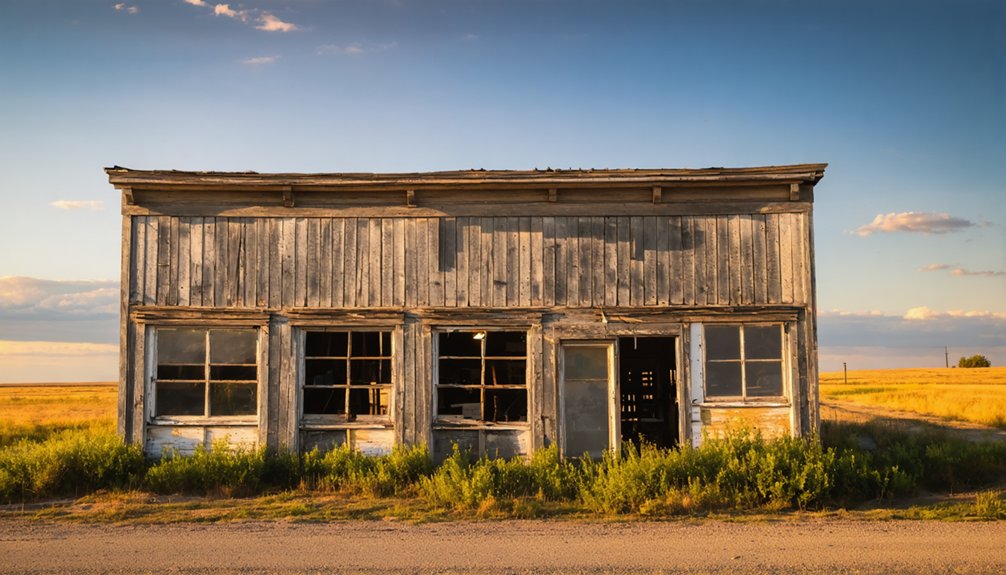
Once you’ve arrived during those golden hours, transforming Saratoga’s weathered buildings into compelling photographs requires more than pointing and shooting. Walk the entire site first, discovering unexpected angles and architectural detail preservation opportunities.
Position the sun behind you to illuminate crumbling facades, then experiment with creative framing techniques using doorways and windows as natural borders. Keep your ISO low and shoot RAW for maximum editing flexibility.
Essential approaches for authentic ghost town imagery:
- Capture close-ups of peeling paint, rusted hinges, and weather-worn textures that tell stories of abandonment
- Shoot from low angles to emphasize the towering presence of remaining structures against vast prairie skies
- Include surrounding sagebrush and elements that juxtapose nature’s reclamation against human construction
Use the rule of thirds while eliminating modern distractions. Your perspective shapes how others experience this forgotten place.
Planning a Multi-Day Black Hills Ghost Town Adventure
With over 600 ghost towns scattered across the Black Hills, you’ll need strategic planning to maximize your multi-day exploration of this historic mining region.
Base yourself in Deadwood to access Route 385’s legendary corridor, then venture to remote sites like Pactola’s submerged ruins and Rochford’s weathered remains.
You’ll want ATV access for reaching Alta, Apex, and Bakerville’s abandoned mine shafts, while Spokane near Elk Heaven campground offers easier terrain.
The Mickelson Trailhead connects you to Englewood’s infrastructure decay.
Allocate time for guided ghost tours revealing mining legends alongside self-directed forest trail adventures where whispers echo through 1800s structures.
Remember: respect private property boundaries and Forest Service regulations at sensitive sites.
Pack camping gear, trail maps, and photography equipment for documenting these haunting glimpses into America’s untamed past.
Frequently Asked Questions
Is Camping Allowed Near Saratoga Ghost Town or Nearby Sites?
Where there’s a will, there’s a way—you’ll find primitive campsites available around Saratoga, plus nearby wilderness areas for dispersed camping in Black Hills National Forest, letting you embrace untamed freedom beneath starlit skies.
Are There Restaurants or Gas Stations Close to Saratoga?
No, you won’t find restaurants or gas stations in Saratoga itself—it’s a true ghost town. Your nearest diner options and convenience store availability are in larger towns like Kadoka or Philip, roughly 30-40 miles away.
Do I Need Special Permits to Explore the Ruins?
You won’t need special permits for Saratoga’s ruins, but you’ll face trespassing concerns since private property rights apply. Always respect posted signs and seek landowner permission before exploring to avoid legal troubles while adventuring responsibly.
Is Cell Phone Service Available in the Saratoga Area?
You’ll likely find cellular coverage strength disappointingly scarce in Saratoga’s remote ruins. The ghost town’s isolated location means nearby tower locations are practically nonexistent, so download maps beforehand and embrace the off-grid adventure ahead.
Are the Roads to Saratoga Accessible for RVS or Trailers?
Road conditions to Saratoga typically allow RVs and trailers, though you’ll want to check current vehicle restrictions through SD511 before departing. Spring load limits may affect heavier rigs, so ascertain access to guarantee your freedom-seeking adventure rolls smoothly.
References
- https://www.sdpb.org/rural-life-and-history/2023-08-21/some-black-hills-ghost-towns-and-their-origins
- https://www.sdhspress.com/journal/south-dakota-history-2-2/some-black-hills-ghost-towns-and-their-origins/vol-02-no-2-some-black-hills-ghost-towns-and-their-origins.pdf
- https://www.youtube.com/watch?v=_0WNYsFLSLA
- https://www.powderhouselodge.com/black-hills-attractions/fun-attractions/ghost-towns-of-western-south-dakota/
- https://www.blackhillsbadlands.com/blog/post/old-west-legends-mines-ghost-towns-route-reimagined/
- https://usghostadventures.com/deadwood-ghost-tour/
- https://en.wikipedia.org/wiki/List_of_ghost_towns_in_South_Dakota
- https://stephentravels.com/top5/ghost-towns/
- https://mad-peak.com/blog-posts-and-info/f/black-hills-ghost-towns-are-real—and-you-can-ride-through-them
- https://theexchangesd.com/moccasin-springs/