To plan your Schwaub ghost town road trip, you’ll head into Death Valley’s Funeral Mountains via Echo Canyon Road, starting 12 miles north of Ryan, California. You’ll need a high-clearance 4WD vehicle to reach this raw, unrestored mining settlement sitting at 3,340 feet. Bring at least one gallon of water per person and visit between late fall and early spring. Schwaub’s bunkhouses, blacksmith shop, and scattered artifacts tell a fascinating story that goes far deeper than you’d expect.
Key Takeaways
- Schwaub is located in Echo Canyon within Death Valley’s Funeral Mountains, accessible via Echo Canyon Road starting 12 miles north of Ryan, California.
- A high-clearance 4WD vehicle is essential for navigating the rugged road conditions leading to Schwaub, which sits at 3,340 feet elevation.
- Visitors can explore authentic ruins including a bunkhouse, blacksmith shop, general store remnants, and mine adits without staged preservation or crowds.
- The best time to visit is late fall through early spring, carrying at least one gallon of water per person daily.
- Nearby ghost towns including Rhyolite, Leadfield, Chloride City, and Lee Camp can be combined into a comprehensive Death Valley road trip itinerary.
What Is Schwaub and Why Visit?
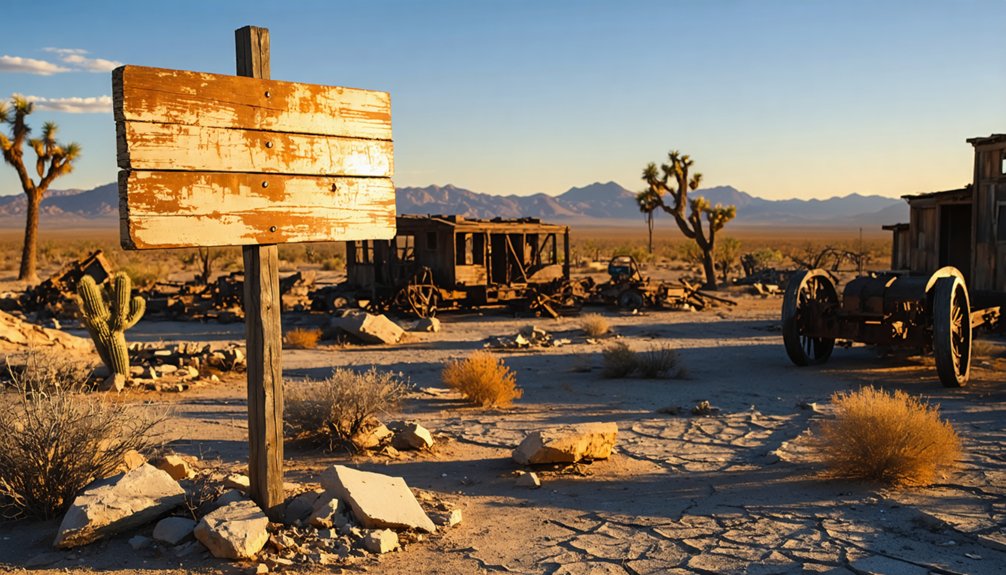
Tucked into the upper reaches of Echo Canyon in Death Valley’s Funeral Mountains, Schwaub is a ghost town that’s barely a ghost — more like a skeleton. Founded around Christmas 1905, its ghost town origins tie directly to the gold rush fever sweeping the Funeral Range during the early 1900s.
The mining history here centers on the Stray Horse mine, where workers extracted gold while living in a remarkably regulated camp that banned drinking, gambling, and prostitution.
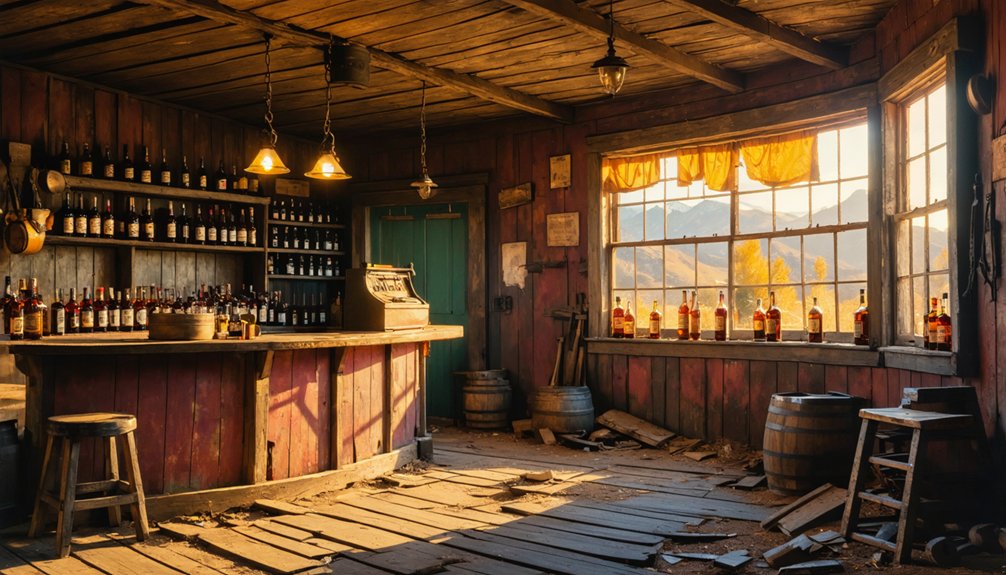
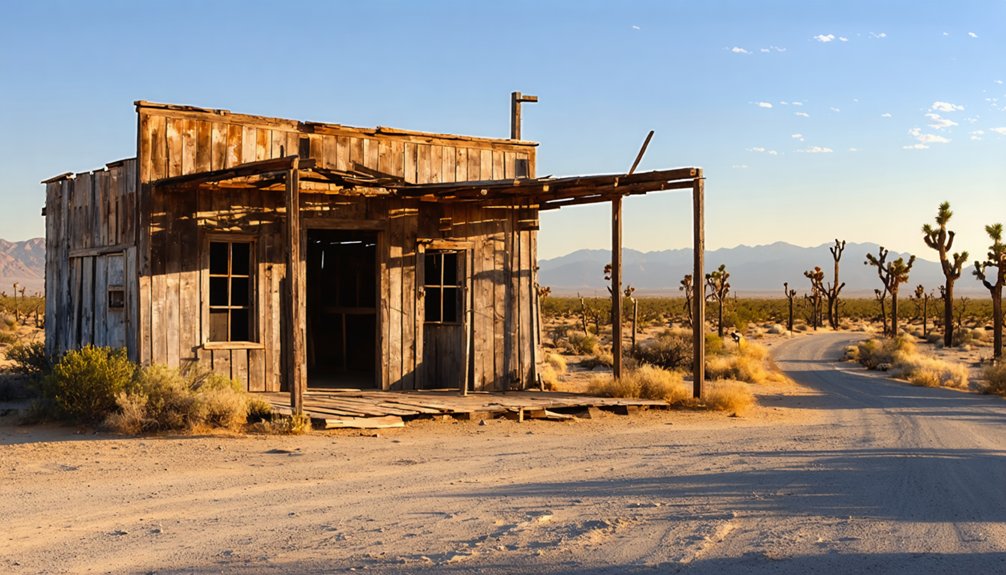
You won’t find polished interpretive signs or maintained walkways. What you’ll find instead are raw ruins, scattered artifacts, crumbling structures, and mine adits cutting into canyon walls.
If you crave authentic, unfiltered history without the crowds, Schwaub delivers exactly that kind of freedom.
How To Reach Schwaub via Echo Canyon Road
Echo Canyon Road is your gateway to Schwaub, cutting through one of Death Valley‘s most dramatic desert corridors before depositing you roughly 12 miles north of Ryan, California.
You’ll know you’re getting close when Echo Canyon narrows dramatically, forcing you through a distinctive “hole in the wall” formation carved into ancient rock. This striking passage isn’t just visually arresting — it carries real historical significance, having guided miners, supply wagons, and ambitious fortune-seekers into the upper canyon over a century ago.
Keep your vehicle’s clearance in mind, as the road demands respect. Once through, you’ll find yourself at elevation 3,340 feet, approaching coordinates 36.505, -116.7236, where Schwaub’s ruins await.
The journey itself mirrors the rugged independence that defined everyone who came before you.
What You’ll Find Among the Schwaub Ruins Today
Once you arrive at Schwaub, you’ll find a bunkhouse and what appears to be a chapel or school still standing among the scattered ruins.
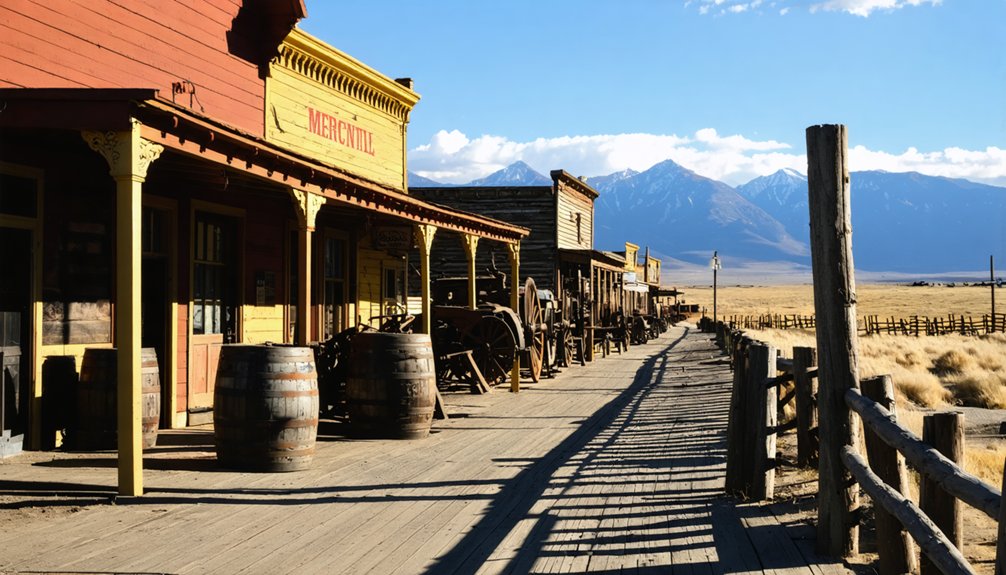
Unlike polished ghost towns such as Bodie, Schwaub offers a raw, archaeological experience where debris, broken glass, and old cans litter the ground around the remnants of the original structures.
Mining equipment tells the story of the Stray Horse mine operation, with fly wheels, crushers, and multiple adits still visible across the site.
Surviving Structures and Buildings
Scattered across the upper reaches of Echo Canyon, the ruins of Schwaub offer a raw, unfiltered glimpse into a town that burned bright and collapsed within a single year.
You’ll find surviving buildings weathered by time, each carrying historical significance that no museum can replicate. Explore freely and discover:
- Bunkhouse – where roughly 200 miners once slept
- Chapel or schoolhouse – evidence of community ambition
- General store remnants – the commercial heartbeat of the camp
- Blacksmith shop – still holding scattered metalwork and equipment
Unlike preserved ghost towns, Schwaub rewards curious explorers willing to piece together history themselves.
Broken glass, rusted artifacts, and crumbling walls tell the story of three determined women who built something extraordinary against impossible odds.
Mining Artifacts and Equipment
Among the sun-bleached ruins of Schwaub, 3 categories of mining artifacts stand out as the most striking remnants of the camp’s short-lived industrial ambition: flywheels, ore crushers, and the dark mouths of multiple adits cut directly into the canyon walls.
These relics reveal the mining techniques workers used to extract gold from the Stray Horse mine and surrounding claims. You’ll spot scattered cans, broken glass, and rusted equipment half-buried in the desert soil — each piece a frozen moment from 1907.
Unlike Bodie’s managed preservation, Schwaub offers raw, unfiltered artifact preservation where nothing’s been staged or roped off. You’re free to wander, observe, and connect directly with the site’s industrial past.
Treat everything with respect; removing artifacts from Death Valley National Park is illegal.
4WD Requirements, Water, and Gear for the Echo Canyon Drive
The drive into Echo Canyon is no Sunday cruise—you’ll need a high-clearance 4WD vehicle to navigate the rocky, uneven terrain that leads to Schwaub’s ruins.
Death Valley’s remoteness demands serious preparation before you roll through that iconic “hole in the wall” entrance. Pack these essentials:
Death Valley’s isolation demands respect—come prepared or don’t come at all.
- Water supply – Carry at least one gallon per person daily; there’s no water source on-site.
- Essential gear – Bring a first-aid kit, maps, and a satellite communicator.
- Recovery equipment – Pack tow straps, a hi-lift jack, and traction boards.
- Sun protection – Desert heat is relentless; pack sunscreen, hats, and layers.
Cell service disappears fast out here, so self-sufficiency isn’t optional—it’s survival.
Best Time of Year To Visit Schwaub in Death Valley
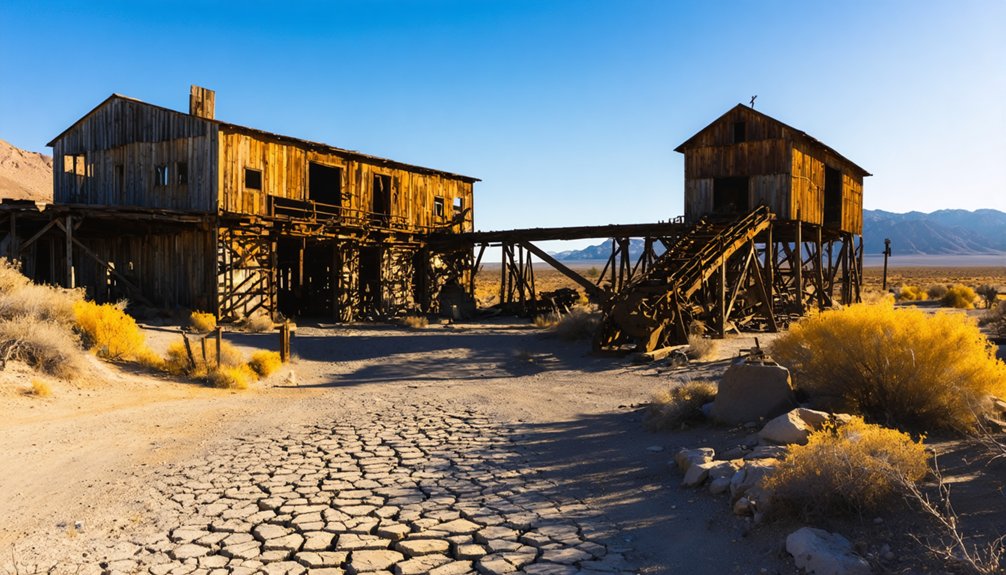
If you’re planning a trip to Schwaub, timing your visit is everything in Death Valley.
You’ll want to aim for late fall through early spring, when temperatures stay manageable and the desert landscape takes on a striking clarity.
Summer heat regularly tops 120°F, making the canyon drive not just uncomfortable but genuinely dangerous.
Ideal Visiting Seasons
Timing your visit to Schwaub can make or break the experience, since Death Valley’s extreme climate turns this high-desert ghost town into a genuine hazard during summer months.
These seasonal highlights and visitor tips will help you plan smart:
- Fall (October–November): Cooling temperatures make canyon exploration comfortable and manageable.
- Winter (December–February): Crisp, clear days offer stunning desert light for photography, though nights get cold.
- Spring (March–April): Wildflower blooms transform the Funeral Mountains, creating breathtaking backdrops for ruins exploration.
- Summer (May–September): Avoid entirely—dangerous heat regularly exceeds 120°F, making Echo Canyon Road treacherous.
You’ll want to carry extra water regardless of season, since Schwaub’s remote elevation of 3,340 feet and rugged terrain demand serious preparation before you arrive.
Weather And Temperature Considerations
Death Valley’s brutal climate shapes every aspect of a Schwaub visit, so understanding seasonal temperature swings isn’t optional—it’s essential.
Summer weather patterns bring valley temperatures exceeding 120°F, making upper Echo Canyon genuinely dangerous. Even at Schwaub’s 3,340-foot elevation, you’ll face punishing heat that drains water supplies and strains vehicles.
Winter offers the most forgiving conditions, with temperature fluctuations ranging from cool afternoons to freezing nights. You’ll want layered clothing and a reliable four-wheel-drive vehicle for canyon roads.
Spring and fall represent the sweet spot—mild daytime temperatures, manageable trails, and genuine comfort while exploring ruins.
Always check forecasts before departing, carry extra water regardless of season, and respect Death Valley’s capacity to turn beautiful landscapes into life-threatening environments within hours.
Who Ran Schwaub: and Why No Drinking or Gambling Was Allowed
Three ambitious women ran Schwaub, which set it apart from virtually every other mining camp in Death Valley. Women leadership here wasn’t symbolic — it was operational. Gertrude Fesler, a Chicago stockbroker, purchased a one-third interest and served as the driving force behind the town’s strict regulations.
Gertrude Fesler didn’t just invest in Schwaub — she ran it, setting the tone for one of Death Valley’s most disciplined camps.
Here’s what those rules actually prohibited:
- Drinking alcohol
- Gambling
- Prostitution
- Disorderly conduct
These women intentionally built a respectable, functioning community rather than a lawless frontier camp. Fesler partnered with Mrs. F.W. Dunn and Helen H. Black to enforce standards that kept Schwaub unusually disciplined.
You’ll notice when visiting that this wasn’t a rough-and-tumble boomtown — it was something far more deliberately constructed.
Why Did Schwaub Collapse After Less Than a Year?
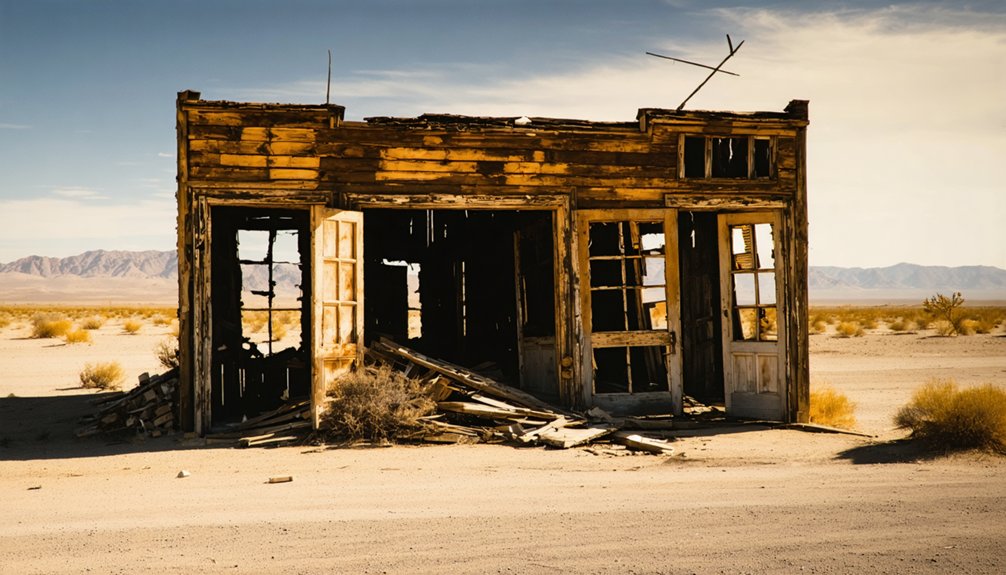
Schwaub collapsed fast, and the reason why comes down to catastrophic timing. The Financial Panic of 1907 devastated mining economies across the American West, and Schwaub couldn’t escape the fallout. Credit dried up, investments evaporated, and the money fueling operations simply disappeared.
Mining challenges compounded the financial crisis. The Echo-Lee District’s remote terrain made extraction costly, and without steady capital, sustaining operations became impossible.
Every camp in the district shut down that same year — except Lee Camp, which survived only because a rail line kept it connected.
Schwaub had launched with ambition, strict rules, and real infrastructure, but none of that mattered when the economy collapsed. In less than a year, what had been a bustling community of 200 people became the ruins you can explore today.
Nearby Death Valley Ghost Towns Worth Adding to the Drive
While Schwaub makes for a compelling destination on its own, Death Valley rewards curious explorers who push a little further.
The surrounding Funeral Mountains hold remarkable ghost town history waiting for you to uncover.
Add these stops to your drive:
- Rhyolite – Nevada’s most photogenic ruins, offering striking ghost town history with standing walls and a bottle house.
- Leadfield – A short-lived 1926 swindle town tucked inside Titus Canyon, rich in mining heritage.
- Chloride City – Remote and raw, featuring exposed mining heritage with scattered equipment and canyon solitude.
- Lee Camp – The sole Echo-Lee district survivor of 1907’s financial panic, accessible by historic rail line.
Each site deepens your understanding of Death Valley’s boom-and-bust story.
Frequently Asked Questions
What Were the GPS Coordinates and Elevation of Schwaub’s Townsite?
You’ll find Schwaub’s ghost stories and abandoned buildings at coordinates 36.505, -116.7236, sitting at 3,340 feet elevation—ironically, quite easy to pinpoint for a town that virtually vanished overnight!
How Much Startup Capital Financed the Schwaub Townsite Company’s Initial Operations?
You’ll find that $30,000 in startup capital financed Schwaub’s initial operations—a sum carrying remarkable historical significance and economic impact, fueling five boxcars of supplies and infrastructure that boldly shaped this short-lived, free-spirited desert mining community.
Which Specific Mine Employed Most of Schwaub’s Approximately 200 Residents?
The Stray Horse Mine’s where you’d have worked alongside most of Schwaub’s 200 residents, extracting gold and shaping this ghost town’s rich mining history deep within Death Valley’s rugged, freedom-inspiring Echo Canyon landscape.
How Were Supplies Originally Transported to Establish the Schwaub Townsite?
Though the remote desert location seems inaccessible, supply routes weren’t an obstacle — five boxcars packed with tents and supplies were shipped directly to establish Schwaub’s townsite, making historical transport surprisingly efficient for such a rugged, isolated destination.
When Exactly Was the Schwaub Townsite Company Formally Incorporated as a Corporation?
You’ll find the Schwab Townsite Company’s Corporate Structure took shape on December 31st, 1906, when it formally incorporated in Nevada—a moment of Historical Significance that transformed an ambitious desert vision into an official, closed corporate venture.
References
- https://www.destination4x4.com/schwab-california-death-valley-national-park-ghost-town/
- https://kids.kiddle.co/Schwaub
- https://www.tripadvisor.com/Attraction_Review-g143021-d143463-Reviews-Ghost_Town_of_Schwab-Death_Valley_National_Park_Inyo_County_California.html
- https://dvnha.org/historyminute2/
- https://www.ghosttowns.com/states/ca/schwab.html