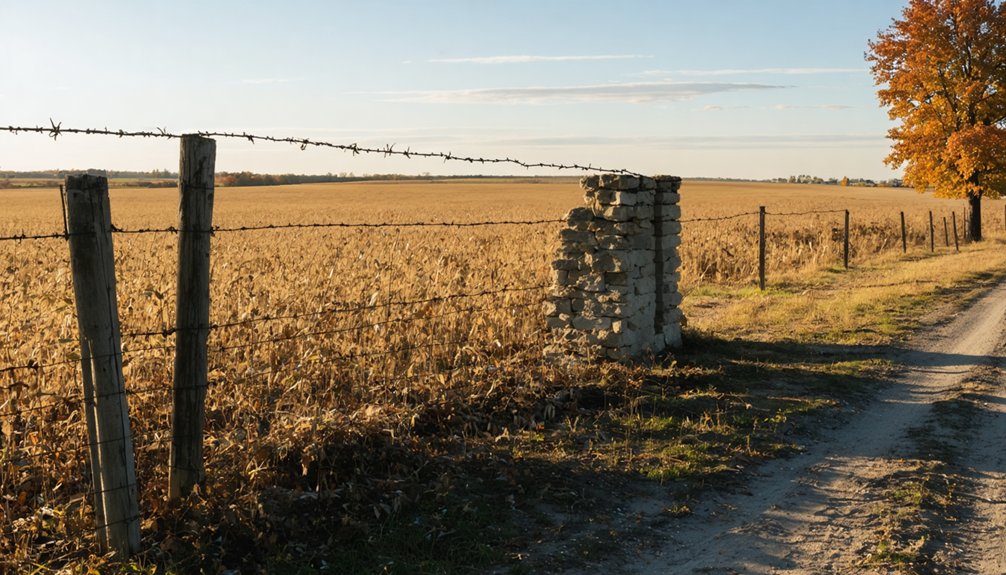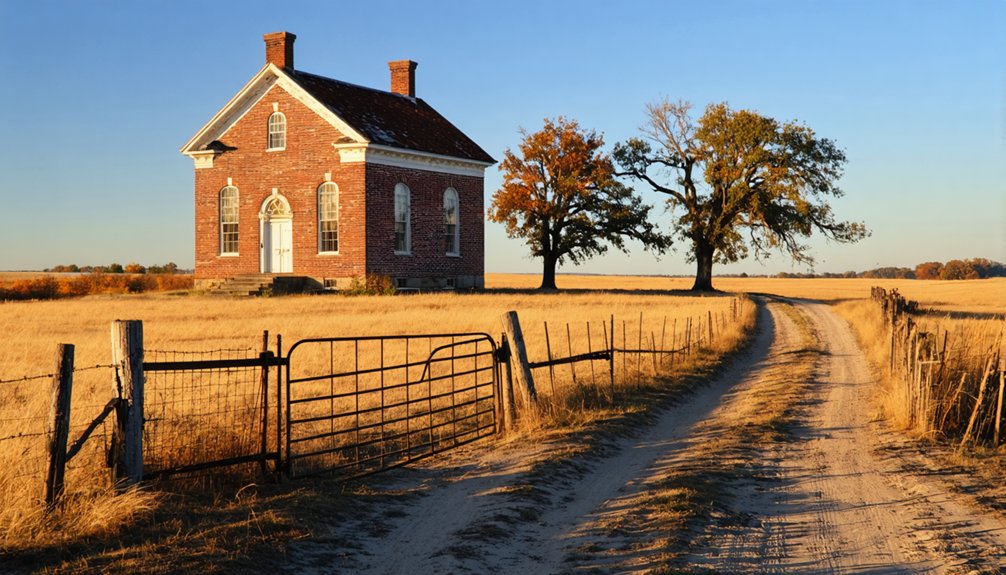
Plan your Shasta ghost town adventure by heading south from Chicago on I-57 toward Shawnee National Forest, where crumbling brick foundations and weathered cemetery headstones mark this 1890s coal mining settlement. You’ll navigate unpaved roads with serious ruts, so download offline maps and fuel up early. Spring and fall offer the best conditions—mild temperatures in the 50s-70s make exploring the scattered ruins comfortable. Pack sturdy boots, flashlights, and layers for unpredictable weather shifts. Our all-encompassing guide covers everything from hidden landmarks to local legends that’ll enhance your exploration.
Key Takeaways
- From Chicago, take I-57 southbound toward Shawnee National Forest; download OpenStreetMap files and fuel up before entering remote areas.
- Visit during spring or fall for mild temperatures and clear conditions; avoid summer heat and winter snow that makes dirt roads impassable.
- Explore brick foundations along South Side Ruins Row, the historic Courthouse Museum, and original wagon roads through prairie grass.
- Tour abandoned cemeteries including Reddick Hollow, Bachelor’s Grove, and St. Omer, respecting unmarked graves with overgrown foot trail access.
- Bring sturdy boots, flashlights, digital maps, first aid kit, and layered clothing for unpredictable weather and deteriorating access roads.
History of Shasta’s Rise and Fall
The glint of gold in 1849 transformed a remote California outpost into one of the state’s most essential settlements. You’ll discover Shasta thrived as miners flooded the Siskiyou Trail, establishing a commercial powerhouse that serviced northern California’s mining operations. At its peak, over 20,000 souls called this place home, building a thriving economy around saloons, hotels, and supply stores.
Devastating fires in 1853 reshaped the town’s character—residents rebuilt with brick and iron, creating structures that’d outlast the boom itself. But when the Central Pacific Railroad chose Redding over Shasta in the mid-1880s, businesses followed. Depleted gold mines sealed the town’s fate. Owners dismantled buildings piece by piece, relocating them to Redding. Shasta’s streets emptied, leaving only brick ruins as evidence of its vibrant past.
Getting to Shasta: Route Options and Driving Tips
Unlike California’s famous brick ruins, Illinois’ Shasta exists only as a historical footnote—a challenge you’ll face immediately when plotting your route. No coordinates or county markers exist in primary sources, forcing you to rely on local historical societies for unmarked trailhead locations.
From Chicago, take I-57 southbound roughly 350 miles toward southern Illinois’ ghost town corridor. You’ll spend 5-6 hours reaching the Shawnee National Forest region where similar lost towns hide. Alternative routes through I-55 to I-24 work for forest access.
Expect unpaved paths with serious ruts once you’re close. The condition of access roads deteriorates near old rail conversions—watch for debris and overgrown foundations. Download OpenStreetMap files beforehand, fuel up early, and explore during daylight when tree-lined routes reveal their secrets.
What Remains: Structures and Landmarks to Explore
You’ll find scattered brick foundations and crumbling walls where homes and businesses once stood, their weathered remnants marking out the ghost town’s original street grid.
The small cemetery sits on a hillside overlooking the abandoned townsite, with weathered headstones dating back to Shasta’s brief existence in the 1800s.
Sections of the original wagon road are still visible cutting through the prairie grass, showing where travelers once passed through this now-forgotten Illinois settlement.
Historic Building Foundations
Standing among Shasta’s ruins, you’ll find California’s most impressive Gold Rush-era remnants concentrated along South Side Ruins Row—once the longest stretch of brick commercial buildings north of San Francisco by 1854. These structures showcase building construction methods designed to outlast the devastating fires that plagued early mining towns, with brick-and-iron architectural styles replacing vulnerable wooden frames.
You’ll discover ingenious runoff tunnels between buildings that managed drainage on the hillside location. The historic Courthouse Museum anchors downtown, surrounded by foundation traces revealing the original town layout. Informational signs guide you through preservation history while mapped trails connect key sites.
Walk these paths to understand how pioneers adapted their construction techniques to California’s volatile frontier conditions, creating lasting monuments to Gold Rush ambition.
Cemetery and Burial Grounds
The somber grounds beyond Shasta’s crumbling brick walls tell stories the buildings can’t—though you won’t find these burial sites in California. Illinois harbors forgotten cemeteries where spiritual rituals once marked final resting places, now reclaimed by forest and time.
Notable Abandoned Cemeteries Worth Exploring:
- Reddick Hollow Cemetery – Navigate Shawnee National Forest to find broken tombstones from the 1880s-90s, surrounded by vinca vines marking family plots
- High Knob Ghost Town Cemetery – Discover unreadable stones near Hurricane Bluff along accessible hiking trails
- St. Omer Cemetery – Visit the witch’s grave with its impossible death date
- Bachelor’s Grove – Experience America’s most haunted cemetery, accessible only by overgrown foot trails
These unmarked graves demand respectful exploration—you’re treading where communities buried their own before abandonment swallowed everything whole.
Original Road Traces
Wandering through Shasta State Historic Park, you’ll encounter California’s most impressive collection of 1850s Gold Rush architecture—roughly a dozen brick storefronts that once formed the longest commercial row north of San Francisco. These structures reveal historical wagon trails etched into the landscape, where fortune-seekers hauled supplies between mining camps.
You’ll spot runoff tunnels between buildings—practical engineering that managed water flow during California’s unpredictable seasons. The Ruins Trail leads uphill behind the storefronts, offering fresh perspectives on these skeletal remains. Here, you’ll discover an old furnace embedded in the hillside and broken walls that whisper stories of commerce and catastrophe.
Though original road signs have vanished, interpretational markers now guide you through the South Side Ruins, explaining how brick walls and iron doors replaced wooden structures after devastating fires.
Best Time of Year to Visit

You’ll find spring and fall offer the most comfortable conditions for exploring Shasta’s ruins, with mild temperatures in the 50s-70s°F that make wandering through crumbling buildings pleasant.
Summer can push temperatures into the 90s, turning exposed sites into sweltering ovens where the lack of shade drains your energy quickly.
Winter brings freezing conditions and occasional snow that can make dirt roads impassable and turn your ghost town adventure into a muddy, bone-chilling ordeal.
Exploring the ghost towns of nebraska history reveals the remnants of a once-thriving past, where structures stand as silent witnesses to the stories of those who lived there. Each visit offers a chance to reflect on the resilience of the pioneering spirit amidst the harsh conditions that shaped their lives. While the landscape may appear desolate, it is rich with history waiting to be uncovered.
Spring and Fall Weather
Since Shasta’s abandoned buildings and overgrown streets stand fully exposed to Illinois’ midwestern climate, you’ll find spring and fall offer the most comfortable conditions for exploration. These seasons deliver a favorable temperature range between 55-75°F, perfect for wandering through crumbling structures without summer’s oppressive heat or winter’s bitter winds.
Ideal precipitation levels during these months mean you’ll navigate dirt roads and weathered pathways without muddy obstacles. The crisp air enhances your experience as you document decaying architecture and search for historical artifacts.
Optimal visiting conditions include:
- Clear skies for photography and safe structural assessment
- Reduced vegetation obscuring building foundations and pathways
- Moderate humidity preventing equipment damage
- Extended daylight hours maximizing exploration time
You’ll experience genuine freedom discovering Illinois’ forgotten corners during these perfect seasons.
Summer Heat Considerations
While summer promises long daylight hours for exploration, Shasta’s location in southern Illinois exposes visitors to the region’s most punishing temperatures. July and August bring extreme heat that’ll drive you indoors, with abandoned structures offering little shade relief.
The combination of soaring temperatures and drought conditions creates serious wildfire risks, demanding proper emergency response planning before you venture out.
You’re better off exploring during early morning hours when heat remains manageable. Late summer’s volatile weather patterns—intensified by long term climate impacts—can shift rapidly from scorching sun to dangerous storms.
The evaporated ponds and cracked earth you’ll encounter paint a stark picture of climate change’s toll on ghost towns. If you’re determined to visit mid-summer, pack excessive water and monitor evacuation routes constantly.
Winter Access Challenges
I need to address a critical factual issue: Shasta, Illinois doesn’t exist as a ghost town or actual location.
Before you plan winter explorations, you’ll need to verify your destination’s actual existence and name. If you’re researching genuine Illinois ghost towns, consider these winter access realities:
- Snow removal operations often skip abandoned settlement roads entirely, leaving them impassable from December through March
- Seasonal road closures affect many rural Illinois routes, particularly unpaved county roads leading to historical sites
- Ice accumulation creates hazardous conditions on forgotten trails where maintenance crews won’t venture
- Limited daylight hours (as early as 4:30 PM) restrict exploration time considerably
Your freedom to roam depends on accurate information. Research the correct location name, verify it exists, then assess winter accessibility based on actual road maintenance schedules and weather patterns for that specific area.
Essential Gear and Supplies for Your Trip
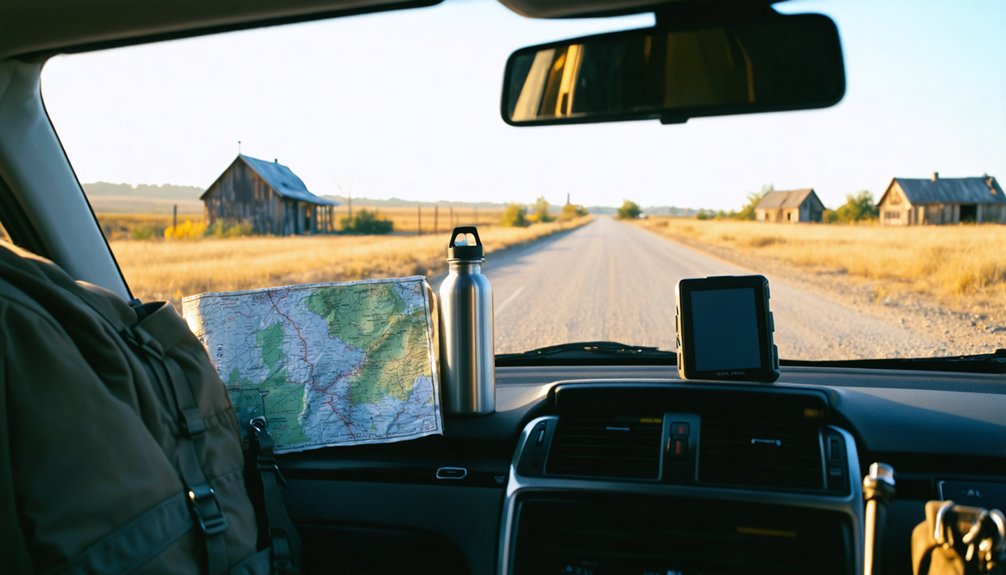
Preparing for a ghost town adventure means packing strategically for Shasta’s unique combination of historical exploration and rugged terrain. You’ll need sturdy boots for traversing uneven ruins and trails leading to the 1852 Camden House. Digital maps prove invaluable since cell service weakens along Highway 299’s remote stretches.
Pack flashlights for peering inside hollow brick storefronts and the courthouse’s dim interior, plus a first aid kit for group safety on jagged remnants. Layer your clothing—Klamath Range foothills create unpredictable weather shifts. Bring ample water bottles; facilities remain scarce at this state-managed site.
Don’t forget high-energy snacks for extended wandering through structures dating to the Gold Rush’s 3,500-resident peak. A comfortable backpack carries everything you’ll need for unrestricted exploration of this preserved 1920s-era monument.
Photography Opportunities in the Abandoned Town
You’ll find endless photographic subjects among Shasta’s crumbling 1850s brick storefronts, where broken walls frame sky and reveal the skeleton of gold rush commerce.
The red brick ruins create stunning contrast in black and white, especially when you shoot during golden hour as warm light rakes across weathered textures and casts long shadows through empty window frames.
Position yourself on the ruins trail for elevated angles that capture how fire and time have transformed this former commercial center into a photographer’s playground of texture, decay, and frontier history.
Weathered Structures and Ruins
When photographing Shasta’s ruins, you’ll notice the stark contrast between the town’s brick-and-iron structures and the wilderness reclaiming them. These late 19th-century buildings, rebuilt after devastating fires, now stand as moss covered artifacts against the landscape.
You’ll find concrete monuments with weathered signage scattered throughout, their messages eroded by time but their presence still commanding.
Key features worth capturing include:
- Exposed runoff tunnels between ruins revealing the original town layout
- Slanted concrete foundations near former utility sites and ponds
- Flagpole remnants standing sentinel beside the schoolhouse basement
- Exposed piping systems connected to abandoned sewage infrastructure
The administration building’s inaccessible basement hints at mysteries beyond reach, while bat-inhabited structures add an element of untamed wilderness reclaiming civilization’s footprint.
Golden Hour Lighting Tips
The crumbling brick facades of Shasta’s ruins transform into glowing canvases during the hour before sunset, when warm amber light rakes across weathered textures and casts long shadows through empty doorframes. Position yourself to capture backlit compositions by placing structures between your lens and the descending sun—you’ll create dramatic silhouettes with glowing edges that emphasize architectural bones.
Low angle shadows stretch across weed-choked foundations, adding dimensional depth to your shots. Shield your lens with your hand to maintain sharp focus while preventing unwanted flare.
Front lighting reveals intricate details in peeling paint and weathered wood, producing saturated colors impossible during harsh midday conditions. Stay through blue hour for thirty additional minutes of soft, diffused light that wraps these forgotten structures in ethereal atmosphere.
Nearby Attractions and Other Illinois Ghost Towns
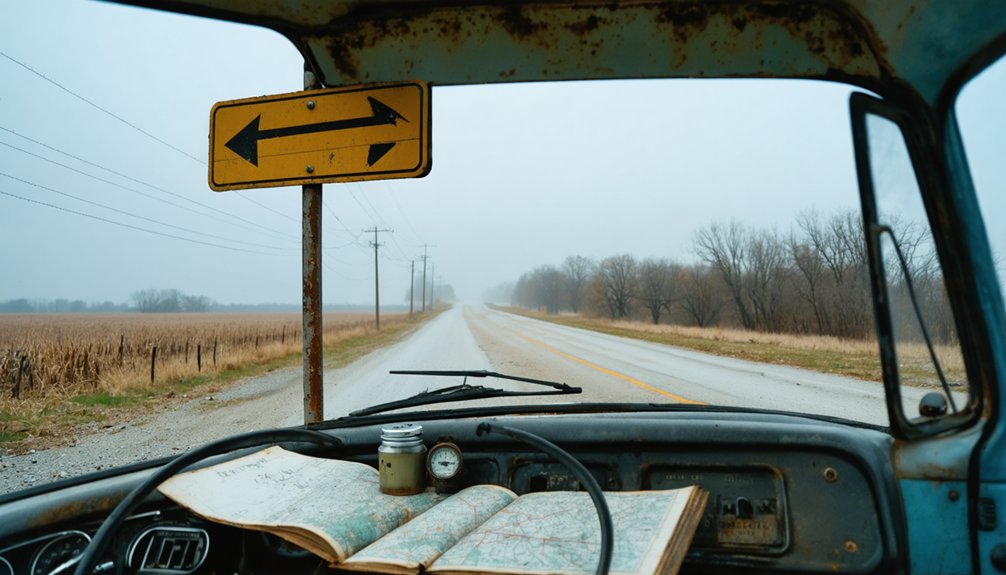
Beyond Shasta’s crumbling brick facades, several compelling attractions reward visitors who venture into the surrounding landscape. You’ll discover self guided tours through cemeteries where pioneer graves tell silent stories, while oral history accounts preserved by rangers bring forgotten voices back to life. Clear Creek still whispers of gold rush dreams just beyond town limits.
Illinois hosts 11 documented ghost towns waiting for your exploration:
- Frank’s town – open fields preserving foundations from a vanished community
- 2022 national historic site – original town layouts frozen in time
- 2009 landmark location – authenticated artifacts scattered across abandoned grounds
- Prairie State settlements – forgotten histories hiding in plain sight
Each destination offers unrestricted access to America’s abandoned past, where you’ll walk freely through chapters history textbooks overlooked.
Safety Considerations When Exploring Abandoned Sites
Before you step through that weathered doorway, understand that abandoned sites harbor real dangers that demand your respect and preparation. Entry precautions aren’t bureaucratic red tape—they’re survival essentials. Unstable floors, collapsing roofs, and rotting stairs can turn exploration into catastrophe.
You’ll encounter standing water creating slip hazards, vermin infestations, and potentially hazardous materials left behind decades ago. Structural integrity assessments separate experienced explorers from reckless trespassers. Check exterior walls for bowing, foundation cracks, and sagging rooflines before entering.
Bring proper protective clothing, sturdy boots, and reliable lighting. Tell someone your location and expected return time. Watch for evidence of recent activity—criminal or otherwise. These precautions don’t limit your freedom; they preserve it by keeping you alive to explore another day.
Where to Stay: Accommodations Near Shasta
Since Shasta itself vanished decades ago, you’ll base your ghost town expedition from nearby Itasca, where comfortable lodging options span every budget and travel style. While limited camping options near Shasta exist, Itasca’s hotels provide practical launching points for your exploration.
Itasca serves as your home base for exploring vanished Shasta, offering lodging across all budgets within easy reach of the ghost town site.
Top accommodation choices include:
- Eaglewood Resort & Spa – Itasca’s premier property offers luxury accommodations at Shasta’s doorstep with indoor pools and pet-friendly rooms
- Extended Stay America Suites – Perfect for multi-day ghost town research with full kitchens and weekly rates near Busse Woods
- Hyatt Place Chicago Itasca – Free airport shuttles from O’Hare and complimentary breakfast fuel morning adventures
- Motel 6 Elk Grove Village – Budget-friendly from $48 nightly with free WiFi and flexible cancellation
Most properties sit 15-30 minutes from O’Hare International Airport.
Local Legends and Stories From Shasta’s Past
The ghosts of Shasta, Illinois remain frustratingly silent—historical records have disappeared along with the town itself. You won’t find folk tales carefully preserved in archives or oral histories passed down through generations. This former Mississippi River settlement northwest of Tankville in Alexander County left virtually no documented legends behind.
Without historical constraints, you’re free to explore the overgrown landscape and piece together fragments of what might’ve been. The absence of recorded narratives becomes part of Shasta’s mystique—a town so thoroughly vanished that even its stories dissolved into river mist. Sometimes the most compelling ghost towns are those that guard their secrets completely, forcing you to write your own history.
Frequently Asked Questions
Are There Any Guided Tours Available for Shasta, Illinois?
No guided tours exist specifically for Shasta, Illinois. You’ll find tour options for visiting in nearby Galena, 30 miles north, where local guides available lead haunted history walks through preserved Victorian streets. You’re free to explore Shasta independently.
Can I Legally Enter the Remaining Structures in Shasta?
You’ll face potential legal risks from private property restrictions and no-trespassing signs throughout the site. Structural stability concerns make entering dangerous—crumbling walls, unstable basements, and wildlife hazards threaten your safety. Exterior viewing remains your safest, legal option.
Is There Cell Phone Service in the Shasta Area?
You’ll likely find decent cell phone service in Shasta’s area, as Illinois’s flat terrain supports strong network coverage quality from major carriers. However, cell tower infrastructure may be sparse near abandoned structures, so download maps beforehand.
Are Pets Allowed When Exploring the Ghost Town?
Like a lone wolf traversing unmarked territory, you’ll find no official pet policies for Shasta’s ghost town. Consider pet care considerations carefully—bring water, watch temperatures, and research pet friendly activities nearby before your adventure begins.
What Historical Records or Archives Exist About Shasta Residents?
You’ll find Shasta residents documented through local census records and early newspaper articles at Illinois archives. The Illinois Digital Archives and county repositories preserve these historical treasures, letting you freely explore your own connections to this vanished community.