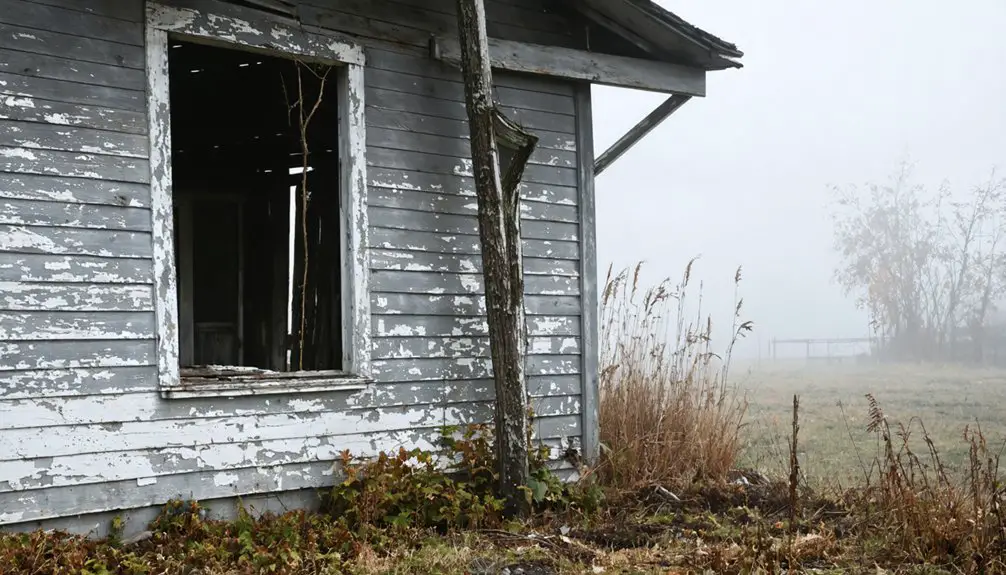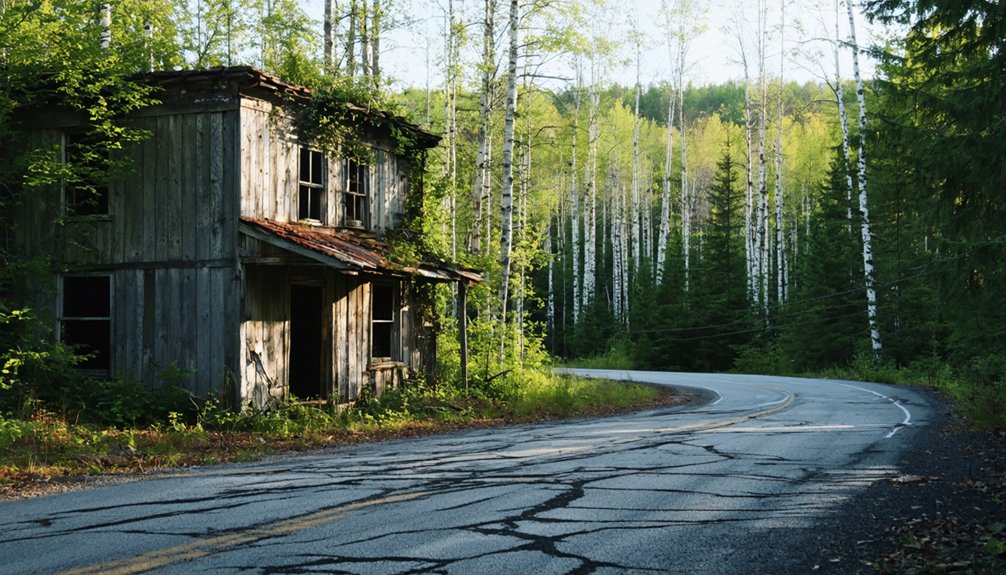
Planning a ghost town road trip to Sigma, Michigan starts with heading into the back roads between Lewiston, Grayling, and Mio. This forgotten railroad town once thrived on logging and the M&NE River Branch Line before timber depletion quietly erased it from the map. Today, you’ll find crumbling foundations, overgrown rail infrastructure, and forests slowly swallowing what’s left. Visit between May and October for the best conditions, and there’s plenty more to discover along the way.
Key Takeaways
- Sigma, Michigan, is a ghost town near Kalkaska, once a thriving railroad logging town now marked by crumbling foundations and overgrown infrastructure.
- Visit between May and October for clear back roads, vibrant forest colors, dry trails, and longer daylight hours ideal for exploration.
- Use 1860 Fire Tower Road, Lewiston, MI 49756 as a reference point, and rely on Google Maps to navigate surrounding back roads.
- Bring navigation tools, sturdy footwear, water, and snacks, as cell service is unreliable and terrain can be uneven throughout the area.
- Enrich your trip by visiting nearby Hartwick Pines State Park, Dollarville ghost town, and the AuSable River for kayaking and fishing.
What Is Sigma, Michigan and Is It Worth the Drive?
Tucked into the forests of northern Michigan near Kalkaska, Sigma is a nearly vanished railroad town that once hummed with logging activity along the M&NE River Branch Line.
Like dozens of Michigan ghost towns, Sigma’s history follows a familiar arc — boom, bust, and quiet abandonment once the timber ran out and the trains stopped rolling.
Why Sigma Was Abandoned: The Rise and Fall of a Railroad Town
Like so many northern Michigan towns, Sigma didn’t fall apart overnight — it followed a well-worn pattern that played out across the region’s forests in the late 1800s and early 1900s.
The M&NE River Branch Line brought life to Sigma, making railroad history by connecting this remote stretch of Kalkaska-area wilderness to the broader logging economy. Crews moved in, timber moved out, and the town hummed with purpose.
But that purpose had an expiration date. Once loggers stripped the surrounding forests, the railroad’s reason for stopping disappeared.
Town decline came swiftly and quietly. No catastrophe ended Sigma — just the cold logic of resource exhaustion. When the trees were gone, so was everyone else, leaving behind a silence that you can still feel today.
The Ruins and Remnants Still Standing at Sigma Today
When you walk through Sigma today, you’ll find crumbling foundations half-swallowed by soil and vegetation, hinting at the structures that once gave this railroad town its purpose.
Overgrown railroad infrastructure still scars the landscape, with old grades and clearing patterns cutting through the woods like faint echoes of a working line.
Weathered remnants of buildings stand in various states of decay, frozen in time and quietly telling the story of a community that logging and the railroad built — and ultimately left behind.
Crumbling Foundations Still Visible
Though little remains of Sigma today, the ghost town still manages to tell its story through the crumbling foundations and scattered remnants that peek through the undergrowth.
As you walk the site, you’ll notice stone and concrete outlines marking where buildings once stood — silent evidence of crumbling history waiting to be rediscovered. These forgotten stories reveal themselves slowly, demanding patience and a keen eye.
You’ll spot foundation walls half-swallowed by tree roots, rusted hardware disappearing into the soil, and clearings that hint at former streets or structures.
Nothing’s been restored or staged for tourists. What you see is raw, unfiltered abandonment shaped entirely by time and nature. That authenticity is exactly what makes Sigma worth the detour on any serious ghost town road trip.
Overgrown Railroad Infrastructure Remnants
Beyond the crumbling foundations, Sigma’s railroad origins reveal themselves through infrastructure remnants that nature has spent decades trying to swallow whole.
The M&NE River Branch Line once carried timber and workers through this corridor, and you can still trace its ghost across the landscape. Overgrown tracks disappear beneath tangled brush and wild grasses, their iron long since salvaged or rusted into the earth.
Subtle grade changes in the terrain mark where rail beds once ran with purpose. These faded memories of industrial ambition emerge for those willing to look carefully, rewarding explorers who slow down and read the land.
Walking this forgotten corridor connects you directly to Michigan’s logging-era past, when towns like Sigma briefly roared with life before falling permanently silent.
Weathered Structures Left Behind
Scattered across Sigma’s overgrown lots, the structures that survived the town’s collapse tell the story that the railroad bed can only hint at.
You’ll find weathered wood frames standing at crooked angles, their grain silvered by decades of Michigan winters. Collapsed rooflines and crumbling foundations mark where workers once lived, ate, and bunked between logging runs.
The weathered charm of these remnants isn’t manufactured — it’s earned through a century of neglect and northern exposure. You’ll notice the haunting beauty most when late afternoon light cuts through the tree canopy, casting long shadows across buckled floorboards and rusted hardware.
These structures aren’t restored or roped off. They’re raw, unfiltered history, and standing among them puts you directly inside Sigma’s forgotten story.
Where Exactly Is Sigma, Michigan Located?

Nestled in the Kalkaska area of northern Michigan, Sigma sits within easy reach of several well-known landmarks, making it surprisingly straightforward to locate on a map.
You’ll find it centrally positioned between Lewiston, Grayling, and Mio, placing you near the AuSable River and Hartwick Pines State Park. These hidden gems of northern Michigan share deep logging and railroad histories, so pairing your visit makes perfect sense.
Sigma sits at the heart of northern Michigan’s logging legacy, nestled between Lewiston, Grayling, and Mio.
Use 1860 Fire Tower Road, Lewiston, MI 49756 as a nearby reference point when traversing back roads.
Local legends describe Sigma as a railroad town born along the M&NE River Branch Line, later swallowed by time.
Google Maps can help you pinpoint surrounding sites before you hit the road, ensuring you don’t miss a single stop.
How Do You Actually Find Sigma on Back Roads?
Tracking down Sigma on back roads takes patience, a decent map, and a willingness to embrace the unexpected.
You’ll want to position yourself centrally between Lewiston, Grayling, and Mio, using Fire Tower Road as a reliable anchor point. From there, hidden pathways branch off in multiple directions, rewarding explorers who trust their instincts over GPS signals that frequently fail in these remote stretches.
Download offline maps before leaving civilization behind. You’ll navigate winding forest roads where ghostly encounters with the past feel genuinely possible — abandoned clearings, rusted remnants, and eerie silence replacing what was once a bustling railroad town.
Keep your tank full, carry water, and tell someone your planned route. Sigma doesn’t advertise itself, but that’s exactly what makes finding it so satisfying.
The Closest Ghost Towns Worth Adding to Your Route
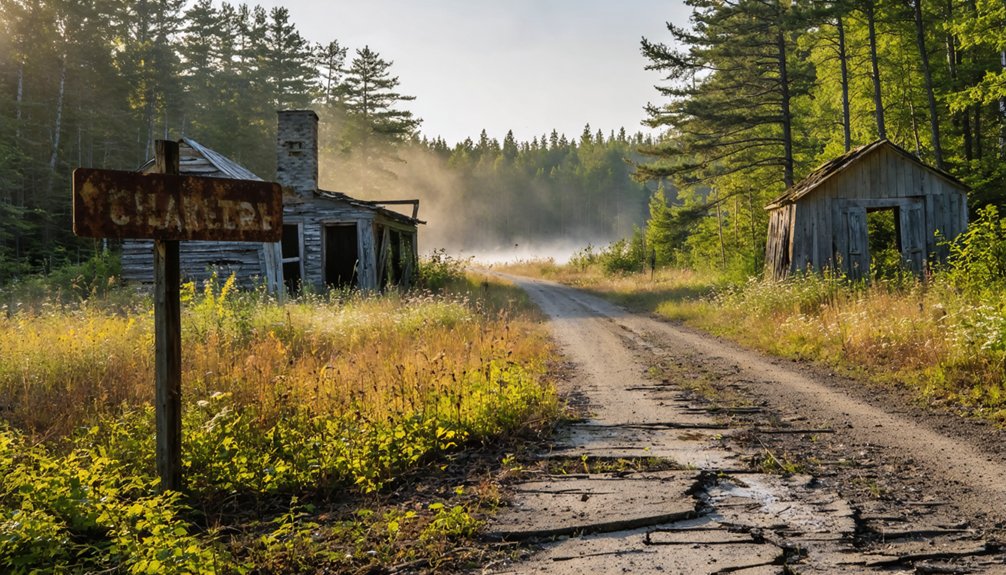
Once you’ve found Sigma, you’d be doing yourself a disservice by heading straight home. The surrounding region holds several ghost towns that share the same ghost town history and railroad origins that make Sigma worth visiting in the first place.
Dollarville, west of Newberry, offers haunting remnants of another logging-era collapse. Hartwick Pines State Park sits nearby and houses a logging museum that contextualizes exactly why these towns vanished so quickly.
Dollarville’s remnants and Hartwick Pines’ logging museum tell the same story: boom, collapse, and silence.
You’ll also find scattered Upper Peninsula sites worth extending your trip for if you’re hungry for more forgotten places. Each stop adds another layer to Michigan’s industrial past.
String these locations together along the back roads, and you’ve built a route that feels genuinely rewarding rather than just a single detour into the woods.
Outdoor Activities Near Sigma: AuSable River, Hartwick Pines, and More
After exploring Sigma’s ghost town remnants, you’ll find plenty of ways to stretch your legs in the surrounding region.
You can paddle or canoe the scenic AuSable River, hike the old-growth forest trails at Hartwick Pines State Park, or visit the park’s authentic logging museum and chapel for a deeper look at the industry that built — and ultimately abandoned — towns like Sigma.
The area’s mix of water adventures, woodland trails, and historical context makes it an easy place to turn a quick ghost town stop into a full weekend road trip.
AuSable River Adventures
While Sigma itself may be little more than a whisper in the trees, the surrounding area pulses with outdoor adventure worth the drive alone.
The AuSable River runs nearby, offering some of Michigan’s finest AuSable River kayaking through stunning forest corridors where you’ll paddle at your own pace, stopping wherever the current calls you.
If you’d rather stay still, drop a line and enjoy world-class AuSable River fishing for brown and rainbow trout that draw anglers from across the country.
The river moves through Grayling and stretches toward Mio, giving you countless access points to choose from.
Whether you’re drifting quietly through the pines or casting into cold, clear water, the AuSable delivers a raw, unhurried freedom that perfectly complements your ghost town exploration.
Hartwick Pines State Park
Just a short drive from the river, Hartwick Pines State Park stands as one of Michigan’s most rewarding stops for anyone chasing both history and the outdoors.
The park pairs perfectly with your Sigma ghost town experience, connecting Michigan’s logging history to the landscape that shaped it.
Don’t miss these three highlights:
- Old-Growth Forest Trail – Walk among ancient pines that escaped the logger’s axe, giving you a rare glimpse of Michigan’s pre-industrial wilderness.
- Logging Museum – Explore authentic equipment and structures that bring Hartwick Pines’ logging history to life.
- Historic Chapel – Step inside a beautifully preserved chapel tucked within the forest.
You’ll leave with a stronger sense of why towns like Sigma rose, thrived, and ultimately vanished.
Local Outdoor Recreation
Sigma’s surrounding landscape offers more than ghost town history — it hands you a full outdoor itinerary.
Paddle the AuSable River‘s winding currents, cast a line from its banks, or rent a canoe and drift through pure northern Michigan wilderness. You’ll find hiking trails cutting through dense forests where deer, eagles, and fox regularly cross your path, making wildlife watching a genuine reward rather than a lucky accident.
Hartwick Pines State Park sits nearby, offering old-growth forest walks that connect naturally to the logging heritage Sigma itself represents.
Cyclists and mountain bikers can tackle back roads threading through Kalkaska County’s quiet terrain.
Whether you’re on water, trail, or gravel road, this region keeps you moving freely through one of Michigan’s most untamed corners.
The Best Time To Visit Sigma and What To Bring
Late spring through early fall is your best window for exploring Sigma, when Michigan’s back roads are clear of snow and the surrounding forests are alive with color.
The best season runs May through October, giving you dry trails and longer daylight hours.
Pack your essential gear carefully before heading out:
- Navigation tools – Download offline maps since cell service is unreliable in Kalkaska’s remote corridors.
- Sturdy footwear – Overgrown terrain and uneven ground demand ankle support.
- Water and snacks – There are no amenities nearby, so self-sufficiency is non-negotiable.
Arrive early to catch the soft morning light filtering through the pines—it transforms an already atmospheric site into something genuinely unforgettable.
Before You Go: Safety at Abandoned Sites
Ghost town structures have stood without maintenance for decades. Floors, stairs and roof timbers fail without warning, and a building that looks solid from outside may not hold your weight. Stay out of standing structures unless the site is actively maintained and open to visitors.
Mine workings are the more serious hazard. Vertical shafts can be hundreds of feet deep, are often unfenced, and may be hidden by brush or capped with rotted boards. Never enter an adit, tunnel or shaft: abandoned workings can hold oxygen-poor or toxic air that gives no warning before you lose consciousness.
Enclosed spaces with rodent droppings carry a risk of hantavirus, which is contracted by breathing contaminated dust. Do not sweep or stir up dust inside old cabins and outbuildings.
Cell coverage at these sites is usually poor or absent. Tell someone your route and expected return time, and carry more water than you think you need.
Frequently Asked Questions
Is Sigma, Michigan Listed on Wikipedia’s Ghost Towns Page?
Like a faded signpost pointing to forgotten roads, yes, Sigma’s listed on Wikipedia’s ghost towns page! You’ll find its historical significance and abandoned structures recognized among Michigan’s 70+ ghost towns, mostly of logging and railroad origins.
What Railroad Line Originally Served the Town of Sigma?
You’ll find that the M&NE River Branch Line originally served Sigma, shaping its railroad history. Once the logging era faded, the town’s decline was inevitable, leaving behind the ghost town you can explore today.
How Many Michigan Ghost Towns Are Included in Eagleeyeexplorer’s Map?
You’ll find 73 ghost town spots on EagleEyeExplorer’s map, making it your ultimate guide for Michigan history and ghost town exploration. It’s an incredible resource that’ll fuel your adventurous spirit across Michigan’s fascinating, forgotten landscapes!
Are Any Buildings at Sigma on Private Property?
The knowledge doesn’t confirm if Sigma’s buildings sit on private property. When exploring ghost towns, you’ll want to research private property concerns beforehand, as some northern Michigan sites do feature privately owned collections of preserved buildings.
What Comparable Ghost Town Exists West of Newberry, Michigan?
Oh sure, who *needs* modern conveniences? Head west of Newberry, and you’ll discover Dollarville, a ghost town brimming with historical significance and local legends, where freedom-seekers like you can wander its forgotten, hauntingly beautiful remnants.
References
- https://railroadfan.com/phpbb/viewtopic.php?t=29966
- https://www.youtube.com/watch?v=7f8uXHNowq8
- https://en.wikipedia.org/wiki/List_of_ghost_towns_in_Michigan
- https://wgrd.com/michigan-ghost-town-map/
- https://lostinmichigan.net/category/ghost-towns/
- https://www.michigan.org/city/sigma