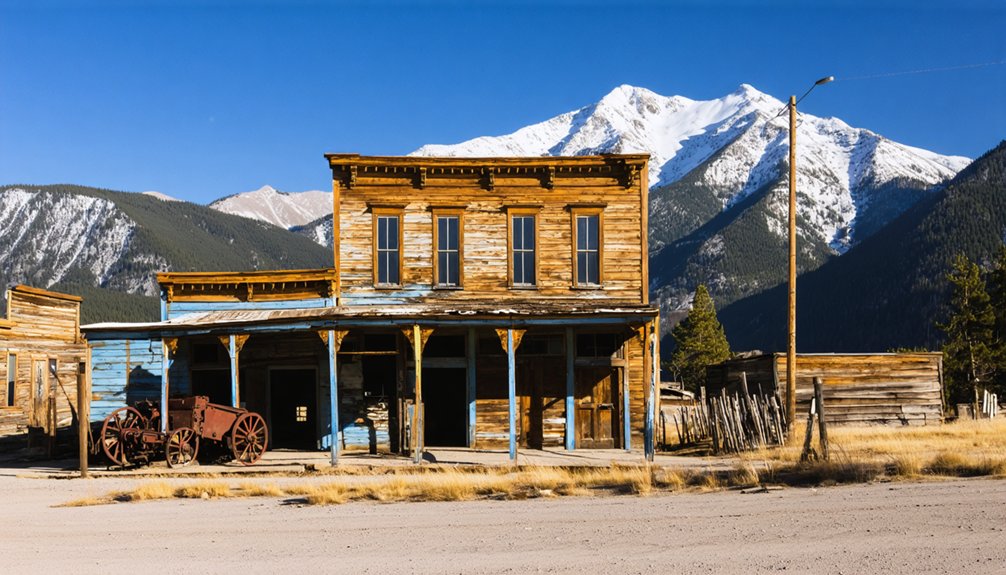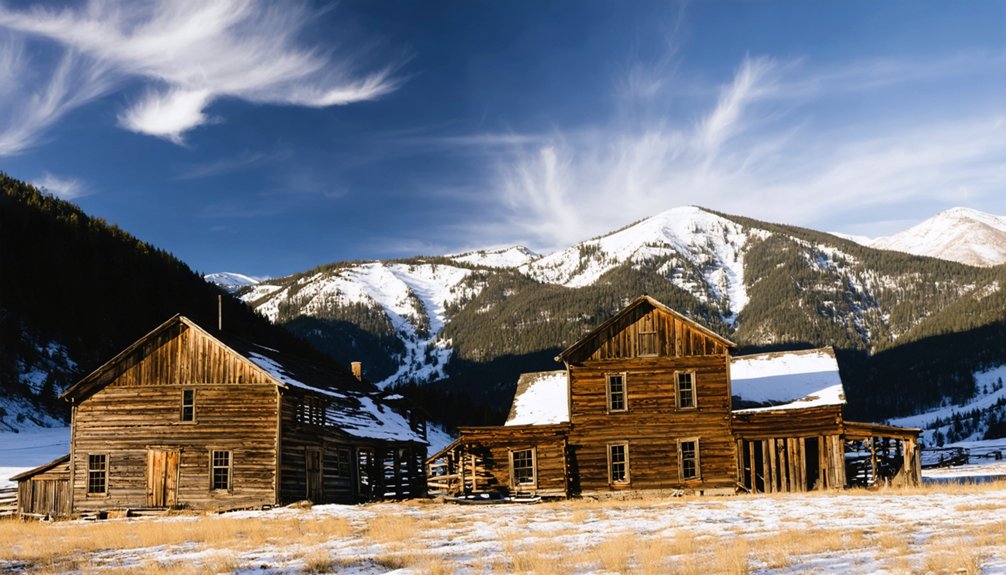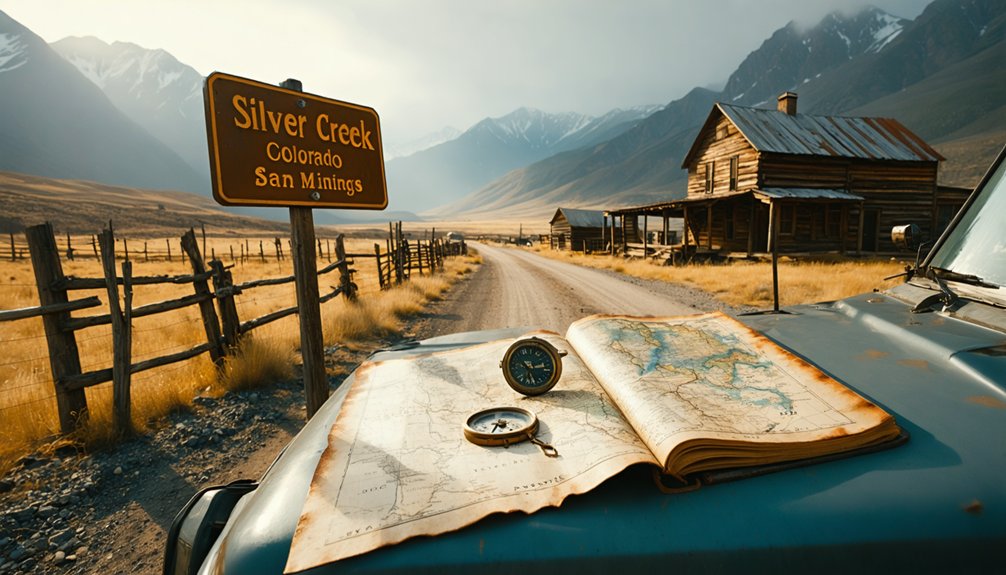
Plan your Silver Creek ghost town adventure between July and October when snow doesn’t block mountain passes at 9,300 feet. You’ll need a high-clearance 4WD vehicle to navigate the rocky, unmarked forest service roads off I-70 west of Georgetown. Pack sturdy boots for exploring scattered foundation stones and rusted mining artifacts half-buried in pine needles. Georgetown’s Victorian storefronts make an excellent basecamp for exploring Clear Creek County’s forgotten mining camps, and the guide below covers everything from route planning to essential safety gear.
Key Takeaways
- Silver Creek sits at 9,300 feet elevation in Clear Creek County, accessible only by high-clearance 4WD vehicles via unmarked forest service roads.
- Visit between July and October when roads are passable; early July offers ideal conditions with dry roads and fewer crowds.
- Explore scattered foundation stones, crockery fragments, and rusted artifacts among pine needles on faint prospector trails wearing sturdy boots.
- Combine your trip with Georgetown’s preserved Victorian district, including Hotel de Paris Museum, Hamill House, and Alpine Hose Company No. 2.
- Winter travel requires monitoring I-70 conditions and carrying chains due to avalanches and heavy snow at high elevations.
Getting to Silver Creek: Route Planning and Vehicle Requirements
Tucked into the rugged folds of Clear Creek County at 9,300 feet, Silver Creek isn’t the kind of ghost town you’ll stumble upon by accident. You’ll head west from Denver on I-70 toward Georgetown, then veer onto unmarked forest service roads where road signage disappears entirely. Bring a high-clearance 4WD—standard vehicles won’t survive the rocky, unpaved switchbacks leading to the abandoned camp.
Weather forecasting becomes critical here. Plan your trip between July and October when snow won’t trap you on exposed mountain passes. Winter transforms these routes into impassable avalanche zones. Check your vehicle’s readiness before committing: working four-wheel drive, good tires, and mechanical reliability matter when you’re miles from help. There’s no cell service, no rescue coming quickly, just you and the mountain’s terms.
The Mining History of Daileyville and Its Brief Existence
Once you navigate those treacherous mountain roads, you’ll discover that Silver Creek’s story doesn’t stand alone—it’s woven into the fabric of Colorado’s legendary mining boom that transformed sleepy gulches into roaring camps almost overnight.
When Abe Lee struck gold in California Gulch on April 26, 1860, early mining practices were primitive—prospectors battling stubborn black sand that clogged their sluices. By 1875, someone finally assayed those troublesome sands and struck silver jackpot. That discovery launched Leadville into boomtown glory, with seventeen smelters processing everything extractable from these mountains.
Economic diversification saved the district when silver crashed in 1893—the Little Jonny mine’s gold strike kept operations alive. You’ll find Daileyville’s remnants nearby, another brief flash in Colorado’s mining pan.
What Remains: Exploring the Scattered Ruins and Artifacts
When you finally reach Silver Creek’s remote location, don’t expect the romanticized wooden facades you’ve seen in Western movies—nature has reclaimed most of this site with aggressive efficiency. You’ll find scattered foundation stones half-buried in pine needles, marking where miners once slept and dreamed of striking it rich. The camp’s brief existence left minimal traces—unlike nearby sites with well preserved mining equipment, Silver Creek offers mostly whispers of occupation.
What you’ll discover requires a keen eye: distinctive crockery fragments nestled among tree roots, rusted tin scraps glinting through undergrowth, and the occasional bottle neck emerging from decades of forest debris. Bring sturdy boots for scrambling through uneven terrain. The site’s obscurity means you’ll likely explore alone, following faint trails where ambitious prospectors once walked.
Best Times to Visit and Seasonal Road Conditions
Your journey to Silver Creek hinges entirely on timing—arrive in summer’s July-to-October window, and you’ll navigate County Road 33 without avalanche fears or impassable snowdrifts.
Winter transforms these high-elevation routes into treacherous corridors where frequent avalanches and heavy snow cut off access completely, stranding ghost towns in frozen isolation.
Spring brings unpredictable weather that can turn a straightforward drive into a muddy ordeal, though lower elevations become accessible as snowmelt gradually opens the high country.
Summer Access Advantages
Colorado’s high-country ghost towns transform from snowbound relics into accessible destinations as summer’s warmth melts the alpine barriers that seal them off for eight months each year. You’ll find Silver Creek and neighboring sites like Animas Forks wide open from June through September, when 2WD vehicles can reach many locations and 4x4s grant access to the backcountry.
As you explore these historic remnants, consider also visiting ghost town attractions near Gleeson for an eerie yet fascinating experience. These locations offer a glimpse into the past, where you can wander through decaying structures and imagine life in a bygone era. Be sure to check local guides for the best routes and safety tips to make the most of your trip.
I’ve discovered that early July offers the sweet spot—roads dry and firm, fewer crowds than August weekends, and mild temperatures perfect for exploring crumbling cabins without layers of winter gear.
Your vehicle choices expand dramatically: standard cars handle improved forest roads, while high-clearance rigs tackle rocky passes like Henson Creek. Creek crossings become manageable, avalanche zones go dormant, and you’re free to hike, bike, or camp among ruins without fighting snow.
Winter Road Closures
Getting to Silver Creek means traversing I-70’s notorious winter gauntlet, where I’ve watched blizzards transform Colorado’s main artery into a parking lot within minutes. You’ll face steep grades at Vail Pass, treacherous ice on Georgetown Hill, and avalanche closures near Eisenhower Tunnel—each capable of stranding you for hours.
Smart travelers master monitoring I-70 Mountain Corridor through COtrip.org’s live cameras and the 511 hotline. I’ve learned that avoiding closure risks means checking conditions obsessively and carrying chains, even in your AWD vehicle. Commercial rigs without proper traction devices trigger cascading shutdowns that trap everyone behind them.
Your freedom depends on timing: skip weekends when ski traffic compounds weather delays, or better yet, wait until late spring when residual snow no longer dictates your schedule.
Spring Weather Challenges
While winter’s grip finally loosens on the high country, spring brings its own brand of chaos to Silver Creek access routes. You’ll face unpredictable changing snowfall patterns—70% snow chances can dump two inches even when daytime temps hit 46°F.
Spring weather forecasts show wild temperature swings from 12°F nights to 65°F days, making trip planning tricky.
Navigate Spring’s Gauntlet:
- Early spring (March-April): Expect snow showers, northeast winds gusting to 20 mph, and potential road closures despite sunny breaks
- Mid-spring sweet spot: Target 57°F partly cloudy days with light 3 mph winds and minimal precipitation
- Late spring (May): Score mostly sunny 68°F highs, but watch for sudden 40 mph southwest gusts that challenge high-clearance vehicles
Pack layers and check real-time conditions—spring doesn’t follow rules here.
Combining Your Trip With Georgetown and Nearby Attractions
You’ll find Georgetown’s Victorian storefronts and brick buildings remarkably preserved just minutes from Silver Creek, making it the perfect bookend to your ghost town adventure. I recommend parking near the historic district’s center and walking the grid of streets where mine owners once strolled—the architectural details on cornices and window frames tell stories that plaques can’t capture.
Beyond Georgetown’s limits, Clear Creek County unfolds with winding canyon roads that connect forgotten camps and active mountain towns, each offering its own slice of mining-era Colorado.
Georgetown’s Historic District Tour
Georgetown’s National Historic Landmark District spreads across more than 200 meticulously restored buildings that transport you straight into Colorado’s 1870s silver boom era. You’ll discover the heart of these historic preservation efforts at the 1867 Old County Courthouse on 6th and Argentine streets, now serving as your gateway to self-guided exploration. The community engagement programs centered here welcome nearly 450,000 annual visitors who crave authentic Western experiences.
Start your walking tour along Taos Street, where you’ll find:
- Alpine Hose Company No. 2 (1874) – Fire station showcasing volunteer firefighting heritage
- Hamill House (1867) – Country Gothic Revival mansion with period furnishings
- Hotel de Paris Museum (1875) – Former French inn preserving immigrant entrepreneurial spirit
Each structure reveals Colorado’s mining legacy without sanitized interpretations or modern interference.
Clear Creek County Exploration
Beyond Georgetown’s historic streets, Clear Creek County unfolds as a high-altitude playground where ghost towns meet wilderness adventures. You’ll discover historic mining sites like the Argo Mill and Tunnel, where gold rush dreams crystallized in 1859.
The county’s 75% public lands invite you to explore backcountry trails by foot, bike, or horseback—no permits holding you back.
Local lore and folklore permeate every abandoned shaft and weathered building. At 10,600 feet, Echo Lake offers solitude among bighorn sheep and alpine wildflowers, while Clear Creek’s rapids challenge your mettle on Colorado’s second-most-rafted river.
The Georgetown Loop Railroad connects these adventures, whisking you between elevation zones where mountain goats traverse cliffsides and columbines blanket meadows. Pack your sense of adventure; this territory demands it.
Essential Supplies and Safety Preparations for Remote Exploration
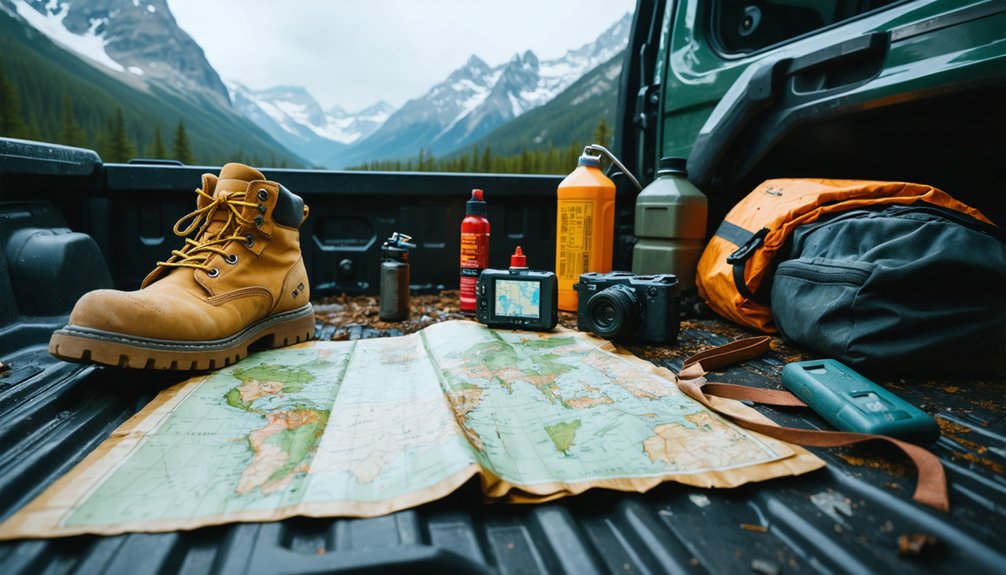
The weathered wooden sign marking the turnoff to Silver Creek disappeared in my rearview mirror as I realized my water bottles were still sitting on my kitchen counter—a mistake I’d never make again. Remote exploration demands self-sufficiency. Your vehicle becomes your lifeline—stock three days’ water, recovery gear including winch equipment and earth anchors for treeless terrain.
Your vehicle becomes your lifeline in remote terrain—stock three days of water, recovery gear, and equipment before the pavement ends.
Critical Supplies for Silver Creek:
- Navigation and Communication: GPS units, paper maps demonstrating outdoor navigation techniques, fully charged phone, whistle for emergencies
- Personal Protection: Sturdy boots, long sleeves, gloves, respirator mask for asbestos-laden structures, headlamp with backup batteries
- Survival Essentials: First-aid kit, multi tool utility essentials, three days’ food and water, fire-starting materials
Inform someone of your itinerary and expected return. Freedom requires preparation—never explore alone.
Frequently Asked Questions
Are There Any Camping or Overnight Accommodation Options Near Silver Creek?
You’ll find rugged camping options from dispersed sites to Silver Creek Ranch’s waterfront spots. Forget glamping sites—embrace remote cabins or backcountry wilderness camps near this ghost town. Pack smart, stay free, and leave no trace behind.
Do I Need Special Permits to Explore the Silver Creek Ghost Town?
You won’t need special permits for exploring Silver Creek’s public areas, but you’ll want to respect private property access boundaries. Watch for trespassing concerns—old mining claims often have active owners who’ll protect their land fiercely.
Is Silver Creek Suitable for Families With Young Children to Visit?
No, Silver Creek isn’t family friendly activities terrain—you’ll tackle demanding four-hour hikes, crumbling structures, and serious fall risks. Safety precautions demand constant vigilance with young kids. Instead, choose stabilized ghost towns like Animas Forks for genuine family adventures.
What Wildlife Should I Expect to Encounter in the Silver Creek Area?
You’ll likely spot mule deer populations grazing mountainsides and native bird species like golden eagles soaring overhead. Watch for elk at lower elevations, mountain bluebirds in meadows, and keep your distance—these wild creatures roam freely here.
Are There Guided Tours Available for the Silver Creek Ghost Town?
Ironically, Silver Creek’s isolation means there’s no guided tours availability—but that’s perfect for you. You’ll enjoy pure self-guided exploration options, wandering freely through weathered cabins without schedules or crowds dictating your adventure.