Silver Peak sits equidistant from Tonopah, Goldfield, and Dyer, making it a natural anchor for a Nevada ghost town loop. You’ll find 19th-century mining ruins scattered across the desert alongside America’s only active lithium mine—a collision of eras unlike anywhere else. Nearby Blair adds an eerie bonus, even from the roadside. Pack water, fuel up early, and respect the land you’re crossing. There’s far more to this forgotten corner of Nevada than first meets the eye.
Key Takeaways
- Silver Peak, founded in 1864, uniquely combines 19th-century ghost town remnants with active lithium mining operations, making it a distinctive Nevada road trip destination.
- The town is equidistant from Tonopah, Goldfield, and Dyer, offering three scenic route options, each featuring historical landmarks and abandoned mining relics.
- Nearby attractions include the Blair Ruins, a former 100-stamp mill site, and Gold Point, known for preserved structures and rugged authenticity.
- Pack extra water, a detailed map, a first aid kit, and check weather conditions before departing into this remote desert environment.
- Respect private property boundaries, follow Leave No Trace principles, and take only photographs to preserve Silver Peak’s fragile historical landscape.
What Makes Silver Peak, Nevada Worth the Drive?
Silver Peak isn’t your typical ghost town—it’s a living, breathing relic where Nevada’s oldest mining heritage collides head-on with a modern lithium boom. Founded the same year Nevada achieved statehood in 1864, this unincorporated community carries a hidden history that most road-trippers completely overlook.
You’ll find 19th-century mining equipment rusting alongside active industrial operations extracting lithium from Clayton Valley’s ancient brines. That juxtaposition is rare—and worth every mile.
Silver Peak’s mining legacy stretches from silver strikes and stamp mills through precious metals revivals and into America’s only domestic lithium source supplying global markets today.
From silver strikes and stamp mills to powering the modern world—Silver Peak’s mining story never stopped evolving.
This isn’t a sanitized museum. It’s a raw, authentic desert community that refused to die, and that stubborn survival makes the drive absolutely worthwhile.
Ghost Town Sites in Silver Peak You Can Actually Explore
Scattered across the high desert floor, Silver Peak’s accessible ghost town remnants reward curious explorers willing to look past the active lithium infrastructure.
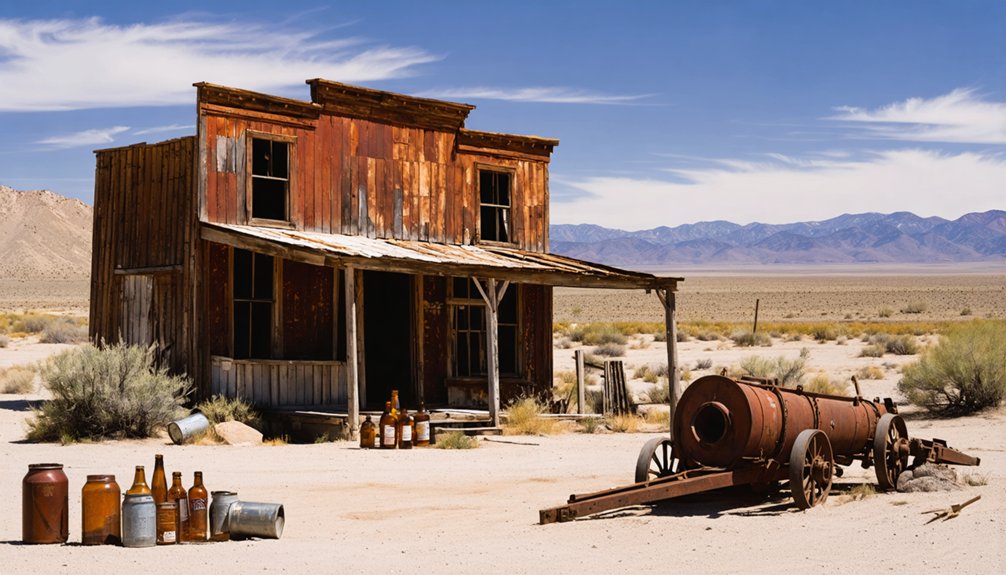
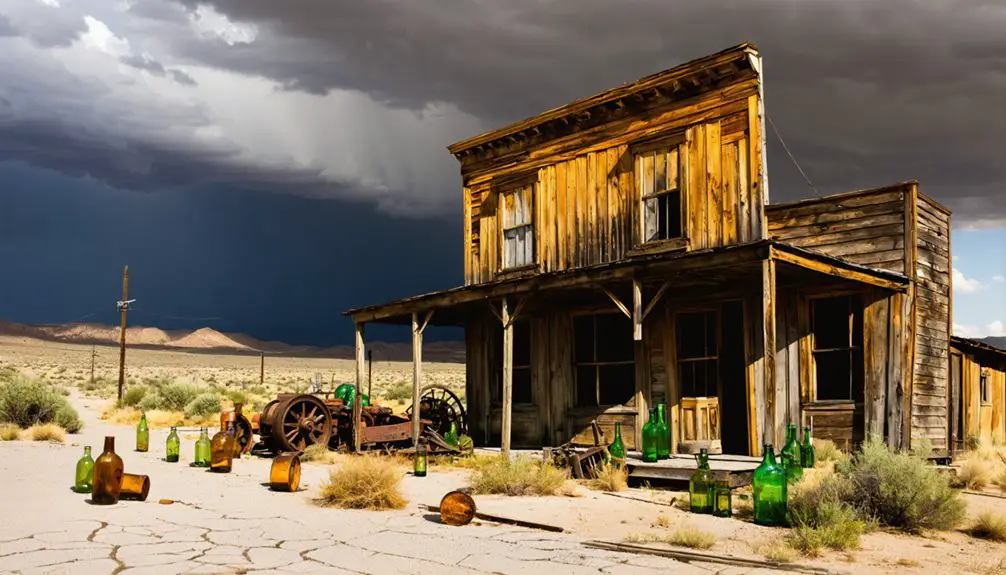
You’ll find 19th-century mining equipment sitting in the open, tangible proof of the region’s turbulent mining history stretching back to 1864. Walk the townsite and you’re tracing footsteps of prospectors who pulled ore worth $180 per ton from surrounding ridges.
Exploring ruins here demands respect — dilapidated structures are private property, so keep your distance and shoot photographs instead of touching.
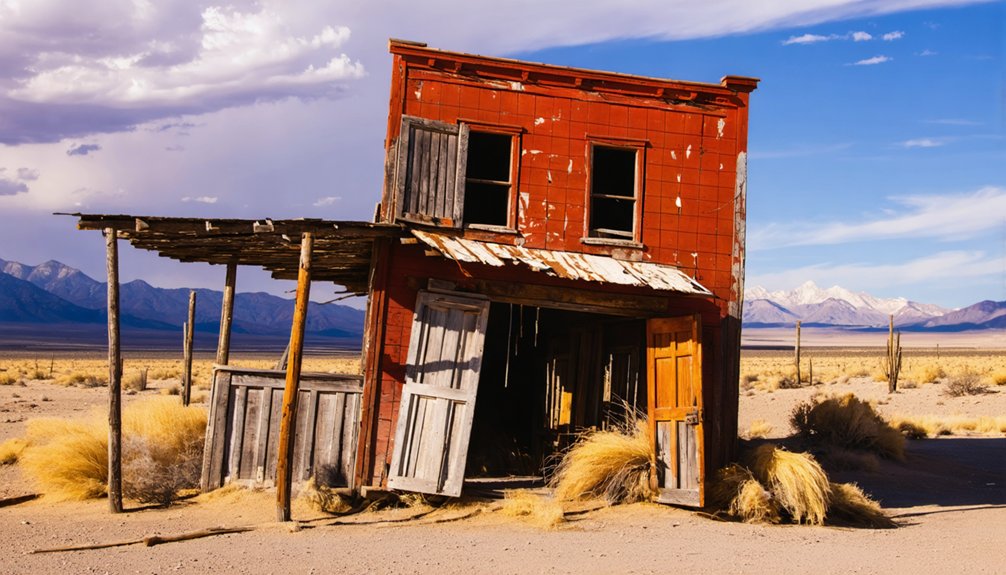
Blair, three miles north, sits on private land entirely. What you *can* do freely is absorb the atmosphere: crumbling facades, abandoned equipment, and desert silence interrupted only by distant industrial hum.
Silver Peak delivers authentic ghost town texture without roping you behind velvet barriers.
Silver Peak’s Lithium Mining Operation, Hiding in Plain Sight
Pivot your gaze from crumbling facades and rusted equipment toward the gleaming industrial ponds shimmering on Clayton Valley’s eastern flats — because Silver Peak’s ghost town story doesn’t end in the 19th century.
Foote Mineral Company discovered lithium deposits here in the 1950s and launched full-scale lithium extraction by 1966, using solar evaporation of underground brines.
Today, Silver Peak supplies roughly 1% of global lithium output, making it America’s only domestic lithium source.
That industrial reality creates a genuinely strange tension. You’re standing amid ghost town ambiance — weathered buildings, abandoned shafts, silent streets — while a modern operation quietly powers the world’s electric vehicles nearby.
Silver Peak never fully died. It simply traded one boom for another, and the contrast makes your road trip here unlike anything else in Nevada.
How to Get to Silver Peak From Tonopah, Goldfield, and Dyer
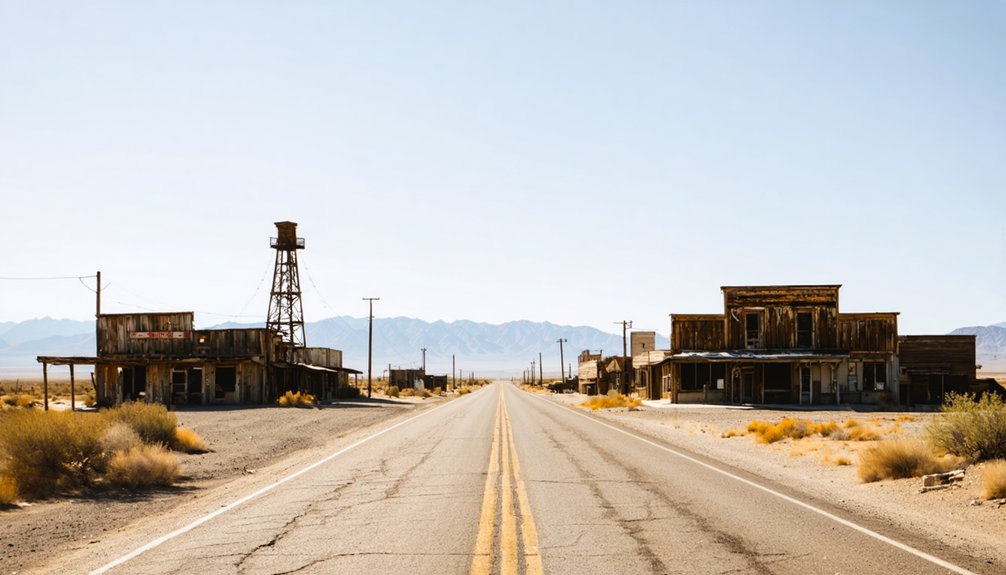
Silver Peak sits at an almost perfect crossroads, equidistant from Tonopah, Goldfield, and Dyer, making it a natural anchor for any southwestern Nevada road trip.
From Tonopah, you’ll head south through open desert, while the Goldfield approach carries you through another legendary mining town before the landscape opens into Clayton Valley.
If you’re crossing from California, Dyer offers a scenic eastern Sierra gateway that drops you right into the heart of Esmeralda County’s lithium-rich basin.
Tonopah Route Overview
Nestled in the heart of the Esmeralda County desert, Silver Peak sits equidistant from three jumping-off points: Tonopah to the northeast, Goldfield to the east, and Dyer to the northwest.
Tonopah’s rich mining history mirrors Silver Peak’s own story, making this route feel like a rolling timeline of Nevada’s silver-rush era. You’ll chase scenic views across open basin flats and jagged mountain silhouettes before descending into Clayton Valley.
Pack your supplies before leaving Tonopah — services disappear fast out here.
Key highlights along this corridor include:
- Dramatic basin-and-range landscapes stretching toward the California border
- Abandoned mining relics dotting the roadside
- Uninterrupted sky ideal for desert photography
Freedom awaits beyond every bend. Point your vehicle southwest and let Nevada’s raw wilderness pull you forward.
Goldfield Approach Details
Goldfield sits roughly 26 miles southeast of Silver Peak, and the drive through this storied boomtown-turned-skeleton makes for one of Nevada’s most atmospheric lead-ins.
Don’t rush through it. Goldfield attractions like the imposing 1908 Goldfield Hotel and the historic courthouse rank among Nevada’s most compelling historical landmarks, and they’re worth a slow pass before you head northwest toward Silver Peak.
From Goldfield’s main drag, pick up the road cutting northwest across open desert. The landscape flattens into a vast, silent basin before Clayton Valley appears in the distance — lithium evaporation ponds shimmering against ancient mountains.
It’s a disorienting and thrilling contrast: frontier ruins behind you, industrial extraction ahead. That tension between past and present defines the entire Silver Peak experience before you even arrive.
Dyer Access Directions
Dyer sits roughly 20 miles west of Silver Peak, making it the closest of the three gateway towns and the most intimate approach. Follow Nevada Route 773 east through Fish Lake Valley, where the scenery opens into raw desert grandeur.
These Dyer directions reward travelers who crave scenic views unmarked by crowds.
Watch for:
- Alkali flats stretching toward distant mountain ranges, unchanged since prospectors crossed them in 1864
- Clayton Valley’s lithium operations, visible on your left — America’s only domestic lithium source
- The quiet shift from agricultural Dyer into Silver Peak’s industrial-ghost-town fusion
You’ll feel the timeline compress as modern evaporation ponds reflect alongside century-old ruins.
This western corridor delivers Silver Peak’s full contradiction in the most direct, unfiltered way possible.
Nearby Ghost Towns to Add to Your Silver Peak Route
While Silver Peak makes a compelling anchor for your ghost town itinerary, the surrounding desert holds even more forgotten history worth chasing.
Just three miles north, the Blair Ruins mark where a 100-stamp mill once thundered through ore before shutting down in 1915. Note that Blair is private property, so admire the remnants from a respectful distance.
Further afield, Gold Point rewards the adventurous traveler with preserved structures and a genuine sense of frozen time. This former silver camp carries a rugged authenticity that photographs can’t fully capture.
Together, these stops transform a Silver Peak visit into a layered exploration of Nevada’s boom-and-bust heritage.
Pack extra water, check road conditions beforehand, and give yourself enough daylight to chase each abandoned chapter properly.
What to Bring on Your Silver Peak Day Trip
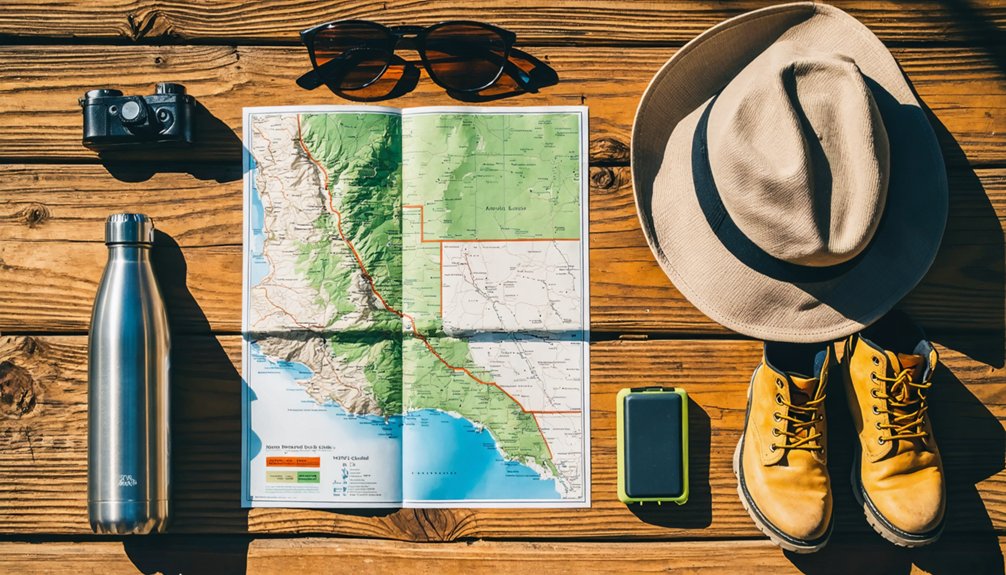
A few key supplies separate a memorable Silver Peak run from a miserable one. Packing essentials matter hard in this remote Nevada desert, where services are scarce and distances punish the unprepared.
Load your rig with:
- Water — minimum one gallon per person; heat here is unforgiving
- Camera gear — Photography tips worth remembering: shoot the rusting 19th-century equipment in golden hour light for maximum drama
- Navigation tools — cell service drops fast near Clayton Valley
You’ll wander private property boundaries around Blair’s ruins and active lithium infrastructure, so carry a detailed map. Respect posted signs, take only photographs, and leave the desert exactly how you found it.
Freedom means responsibility out here.
Frequently Asked Questions
Is Silver Peak, Nevada an Actual Functioning Town With Residents?
Yes, you’ll find Silver Peak very much alive! Under 200 residents call it home, while abandoned structures and local legends surround you. Active lithium mining fuels its heartbeat, blending raw frontier history with modern industry.
What Notable Historical Events Happened in Silver Peak Besides Mining?
Like echoes from another era, Silver Peak’s got ghost stories beyond mining! You’ll find cultural significance in Max Baer’s 1939 boxing match, Enron’s controversial 1999 power rerouting, and a murder case that’s captivated true crime enthusiasts.
Are There Any Places to Eat or Drink in Silver Peak?
You’ll find local dining and beverage options at the Old School Saloon, where cold refreshments and small-town hospitality await. It’s your perfect pit stop before exploring Silver Peak’s hauntingly rich, mineral-steeped frontier landscape.
When Was Silver Peak, Nevada Officially Founded?
Silver Peak’s history dates to 1864, the same year Nevada achieved statehood. You’re stepping into a mining legacy born from a silver discovery that sparked an entire community’s adventurous, freedom-fueled frontier spirit.
Has Silver Peak Ever Been Featured in Any Media or Television?
Silver Peak’s ghost town legends caught TV’s eye — you’ll find it featured in “Welcome To Murdertown,” exploring Charlie Kinkle’s murder. These media representations prove this living relic’s stories run deeper than abandoned mines.
References
- https://en.wikipedia.org/wiki/Silver_Peak
- https://www.nvexpeditions.com/esmeralda/silverpeak.php
- https://www.youtube.com/watch?v=IgCQ8YcuQ3s
- https://www.atlasobscura.com/places/silver-peak
- https://travelnevada.com/food-drink/old-school-saloon/
- https://archive.org/details/SilverPeakNeveraGhostTown
- https://www.nevadaappeal.com/news/2021/mar/31/nevada-traveler-boom-and-bust-and-boom-times-again/
- https://www.forgottennevada.org/sites/silverpeak.html