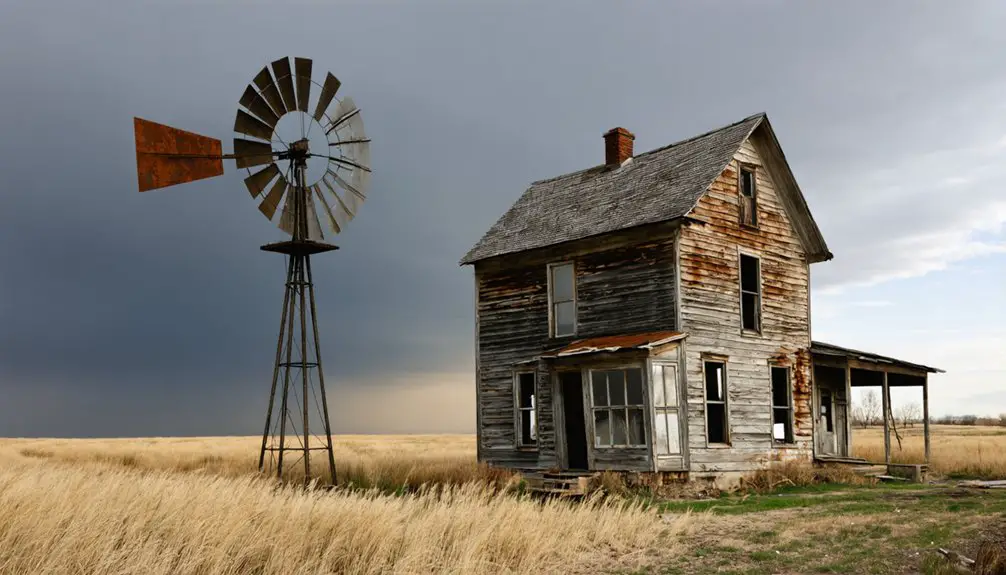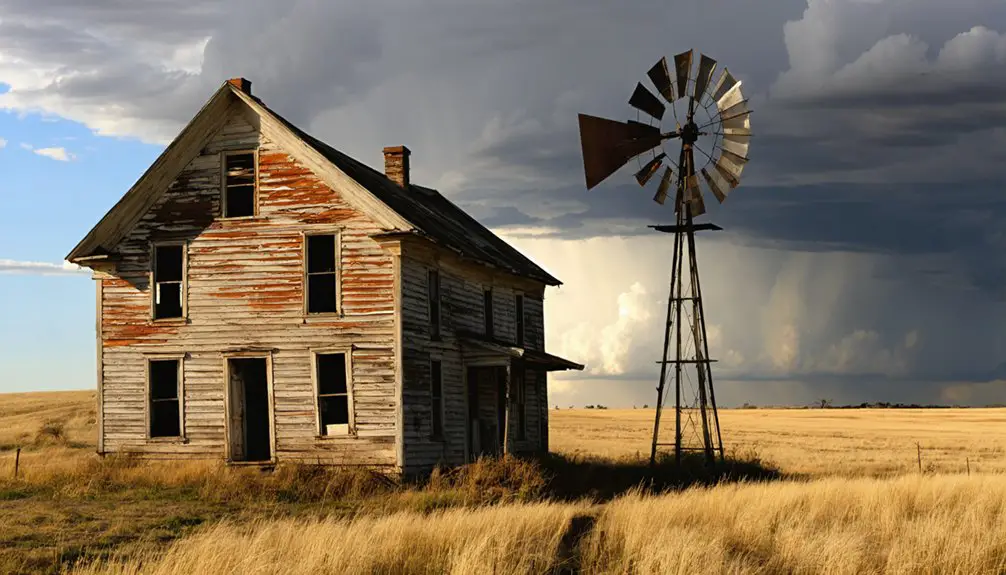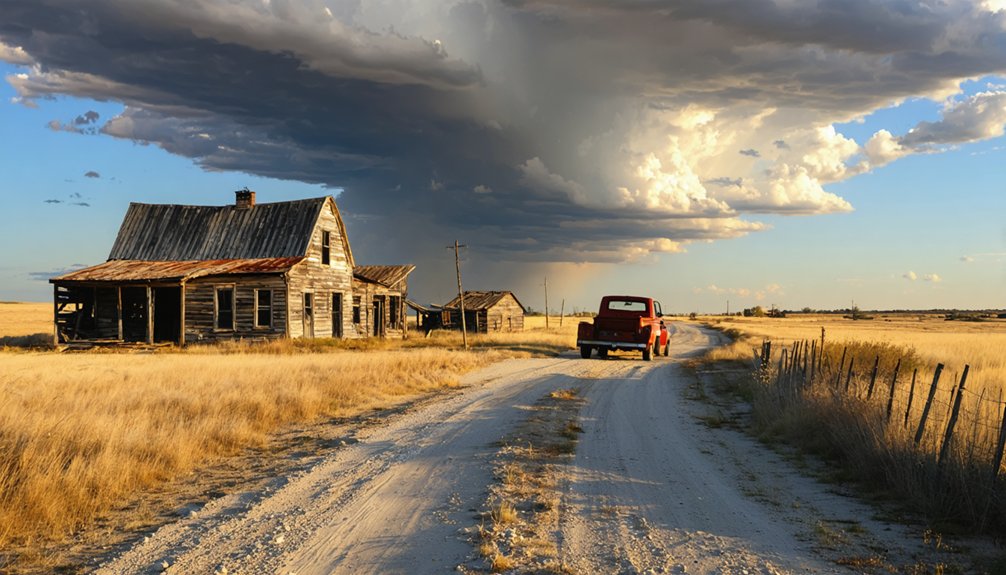
You’ll find St. Deroin tucked into Indian Cave State Park‘s wooded bluffs in southeastern Nebraska, where a brick-by-brick reconstructed schoolhouse and general store stand beside a historic cemetery overlooking the Missouri River. The 1911 flood washed away this once-thriving trading post, but you can still explore building foundations at the original townsite and walk among weathered gravestones on the bluffs. The scenic one-way loop descending through trees leads you to parking near these haunting remnants, where local legends and frontier stories await your discovery.
Key Takeaways
- St. Deroin is located in Indian Cave State Park at 65296 720 Rd in Shubert, southeastern Nebraska along the Missouri River.
- From Brownville, drive 5 miles east on S64E and follow the scenic one-way loop descending through trees to reach the site.
- Explore two reconstructed buildings (schoolhouse and general store), a relocated cemetery, and original townsite foundations on foot.
- The Missouri River trading town was abandoned by 1920 after devastating floods, particularly the catastrophic 1911 deluge.
- Local legends include ghostly sightings of Joseph Deroin on horseback, one-armed A.J. Ritter, and the mysterious Lantern Lady.
Getting to St. Deroin in Indian Cave State Park
Tucked away in the wooded bluffs of southeastern Nebraska, St. Deroin awaits your discovery within Indian Cave State Park‘s 3,052 rugged acres. You’ll find the park at 65296 720 Rd in Shubert, straddling the Missouri River‘s western banks.
From Brownville, head five miles east on S64E—the drive alone rewards you with sweeping views. Once inside, follow the scenic one-way loop that descends through towering trees toward the river. Parking availability near the historic buildings lets you explore on foot without hassle.
Trail markers guide you through 22 miles of interconnected paths accessible for hiking, biking, and horseback riding. The road winds strategically, offering glimpses of this frontier settlement without demanding strenuous treks. You’re free to wander at your own pace.
What Remains of the Original Settlement Today
When you arrive at St. Deroin, you’ll find a preserved historical footprint dramatically different from the bustling river port that once thrived here. The Missouri River’s relentless floods washed away the original settlement below the bluffs—the catastrophic 1911 deluge sealed the town’s fate by 1920.
Today’s forgotten town remnants consist of two reconstructed buildings perched on higher ground: the brick-by-brick rebuilt school and a general store overlooking the very waters that claimed their predecessors. The cemetery rests nearby on the bluffs, sheltering generations including A.J. Ritter, whose ghost allegedly searches for his dynamite-severed arm on moonless nights.
Below, where streets once bustled, nothing visible remains—just parkland where nearly 300,000 annual visitors wander freely among cerulean warblers and whispers of Nebraska’s vanished frontier past.
The Dramatic Rise and Fall of a Missouri River Trading Town
Standing at the confluence of the Nemaha and Missouri Rivers, you’ll grasp why Joseph Deroin chose this exact spot in 1842—steamboats ruled commerce, and his trading post commanded the gateway to 138,000 acres of reservation land.
Strategic Trading Hub Emergence
Long before railways crisscrossed the Great Plains, the Missouri River served as America’s liquid highway to the West, and Joseph Deroin recognized the fortune waiting at its banks.
In 1840, this son of a French Canadian trapper and Otoe woman established his trading post where the Nemaha met the Missouri—a junction that promised cultural exchange between trappers, settlers, and tribal nations.
Floods Force Town Abandonment
The same waters that brought prosperity to St. Deroin ultimately sealed its fate. Beginning in the 1840s, spring floods repeatedly clawed away buildings near the riverbank, each surge claiming more of the community below the bluffs.
The 1911 deluge proved catastrophic—washing away structures and forcing residents to make hard choices about their future.
The river’s shifting channel dealt the final blow, stranding the ferry landing high and dry by 1915. Without its indispensable link to river traffic, St. Deroin’s economy collapsed. The causes of economic decline were swift: no ferry income, no steamboat trade, bypassed by rail.
The response to recurrent flooding came too late. By 1920, survivors relocated the schoolhouse brick-by-brick to higher ground, established a cemetery on the bluffs, and abandoned what remained below.
Exploring the Reconstructed Buildings and Historic Cemetery
Perched on the river bluffs above where St. Deroin once thrived, you’ll discover authentic remnants of frontier life that survived nature’s wrath. The relocated cemetery stands as the settlement’s primary structure, where gravesites maintenance preserves stories of pioneers like founder Joseph Deroin and A.J. Ritter, who lost his arm dynamite fishing the Missouri.
The brick-by-brick reconstructed schoolhouse and rebuilt general store offer tangible connections to 1854.
Your exploration includes:
- Walking among weathered tombstones documenting settlement life
- Examining building foundations at the original flood-ravaged townsite
- Discovering aerial-revealed roadbeds and structural outlines
- Viewing the reconstructed store overlooking the treacherous river channel
- Experiencing visitor experience enhancements through interpretive campfire programs
You’re free to roam these grounds year-round, tracing the footsteps of Missouri River traders.
Ghost Stories and Local Legends Worth Knowing
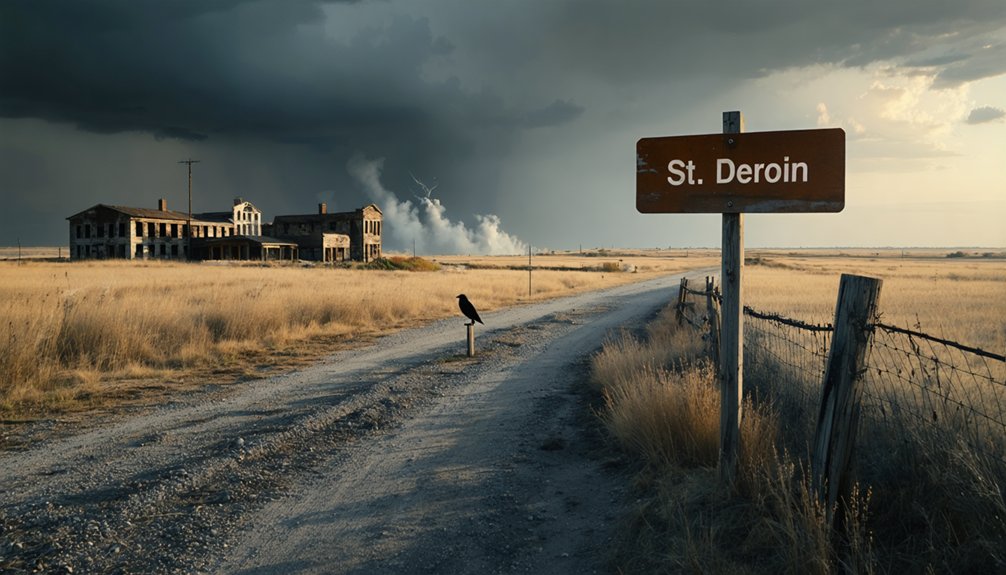
Whispers of frontier violence and restless spirits drift through St. Deroin’s abandoned streets. Joseph Deroin himself, killed over a $6 hog payment in 1858, allegedly rests astride his horse beneath a marker tree—visitors claim they’ve heard phantom hoofbeats near the cemetery.
One-armed A.J. Ritter‘s ghost reportedly rises on moonless nights, searching for the limb he lost dynamite-fishing. The Lantern Lady adds another layer to these strange occurrences: she’s a ghostly widow waiting by a riverside cave for her murdered husband’s return. Her light dances across the road before vanishing.
The cemetery’s heartbreaking collection of children’s graves—infants, teenagers, even young Dulcena who likely died in childbirth—provides ample material for paranormal investigations and campfire tales that keep St. Deroin’s haunted reputation alive.
Best Times to Visit and What Else to Do in the Park
While St. Deroin draws history buffs year-round, you’ll find the park truly comes alive during special events. Living history demonstrations animate weekends from summer through fall, where you’ll watch blacksmiths hammer, broom makers weave, and candlemakers dip. The Missouri River scenery provides a stunning backdrop for exploring 22 miles of trails through hardwood forests.
Experience living history come to life as artisans demonstrate traditional crafts against the backdrop of Missouri River vistas and miles of forested trails.
Plan your visit around these standout events:
- Haunted Hollow (October weekends) – Decorated campsites, spooky displays, and hayrack rides
- Christmas in July – Santa visits, festive decorations, and holiday craft markets
- Outdoor Adventure (April) – Family activities, cooking demos, and a 5k run
- Birdwatching – Over 140 avian species year-round
- Prehistoric Petroglyphs – Explore Native American cave drawings via wooded boardwalk
Frequently Asked Questions
Are There Entrance Fees to Access Indian Cave State Park?
Nothing’s truly free—you’ll pay $7 daily for Nebraska vehicles or $14 for out-of-state plates at Indian Cave State Park. Visitation hours welcome you year-round, with parking availability at the entrance booth for your ghost-hunting adventure.
Can Visitors Camp Overnight Near the St. Deroin Ghost Town Site?
You’ll find primitive camping options throughout Indian Cave State Park near St. Deroin’s ghost town. Check local regulations regarding camping placement and fire restrictions. You’re free to explore backcountry sites and Adirondack shelters along scenic trails year-round.
Are the Reconstructed Buildings Open for Interior Tours Year-Round?
Timing is everything—interior tours availability isn’t guaranteed year-round at St. Deroin’s reconstructed buildings. You’ll find seasonal visitor hours affect access, especially during winter months. Plan your adventure during warmer seasons when the schoolhouse and general store welcome explorers inside.
What Accessibility Accommodations Exist for Visitors With Mobility Limitations?
You’ll find limited accessibility features at St. Deroin. While handicapped parking availability exists at overlooks with Missouri River views, wheelchair accessible trails aren’t specifically designated. The park offers vehicle access to viewpoints, though mobility accommodations remain minimal throughout.
Are Pets Allowed When Exploring the Ghost Town and Cemetery?
Yes, you’ll find pet friendly policies welcome your leashed companions while exploring St. Deroin’s haunting remnants and weathered cemetery stones. These family friendly activities let you roam freely through Nebraska’s ghostly past with your furry adventurers beside you.