Planning a ghost town road trip to Stachnikville, Illinois means driving into Tazewell County’s rural back roads to find a place that’s fundamentally vanished. Founded in 1856 during a coal boom, the town peaked by 1873 before fading into open farmland. You won’t find tourist markers or GPS pins guiding you there. The only surviving structure is the Hillman Street Barn. Download offline maps before you go — there’s far more to uncover about this haunting landscape.
Key Takeaways
- Start your road trip from Peoria, Illinois, taking scenic rural highways through Tazewell County to reach Stachnikville’s approximate location.
- No GPS pin or signage exists, so download offline maps before departing to navigate the unmarked rural roads successfully.
- The Hillman Street Barn is the only surviving structure, making it the sole physical landmark of the former coal town.
- Extend your trip by visiting nearby lost coal towns like Oakwood and Fithian, which share similar histories of decline.
- Check seasonal road conditions before traveling, as Tazewell County’s rural roads can vary significantly depending on the time of year.
What’s Left of Stachnikville Today?
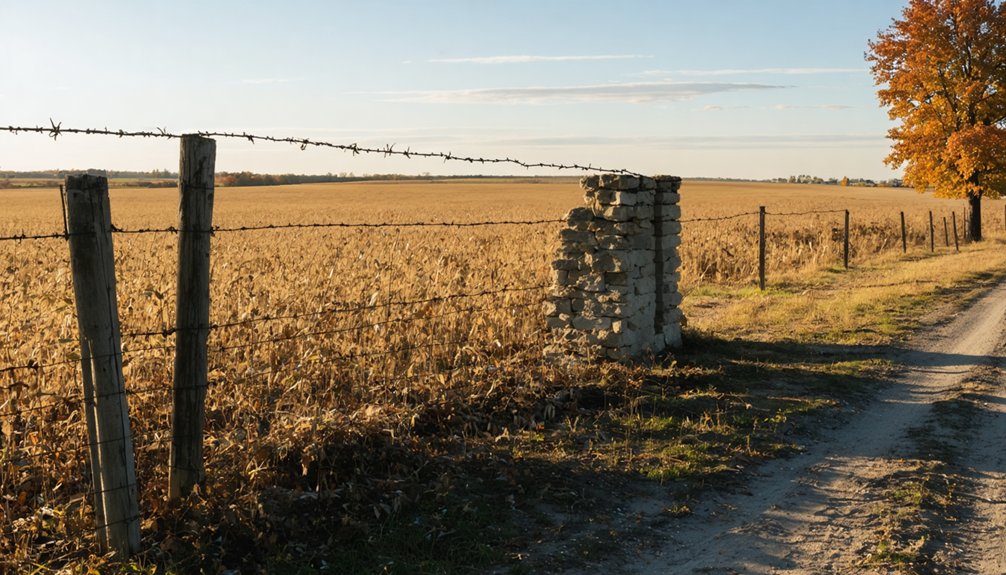
Though Stachnikville once buzzed with coal miners and community life, virtually nothing remains of it today. The original structures have been leveled, and the land has returned to agriculture. You won’t find markers, signage, or preserved foundations pointing to its historical significance.
The freedom to explore comes with a catch — there’s little to discover beyond open farmland.
The sole surviving feature is the Hillman Street Barn, a quiet reminder of what once stood here. Don’t expect ghost stories tied to haunted buildings or eerie ruins. Instead, Stachnikville offers something subtler — the haunting emptiness of a place erased by time.
If you’re driving through Tazewell County, this stark, desolate landscape speaks louder than any crumbling wall ever could.
The Rise and Fall of Stachnikville’s Coal Industry
Stachnikville didn’t stumble into existence by accident — coal brought it to life. When founders established the settlement in 1856, Tazewell County’s rich coal seams promised real opportunity. The coal boom pushed the town to its peak by 1873, drawing miners hungry for steady wages and a fresh start.
Coal didn’t just fuel Stachnikville’s economy — it breathed the town into existence entirely.
But freedom built on a single industry is fragile. After 1873, the mining decline hit hard and fast. Surrounding towns grew stronger while Stachnikville weakened, its income sources vanishing alongside the coal.
Poverty and sickness crept in, stripping away whatever energy remained. A discovered underground spring offered brief hope, but not enough to reverse course.
The industry that built Stachnikville ultimately abandoned it, leaving behind silence, farmland, and one lonely barn.
How to Get to Stachnikville, Illinois

If you’re planning a road trip to Stachnikville, start your journey in Peoria, Illinois, which serves as your closest major access point to this forgotten coal town.
From there, you’ll navigate Tazewell County’s rural roads to reach the approximate site, though don’t expect any signage or tourist markers guiding your way.
Skip the interstates and take the scenic rural highways instead — the open farmland stretching across the landscape tells its own quiet story of a region that once buzzed with coal mining activity.
Starting Point: Peoria, Illinois
Peoria, Illinois serves as your best jumping-off point for tracking down Stachnikville, sitting just a short drive from this long-forgotten coal town in Tazewell County.
Peoria history runs deep, stretching back centuries along the Illinois River, making it a worthy starting destination before you venture into the rural unknown.
From downtown Peoria, you’ll head into Tazewell County’s back roads, trading city noise for open farmland and quiet stretches of highway.
Don’t expect signage or tourist markers — Stachnikville doesn’t advertise itself.
Ghost town myths surrounding vanished mining communities often romanticize the journey, but the reality here is raw and honest: empty fields where a bustling settlement once stood.
Skip the interstates, take the rural highways, and let the landscape tell the story.
Once you’ve left Peoria’s city limits behind, Tazewell County’s rural road network becomes your guide toward what little remains of Stachnikville. You’ll navigate winding country roads that cut through converted farmland, where the old mining settlement once thrived.
Road conditions here vary seasonally, so check local reports before heading out, especially after heavy rain when unpaved stretches turn muddy and unforgiving. Keep your speed low — local wildlife, including deer and wild turkey, frequently crosses these open agricultural corridors.
No signage marks your destination, so download offline maps and use Peoria as your anchor point when orienting yourself. The landscape itself tells Stachnikville’s story: endless cultivated fields stretching where coal miners once lived, worked, and struggled through the town’s inevitable collapse.
Scenic Rural Highway Routes
Skipping the interstate entirely transforms your drive toward Stachnikville into something worth remembering. Rural highways cutting through Tazewell County offer scenic views you’d never catch on a crowded freeway.
You’ll pass rolling rural landscapes, weathered farmsteads, and open fields that echo the agricultural fate of Stachnikville itself — land reclaimed after the coal industry collapsed.
Approach from Peoria using state and county roads heading southeast into Tazewell County. These routes wind naturally through small communities and working farmland, giving you genuine context for what you’re seeking.
There’s no GPS pin marking Stachnikville, so embrace the journey itself. Print a county map, keep your speed relaxed, and stay observant. The freedom of an unscripted rural drive suits a destination that history quietly erased.
The Hillman Street Barn and the Farmland That Replaced It
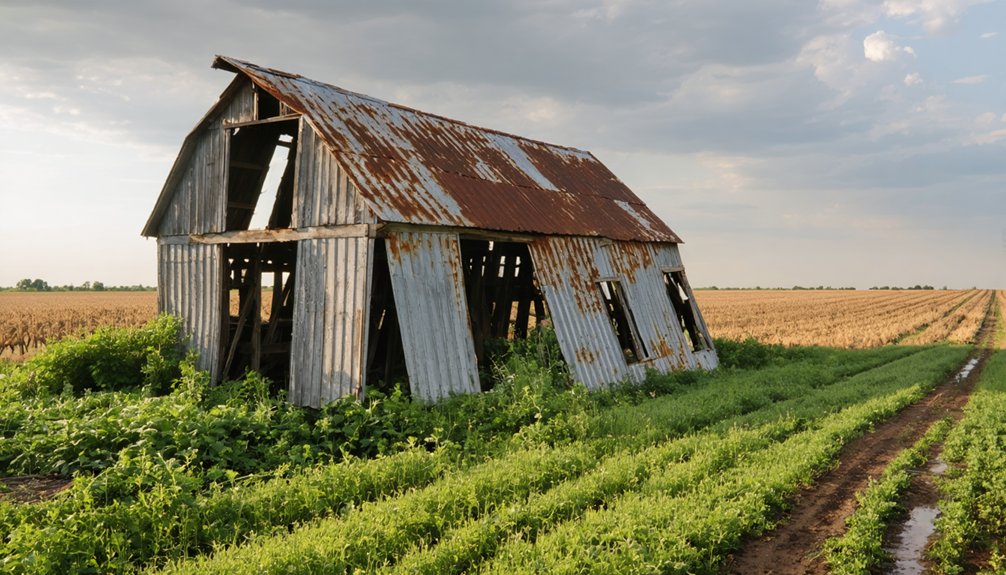
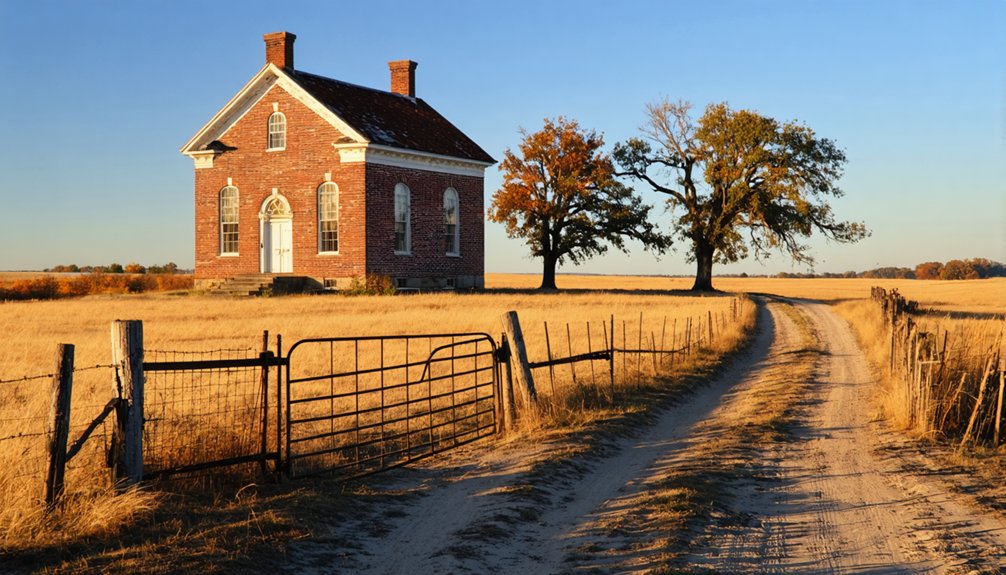
Though Stachnikville has all but vanished from the earth, the Hillman Street Barn stands as its lone survivor, a weathered relic holding its ground amid fields that long ago swallowed the town whole.
Its barn significance can’t be overstated — it’s the only physical thread connecting you to the town’s Hillman history and the coal-driven lives once lived here.
Everything else — homes, businesses, foundations — got leveled and reclaimed by agriculture.
When you visit, you’ll find open farmland stretching in every direction, the soil now growing crops where miners once worked and families once struggled.
There’s no signage, no markers, no tourist infrastructure.
Just you, that barn, and the quiet weight of a 19th-century boom-and-bust story written directly into the landscape.
Other Lost Coal Towns Near Tazewell County Worth Visiting
Stachnikville isn’t the only coal town that time erased from Tazewell County’s map, and if you’re already out here chasing ghosts, it’s worth pushing a little further to see what else the Illinois coal boom left behind.
Towns like Oakwood and Fithian followed eerily similar paths — thriving briefly on mining and rail traffic before industry shifts gutted them entirely.
Your ghost town exploration doesn’t have to stop at one hollow field. Head toward Route 66 corridor communities like Zanesville, where post-1940s abandonment created its own distinct brand of ruin.
These lost coal towns share the same boom-and-bust DNA as Stachnikville, but each one offers a slightly different texture of collapse.
String them together, and you’ve got a genuinely rewarding Illinois backcountry route.
What to Know Before Driving Out to Stachnikville
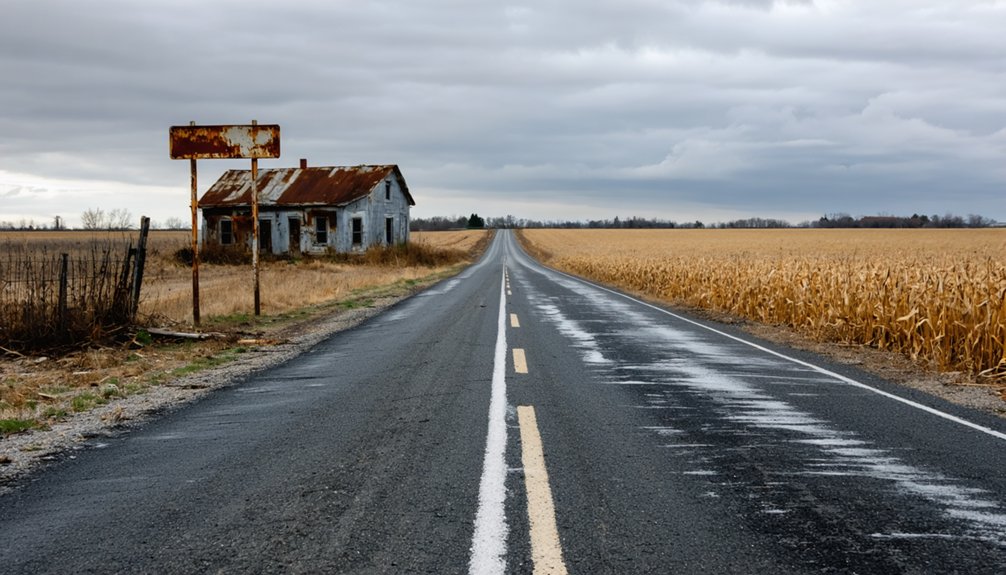
Before you load up the car and head toward Tazewell County, understand that Stachnikville offers almost nothing in the way of conventional tourist infrastructure — no signs, no markers, no preserved foundations.
You’re chasing ghost town lore and mining heritage on your own terms. Pack accordingly:
- Navigation tools matter — coordinates aren’t confirmed, so use Peoria as your anchor point.
- Respect private farmland — the original town site is now agricultural property.
- The Hillman Street Barn is your only guaranteed visual payoff.
- Pair this stop with nearby ghost towns like Zanesville to maximize your drive.
Rural highways offer the most rewarding approach. You won’t find crowds here — just open land where a coal community once struggled and quietly disappeared.
Frequently Asked Questions
Was Stachnikville Ever Considered for Historical Preservation Efforts?
With only one structure remaining, Stachnikville’s historical significance never sparked formal preservation efforts. You’d find preservation challenges overwhelming — no markers, no foundations, no advocates pushed to protect this forgotten 19th-century coal town before farmland swallowed it completely.
Did the Underground Spring Discovery Create Any Lasting Geographic Features?
The underground spring’s discovery didn’t leave lasting geological impact or spring formation you’d notice today. You’ll find only open farmland where it once bubbled, nature reclaiming what brief hope it sparked for Stachnikville’s struggling community.
Are There Any Photographs or Documents From Stachnikville’s Peak Years?
You won’t find many photographic archives or historical documents from Stachnikville’s 1873 peak years. The town’s rapid decline left little recorded legacy, so you’d need to dig deep into Tazewell County’s regional collections for rare surviving materials.
Did Any Founding Families Leave Records About Stachnikville’s Early Days?
Dusty archives hold little light—no founding families left clear early records of Stachnikville’s vibrant beginnings. You’d find silence where stories should echo, as history slipped away like coal dust carried on an Illinois prairie wind.
Has Any Archaeological Survey Ever Been Conducted at the Stachnikville Site?
No documented archaeological survey’s been conducted at Stachnikville. You’d find no formal study of its archaeological significance or established survey methodology applied here — leaving this forgotten coal settlement an open, unexplored mystery waiting for adventurous, freedom-seeking investigators like you.
References
- https://drloihjournal.blogspot.com/2022/09/lost-towns-of-illinois-stachnikville.html
- https://www.youtube.com/watch?v=rNSjcGsONhM
- https://drloihjournal.blogspot.com/search/label/Lost Towns of Illinois
- https://macon.illinoisgenweb.org/histlosttowns.html
- https://www.youtube.com/watch?v=anFCnaFkH9A
- https://mcgsil.com/home-8/home-17
- https://www.youtube.com/watch?v=93k0qtvzkn4&vl=en-US