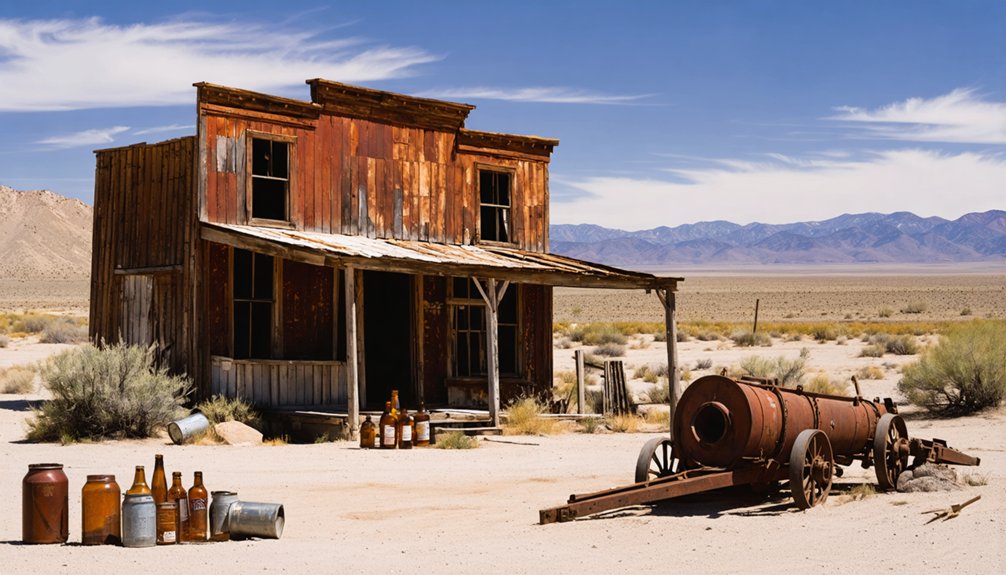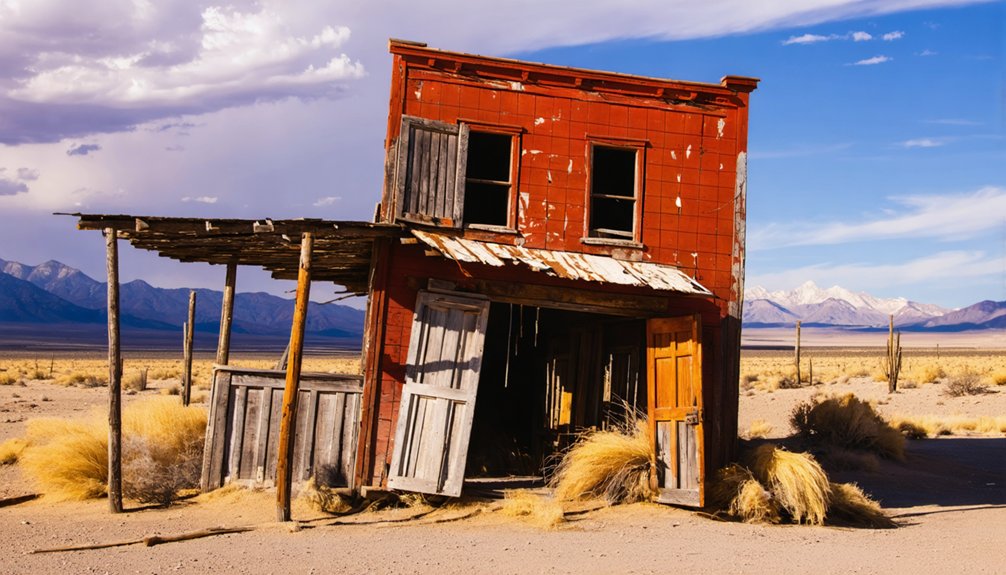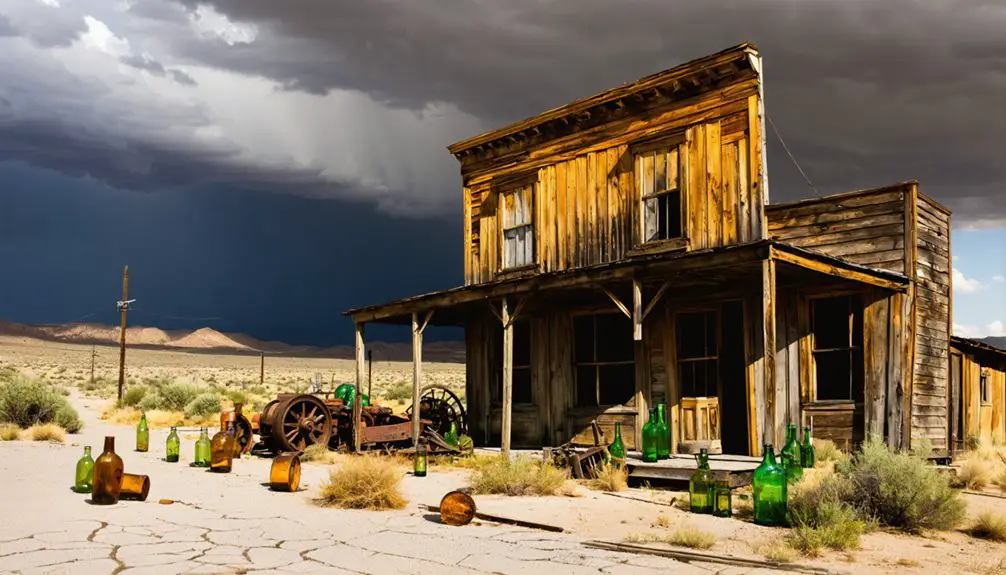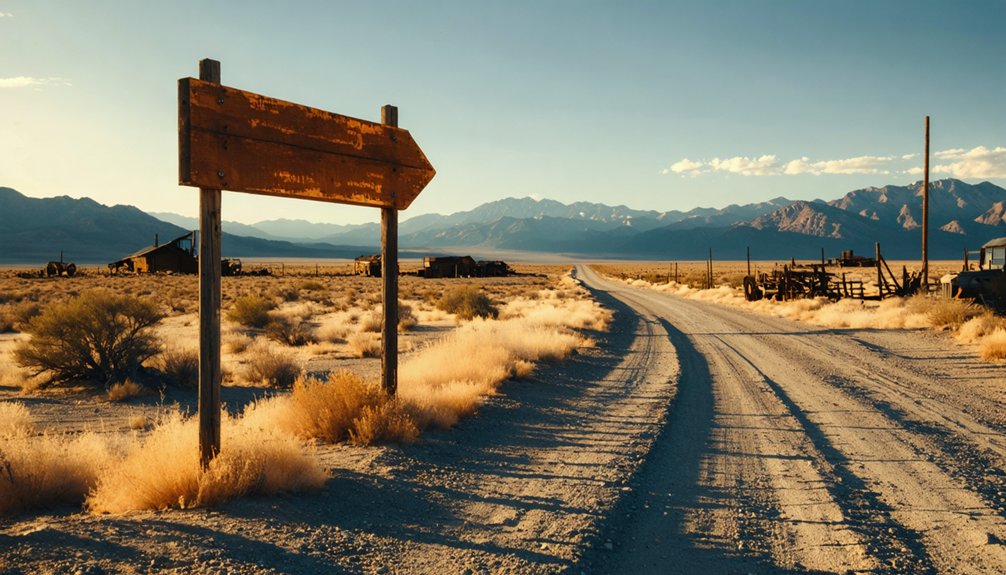
You’ll navigate seven miles of unpaved roads branching from SR 400 near Historical Marker 231, requiring 4WD and high clearance to reach Star City’s scattered stone foundations at 6,801 feet. The ghost town, which housed 1,200 residents during its 1860s silver boom, now offers dramatic canyon views and crumbling ruins where the legendary Sheba Mine once extracted $5 million in ore. Check Nevada 511 for current conditions, pack extra supplies, and avoid winter’s treacherous mud—there’s much more to understand about timing, safety, and maximizing your backcountry exploration.
Key Takeaways
- Start at Nevada Historical Marker 231 on SR 400, then take Star City Road westward for seven miles through desert terrain.
- Bring a 4WD vehicle with high clearance to navigate unpaved, graded dirt roads that worsen in winter conditions.
- Check Nevada 511 before departure for current road conditions, weather alerts, and potential construction affecting backcountry access.
- Visit during spring or fall to avoid summer’s 100°F heat and winter’s freezing temperatures with snow and mud.
- Explore crumbling foundations, the historic Sheba Mine site at 6,801 feet, and scattered mining machinery remnants.
The Rise and Fall of a Nevada Silver Boom Town
When prospectors struck silver in Star Canyon during 1861, they triggered a frenzy that would transform a remote Nevada ravine into one of the territory’s most prosperous settlements. By 1863, you’d have found 1,200 residents living among a dozen saloons, two hotels, and the Gander Club literary society—proof that the social life of mining community thrived beyond mere fortune-hunting.
The economic impact of silver mining peaked when Sheba Mine’s stock hit San Francisco’s exchange, generating $5 million between 1862 and 1868. Seven mining companies operated during the boom years, extracting precious metals from the canyon’s rich deposits. Yet prosperity proved fleeting. Once ore deposits ran dry in 1868, Star City’s population crashed to a single family within months. By 1871, only 78 souls remained where thousands once chased riches through unforgiving high-desert terrain. The settlement sat on the westerly slope of the Star range of mountains, roughly five miles from the river, where Humboldt Creek carved through a four-mile canyon.
Getting to Star City: Routes and Road Conditions
You’ll reach Star City by traversing unpaved roads through Pershing County’s high desert terrain, where the Humboldt Range rises against Nevada’s endless sky. The primary route follows graded dirt roads that branch off from state highways, their conditions shifting dramatically between summer’s packed earth and winter’s treacherous mud or snow.
Check weather forecasts before departing—spring runoff and winter storms can transform accessible paths into impassable quagmire, stranding vehicles miles from the nearest paved surface. The towering Star Peak dominates the landscape above the ghost town, a prominent landmark visible throughout your approach. The surrounding geology features limestone and rhyolite formations that supported the area’s historic mining operations.
Primary Access Routes
Finding Star City requires traversing a remote stretch of Nevada’s backcountry where pavement gives way to weathered dirt. Your journey begins at Nevada Historical Marker 231 along SR 400, one of the few navigational signage points marking this forgotten mining district. From this historical access point, Star City Road branches westward into Pershing County’s raw terrain.
The seven-mile dirt track demands respect—bring a 4WD vehicle with high clearance to handle the rough conditions ahead. You’ll navigate through sagebrush flats at coordinates 40°32′40″N 118°08′30″W, where the Star Mining District once thrived. The district was established in 1861 following the discovery of rich silver ore deposits that would soon transform this desolate landscape. No cell service, no guardrails, just open desert and the ghost of a silver-mining boom town waiting at road’s end. Not to be confused with Roanoke’s Star City, this Nevada ghost town stands as one of several locations bearing the historic name across America. Check your vehicle beforehand; this isn’t territory for mechanical failures.
Road Surface Conditions
Check Nevada 511 before departing for real-time road conditions and weather alerts affecting northern Nevada’s backcountry. Your vehicle needs genuine clearance here—sedans won’t cut it.
Pack recovery gear, extra water, and fuel. The freedom to explore these forgotten places comes with accepting nature’s terms. You’re entering terrain where self-reliance isn’t optional; it’s survival. Expect gravel and dirt roads as you approach the ghost town site. Be aware that various roads throughout the region may experience lane restrictions with flaggers during weekday construction hours.
Seasonal Weather Considerations
Timing your Star City adventure means respecting Nevada’s fierce seasonal swings. Winter temperatures plummet to bone-chilling lows of 20°F, with freezing nights persisting October through April. You’ll face real snow threats in Sierra Nevada passes as early as October, potentially blocking your path to this remote ghost town.
Summer brings scorching highs near 100°F across southern Nevada, though low humidity makes the heat bearable if you’re prepared. The Sierra Nevada wrings moisture from Pacific winter storms while the Rocky Mountains block Gulf of Mexico moisture, creating the dry air that fuels these extreme temperature swings. Spring weather shifts offer your sweet spot—Northern Sierra warms by April or early May, though expect freezing overnight temperatures initially.
Fall delivers ideal conditions until late September, when significant cooling begins at high elevations. Nearby Nevada City experiences a cool season lasting 4.4 months from mid-November through late March, with average highs dropping below 59°F during this extended period.
Plan around Nevada’s minimal 10.3 inches annual precipitation, but watch for November-March rainy seasons that transform dirt roads into impassable quagmires.
What to Expect When You Arrive
As you navigate the final canyon passage into Star City, the dramatic walls of Star Canyon rise around you, creating a natural amphitheater that once sheltered over a thousand hopeful miners. Don’t expect manicured trails or visitor amenities—this is raw history on your own terms.
The site layout centers around a ghostly plaza where crumbling foundations mark where two hotels and a dozen saloons once thrived. You’ll need imagination to reconstruct the telegraph office, Wells Fargo station, and bustling stores from scattered stone walls and deteriorated frames. Few intact structures remain from the 1860s boom, so bring your sense of adventure rather than expectations of pristine ruins.
This freedom comes with responsibility: pack water, snacks, and prepare for complete self-reliance in this abandoned chronicle to Nevada’s silver rush.
Exploring the Sheba Mine and Star Mining District
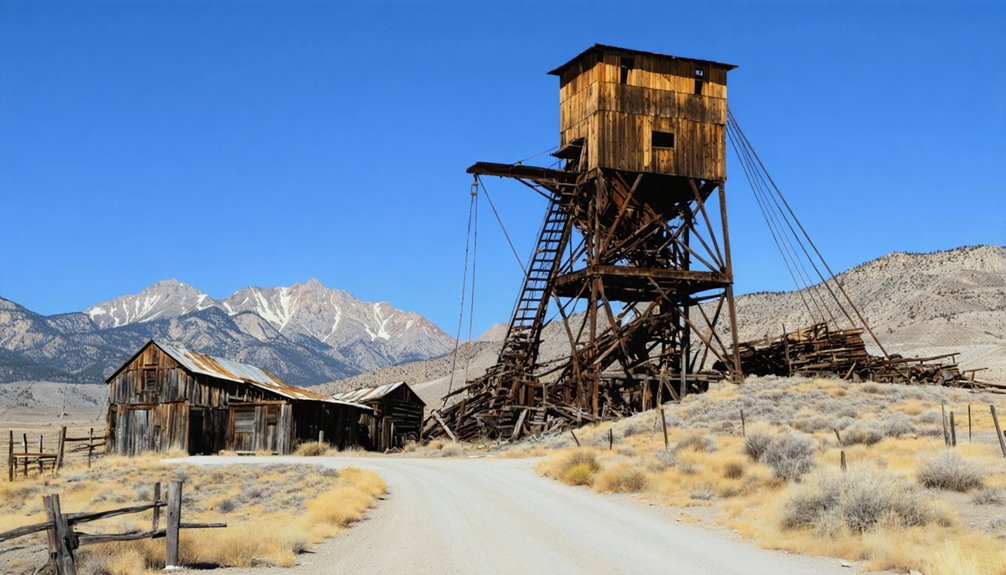
Once you’ve oriented yourself in the ghostly plaza, head north toward the rocky slopes where the legendary Sheba Mine carved its fortune from Star Canyon’s stubborn earth.
At 6,801 feet elevation, you’ll find remnants of the Queen of Sheba, the district’s heavyweight champion that extracted $5 million in silver by 1868. The notable equipment here included a ten-stamp mill that thundered twenty-four hours daily, processing ore worth up to $2,000 per ton.
Operational challenges eventually conquered this empire—miners extracted silver through stoping methods from complex stockwork deposits until the veins simply gave out in 1868. The mill was dismantled and hauled to Unionville, leaving only foundation stones and scattered machinery as monuments to ambition.
Visible Ruins and Artifacts You’ll Discover
The scattered stone foundations tell Star City’s story in fragments—three or four substantial ruins cling to the hillside among sagebrush and tall grass, their crumbling walls marking where merchants and miners once conducted daily business. You’ll find crumbling stone foundations peeking through vegetation along Star Creek brook, where poplars shade the babbling water.
The Queen of Sheba’s wooden head-frame stands sentinel at the canyon cliffs, guarding a deep shaft that plunges into darkness. Near it, remnant mining machinery and mill foundations surround a partially caved-in shaft—watch your footing here.
Canvas tatters flutter between broken walls scattered across the hillside, remnants of a town that housed 1,200 souls. Each ruin invites exploration, though you’ll need to pick your path carefully through this authentic, unmanicured ghost town.
Best Times of Year to Visit Star Canyon
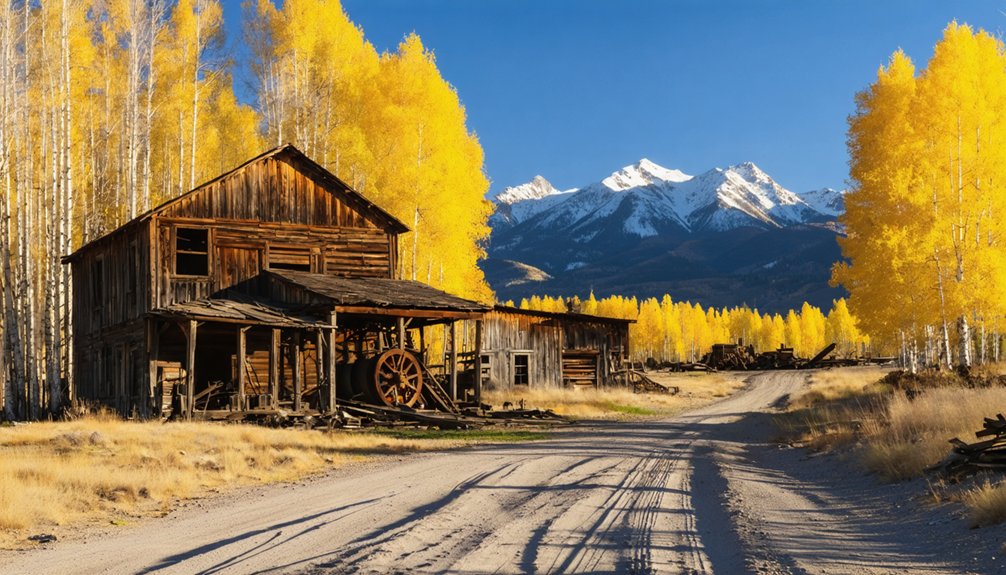
You’ll find Star Canyon most inviting during spring and fall, when daytime temperatures hover comfortably in the 60s-80s°F and clear skies stretch endlessly above the sagebrush-dotted valley.
Summer’s punishing heat—often soaring near 100°F—demands early morning departures and plenty of water, though the low humidity makes exploration more tolerable than you’d expect.
Pack layers regardless of season, since nighttime temperatures plummet near freezing even during warmer months, transforming sun-baked ruins into frost-kissed silhouettes by dawn.
Spring and Fall Weather
Visiting Star Canyon during spring or fall transforms your ghost town adventure into a comfortable exploration window free from Nevada’s temperature extremes. You’ll experience ideal conditions as spring brings March through May temperatures ranging from 71°F to 90°F in nearby Mesquite, while fall delivers September’s 95°F cooling to November’s agreeable 67°F.
These seasons minimize seasonal precipitation patterns and showcase microclimatic variations across elevation changes—desert floors warm beautifully while canyon areas stay refreshingly cool.
Your optimal exploration window includes:
- Spring (March-May): Mild warming trends with 300+ sunny days annually
- Fall (September-November): Relief from summer’s brutal heat, perfect for hiking
- October: Sweet spot averaging 82°F highs, 20-30°F cooler than summer peaks
- Both seasons: Reduced crowds and exceptional visibility for photographing ruins
You’ll avoid winter’s accessibility challenges and summer’s dangerous heat.
Summer Heat Considerations
While Star Canyon’s rugged beauty beckons year-round, summer transforms this remote ghost town into a dangerously inhospitable destination where triple-digit temperatures regularly exceed 100°F and can spike toward Nevada’s record-breaking 125°F. You’ll face relentless heat amplified by dark asphalt surfaces and sparse vegetation that offer virtually no shade mitigation. The terrain’s exposed nature means you’re completely vulnerable to solar radiation during midday hours.
Plan your exploration strategically through early morning visits, arriving before dawn when temperatures hover in the low 70s. You’ll capture the best photography light while avoiding the brutal afternoon heat. Don’t venture out between 10 AM and 6 PM when temperatures soar dangerously high. Pack excessive water, wear sun-protective clothing, and always monitor weather forecasts for monsoon-influenced humidity that compounds heat stress in this unforgiving landscape.
Photography Tips for Capturing Ghost Town Remains
When sunlight stretches low across weathered planks and crumbling facades, ghost towns transform into a photographer’s playground where decay becomes art. Dawn and dusk deliver dramatic shadows that carve dimension into Star City’s abandoned structures, while your wide-angle lens captures the sprawling desolation.
Golden hour transforms abandoned relics into masterpieces—when decay meets perfect light, ghost towns reveal their most photogenic secrets.
Essential gear for your expedition:
- Tripod for long exposures capturing movement in clouds and star trails
- Prime lenses to isolate weathered doors, rusted handles, and forgotten artifacts
- Flashlights for light painting interiors and highlighting details
- Headlamp for hands-free exploration of darkened buildings
Frame the saloon’s silhouette against twilight skies, or crouch low to emphasize the jail’s imposing presence. Black and white processing intensifies texture in rotting wood and peeling paint. Keep horizons level, eliminate distractions, and let Star City’s haunting beauty tell its own story.
Essential Supplies and Safety Precautions
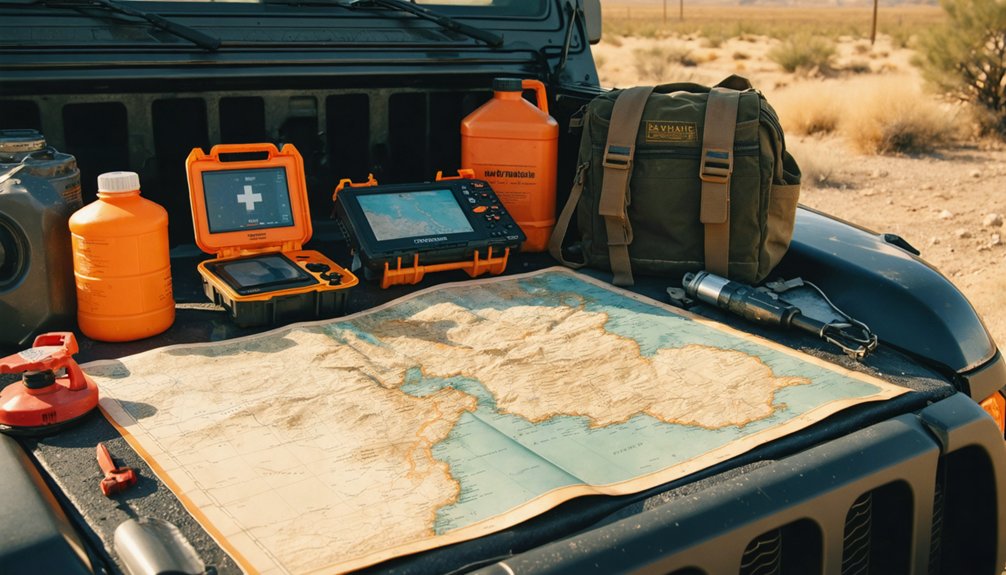
Your survival in Star City’s remote desert terrain hinges on three critical categories: abundant water reserves and emergency provisions, reliable navigation and communication tools for the GPS-dead canyons, and weather-appropriate protective gear that shields you from both the elements and the ghost town’s jagged ruins.
The unforgiving Nevada high desert offers no second chances—dehydration strikes fast, cell service vanishes in the Humboldt Range, and temperatures swing from scorching days to frigid nights.
Pack as if rescue won’t arrive, because in this abandoned mining district perched on narrow ledge roads, you’re genuinely on your own.
Water and Emergency Provisions
The Nevada desert doesn’t forgive the unprepared, and water ranks as your most critical survival resource on any ghost town expedition to Star City. Pack one gallon per person daily—more in summer heat—and never consider rationing water during shortage. Instead, drink what you need and actively seek additional sources. For disinfecting water sources you discover, carry purification tablets and follow proper treatment protocols.
Your freedom to explore demands smart preparation:
- Store a minimum 72-hour supply in labeled plastic containers
- Pack a collapsible 5-gallon container with spigot for emergencies
- Include water purification tablets for questionable sources
- Bring a wrench to access water heater or pipe supplies
Avoid toilet water, pools, and anything with chemical contamination. Your water heater holds emergency gallons—just isolate it from the public supply first.
Beyond keeping yourself hydrated and alive, you’ll need reliable tools to actually find Star City in the vast expanse of Pershing County’s backcountry. Download offline mapping apps before you lose cell signal past Unionville—these digital companions work when everything else fails. Load the coordinates (40°32′40″N 118°08′30″W) and trace your route through Star Canyon, where vehicle-width passages demand precision navigation.
Pack satellite communication devices for true independence. Two-way radios keep your group connected through canyon walls, while emergency beacons provide lifeline insurance when exploring remote mine sites. Cell towers don’t reach these forgotten places.
Bring an old-school compass too. When technology stutters, magnetic north never lies. This isn’t just preparation—it’s your ticket to genuine exploration without invisible digital leashes holding you back.
Weather-Appropriate Protective Gear
When March temperatures plummet from sunny 60s to bone-chilling 20s within hours, Star City’s high-desert climate transforms from comfortable to dangerous. Temperature range planning demands you pack smartly for 30-40°F swings between exploring crumbling structures at midday and setting camp under starlit skies.
Your layered apparel needs should include:
- Base layers: Moisture-wicking shirts preventing sweat-induced chills during steep climbs
- Windproof shells: Protection against 40 mph gusts that drop wind chill dangerously low
- Insulated mid-layers: Fleece or down for nighttime temps approaching freezing
- Waterproof outer gear: Hooded jackets handling afternoon showers without restricting movement
Don’t forget gloves, scarves, and SPF50 sunscreen—high-elevation UV rays burn mercilessly despite cool air. Emergency blankets safeguard against hypothermia when exploring remote mine shafts where temperatures nosedive unexpectedly.
Nearby Attractions and Historic Sites Worth Adding to Your Trip
Your ghost town adventure opens doors to Carson City’s remarkable historic corridor, where Victorian mansins and mining-era landmarks cluster along the self-guided Kit Carson Trail. You’ll discover the Nevada State Museum‘s authentic Mint exhibits and prehistoric treasures, while St. Peter’s Episcopal Church showcases stunning Comstock Era stained glass.
Twenty minutes out, Dayton State Park delivers 1800s Rock Point Mill ruins along shaded Carson River paths—perfect for extending your ghost town exploration. The Nevada State Railroad Museum reveals mining-era rail history that vintage car clubs appreciate during community events nearby.
Jack C. Davis Observatory offers stellar evening programs, while Animal Ark Wildlife Sanctuary provides rescued predator encounters. Don’t miss Marshall Gold Discovery State Historic Park thirty-three miles away, where California’s gold rush ignited the westward migration that birthed Nevada’s legendary mining towns.
Respecting and Preserving This Nevada Historical Site
Since Star City’s crumbling foundations and rusted mill equipment represent irreplaceable fragments of Nevada’s 1860s silver boom, you’ll need to tread carefully among these fragile remnants. Unlike better-preserved ghost towns, this site lacks significant stabilization efforts, making every visitor interaction critical to its survival.
Protect what remains by following these essential practices:
- Never remove artifacts, coins, or structural fragments—they’re protected under federal antiquities laws
- Avoid climbing on deteriorating walls or entering unstable mine adits
- Stay on established paths to prevent erosion around foundations
- Photograph freely, but don’t disturb equipment positioning for better shots
The sparse interpretive signage means you’re witnessing history without barriers—a privilege requiring responsibility. Your considerate exploration safeguards future adventurers’ ability to experience Star City’s haunting solitude exactly as you found it.
Frequently Asked Questions
Is Overnight Camping Allowed Near the Star City Ghost Town Site?
Like a tumbleweed rolling free across the desert, you can camp near Star City for 14 days following BLM camping regulations. Take safety precautions: pack water, stay on designated routes, and leave no trace behind.
Are There Guided Tours Available for the Star Mining District?
No guided tours exist for Star Mining District—you’ll explore independently. This remote ghost town rewards self-guided tours where you’re free to wander crumbling structures and mining remnants at your own pace, creating your own adventure through Nevada’s rugged history.
Can I Bring My Dog to Explore Star City Ruins?
You’ll find no official pet policies restricting dogs at Star City’s remote ruins, though nearby dog parks don’t exist. Keep your pup leashed near open mine shafts and watch for mountain lions while exploring this wild, freedom-filled ghost town adventure.
Is Four-Wheel Drive Required to Reach Star City Ghost Town?
Four-wheel drive isn’t strictly required, though you’ll navigate terrain difficulties more reliably with one. Guarantee proper vehicle maintenance before departure, drive slowly on narrow ledges, and you’ll conquer this remote canyon route to freedom.
Are There Entrance Fees to Visit Star City Historical Site?
You won’t pay entrance fees for site maintenance at Star City—it’s completely free. The BLM guarantees site accessibility for visitors without charging, letting you explore these weathered ruins and windswept trails on your own terms.
References
- https://www.youtube.com/watch?v=qTFmQT-QCx4
- https://www.nevadaghosttownsandmininghistory.com/portfolio-2/star-city
- https://en.wikipedia.org/wiki/Star_City
- https://www.nvexpeditions.com/pershing/starcity.php
- https://nvtami.com/2020/08/18/star-city/
- https://nvtami.com/2021/07/27/belfort-boulder-flat-star-city-california-sweetwater-sister-towns/
- https://kids.kiddle.co/Star_City
- https://forgottennevada.org/sites/starcity.html
- https://scripophily.net/buena-vista-gold-silver-mining-co-fort-pitt-ledge-prince-roya-district-humboldt-county-nevada-territory-1863/
- http://backyardtraveler.blogspot.com/2007/07/ghosts-of-star-city.html