Navigate to Stecker using coordinates 34°57’27″N 98°18’57″W since GPS won’t recognize this vanished farming community. You’ll find weathered timber frames and concrete foundations where 190,000 Oklahoma pioneers once built their dreams before mechanization emptied the prairie. Pack offline maps, water, and sturdy boots for exploring the old railroad bed that cuts through reclaimed grassland. Visit during late spring or fall when temperatures hover around 70-80°F, and fuel up in nearby Cyril or Anadarko before venturing out. The surrounding landscape hides dozens more abandoned settlements waiting to reveal their stories.
Key Takeaways
- Use coordinates 34°57’27″N 98°18’57″W since Stecker doesn’t appear on GPS; bring printed maps as cell service is unreliable.
- Visit during late spring or early fall for comfortable 70-80°F temperatures; weekdays provide more solitude than weekends.
- Pack water, sturdy boots, layered clothing, first-aid kit, bug spray, and offline maps for safe exploration.
- Refuel in nearby towns like Cyril, Anadarko, or Boone before visiting the remote site.
- Explore nearby ghost towns including Shamrock, Skedee, Foss, Ingalls, and Avery to maximize your Oklahoma road trip.
The Rise and Fall of Stecker: A Farming Community’s Story
Between 1889 and 1906, treaties and federal legislation flung Oklahoma’s lands wide open, and pioneer settlers poured in with dreams of turning raw prairie into productive farms. You’ll find Stecker’s story mirrors thousands of farming communities that sprouted across the territory—sod houses sheltering families who raised corn, milked cows, and scraped by through droughts and rock-bottom prices.
Farm numbers exploded from 8,826 in 1890 to 190,192 by statehood. Stecker thrived as neighbors gathered, worked land, and built something lasting.
But generational shifts within families changed everything. Young folks chased oil money instead of plowing fields. Tenant farming and sharecroppers couldn’t sustain communities when mechanization arrived. By 1935’s peak of 213,325 farms, the decline had already begun, scattering Stecker’s residents to towns with steadier paychecks.
What Remains: Exploring the Physical Remnants of Stecker
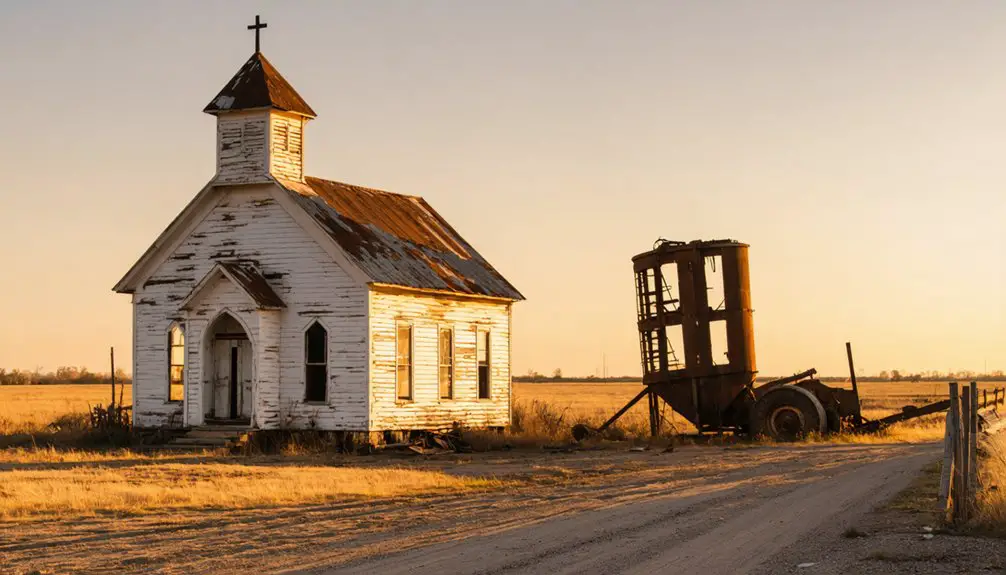
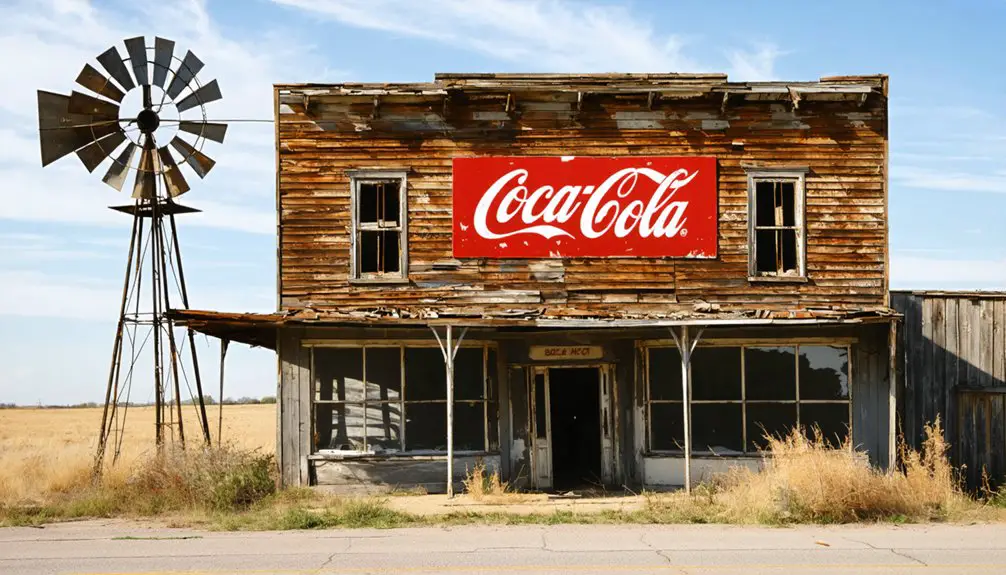
You’ll find Stecker’s skeletal remains scattered across the prairie—a handful of weathered buildings lean against the wind, their timber frames stubbornly refusing to surrender to gravity. Concrete foundations jut from the earth like broken teeth, marking where homes and businesses once anchored families to this spot.
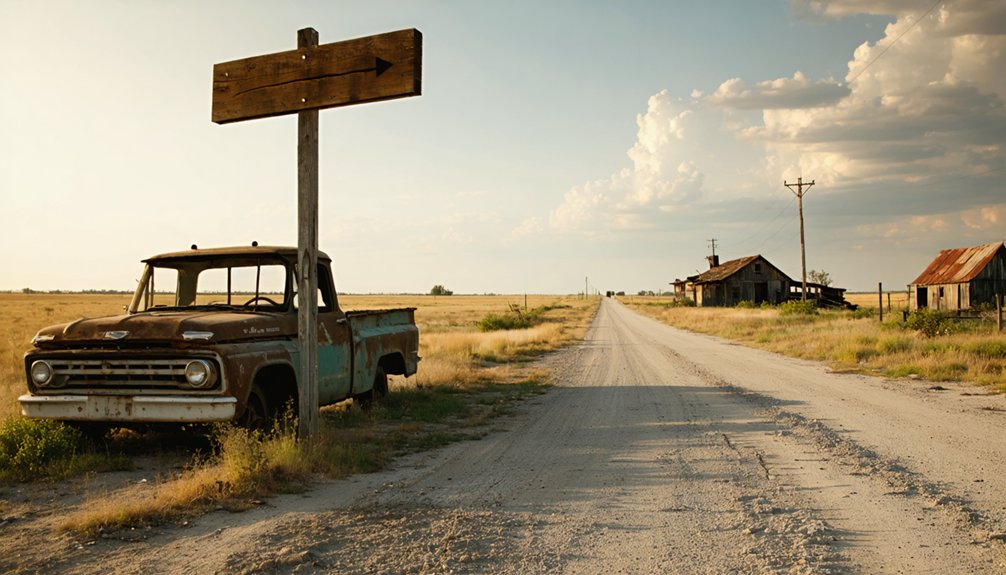
The old railroad bed cuts a gentle depression through the grass, its phantom tracks still visible as shallow ruts that guide your eye toward where the depot once welcomed travelers.
Buildings and Foundations Standing
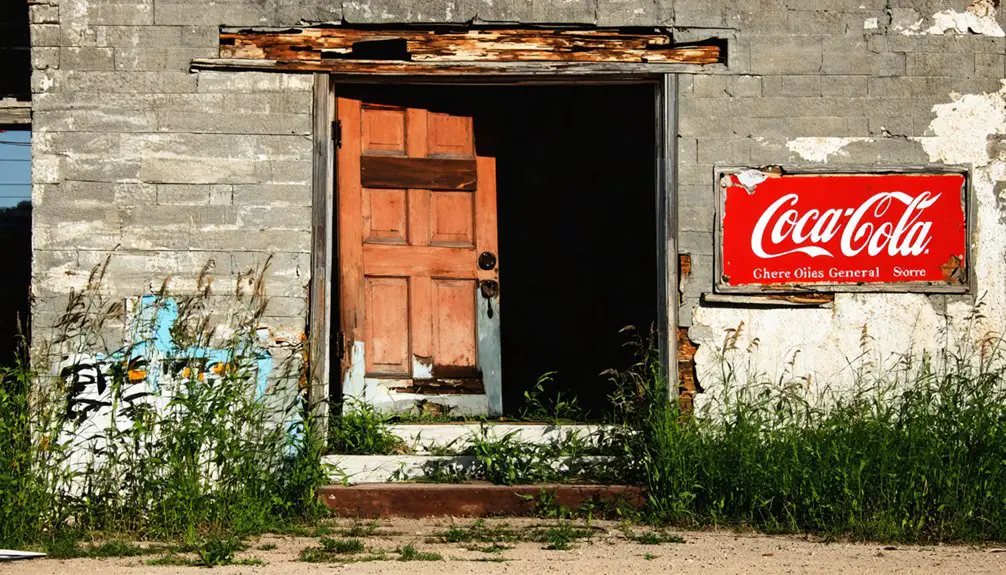
As you approach Stecker’s scattered remains, the skeletal frames of abandoned buildings emerge from a tangle of overgrown prairie grass and scrub brush. You’ll find weathered architectural details still clinging to partial walls—rotting window frames, exposed beams, and doorways leading nowhere. The crumbling infrastructure remnants tell stories of a once-thriving farming community brought down by the Dustbowl’s relentless grip.
Concrete and stone foundations mark where homes and businesses stood, creating a ghost grid of streets and property lines. You’re free to explore these accessible ruins, distinguishing former storefronts from farmhouses by their footprints and remaining structural elements. Each foundation serves as an archaeological marker, documenting early 20th-century Oklahoma settlement patterns and the harsh reality of agricultural collapse that transformed prosperity into abandonment.
Railroad Track Ruts Visible
Where Stecker’s main thoroughfare once buzzed with freight wagons and Model Ts, a subtle depression cuts through the overgrown prairie—the ghost of the Rock Island railway that breathed life into this settlement. You’ll spot this single rut near the dilapidated structures, a phantom limb where steel rails vanished after the 1980 liquidation.
The historical railroad significance runs deeper than nostalgia: this Chicago, Rock Island & Pacific line reached El Reno by 1892, stitching Oklahoma Territory together before statehood.
Now the environmental impact of abandonment rewrites the landscape—native grasses reclaim graded earth, cottonwoods sprout where locomotives once thundered. Trace that rut with your boot and you’re walking the same path that transformed cattle trails into commerce routes, before progress deemed them superfluous.
Getting There: Directions and Accessibility Information
Finding Stecker requires a bit of adventurous spirit, as this ghost town doesn’t appear on most modern GPS systems. Your best bet is heading northeast from Apache—just five miles along the old Rock Island railway corridor in Caddo County. The coordinates 34°57′27″N 98°18′57″W will guide modern devices, while satellite views reveal the historical background of abandoned structures scattered across the landscape.
You’ll want to download printable maps beforehand, as cell service gets spotty out here. The area code is 580 if you need local assistance. Interactive Google Maps shows surrounding towns—Cyril, Anadarko, Boone—useful for planning fuel stops. This transportation infrastructure follows routes established over a century ago, visible on that 1911 Rand McNally map. Pack provisions; freedom means self-reliance in Oklahoma’s backcountry.
Best Times to Visit and What to Bring
Timing your Stecker expedition can mean the difference between a memorable adventure and a miserable slog through Oklahoma’s unforgiving backcountry. Target late spring or early fall when temperatures hover around 70-80°F, avoiding summer’s brutal 100°F+ heat that’ll drain you fast.
Weather preparedness means layered clothing for Oklahoma’s mood swings—pack breathable fabrics, long sleeves against brush, and a rain jacket for surprise thunderstorms.
Your packing essentials start with water—at least one gallon per person. Add sturdy boots for crumbling foundations, sunscreen, and a reliable flashlight for dim interiors. Download offline maps since cell service vanishes out here. Bring a first-aid kit, bug spray for ticks, and trash bags—leave nothing but footprints. Weekdays offer solitude that weekend warriors never find.
Understanding Oklahoma’s Ghost Town Phenomenon
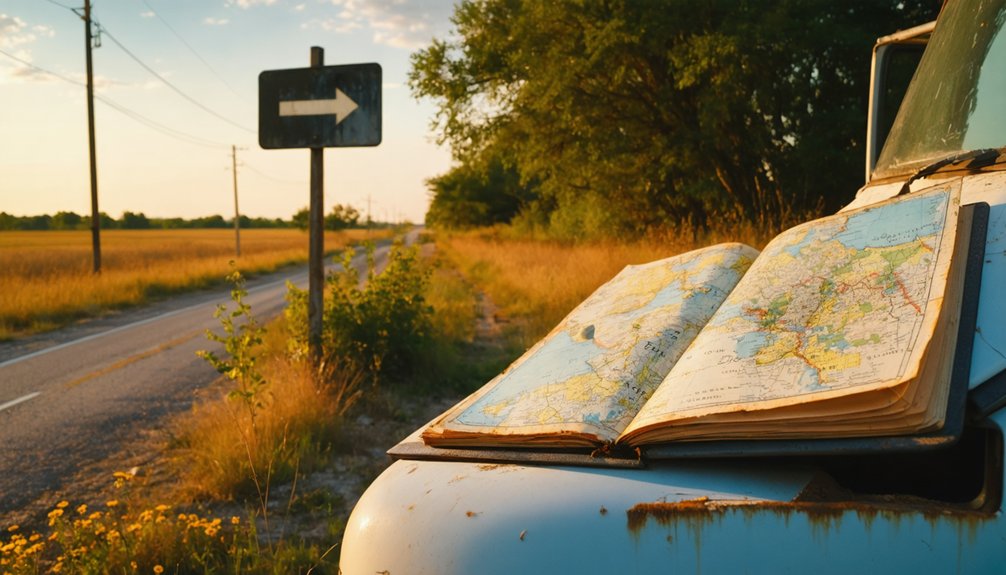
You’ll find Oklahoma’s landscape dotted with roughly 2,000 ghost towns—communities where populations crashed by at least 80% or vanished entirely, leaving behind weathered foundations, rusted equipment, and overgrown cemeteries.
These abandoned places rose and fell with economic waves: oil derricks appeared overnight in towns like Denoya, only to stand silent by the 1930s; railroad companies chose new routes and left entire settlements to wither.
From fully deserted mining camps with toxic chat piles to semi-abandoned land rush towns clinging to life with a handful of residents, each ghost town tells a story of sudden fortune and equally sudden collapse.
Economic Booms and Busts
Oklahoma’s ghost towns stand as weathered monuments to the brutal economics of extraction and exhaustion. You’ll find these abandoned places where natural resource depletion cycles turned thriving communities into dust-blown memories.
When timber ran out near America, Oklahoma in the 1920s, mill owners pivoted to cotton or simply vanished. Oil boomtowns like Whizbang roared to life in 1921, then disappeared by 1942 when the wells dried up.
Economic competition among towns proved equally merciless. Railroad companies chose winners and losers with a single routing decision—bypass your settlement, and you’re finished. McCurtain’s 1912 mine explosion killed seventy-three miners and obliterated the town’s economy overnight.
These places remind you that freedom comes with risk, and prosperity built on depleting resources always faces a reckoning.
Two Thousand Abandoned Towns
Beyond the economic calculations of profit and loss, Oklahoma’s ghost towns tell a more staggering story: researchers estimate nearly 2,000 abandoned settlements dot the state’s landscape. You’ll find empty main streets where environmental factors—floods, tornadoes, fires—swept away dreams as ruthlessly as any market crash. The North Canadian River swallowed Burke City whole. Bitter Creek’s fury forced Frazer to relocate. Picher’s toxic legacy transformed “America’s Most Toxic Ghost Town” into a Superfund cautionary tale.
What’s remarkable isn’t just the sheer number, but the lack of economic diversity that made these towns vulnerable. When the railroad bypassed, the mine closed, or the river flooded, communities had no backup plan. You’re witnessing what happens when people stake everything on single industries and unforgiving geography.
Classification Criteria and Categories
When you’re standing in an overgrown field where a town once thrived, you might wonder: what makes this a ghost town versus simply forgotten land?
Researchers have wrestled with historic site categorization for decades, creating frameworks that range from Morris’s population-decline metrics to Schmidt’s four-tier system distinguishing barren sites from semi-abandoned communities. Varney documented everything from completely deserted settlements to thriving towns that’ve simply shrunk since their boom years.
Baker’s approach offers you the most practical guidance: if the town’s original purpose vanished but tangible remains exist, you’ve found your ghost town. Regional variation in criteria matters too—what qualifies in Oklahoma might differ from New Mexico’s standards. The key? Visible evidence you can explore, whether that’s crumbling storefronts or weathered cemetery markers standing against relentless prairie winds.
Nearby Attractions and Extended Route Options
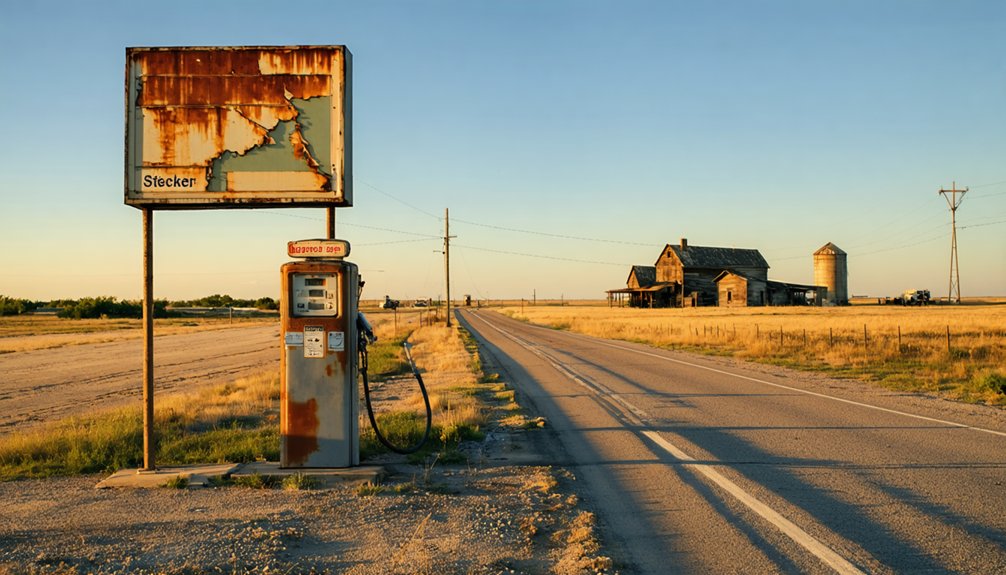
Stecker’s isolation works to your advantage if you’re plotting a ghost town odyssey across central Oklahoma. You’ll find a network of abandoned communities within striking distance, each offering distinct remnants of pioneer ambition and economic collapse. Historic site preservation remains minimal at most locations—expect foundations rather than museums—but that rawness is precisely what makes roadside attraction development here feel authentic rather than commercialized.
Extended route highlights include:
- Shamrock: Creek County community showing 19.2% population decline, still clinging to existence with 101 residents
- Skedee: Bond of Friendship monument from 1926, commemorating Osage Nation ties before the 1935 oil bust
- Foss: Vacant sidewalks and Kobel’s Gas Station ruins from its 1906 boom peak
- Ingalls: Eastern Payne County ghost town, post office operated 1890-1955
- Avery: 1897 Immanuel Lutheran Church serves German-descended pioneer families
Frequently Asked Questions
Is Camping or Overnight Stays Permitted Near Stecker?
No designated camping exists at Stecker itself due to private property considerations and historical preservation efforts. You’ll need to camp at nearby Sardis Lake’s three campgrounds or state parks, respecting the ghost town’s fragile heritage while exploring freely.
Are There Guided Tours or Local Experts Available for Hire?
No guided tours exist for Stecker specifically. You’ll need to contact your local historical society for regional experts who might offer private guided tours, or embrace the freedom of exploring this forgotten settlement independently with your own research.
What Safety Precautions Should Visitors Take When Exploring Abandoned Buildings?
You’ll want to wear protective gear like sturdy boots and gloves, and exercise caution when entering structures—watch for unstable floors and hazardous materials. Remember, your safety matters more than any photo op or adventure thrill.
Can Artifacts or Items Be Removed From the Ghost Town Site?
No, you can’t remove artifacts—period. Unauthorized artifact removal violates Oklahoma law, and legal implications for artifact theft include confiscation and penalties. Instead, photograph items in place, document locations, and report finds to preserve history for everyone.
Are There Any Entrance Fees or Permits Required to Visit?
No entrance fees or permits are needed—you’re free to explore anytime. Public access policies don’t restrict this abandoned site, and there aren’t official operating hours or schedules. Just respect the land and whatever structures remain standing.