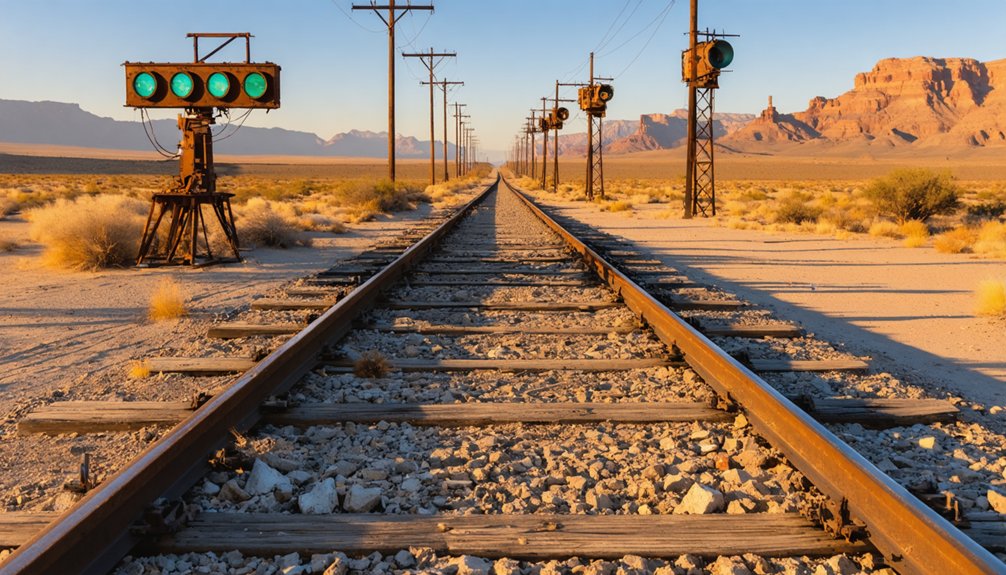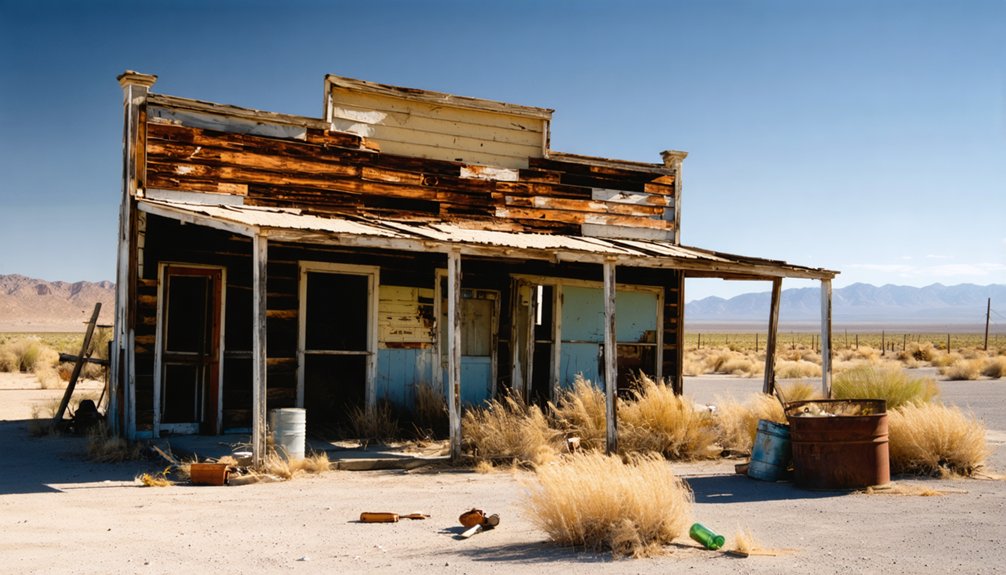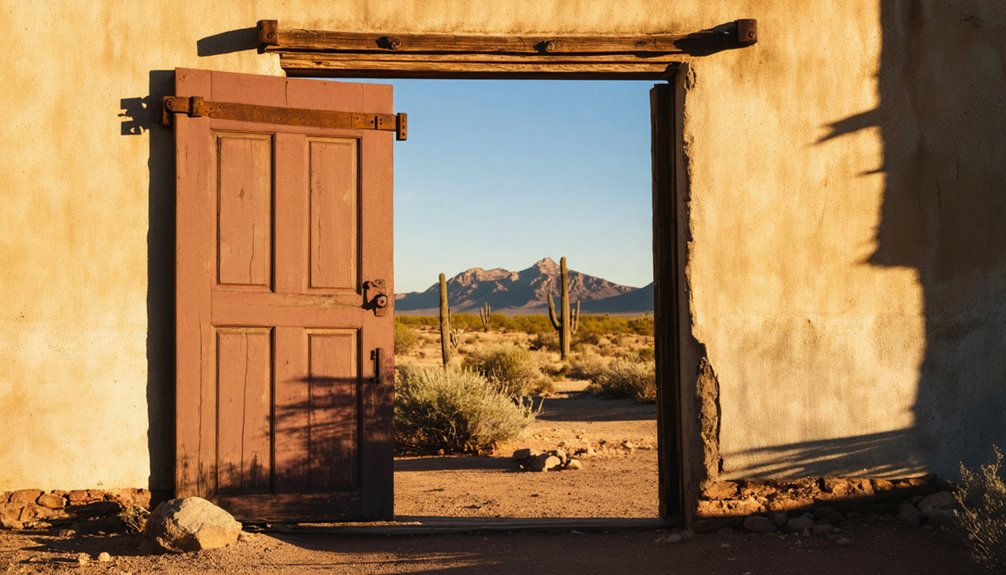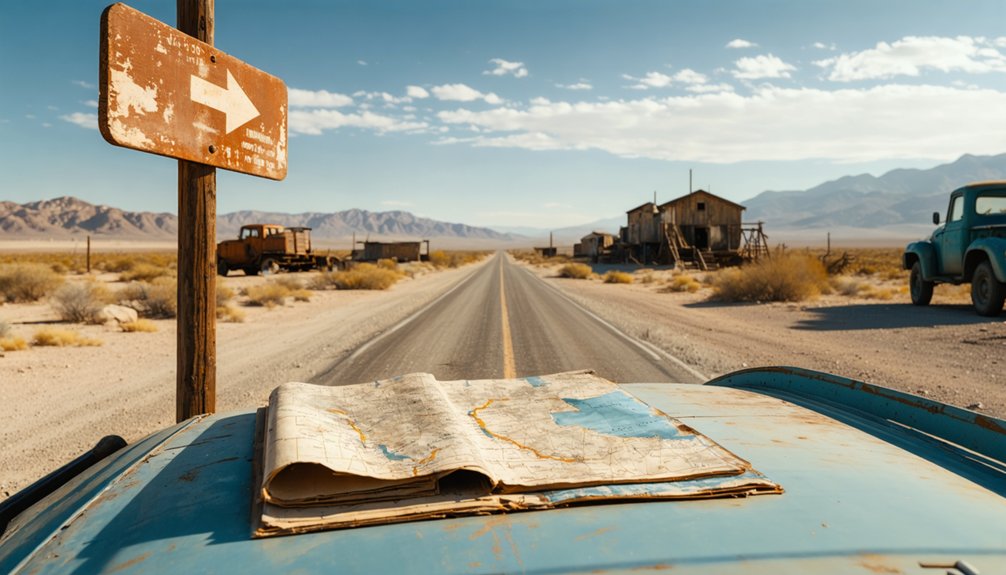
You’ll need a high-clearance vehicle to reach Swansea Ghost Town, traversing either 27 miles of dirt from Phoenix via Bouse or 17 unpaved miles from Parker. Pack three days’ water, offline maps, and recovery equipment—there’s no cell service or facilities beyond vault toilets. Once there, you’ll explore rust-colored ruins, massive smelter foundations, and authentic 1910 handprints in adobe walls. Golden hour lighting transforms these abandoned structures into haunting photographic compositions, and comprehending the essential preparation will guarantee your desert adventure succeeds.
Key Takeaways
- Bring an SUV or 4WD vehicle; choose Parker route (17 miles unpaved) or Phoenix route (27 miles dirt roads).
- Download offline maps before departure due to no cell phone coverage in the remote desert location.
- Pack three days’ water minimum, layered clothing, physical maps, and desert-specific first aid supplies.
- Visit during golden hour for dramatic photography of 1910s ruins, mine shafts, and industrial structures.
- Expect no facilities beyond vault toilets; watch for hazardous structures, contaminated soil, and unstable terrain.
Reaching Swansea requires commitment to desert backroads that test both your vehicle and navigation skills. Two main routes lead to this remote ghost town—from Phoenix via Bouse (27 miles of dirt) or from Parker via Shea Road (17 miles unpaved). Don’t expect cell phone coverage out here; download maps beforehand.
The Parker route offers more pavement initially, while the Bouse approach plunges you straight into raw desert terrain. Your high-clearance vehicle will navigate steep hills, sandy washes, and rusty nail hazards across these BLM-managed lands. Watch for wildlife sightings as you traverse the Eastern Sonoran plains. Standard cars struggle here—bring an SUV or 4WD.
The final miles wind through dramatic elevation changes on mostly graded roads, rewarding your adventurous spirit with absolute solitude. Unlike Welsh Swansea with its temperate oceanic climate, this Arizona namesake delivers unrelenting desert heat and minimal rainfall year-round. Plan for a 25-mile drive through the Eastern Sonoran plains to reach this well-preserved ghost town.
As you explore the history of Swansea ghost town, you’ll uncover remnants of its past that tell tales of resilience and struggle against the harsh desert environment. Each dilapidated structure stands as a testament to the once-thriving mining community that sought fortune in this unforgiving land. Keep an eye out for unique artifacts that hint at the endeavors of those who once called this place home.
What to Bring for Your Desert Ghost Town Adventure
Before you point your vehicle toward Swansea’s weathered ruins, you’ll need to pack like your safety depends on it—because it does. The desert’s unforgiving isolation demands three days’ water minimum—one gallon per person daily—plus water purification methods for emergencies.
Temperature swings from 98°F to freezing require layered clothing and sturdy boots. Solar power options keep devices charged when civilization disappears.
Essential gear includes:
- Navigation backup: Physical maps, compass, and offline GPS apps like Gaia GPS for when cell service vanishes
- Recovery equipment: Earth anchors and self-extraction tools since trees don’t exist for winching
- Desert-specific first aid: Supplies for cacti punctures, insect bites, and heat-related emergencies
- Survival fundamentals: Three-day food supply, shelter, emergency whistle, signal mirror, and field medicine guides
Cash matters here—credit cards won’t save you. Share your route plan and expected return time with a trusted contact before venturing into these remote areas. Store water in multi-gallon containers with spigots for convenient access at your campsite.
Exploring the Historic Ruins and Structures
When you step beyond Swansea’s historical entrance sign, rust-colored brick walls rise from the desert floor like skeletal remains of industrial ambition. The massive smelter foundations dominate the landscape—concrete monuments to mining operations that once processed copper ore through a 700-ton facility built to dazzle investors. You’ll discover authentic handprints from 1910 pressed into adobe walls, connecting you directly to the workers who built this desert empire.
Industrial facilities spread across the site reveal the town’s complete infrastructure: company store foundations, railroad depot remnants, and recreation halls. Double rows of gray-plastered quarters housed single miners, while adobe structures sheltered mining officials. Five mine shafts pierce the southern hillside near mill foundations, with dump sites marking decades of extraction. A 22-mile-long aqueduct once carried water from the Bill Williams River to sustain the town’s population of over 5,000 residents during its peak in the 1920s. Two cemeteries stand as silent testimony to frontier hardship. As Tony Hillerman described, these ghost towns serve as a “touching-place with the past”, offering visitors a tangible connection to Arizona’s mining heritage.
Photography Tips and Best Times to Visit
Swansea’s abandoned structures create a photographer’s paradise where rust-weathered metal, crumbling adobe walls, and desert light converge into haunting compositions. You’ll discover unique features to photograph everywhere—ornate door handles, maker-stamped bricks, weathered musical instruments, and sun-bleached toys scattered throughout the ruins.
Creative lighting opportunities abound during golden hour when dramatic shadows stretch across the desert, while window latticing creates mesmerizing patterns. Shoot in black-and-white for moody atmospheres or vibrant color to capture the stark desert palette. Informational markers throughout the site explain the history and purpose of various buildings, providing valuable context for your photographic storytelling. Before visiting, check for any closures or private property restrictions that may affect access to certain areas of the ghost town.
Essential Photography Tips:
- Bring your tripod for low-light interior shots and star-gazing sessions at designated BLM campsites
- Visit during winter months to escape Yuma’s horrific summer heat
- Arrive early morning for serene light and solitude
- Pack your off-road vehicle with ample water and equipment for the 25-mile unpaved journey
Safety Precautions and BLM Guidelines
The remote desert location and abandoned structures at Swansea demand serious preparation before you set out. You’ll find no water, trash service, or facilities beyond basic vault toilets—pack everything in and haul it back out. The BLM manages this land under dispersed camping rules, requiring zero-trace principles while permitting pets, fires, and alcohol responsibly.
Hazardous structural elements include covered mine shafts, toppling smelter walls, and unstable ruins. Though metal grates protect major openings and fencing marks recent collapses, you’re ultimately responsible for your safety. Keep children close and never climb deteriorating structures. The contaminated soil from historical mining operations presents additional health concerns that require vigilance.
With minimal amenities on site, stock supplies in Parker beforehand. Your high-clearance vehicle needs GPS navigation, and you’ll want to avoid post-rain visits when the steep grade becomes treacherous. Hiking trails extend beyond the ghost town ruins, offering opportunities to explore more of the stunning desert landscape. This government land offers complete freedom—use it wisely.
Frequently Asked Questions
What Caused Swansea to Become a Ghost Town?
Copper prices crashed after WWI, triggering Swansea’s economic decline. You’ll find environmental factors like remote desert location and water scarcity compounded financial troubles. By 1937, mines closed completely, transforming this once-thriving community into Arizona’s hauntingly preserved ghost town.
How Many People Lived in Swansea at Its Peak?
Swansea’s peak population reached approximately 750 residents during 1908-1909, driven by rapid population growth from mining operations. However, this boom proved fleeting—the town’s complete economic dependency on copper mining ultimately sealed its fate as a ghost town.
When Did the Post Office and Mines Permanently Close?
I don’t have specific post office closure timeline or mine shutdown details for Swansea available. You’ll need to research historical records to uncover when this desert outpost’s lifelines finally went silent, leaving only weathered ruins behind.
What Minerals Were Originally Discovered in the Swansea Area?
Prospectors originally discovered copper and silver deposits alongside iron and gold in 1862, revealing the mineral wealth of the region. You’ll find the hills still show red iron oxidation and green-blue copper carbonates today.
Who Currently Owns and Manages the Swansea Ghost Town Site?
The Bureau of Land Management owns and manages Swansea as a Special Management Area, not private landowners. You’ll find their restoration efforts include stabilizing miners’ quarters and maintaining interpretive trails for your self-guided exploration.
References
- https://www.atlasobscura.com/places/swansea-ghost-town
- https://www.arizonahighways.com/article/arizona-ghost-towns
- https://davenkathy.blogspot.com/2019/01/swansea-ghost-town.html
- https://en.wikipedia.org/wiki/Swansea
- https://www.youtube.com/watch?v=uJvtntuFH_k
- https://crazyhorsecampgroundsaz.com/swansea-arizona-not-wales/
- https://www.onlyinyourstate.com/experiences/arizona/az-abandoned-town-swansea
- http://www.apcrp.org/Swansea/Swansea_011008.htm
- https://www.go-arizona.com/Swansea-Historic-Ghost-Town/
- https://www.tripadvisor.com/Attraction_Review-g31301-d7645184-Reviews-Swansea_Ghost_Town-Parker_Arizona.html