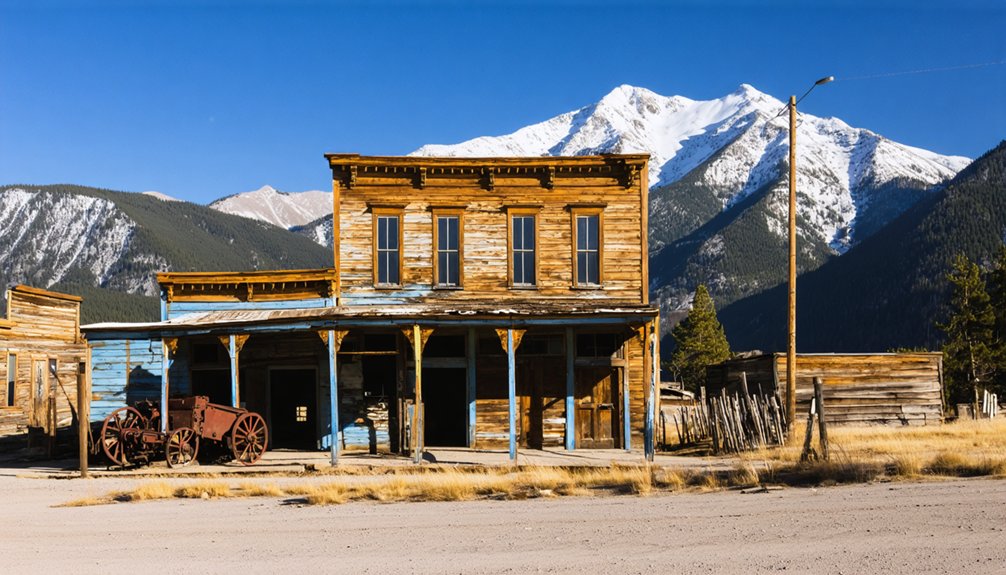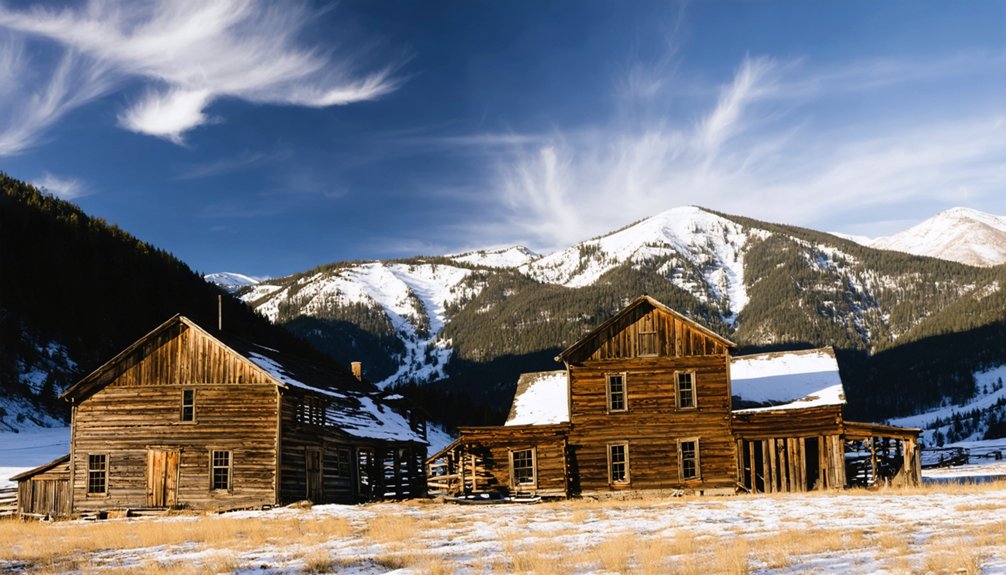
You’ll find Tarryall’s ghost town site marked by a commemorative plaque at Cline Ranch State Wildlife Area along Highway 285, though no buildings remain from this once-thriving mining camp that housed 6,000 prospectors. The best visiting window runs April through September, when you can safely explore the marker and venture 29 miles southeast on County Road 77 to the modern Tarryall community. Nearby Como’s restored railroad depot, Tarryall Reservoir’s fishing opportunities, and the 1921 schoolhouse along the historic Ute Trail offer compelling reasons to extend your ghost town journey beyond a simple roadside stop.
Key Takeaways
- Visit the commemorative marker at Cline Ranch SWA along Highway 285, as no original buildings remain from the 1859 gold rush town.
- Plan your trip between April and September for comfortable temperatures, safer travel conditions, and better access to surrounding attractions.
- Explore nearby Como, eight miles north, to see the 1881 stone roundhouse, restored depot, and locomotive Klondike Kate.
- Stop at the 1921 Tarryall Schoolhouse at milepost 29.3, a National Register-listed one-room structure along the historic Ute Trail.
- Combine your visit with recreation at Tarryall Reservoir for fishing, boating, camping, and Pike National Forest hiking trails.
The Gold Rush That Started It All
On July 19, 1859, a small band of miners from Gregory Diggings—William J. Holman and Earl Hamilton among them—stumbled upon an unnamed stream in South Park that would reshape Colorado’s mining legacy. They called it Pound’s Diggings after prospector Daniel Pound, though legend claims an exhausted miner’s plea to “tarry here” sparked the eventual name Tarryall.
News of rich gold specimens spread like wildfire. By September 22, 1859, the Rocky Mountain News confirmed Tarryall’s deposits rivaled anything yet discovered. What began with 150 miners in spring 1859 exploded to 6,000 by autumn 1862. These influential prospectors transformed quiet Ute hunting grounds into a raucous mining camp where fortune-seekers worked every inch of creek bank. Shouts replaced silence. Opportunity beckoned those brave enough to chase it. Denver served as the primary supply point for Tarryall and other mining camps scattered throughout the high Rockies.
Two rival settlements—Tarryall City and Hamilton—sprang up on opposite banks of Tarryall Creek, competing for miners’ business and claims to prosperity.
Puma City Rises From the Hills
The boom years of the 1860s eventually faded, but Tarryall’s story didn’t end with the original gold rush. In 1895, prospector arrivals breathed new life into the valley when word spread about fresh mining possibilities. They christened their camp Puma City, and fortune-seekers flooded in with unbridled optimism.
Within twelve months, over 1,000 people transformed the landscape. You’d have witnessed 50 houses, tents, and log cabins rising from the hills. By 1897, two sawmills buzzed with activity while five saloons and three hotels served the growing population. William Derby opened a general merchandise store near his ranch, supplying miners with essential goods.
The settlement emerged along ancient Native American trails, where hopeful prospectors staked their claims in Park County’s rugged terrain, convinced they’d strike it rich. However, as mining operations progressed, the deposits were much smaller than initially anticipated, disappointing those who had come seeking fortune. Today, the landscape of foothills and mountains marks the original site of Puma City, now part of present-day Tarryall.
What to Expect at the Ghost Town Today
Unlike many Colorado ghost towns where weathered cabins still lean against mountain winds, Tarryall has vanished completely. You’ll find no buildings, no ruins—just wilderness where thousands once scrambled for gold. High altitude winters and time dissolved wood structures into earth, leaving nothing but memory.
The commemorative marker significance lies along Highway 285 near Como, where you can pause at Tarryall Creek’s crossing. This roadside monument reminds you of 1859’s frenzied placer discoveries and marks what’s left of this ghost town’s legacy. The Tarryall diggings yielded over $2 million worth of gold, making it one of the region’s most productive strikes.
Your visitor experience insights? Don’t expect exploration—the original site sits on private land with no public access. You’re free to imagine the boom days from the highway, then head to nearby Tarryall Reservoir State Park for camping adventures.
How to Get to Tarryall
Finding Tarryall requires understanding you’re really chasing two destinations: a vanished ghost town marked only by a roadside plaque, and a modern rural community sharing the historic name. The original 1859 diggings northwest of Como left no structures—just commemorative marker details visible from U.S. Highway 285 near Tarryall Creek’s crossing at Cline Ranch State Wildlife Area. Pull off here for your gold rush history fix.
The living Tarryall community lies 29 miles southeast along County Road 77 (Tarryall Road), stretching between Lake George and Jefferson. This route passes working ranches and offers public access points near Tarryall Reservoir State Wildlife Area. Highway 285 remains your primary artery into South Park, following the same mountain passes prospectors traveled seeking fortune in these creeks.
Best Time to Visit This Historic Site
You’ll find Tarryall’s abandoned site accessible year-round, though April through September offers the most reliable conditions for exploring the commemorative plaque at Cline Ranch SWA crossing.
Spring through fall provides comfortable temperatures and safer travel on unpaved roads, while late September rewards you with spectacular fall colors painting the surrounding mountains.
Winter visits remain possible with snow adding atmospheric beauty to the desolate landscape, but you’ll need to verify road conditions and prepare for very cold temperatures at this high-elevation location.
The dry cool climate makes summer exploration particularly pleasant compared to lower elevation ghost towns in Colorado.
Keep in mind that afternoon thunderstorms are common during summer months, so plan to visit earlier in the day for the best weather.
Seasonal Weather and Access
Because Tarryall sits at high elevation in Colorado’s Rocky Mountains, its weather patterns shift dramatically with the seasons and directly impact when you can reach this ghost town.
Winter brings brutal cold with temperatures plunging to teens below zero, heavy snowfall, and winds gusting to 30 mph—creating significant winter driving challenges that often make roads impassable.
Spring offers transitional weather with highs near 59°F, though you’ll still encounter freezing nights around 29°F. Early March typically brings 1-3 inches of snow along with rain, requiring continued caution for mountain travel.
Summer delivers your best window for exploration, with pleasant 84°F days and minimal precipitation. Current cloud cover conditions can vary throughout the day, so prepare for changing mountain weather even during the warmest months.
Fall ushers in cooling temperatures and increased rain chances.
For ideal seasonal trail access, plan your visit between late spring and early fall when roads remain clear and weather conditions won’t strand you in this remote mountain outpost.
Special Events and Activities
Beyond traversing the seasonal conditions, your Tarryall adventure becomes exponentially richer when you time your visit to coincide with the area’s living history experiences. The nearby ranch—established in 1930—offers cowboy led instruction in quick-draw shooting, knife throwing, and archery year-round. You’ll find family friendly activities like the Tarryall Buckaroo Ride for young adventurers and horseback trails threading through authentic Western terrain.
Plan around Ghost Town Club field trips during temperate months—July’s Summitville expedition or September’s Interlaken hike immerse you in Colorado’s abandoned settlements. Fairplay’s annual Burro Days celebration since 1949 honors mining heritage through unconventional races and local crafts. May through September activates gold panning opportunities at regional museums, transforming your ghost town pilgrimage into an interactive journey through frontier history rather than passive observation. Staff-offered guided hikes to Lizard Rock provide direct access to Pike National Forest trails with breathtaking views and elevation gain.
Nearby Attractions Worth Exploring
Beyond Tarryall’s ghost town remnants, you’ll discover Como just north—a former railroad hub where historic depot buildings still stand amid mountain scenery.
If you’re seeking outdoor recreation, Tarryall Reservoir offers prime fishing, boating, and camping opportunities within the Pike National Forest. These neighboring destinations transform your ghost town visit into a fuller exploration of South Park’s pioneer heritage and natural beauty.
Historic Como Railroad Hub
Just eight miles north of Tarryall, the railroad town of Como emerges from the high country landscape at 10,000 feet elevation, its collection of weathered structures standing as one of Colorado’s most authentic preserved rail complexes. You’ll discover the stone roundhouse, hand-built by Italian stonemasons in 1881, where railroad maintenance operations once serviced up to 26 trains daily from three converging mainlines. The 1879 depot, restored South Park Hotel, and remaining outbuildings sprawl across five acres of National Register-listed property.
The preservation timeline began in the 1980s when restoration societies rescued these deteriorating structures. Today, you can walk 800 feet of relaid track connecting the depot to the roundhouse, where locomotive Klondike Kate rests within the original six stone stalls—the wooden additions lost to fire in 1935.
Tarryall Reservoir Recreation
While the ghost town itself offers glimpses into Colorado’s mining past, Tarryall Reservoir sprawls across 2,000 acres just minutes away, transforming this high-country destination into a year-round recreation hub.
You’ll find rainbow, brown trout, and pike waiting beneath the surface, with fly fishing outfitters providing rental gear for riverside expeditions. Launch your boat between May and October (Thursday through Monday, 6am-8pm) to explore open waters perfect for paddle boarding opportunities across glassy morning surfaces.
Cold-water fishing dominates the State Wildlife Area, where special regulations keep populations thriving. Beyond angling, surrounding Pike National Forest trails beckon hikers and mountain bikers, while designated campgrounds offer overnight stays among rolling hills.
Remember your valid Colorado fishing license before casting—this wilderness rewards those who venture beyond pavement.
The Tarryall Schoolhouse and Historic District
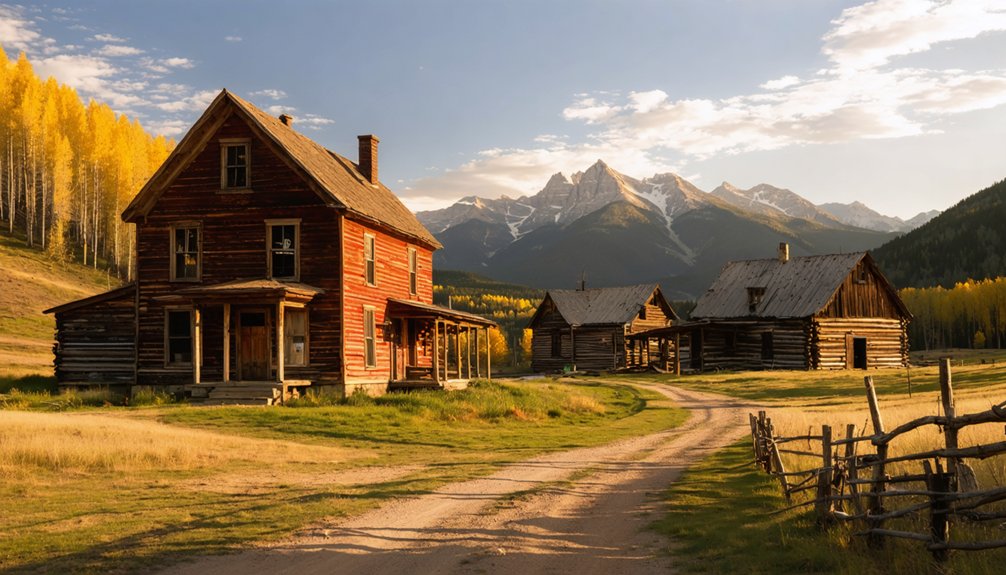
Perched along the historic Ute Trail at milepost 29.3, the Tarryall Schoolhouse stands as a weathered chronicle to Colorado’s early 20th-century educational frontier. Built in 1921, this one-room structure earned National Register listing in 1985 for its architectural preservation and authentic rural design. You’ll discover more than just a building—it’s your gateway to understanding how isolated communities carved out education in unforgiving terrain.
The complex reveals pioneer life through:
- The rehabilitated schoolhouse with distinctive one-room architecture
- Original outhouses maintaining period authenticity
- The teacherage where educators lived during harsh mountain winters
As community significance continues today, locals gather here while you can explore this interpretive site before heading to Twin Eagles Trailhead. It’s part of the proposed Tarryall Valley Rural Historic Landscape District, connecting you to generations of ranchers, miners, and settlers who valued freedom through knowledge.
Tales and Legends From the Mining Days
On July 19, 1859, two weary miners from Gregory Diggings—William J. Holman and Earl Hamilton—stopped at an unnamed stream and discovered watermelon seed-sized gold scales worth up to $1.30 each. Word spread fast, and secretive prospectors’ stories began multiplying as quickly as the miners themselves.
The creek’s original name, Pound’s Diggings, sparked a rush when newcomers misinterpreted it, expecting a literal pound of gold per claim. When early arrivals grabbed every profitable spot, frustrated latecomers dubbed it “Grab-all” and moved south to establish Fairplay instead.
But the most enduring legends of buried treasure center on the mysterious prospector Lebelt, who allegedly stashed a massive gold cache somewhere in these hills. Reports from 1933 still fuel treasure hunters’ dreams today.
Tips for Your Ghost Town Adventure
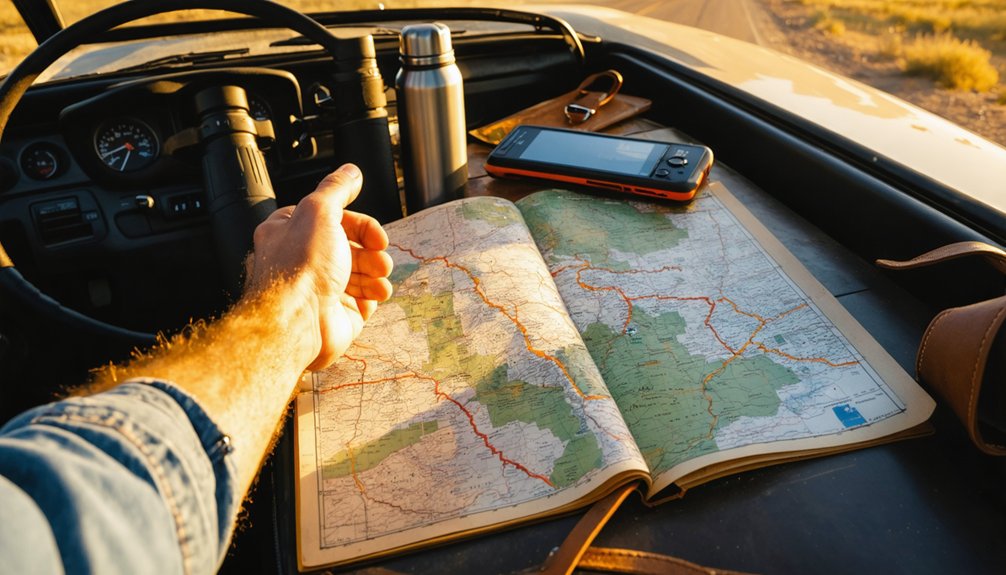
Before you set out to explore Tarryall’s weathered remnants, pack essentials that’ll transform a casual drive into a proper backcountry expedition.
Gear up wisely:
- Navigation tools – Cell service vanishes between ponderosa pines, so download offline maps before heading into these remote mountains where abandoned buildings stand silent.
- Weather protection – Colorado’s high country shifts from blazing sun to thunderstorms within hours; layer clothing and pack rain gear regardless of forecasts.
- Camera and notebook – Document crumbling facades and architectural details you’ll discover, then seek out local storytellers in nearby settlements who’ll reveal context behind the ruins.
Respect private property boundaries, leave artifacts untouched, and tread lightly through structures. These ghost towns belong to everyone who values untamed places and the freedom to wander where history whispers through empty doorways.
Frequently Asked Questions
Are There Any Entrance Fees to Visit the Tarryall Ghost Town Site?
You won’t encounter any known entrance fees when exploring the Tarryall ghost town site. You’re free to wander these historic ruins at will, though you’ll want to check seasonal road conditions before making your journey into Colorado’s backcountry.
As you venture further, keep an eye out for hidden gems in Geneva City that add to the local charm and allure. Each corner may reveal a quaint café or a vibrant market that showcases the culture and creativity of the area. Embrace the unexpected and let your curiosity lead the way to unforgettable discoveries.
Can You Camp Overnight at the Original Tarryall Ghost Town Location?
You won’t find permitted camping on site at the ghost town itself. Overnight camping restrictions apply there, but you’ll discover freedom at nearby Tarryall Reservoir’s designated sites or dispersed spots along Tarryall Creek requiring valid licenses.
Is the Tarryall Area Safe for Children and Families to Explore?
You’ll find Tarryall generally safe for families, though potential safety hazards like abandoned mines, high elevation, and creek crossings require supervision. The suitable age range starts around 8-10 years for children who can handle rugged terrain responsibly.
What Type of Vehicle Is Needed to Access the Ghost Town?
Like a key fitting different locks, you’ll find the plaque accessible via standard 2WD car on Highway 285. However, suitable off-road vehicles with high clearance meet reliable transportation requirements for exploring surrounding backcountry trails beyond the commemorative site.
Are There Guided Tours Available at the Tarryall Historic Sites?
Guided tours aren’t offered at Tarryall’s historic sites, but you’ll find preserved historic buildings along the self-guided Heritage Tour route. You’re free to explore independently using the detailed brochure highlighting forty-two miles of frontier history.
References
- https://www.uncovercolorado.com/activities/tarryall-ghost-town/
- https://kekbfm.com/colorado-ghost-towns-started-as-puma-city-ended-as-tarryall/
- https://southparkheritage.org/where-have-all-the-ghost-towns-gone-by-christie-wright/
- https://www.coloradocentralmagazine.com/tarryall-city-hamilton-south-parks-first-gold-rush/
- https://parkcoarchives.org/Guide_Tarryall_Road.pdf
- https://en.wikipedia.org/wiki/Tarryall
- https://coloradogeologicalsurvey.org/wp-content/uploads/woocommerce_uploads/B-31.pdf
- https://npshistory.com/publications/blm/cultresser/co/17/chap6.htm
- https://westernmininghistory.com/4785/the-colorado-gold-rush/
- https://www.money.org/money-museum/virtual-exhibits-coloradogold/