Planning a ghost town road trip to Tejon, New Mexico means heading deep into Guadalupe County’s open rangeland, where pavement disappears and cell service goes with it. You’ll navigate unmarked dirt roads to find crumbling adobe walls and scattered ruins that hint at lives once lived here. Pair it with nearby Route 66 ghost towns like Glenrio, Endee, and Bard for a full eastern New Mexico adventure. Stick around — there’s a lot more you’ll want to know before you go.
Key Takeaways
- Tejon is a mysterious ghost town in Guadalupe County, New Mexico, featuring crumbling adobe walls, foundation stones, and debris fields from past inhabitants.
- Navigate using historical county maps and satellite tools, as exact coordinates are hard to pinpoint and roads are largely unmarked dirt paths.
- Prepare with extra water, fuel, offline maps, and a first aid kit, since the remote area lacks cell service and presents road hazards.
- Visit during April, May, or October for mild temperatures, as midsummer heat regularly exceeds 100°F, making exploration uncomfortable and potentially dangerous.
- Pair Tejon with nearby ghost towns like Glenrio, Endee, Bard, and San Jon for a rewarding multi-day Route 66 ghost town road trip.
What Is Tejon, New Mexico’s Ghost Town Story?
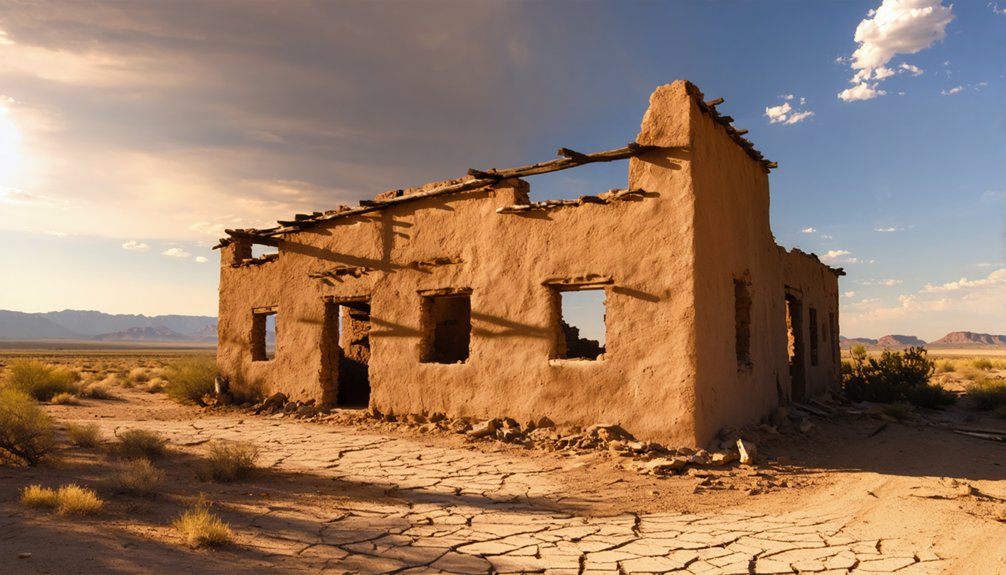
Tucked away in Guadalupe County, New Mexico, Tejon carries the quiet distinction of being a ghost town whose full story remains largely untold.
You won’t find detailed settlement dates or abandonment records tied to Tejon history — it exists mainly as a name on New Mexico’s broader ghost town inventory. That mystery is part of its pull.
Tejon exists as little more than a name — no dates, no records, just mystery etched into New Mexico’s ghost town map.
Ghost town legends thrive in places where documentation runs thin and imagination fills the gaps. Tejon is exactly that kind of place.
You’re stepping into a location where the land holds secrets that official records simply don’t capture.
Whether Tejon was a ranching settlement, a small community, or something else entirely, no one can say for certain.
That uncertainty makes exploring it feel like genuine discovery rather than a guided tour.
Where Exactly Is Tejon Located in Guadalupe County?
Guadalupe County stretches across a wide, sparsely populated stretch of eastern New Mexico, and Tejon sits somewhere within that vast landscape.
Pinning down its exact coordinates isn’t straightforward — ghost town geography rarely is. Records list it as part of Guadalupe County‘s broader inventory of forgotten settlements, but precise location details remain elusive.
What you’ll likely encounter is open rangeland, scattered high desert terrain, and the quiet that defines this region.
Tejon history doesn’t offer you clear landmarks or well-marked turnoffs. You’re traversing territory where towns faded without fanfare.
Your best approach is combining historical county maps with current satellite tools before you hit the road.
Freedom-seekers exploring eastern New Mexico should expect dirt roads, wide skies, and the satisfying challenge of finding a place that doesn’t advertise itself.
How to Reach Tejon by Road
Once you’ve narrowed down Tejon’s general position within Guadalupe County using historical maps and satellite tools, the next challenge is actually getting there.
Tejon accessibility demands preparation, since eastern New Mexico’s ghost town experiences rarely come with paved roads or clear signage.
Before heading out, consider these road conditions you’ll likely encounter:
- Dirt county roads stretching across open, windswept plains with minimal landmarks
- Unmarked intersections where old ranch roads split without any posted guidance
- Dry creek crossings that become impassable after seasonal rainfall
- Remote stretches with no cell service, requiring printed maps or downloaded offline navigation
Pack extra water, fuel, and a physical map.
Freedom-seekers thrive here, but respect the terrain — Guadalupe County’s backcountry roads demand both confidence and caution.
What Survives at Tejon: Ruins, Remnants, and Empty Land
When you arrive at Tejon, you won’t find much standing, but the scattered ruins and remnants still tell a quiet story of what once existed there.
You’ll likely spot crumbling foundations, weathered structural traces, and the kind of emptiness that only a forgotten settlement leaves behind.
The open land itself becomes the exhibit, stretching out around you with subtle clues buried in the earth and landscape.
Visible Ruins And Remnants
What remains at Tejon today reads more like a question than an answer. You’ll find no museum, no marker, no guided tour — just open eastern New Mexico land holding its ghostly legends quietly.
The historical significance lives in what’s barely standing.
Look closely and you might spot:
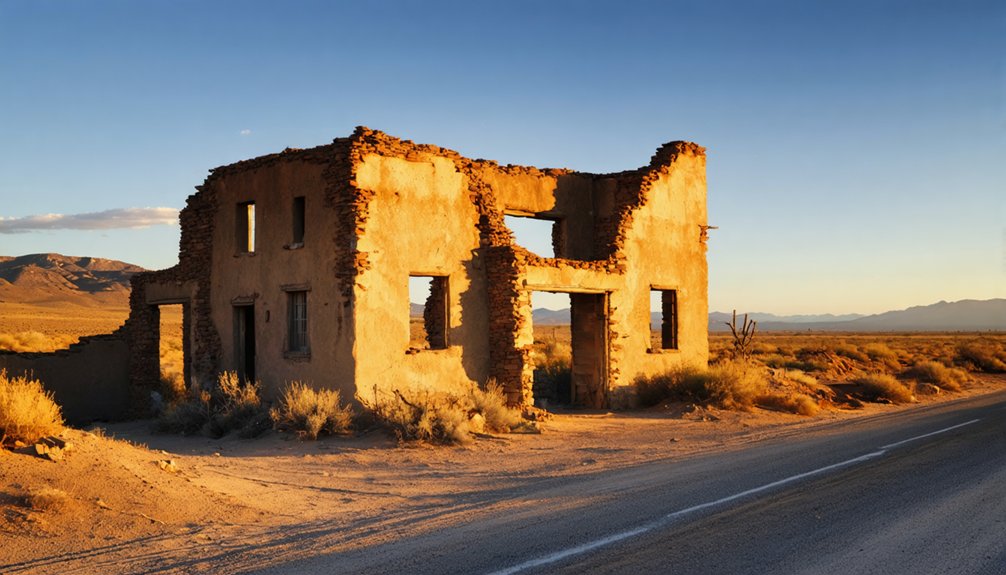
- Crumbling adobe walls dissolving back into the desert floor
- Scattered foundation stones outlining where structures once defined daily life
- Overgrown pathways suggesting roads that once connected neighbors and commerce
- Faded debris fields where wood, metal, and memory have slowly merged with soil
You’re standing where people built something real. The plains don’t apologize for swallowing it whole.
That raw, unfiltered honesty is exactly what draws freedom-seekers to places like Tejon.
Open Land And Traces
Beyond the crumbling adobe and scattered stones, Tejon’s most striking feature is simply the land itself — sprawling, indifferent, and quietly consuming everything human hands once built here.
The open landscapes stretch endlessly in every direction, swallowing fence lines, pathways, and foundations beneath decades of wind-driven earth.
You’ll notice shallow depressions where structures once stood, faint impressions hinting at daily life long erased. These traces carry real historical significance — they remind you that people carved out an existence here against formidable odds.
Walk slowly. The land rewards careful attention.
Broken pottery shards, rusted metal fragments, and subtle soil discolorations mark where Tejon’s residents once gathered, worked, and lived. Nothing dramatic announces itself. Instead, the emptiness speaks plainly, offering you a rare, unfiltered connection to forgotten New Mexico history.
Nearby Ghost Towns Worth Pairing With Tejon
Since Tejon sits in the broader sweep of eastern New Mexico’s ghost town country, you’d be doing yourself a disservice by stopping there alone.
Tejon is just the beginning — eastern New Mexico’s ghost town country rewards those who wander further.
Pair the Tejon mystery with neighboring ruins to fully absorb ghost town culture across the region.
- Glenrio – Straddles the Texas-New Mexico line on Route 66, frozen in crumbling concrete and faded signage.
- Endee – Five miles past Glenrio on old dirt Route 66, once a ranch supply hub in 1885.
- Bard – A wild cowboy settlement relocated three times, with Rock Island trestle remains standing sentinel.
- San Jon – Pronounced “San Hone,” featuring an abandoned Western Motel, tavern ruins, and weathered service stations lining the old highway.
Route 66 Ghost Towns Within an Hour of Tejon
Within an hour of Tejon, you’ll find some of New Mexico’s most iconic Route 66 ghost towns waiting to be explored.
Glenrio straddles the Texas-New Mexico border, while San Jon’s historic structures — including the abandoned Western Motel and Pourhouse Tavern ruins — line the old highway corridor.
Push five miles past Glenrio and you’ll reach Endee, and just before it, Bard’s rugged remnants tell the story of a wild cowboy town that once featured shootouts and a Rock Island railroad trestle.
Glenrio: Texas-New Mexico Border
Straddling the Texas-New Mexico border along old Route 66, Glenrio stands as one of the most hauntingly preserved ghost towns you’ll find on a road trip from Tejon. Among border towns, Glenrio history feels uniquely suspended in time, offering raw, unfiltered Americana.
Here’s what you’ll encounter:
- Weathered storefronts lining both sides of the state line, their faded signs barely whispering their former purpose.
- Cracked asphalt stretching through empty lots where travelers once fueled up and rested.
- A collapsed motel whose broken windows frame open sky like hollow eyes.
- Rusted gas station canopies leaning under decades of wind and sun.
You’ll feel the weight of abandoned freedom here, standing exactly where two states meet and commerce once thrived.
San Jon’s Historic Structures
Just off Interstate 40, San Jon — pronounced “San Hone” — rewards the curious traveler with a cluster of Route 66 relics that most drivers blow past without a second glance.
You’ll find the Cedar Hill Service Station standing as a symbol of San Jon architecture from the highway’s golden era. Nearby, the Route 66 Truck & Auto Service Station ruins, the abandoned Western Motel, and the crumbling Pourhouse Tavern tell the story of a once-thriving stop for cross-country travelers.
Historic preservation efforts have kept these structures identifiable, giving you enough context to imagine the town’s busier days.
With roughly 300 residents still calling San Jon home, it’s not fully a ghost town — but it carries that haunted, wide-open energy that makes Route 66 exploration so compelling.
Exploring Endee And Bard
Pushing further east from San Jon, two ghost towns sit within striking distance of Tejon — Endee and Bard — each carrying its own brand of Route 66 history.
Endee history traces back to 1885 as a ranch supply hub, eventually peaking at 110 residents in 1946.
Bard legends paint a wilder picture — shootouts, relocations, and a Rock Island trestle standing like a steel skeleton against the plains sky.
You’ll reach Endee via a dirt stretch of old Route 66, five miles past Glenrio.
Picture these stops on your route:
- Endee’s dusty remains scattered across open ranchland
- Bard’s trestle rising unexpectedly from flat terrain
- Glenrio’s state-line ruins bridging Texas and New Mexico
- Russell’s Truck Stop marking the edge of Bard’s modern footprint
Best Time to Visit Tejon and Eastern New Mexico Ghost Towns
When planning a ghost town road trip through eastern New Mexico, timing can make or break your experience. The best visiting season runs from late spring through early fall, when you’ll find longer daylight hours perfect for exploring ruins like those around San Jon and Bard.
Timing your ghost town road trip right unlocks everything — longer days, better light, and ruins worth every mile.
Ideal weather conditions peak in April, May, and October, offering mild temperatures before summer’s intense heat settles over the plains.
Avoid midsummer if you can — temperatures regularly exceed 100°F, turning dirt roads into exhausting slogs. Winter brings freezing winds that sweep across the open eastern plains with little mercy.
Early morning visits reward you with golden light across crumbling structures and cooler air before afternoon winds kick up.
Pack water regardless of season; this remote landscape doesn’t forgive the unprepared.
Is Tejon Worth an Overnight Stay or Just a Quick Stop?
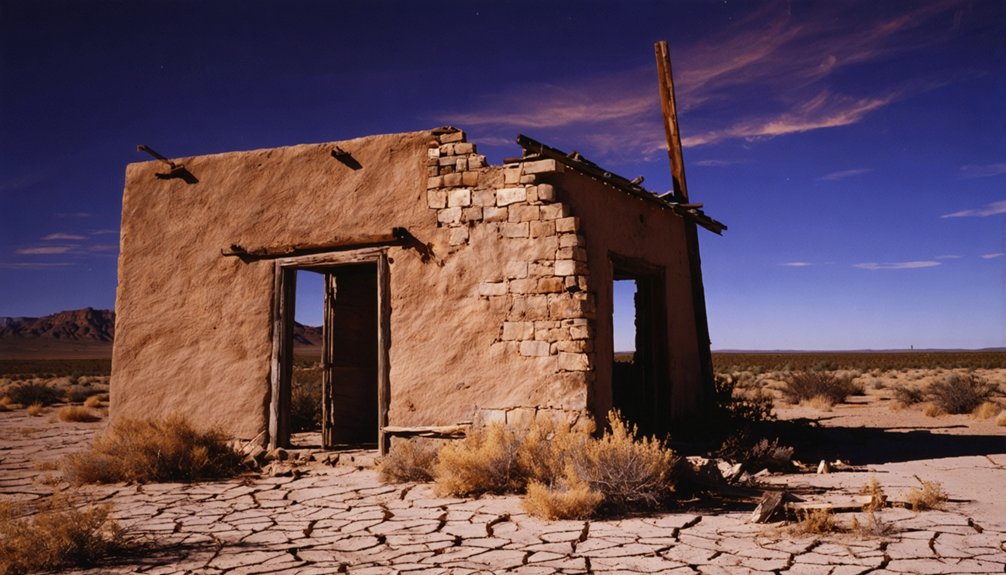
Tejon itself offers little more than a quick stop — you’ll take in the remnants fast, making an overnight stay in the ghost town itself unnecessary.
However, the surrounding eastern New Mexico region rewards those who linger, with nearby Route 66 stops like San Jon, Endee, and Glenrio adding serious depth to your road trip itinerary.
If you’re planning a multi-day adventure, you’ll get far more value by using a base camp in a nearby town and hitting these scattered ghost towns one by one.
Tejon’s Overnight Stay Value
Given its status as a bare-bones ghost town with no documented amenities, lodging, or visitor infrastructure, Tejon is firmly a quick-stop destination rather than an overnight base.
For richer ghost town experiences with overnight accommodations nearby, consider these vivid alternatives:
- San Jon – Wander crumbling motor courts and abandoned Route 66 storefronts before sleeping under vast eastern New Mexico skies.
- Glenrio – Straddle two states at dusk, photographing weathered facades fading into golden light.
- Endee – Drive the original dirt Route 66 road through silence and open plains.
- Bard – Spot remnants of the Rock Island trestle rising from empty flatlands.
You’ll experience Tejon fully within minutes, leaving your day wide open for deeper exploration elsewhere.
Quick Stop Versus Overnight
Because Tejon offers no documented amenities, lodging, or visitor infrastructure, you’ll want to treat it as a quick stop rather than an overnight base.
Spend time absorbing its ghost town legends, photographing remnants, and soaking in its historical significance before moving on to a town with actual accommodations.
San Jon sits nearby with basic services, making it your smartest overnight option.
From there, you can day-trip to Tejon and other eastern New Mexico ruins without sacrificing comfort.
Endee, Bard, and Glenrio all fall within striking distance, giving you a full itinerary across the region’s forgotten Route 66 corridor.
Your freedom to roam expands dramatically when you base yourself strategically rather than chasing overnight stays in places that simply can’t support them.
Nearby Attractions Worth Exploring
While Tejon itself offers little beyond ruins and atmosphere, the surrounding region rewards curious travelers with a string of ghost towns and Route 66 relics worth weaving into your itinerary.
Explore these nearby stops that carry genuine historical significance and break through ghost town myths:
- Glenrio – A haunting Texas-New Mexico border town frozen along old Route 66, with crumbling storefronts demanding your camera.
- Endee – Reached via dusty dirt roads, this former ranch supply hub once bustled with 110 residents by 1946.
- Bard – Wild and weathered, featuring remaining Rock Island trestle ruins that echo frontier lawlessness.
- San Jon – Still breathing with 300 residents, abandoned motor courts, and the ghostly Cedar Hill Service Station standing roadside.
What to Bring to Tejon: Gear, Water, and No-Service Prep
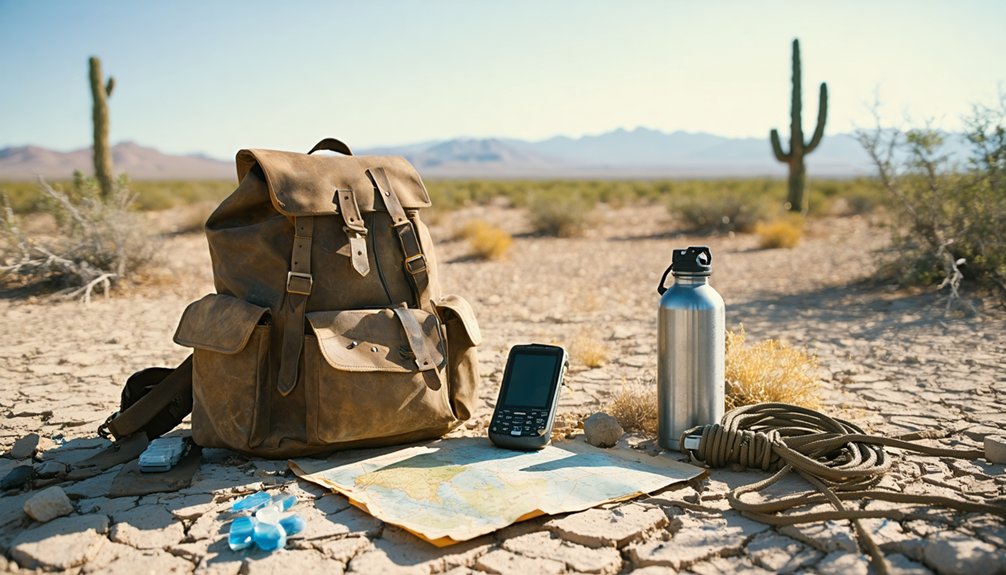
Tejon sits in the remote eastern plains of Guadalupe County with no documented services, no paved guarantees, and no cell signal to bail you out if something goes wrong.
Pack your ghost town essentials before you leave civilization behind. Bring more water than you think you’ll need — at least a gallon per person. Toss in a paper map, a spare tire, jumper cables, and a first aid kit.
These survival tips aren’t dramatic; they’re practical. Wear sturdy boots for uneven terrain and broken foundations. Pack snacks, a flashlight, and sun protection because the eastern plains don’t offer shade.
Download offline maps before you lose signal. Tell someone your route. Freedom tastes better when you’ve planned smart enough to actually enjoy it.
What Can Go Wrong on Isolated Eastern New Mexico Ghost Town Roads
Packing smart gets you out the door, but knowing what can go wrong keeps you from getting stranded somewhere no one will find you before dark.
Gear up right and you leave on time. Know what breaks down and you make it back alive.
Eastern New Mexico’s isolated roads deliver real road hazards and navigation challenges fast.
- Flat tires — Sharp caliche rock slices through sidewalls on unmarked dirt roads leading to ruins like Tejon.
- Washed-out crossings — Flash floods carve sudden gaps across low-water dirt paths with zero warning signs.
- Dead GPS signal — Navigation challenges hit hard once cell towers disappear past San Jon’s interstate corridor.
- Soft sand traps — Dry arroyos disguise loose sand that swallows tires whole, leaving you digging out alone under open sky.
Know these risks before your wheels leave pavement.
Frequently Asked Questions
Are There Legal Restrictions on Photographing or Entering Tejon’s Abandoned Structures?
You’ll want to research local photography regulations and urban exploration laws before visiting Tejon’s abandoned structures. Trespassing on private property’s illegal, so always seek permission, respect boundaries, and stay safe while capturing your ghost town adventure.
Do Any Guided Ghost Town Tours Include Tejon on Their Itinerary?
You won’t find guided tours that include Tejon on their itinerary due to its limited documented historical significance. However, you can explore nearby Route 66 ghost towns, where some operators actively feature stops along this iconic corridor.
Is Tejon Located on Private Land Requiring Landowner Permission to Visit?
Over 60% of New Mexico’s ghost towns sit on private land. Records don’t confirm Tejon’s land access status, so you’ll want to research local ownership and respect trespassing laws before exploring to stay truly free.
Are There Any Known Native American Cultural Sites Near Tejon?
You won’t find documented Native American cultural sites specifically near Tejon, but New Mexico’s rich Native American history means you’re exploring land with deep cultural significance—so stay curious and respectful as you roam freely.
Has Tejon Appeared in Any Films, Books, or Documentaries?
Like a whisper lost in the wind, Tejon history remains uncaptured on film or in books. No documentaries or notable works featuring Tejon folklore have been confirmed, leaving you free to write your own discovery story.
References
- https://www.legendsofamerica.com/nm-sanjon/
- https://www.youtube.com/watch?v=6xBSRQiDGSM
- https://chaosandcoffeebeans.com/2016/01/15/road-trip-southwest-new-mexico-ghost-towns-open-road/
- https://www.atlasobscura.com/things-to-do/new-mexico/ghost-towns
- https://www.youtube.com/watch?v=oORLKZszA5o
- https://en.wikipedia.org/wiki/List_of_ghost_towns_in_New_Mexico