You’ll find Texola straddling the Oklahoma-Texas border, a weathered sentinel where Route 66 dreams faded into dust. Start at the 1910 territorial jail, then explore abandoned gas stations and the Magnolia Service Station marking the historic highway split. Snap photos of crumbling facades before grabbing a meal at the Windmill Restaurant, surrounded by vintage memorabilia. Time your visit for spring or fall when Oklahoma’s heat won’t overwhelm you, and you’ll discover nearby ghost towns that complete this journey through America’s forgotten roadside.
Key Takeaways
- Texola sits along historic Route 66 in western Oklahoma, accessible via I-40, with a population dwindled to just 43 residents.
- Explore the 1910 territorial jail, Magnolia Service Station, and abandoned cotton gins, churches, and gas stations throughout town.
- Dine at Windmill Restaurant & Trading Post or Tumbleweed Grill, both featuring Route 66 memorabilia and rustic historic interiors.
- Extend your trip to nearby ghost towns like Hext, Foss, and Lenora along the Route 66 corridor.
- Plan for photography opportunities at weathered signage, building facades, and freely accessible abandoned structures throughout Texola.
The Rise and Fall of a Route 66 Town
The story of Texola began with the rhythmic clang of hammers on railroad spikes in 1901, when the Choctaw, Oklahoma and Gulf Railroad stretched its iron fingers westward from Weatherford.
You’ll discover this town’s golden age arrived in 1926 when Route 66 carved through its heart, transforming it into an essential oasis for dust-covered travelers chasing horizons. Peak prosperity hit in 1930 with 581 residents serving motorists and supporting cotton production reliance.
But freedom’s highway proved fickle. The Great Depression, Dust Bowl devastation, and eventual economic decline stripped away Texola’s vigor. When I-40 bypassed the town, that final blow reduced the population to merely 43 souls by 2020, leaving behind weathered buildings as monuments to America’s restless spirit.
Historic Landmarks Worth Exploring
Weathered structures rise from the Oklahoma prairie like stubborn sentinels, refusing to surrender completely to time’s relentless march. You’ll find the territorial jail history most compelling—this 1910 one-cell concrete fortress still stands as Texola’s most photographed landmark, its thick walls once containing desperate souls while displaying artifacts about Belle Starr and Jesse James.
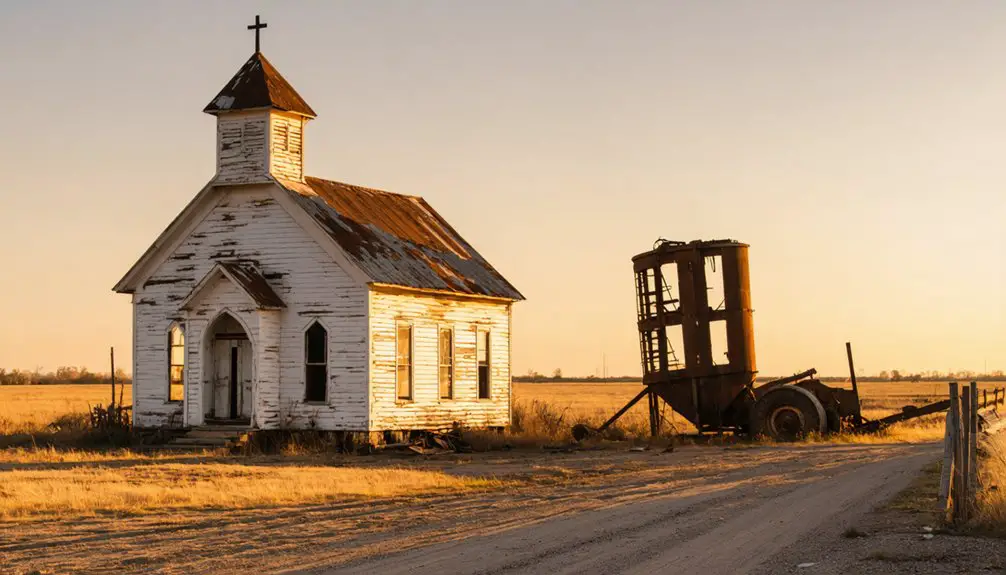
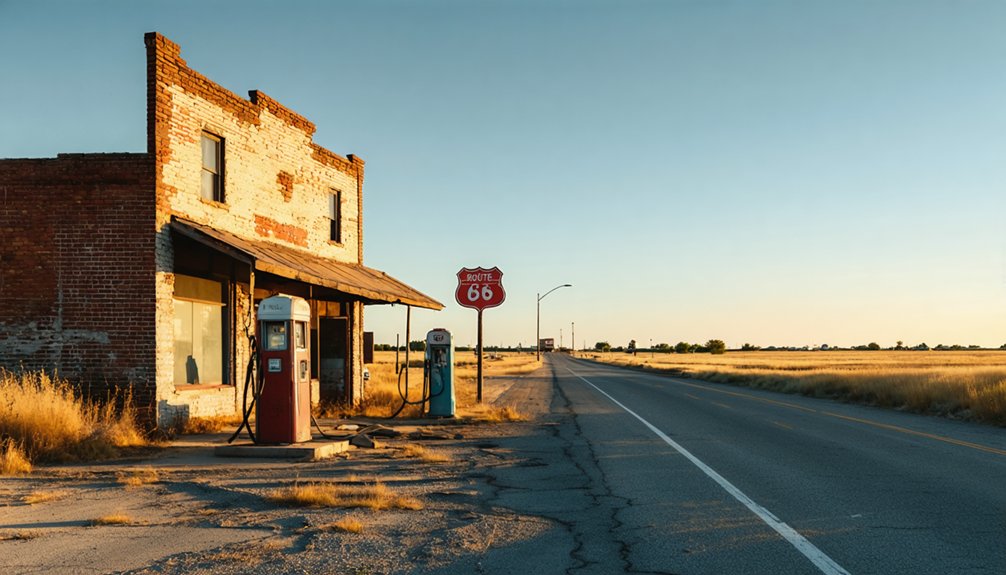
The Magnolia Service Station at Grand Avenue and Broadway marks where Route 66 splits directions, though its abandoned buildings condition grows precarious without intervention. Decaying bars and beer joints whisper tales of thirsty Texans crossing state lines for legal liquor. You’re free to explore these crumbling relics at your own pace, wandering through remnants of cotton gins, churches, and gas stations that once served thousands of Mother Road travelers seeking their own American adventures.
Dining and Photo Opportunities
Between crumbling facades and windswept prairie, you’ll discover unexpected culinary outposts that’ve survived Texola’s decline into near-abandonment. The Windmill Restaurant & Trading Post at 209 E 2nd St blends hearty meals with Route 66 memorabilia, while Tumbleweed Grill stands as one of the Mother Road’s oldest surviving eateries. These aren’t polished tourist traps—they’re authentic roadside refuges serving country-style fare amid genuine ghost town atmosphere.
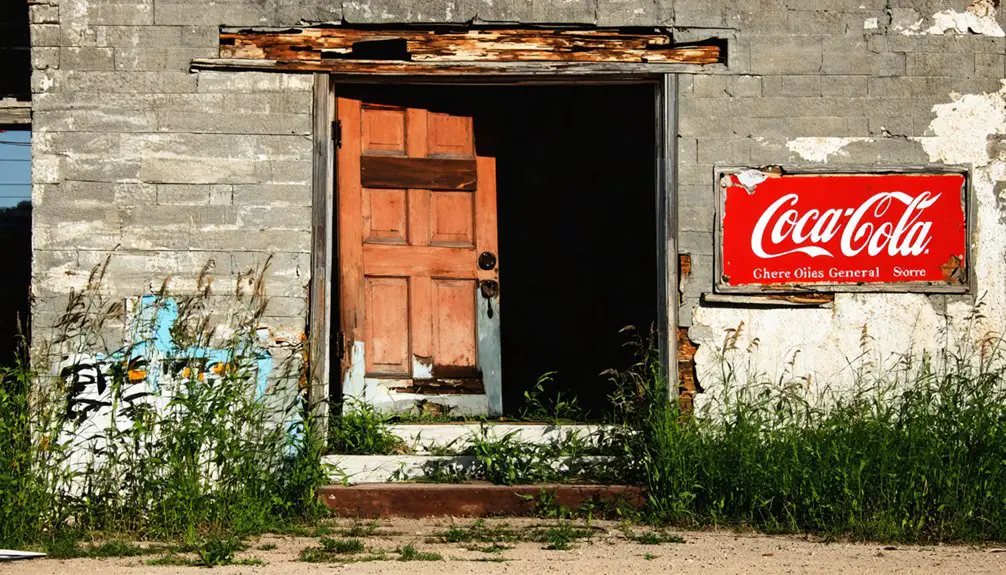
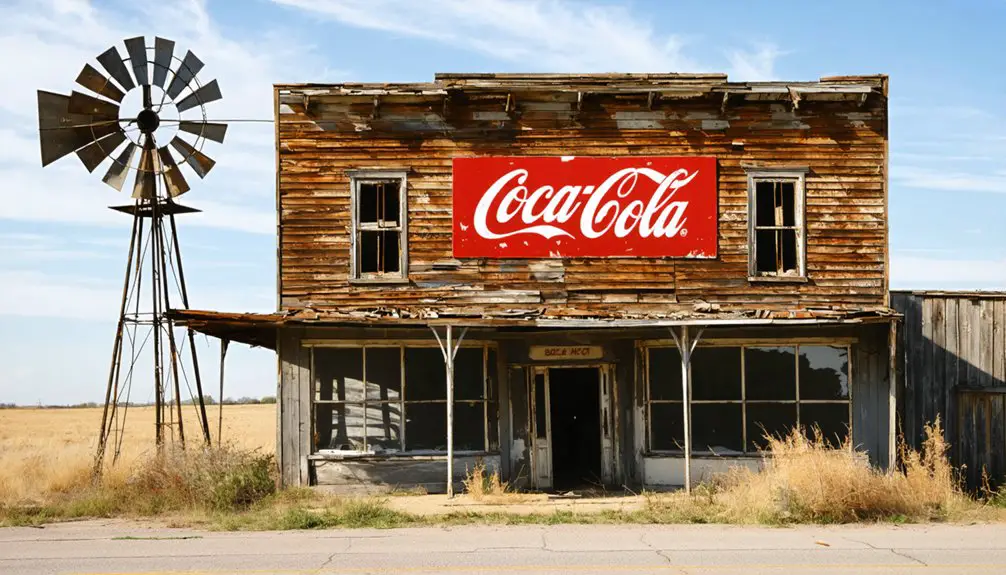
Before settling in for memorable dining experiences, scout exterior photo angles capturing weathered signage against Oklahoma’s endless sky. The vintage facades tell stories your camera craves.
Inside, rustic interiors adorned with historic decor provide intimate snapshots between bites. You’re free to wander surrounding abandoned structures post-meal, creating a perfect rhythm of sustenance and exploration that defines true Route 66 independence.
The Story Behind Texola’s Territorial Jail
Standing sentinel amid Texola’s ruins, a cramped limestone structure tells the harsh reality of frontier justice in early Oklahoma Territory. Built between 1908-1910, this one-room jail held rowdy cowboys, cattle rustlers, and bootleggers in conditions designed to discourage return visits. You’ll discover thick concrete walls that trapped summer heat and winter cold, a single steel door, and barely six feet of headroom creating an oppressive atmosphere.
The historical significance becomes visceral when you peer through barred windows into quarters where multiple prisoners shared one bed, one chair, and a bucket. Despite a century of abandonment, cultural preservation efforts now transform this symbol of confinement into a small museum. Inside, news articles and photos document past criminals who experienced this crossroads of law and lawlessness along the Texas-Oklahoma border.
Nearby Ghost Towns and Attractions
Texola’s crumbling jail marks just the beginning of your western Oklahoma ghost town exploration. Route 66 stretches before you like a ribbon of forgotten dreams, connecting remnants of once-thriving communities.
Route 66 winds through western Oklahoma’s forgotten settlements, each crumbling structure a monument to communities that time left behind.
You’ll find Hext nearby, where a burned-down schoolhouse stands as an enduring symbol to a community that never quite flourished. The skeletal remains speak volumes about aspirations that outpaced reality.
Foss maintains surprising community liveliness despite shrinking to one-tenth its peak population over the past century. It’s a survivor among ghosts. Five and a half miles west of Taloga, Lenora waits in obscurity—founded in 1892 with 400 souls, now barely a memory since its post office closed in 1955.
Each stop reveals historical population decline’s relentless march, yet you’ll discover freedom in wandering these unguarded monuments to American resilience.
Best Times to Visit and What to Expect
You’ll want to plan your Texola visit for spring or fall when temperatures won’t leave you gasping in the abandoned jail’s stifling confines or shivering through 28-degree wind chills. The ghost town’s eerie atmosphere intensifies after dark, when empty storefronts and crumbling facades take on an otherworldly quality that daylight can’t match.
Budget just ten minutes for a quick drive-through or stretch it to half an hour if you’re ready to wander through derelict buildings where you won’t encounter another soul.
Optimal Visiting Seasons
When should you venture into this windswept ghost town along Route 66’s final Oklahoma stretch? Spring and fall deliver moderate temperatures perfect for wandering the abandoned highway, though you’ll avoid shoulder season crowds entirely—Texola doesn’t attract them.
Winter transforms the townscape into crystalline solitude, where crisp air amplifies the eerie silence and frozen mid-century architecture becomes your private museum. You’ll walk deserted streets without encountering another soul for thirty minutes or more.
Summer brings brutally direct light that challenges photography but intensifies the surreal atmosphere of empty gas pumps and shuttered diners. Storm-chasers should embrace foul weather, when high winds animate skeletal trees around derelict buildings, creating genuinely unsettling paranormal ambiance.
Regardless of season, expect complete freedom to explore without restrictions or traffic interruptions.
Ghost Town Atmosphere
The desolation hits differently here than at sanitized Route 66 tourist stops where vintage neon gets restored and gift shops peddle nostalgia. Texola’s rumbling silence wraps around you as you walk past crumbling commercial shells and abandoned houses where weeds reclaim what prosperity left behind.
The haunting stillness amplifies every footstep echoing off the 1910 stone jail’s walls, where a weathered inscription still lists the 1939 senior class names—ghosts frozen in time. Brutal midday light exposes raw decay without filters, while rusting signs lean against wind-scoured buildings.
You’ll find a Baptist church standing defiant, a few maintained properties, and maybe an operating restaurant—proof that thirty-five souls still resist this town’s slide into oblivion. This isn’t curated nostalgia; it’s authentic abandonment.
Time Needed for Exploration
Budget ninety minutes if you want to absorb Texola properly—enough time to photograph the 1910 jail’s weathered stone, circle the National Register-listed Magnolia Service Station at Grand and Broadway, and prowl among the dozens of collapsed structures where rusted tin peels away from rotting wood. You’ll manage a quick drive-through in ten minutes, but that robs you of Texola’s haunted essence.
Photography considerations demand midday’s brutal light for stark documentation or stormy weather for atmospheric shots when wind screams through hollow windows. Potential safety hazards multiply after dark—fractured floorboards, exposed nails, unstable walls—so arrive during daylight unless you’re chasing paranormal experiences at that operational bar on Friday nights.
The 3.7-mile ghost town rewards patience; rush through and you’ve missed everything.
Frequently Asked Questions
Are There Any Hotels or Accommodations Available in Texola for Overnight Stays?
Texola itself has no hotels, but you’ll find nearby lodging options starting at just $45 in neighboring towns. Local accommodation recommendations include Shamrock Country Inn and Days Inn, perfect for your freedom-seeking ghost town adventure.
Is It Safe to Explore the Abandoned Buildings in Texola?
You’ll want to use caution when entering structures—most buildings are collapsing shells with potential safety hazards. The Magnolia Service Station’s deteriorating rapidly, and structural instability threatens what remains. Observe from outside; don’t risk injury exploring interiors.
Are There Any Guided Tours Available for Visitors to Texola?
You’ll chart your own course here—no guided tours by local historians exist in this windswept ghost town. Instead, embrace self-guided walking tours of the town, wandering freely through abandoned jails and crumbling Route 66 relics at your own pace.
What Are the Exact Directions to Reach Texola From Interstate 40?
Take I-40 Exit 1 at Oklahoma’s western edge. You’ll find Texola immediately off the highway, where abandoned structures dot the scenic countryside along the Texas border. It’s your gateway to authentic ghost town exploration and untamed adventure.
The history of Texola, Oklahoma is rich with stories of settlers and their quest for prosperity during the early 20th century. As you wander through the remnants of this once-thriving town, you’ll uncover tales of resilience and struggle against the harsh landscape. Exploring these dilapidated buildings offers a glimpse into a bygone era and a connection to the rugged spirit of the American West.
Is There a Visitor Center or Information Booth in Texola?
No, Texola doesn’t have visitor services availability. You’re exploring independently here—freedom means wandering without guideposts. For local history resources, you’ll find authentic stories painted on weathered buildings and whispered through abandoned streets instead.