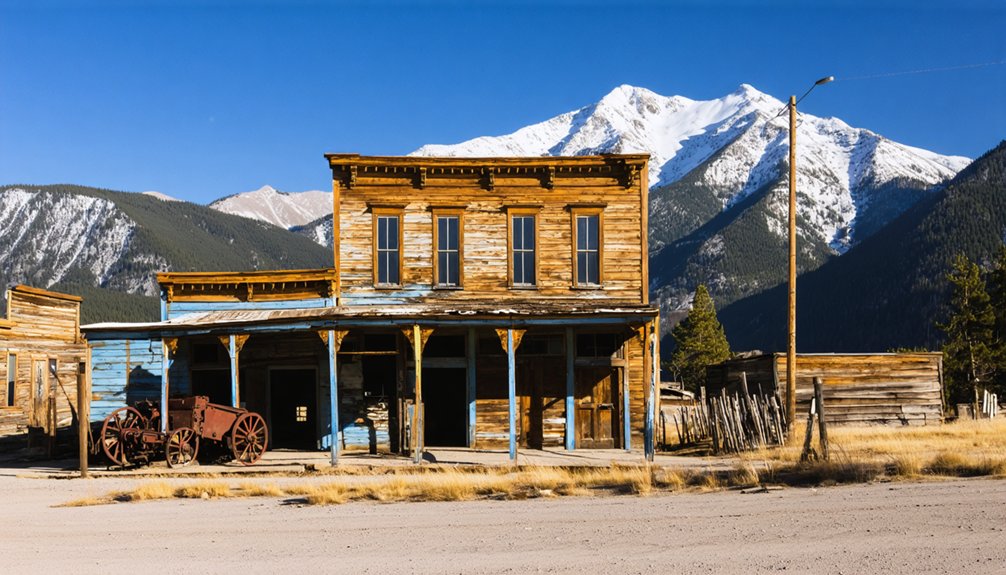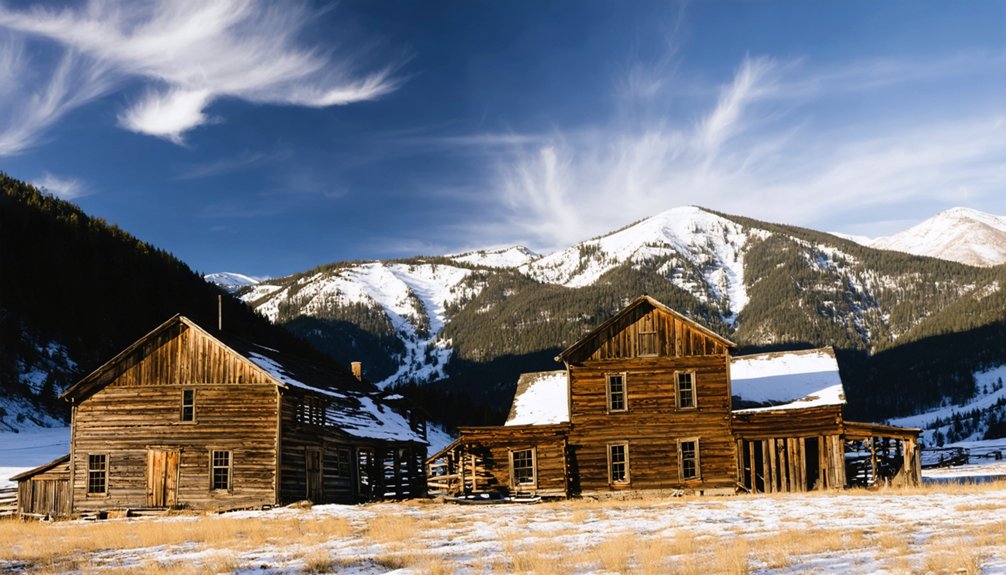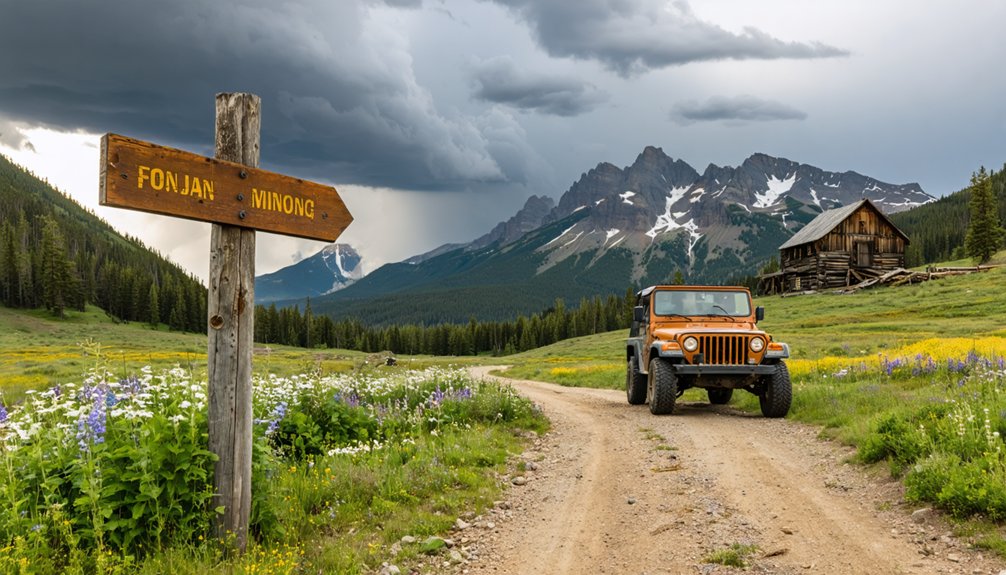
You’ll need a high-clearance 4×4 and experienced off-road skills to conquer Tomboy Road‘s 4.5-mile ascent to 11,509 feet, where the Rothschilds’ $2 million mining empire once extracted fortunes in gold and silver. Only accessible July through September when snowpack clears, this treacherous route rewards adventurers with crumbling cabins, scattered mine tailings, and 360-degree San Juan Mountain views. Consider extending your journey over Imogene Pass to connect with Sneffels ghost town and Camp Bird Mine, creating a thrilling circuit through Colorado’s highest mining camps and century-old supply corridors.
Key Takeaways
- Tomboy sits at 11,509 feet, accessible only July through September via a difficult 4.5-mile dirt road requiring high-clearance 4WD.
- The ghost town thrived 1894-1941, producing millions in gold and silver, and once supported 2,000 residents with exceptional amenities.
- Explore weathered cabins, Whispering Jim’s green shack, scattered mine tailings, and panoramic San Juan Mountain views from the elevation.
- Extend your trip via Imogene Pass, Colorado’s second-highest pass at 13,114 feet, connecting to Sneffels ghost town and Camp Bird Mine.
- Budget four hours for Imogene Pass’s 12-mile route and check Forest Service weather reports before attempting either challenging drive.
From Mining Camp to Million-Dollar Sale: The Story Behind Tomboy
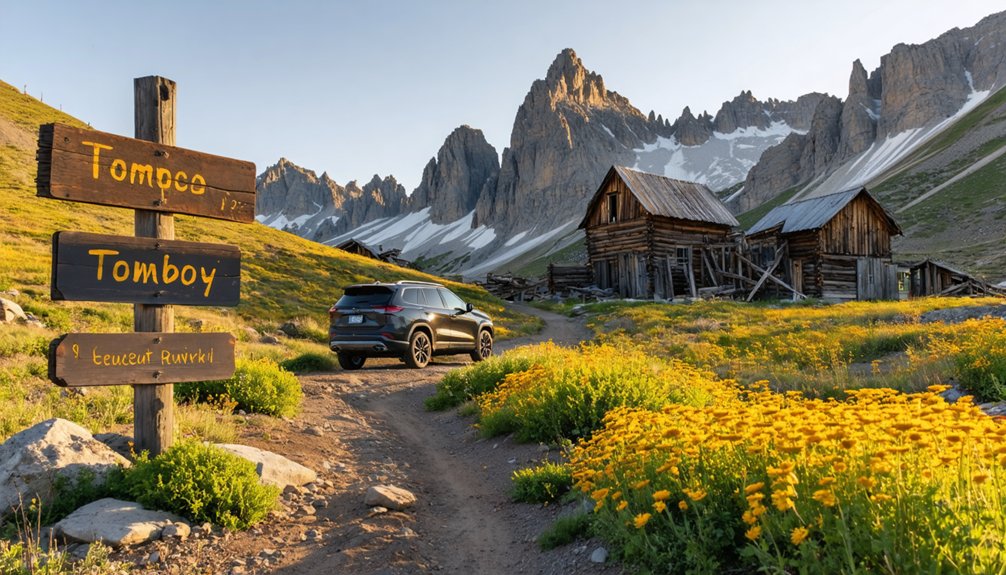
High in Colorado’s San Juan Mountains, where winter winds scream across exposed ridges at 11,500 feet, a mining camp called Savage Basin clung to life in the 1880s.
You’ll find it 3,000 feet above Telluride, nestled in a glacial cirque that proved rich with gold. When the Tomboy Mine struck quantities in 1894, the camp took its name and exploded—ballooning to nearly 1,000 souls chasing fortune in one of the district’s top three producers.
Reaching One of North America’s Highest Ghost Towns
Perched at 11,509 feet in a glacial cirque, Tomboy ranks among the highest ghost towns in North America—a distinction that comes with serious access challenges. You’ll find it just two miles east of Telluride in Colorado’s rugged Savage Basin, overlooking the San Juan Mountains below.
Exploring similar remnants of the past, you’ll encounter ghost towns near Capitol City, Colorado, each with its own unique history and allure. These abandoned settlements tell stories of mining booms and busts, inviting adventurers and history enthusiasts alike. As you navigate the trails, keep an eye out for artifacts left behind, which offer a glimpse into the lives of those who once called these places home.
High altitude challenges dictate everything here. Seasonal accessibility means you’ve got only a few precious months each year to make this journey—typically July through September when snowpack finally clears.
From Telluride’s Oak Street, you’ll tackle Tomboy Road, a treacherous dirt track completed in 1901 that demands a high-clearance 4WD and serious driving skills. Locals rate it 4.5 out of 5 for difficulty and danger, with loose rock, steep grades, and landslide-prone sections that’ll test your nerve.
What Made This 11,509-Foot Settlement Thrive
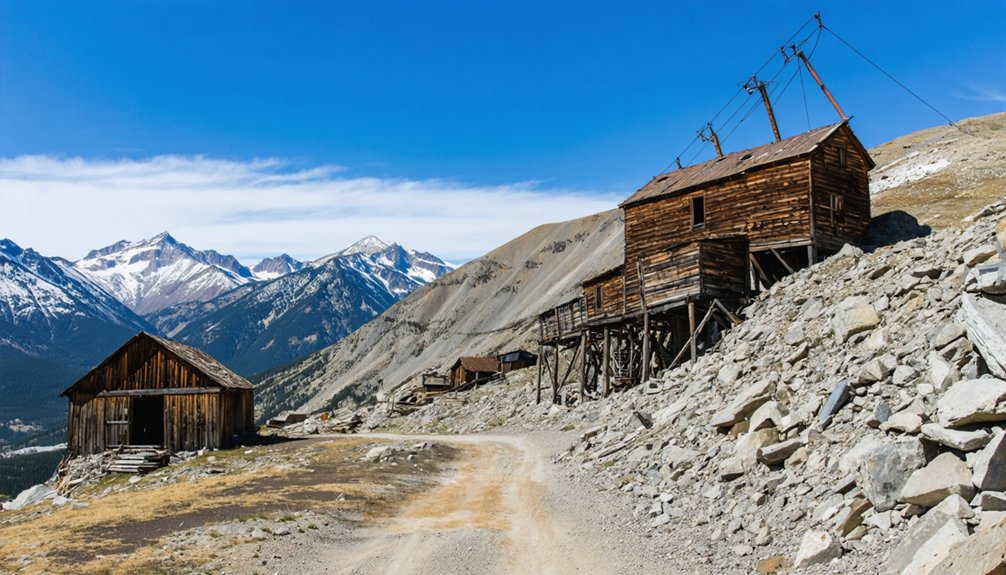
Despite its brutal elevation and isolation, Tomboy flourished as one of Colorado’s most prosperous mining settlements from 1894 through 1941. You’ll discover what drove nearly 1,000 residents to endure harsh alpine conditions: millions in extracted gold, silver, copper, lead, and zinc.
When the Rothschilds purchased the operation for $2 million in 1897, capital flooded in for residential development—establishing miner cabins, a general store, school, and even a YMCA with tennis courts and a bowling alley.
The 1901 Tomboy Road transformed everything, creating tourism infrastructure through daily stagecoach service connecting adventurers to Telluride. Strategic positioning near rich veins, abundant snowmelt for processing, and exceptional amenities unusual for remote camps created a self-sustaining community where fortune-seekers could actually live, not merely survive.
The Tomboy Mine’s 47-Year Legacy
The Tomboy Mine began operations in 1880 in the Savage Basin glacial cirque, but it wasn’t until 1894 that gold ore production truly ignited the settlement’s transformation from primitive camp to industrial powerhouse. An ownership change in 1897 brought London’s Rothschild family into control for $2 million, fueling expansion at this 11,509-foot elevation site.
You’ll find the mine’s production diversity particularly impressive—beyond gold, it yielded silver, copper, lead, and zinc across 47 years of operation. Between 1908-1914, zinc processing added another revenue stream. The mine ranked among Telluride district’s top three producers, supporting up to 2,000 residents before gold and silver depletion forced closure in 1927-1928. Tunnel work persisted until 1978, a lasting legacy of prospectors’ relentless spirit.
Planning Your 4×4 Adventure on Tomboy Road
Before venturing onto Tomboy Road’s treacherous 4.5-mile ascent, you’ll need to prepare for one of Colorado’s most demanding backcountry routes. High clearance vehicle selection isn’t optional—you’ll require a 4×4 with low-range gearing, skid plates, and high sidewall tires to conquer 14-15% gradients and rocky obstacles. Off season accessibility remains impossible; snow and ice seal this route for ten months annually, leaving only a brief summer window.
Essential preparation for this 45-minute mountain challenge:
- Monitor San Juan Mountain weather obsessively—violent storms materialize without warning above timberline
- Verify current conditions through Forest Service reports before departure
- Master low-range maneuvering on steep terrain beforehand
- Turn back immediately when encountering snow, ice, or deteriorating conditions
The 772-meter elevation gain demands experienced drivers who understand backcountry consequences.
What You’ll Discover at the Ruins Today
When you arrive at Tomboy’s windswept basin at 11,509 feet, you’ll find weathered remnants of what was once Colorado’s second-highest ghost town—crumbling cabins, “Whispering” Jim’s small green shack, and scattered tailings from the Tomboy Mine’s 47-year operation.
Beyond the ruins, marmots whistle from rockpiles while seasonal wildflowers carpet the alpine terrain each summer. The surrounding peaks frame these echoes of mining history in a panorama that reveals why prospectors braved this brutal elevation to extract millions in gold, silver, and zinc.
Historic Mining Structures Remain
Scattered across Savage Basin’s 11,500-foot elevation, Tomboy’s mining structures tell the story of a town that once housed up to 2,000 residents and produced millions of dollars in gold, silver, copper, lead, and zinc between 1880 and 1927. You’ll explore abandoned infrastructure ranging from standing buildings to collapsed remnants, with concrete foundations marking where substantial structures once stood.
The mining heritage reveals itself through:
- Smuggler Union Mine remnants with 20 miles of tunnels, including the Bullion Tunnel that connected Ouray to Telluride
- Whispering Jim’s green cabin and yellow compressor shed built into the hillside, containing original drill equipment
- Community buildings including the school, general store, and YMCA with its bowling alley
- Scattered machinery, rusted metal, and splintered wood throughout the basin
Wildlife and Wildflower Viewing
Beyond the weathered timbers and rusted machinery, Savage Basin’s 11,509-foot elevation creates a thriving alpine ecosystem where wildlife adapts to harsh conditions that once challenged Tomboy’s miners. You’ll spot American Pikas darting across talus slopes near ghost town ruins, while coyotes vocalize along Tomboy Road. Rare wildlife sightings include American Peregrine Falcons nesting on surrounding cliffs and badgers roaming open basins.
July and August transform the north-facing slopes into spectacular wildflower displays, where alpine flora conservation efforts protect delicate meadows within this glacial cirque environment. American Bumble Bees pollinate high-elevation blooms that thrive where gold seekers once toiled. The ecosystem’s resilience offers a stark contrast to the crumbling structures—nature reclaiming what human ambition temporarily conquered in these unforgiving San Juan Mountains.
Panoramic Mountain Basin Views
At 11,509 feet above sea level, Tomboy’s ruins command one of Colorado’s most dramatic mountain panoramas—a sweeping 360-degree vista where the San Juan Mountains reveal their full alpine majesty. From this high basin perch, you’ll witness panoramic mountain splendor extending 90 miles to Utah on crystalline days.
Below, Telluride’s box canyon unfolds with cascading waterfalls, while above, jagged peaks pierce the thin mountain air.
These sweeping scenic vistas transform throughout the day:
- Golden hour illuminates weathered mining structures against crimson-painted ridgelines
- Night brings Telluride’s lights twinkling in the canyon depths far below
- Wide-angle perspectives capture the engineering audacity of 1800s miners working at such extreme elevation
- Telephoto compositions isolate distant mountain ranges layering into purple horizons
The basin’s open expanse offers unrestrained visibility—photography heaven for those seeking untamed landscapes.
Connecting Your Trip: Nearby Ghost Towns and Mountain Passes
The Imogene Pass route transforms your Tomboy visit into a thrilling circuit through Colorado’s second-highest mountain pass, where switchbacks carved into cliffsides connect you to a network of legendary mining camps.
You’ll navigate the same treacherous shelf road that once carried daily stagecoaches between Telluride and Ouray, now accessible only during brief summer months when snow releases its grip on the 13,114-foot summit.
On the western descent, Sneffels ghost town and the renowned Camp Bird Mine await exploration, positioned strategically near the pass where fortune-seekers once extracted some of the world’s richest ore deposits.
Exploring Imogene Pass Route
While Tomboy serves as your primary destination, venturing beyond requires tackling one of Colorado’s most formidable mountain routes. Imogene Pass stretches 19.5 miles between Telluride and Ouray, cresting at 13,114 feet through spectacular geological features. This historic supply route demands experienced 4WD navigation across rocky switchbacks and narrow traverses where treacherous weather conditions shift without warning.
Essential route considerations:
- Summit approach from Tomboy: Five rugged miles climb through Imogene Basin with tight switchbacks above the mine ruins
- Technical requirements: High-clearance 4×4 essential; novice drivers risk serious complications on exposed sections
- Time commitment: Budget four hours for the 12-mile passage, maintaining elevation above 11,467 feet
- Historic connections: Pass links abandoned mining settlements across San Juan Mountain backcountry, following century-old supply corridors
You’ll traverse untamed high-alpine terrain echoing Colorado’s mining legacy.
Western Ghost Town Stops
Beyond Tomboy’s weathered structures, the Imogene Pass corridor connects you to a constellation of abandoned mining operations that once formed Colorado’s richest silver belt. You’ll pass Sneffels Ghost Town near Camp Bird Mine on the western slope, where remnants cling to mountainsides accessible only by high-clearance 4×4. The Smuggler Union Mine—discovered in 1875 with twenty miles of tunnels—lines your route with crumbling mining infrastructure that speaks to the district’s massive scale.
Early 1900s transportation networks carved directly into peaks still serve modern adventurers. The Social Tunnel, 2.6 miles up Tomboy Road, channeled horses and wagons for 130 years while the Bullion Tunnel shuttled ore between Ouray and Telluride. These passages weren’t just commerce routes—they were lifelines connecting isolated communities across impossible terrain.
Frequently Asked Questions
What Facilities Are Available for Lodging Near Tomboy Ghost Town?
You’ll find nearby inn amenities like hot tubs and full kitchens at Tomboy Lodge, just blocks from Telluride’s historic center. Local campground accommodations dot the surrounding wilderness, offering rustic freedom beneath Colorado’s star-filled mountain skies.
Are There Guided Tours Available for Visiting Tomboy?
Step into history’s footprints—yes, you’ll find guided jeep tours from Telluride and Ouray exploring Tomboy’s mining ruins. While guided hiking tours and private photography tours aren’t specifically mentioned, outfitters offer customized experiences capturing this wild, untamed landscape.
What Safety Equipment Should I Bring for the Drive?
You’ll need emergency supplies like blankets, water, and first aid kits, plus navigation equipment including maps and GPS. Pack tire chains, shovels, and weatherproof gear—Tomboy’s rugged mountain roads demand self-reliance and preparation.
Can I Camp Overnight at the Tomboy Site?
Yes, you can camp overnight near Tomboy with dispersed camping permitted on surrounding public lands. However, accessibility considerations and archaeological preservation concerns protect the ghost town’s fragile mining structures—camp responsibly away from historic ruins following BLM’s 14-day limits.
What’s the Best Time of Year to Visit Tomboy?
Visit Tomboy during summer months (June-August) when weather patterns stabilize and roads open fully. You’ll experience peak seasonal activities like wildflower viewing and ideal 4×4 access, though early fall offers stunning aspens with fewer crowds.