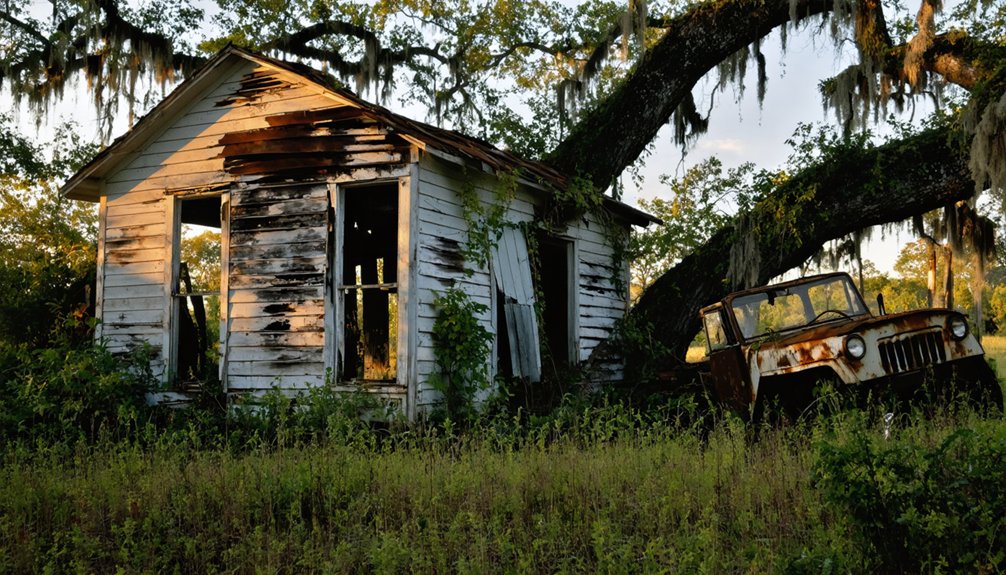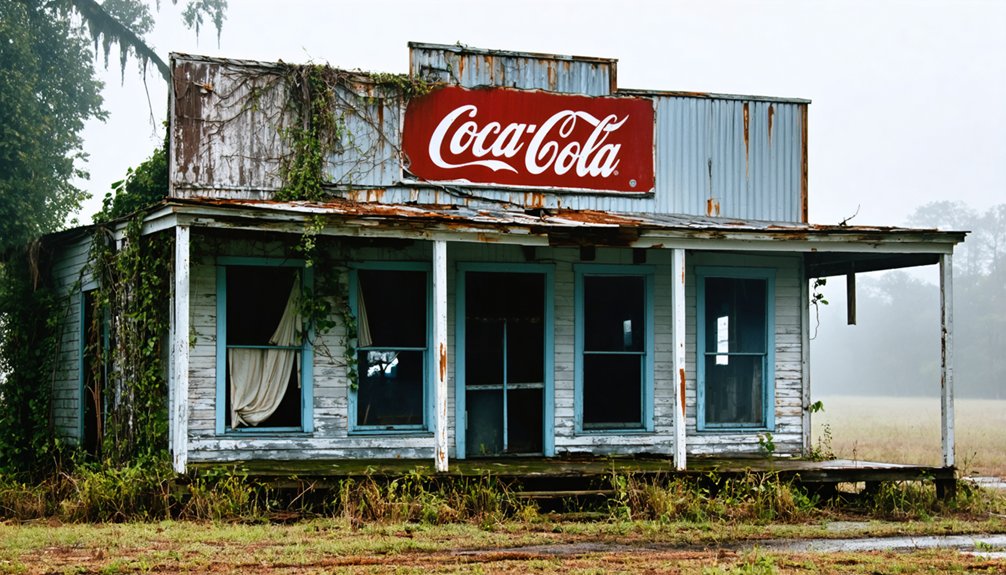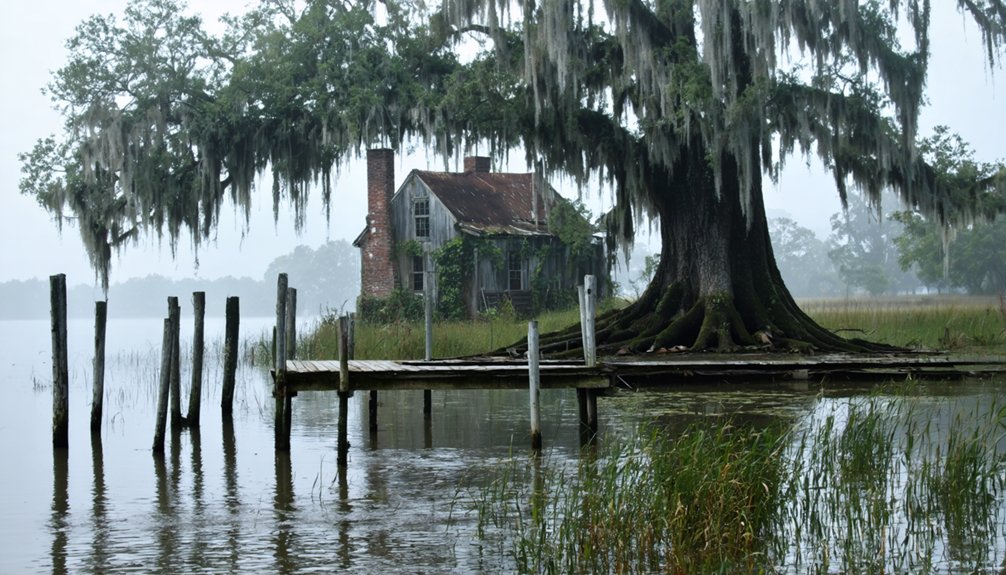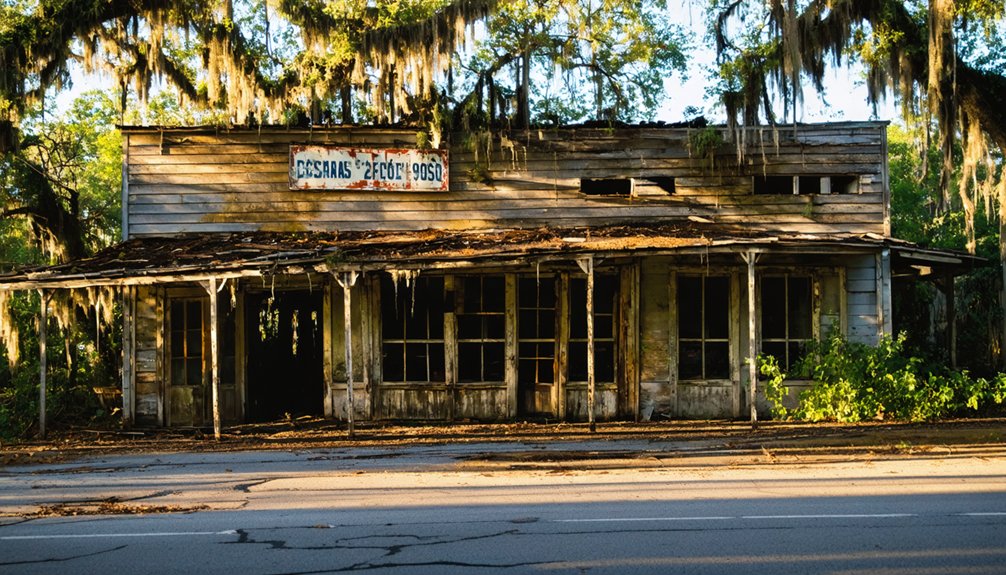
Planning a ghost town road trip to Torras, Louisiana means embracing a destination where almost nothing remains. Founded in 1900 by Joseph Torras as a thriving shipping hub, the town was destroyed by repeated Mississippi River floods and an abandoned railroad, leaving residents with no choice but to flee by 1927. Today, you’ll find open land, dense vegetation, and sweeping river views at coordinates 30.9833, -91.6833. Keep going to uncover everything you need to know before you visit.
Key Takeaways
- Torras, Louisiana, was founded in 1900 and abandoned by 1927 after repeated floods and railroad relocation destroyed its economic viability.
- The ghost town site leaves no visible structures, offering only sweeping river views and dense vegetation reclaiming the former townland.
- Use GPS coordinates 30.9833, -91.6833 to navigate to the site, and visit during fall for optimal weather conditions.
- Complement your visit by exploring nearby antebellum plantation homes and other Pointe Coupee Parish ghost towns along the historic River Road.
- Stop in New Roads before visiting for fuel and authentic Cajun food, including crawfish étouffée at Syd-N-Ivy’s or boudin from Morel’s Restaurant.
What’s Left of Torras, Louisiana Today
When you arrive at the site of Torras, Louisiana, you’ll find nothing but open land — no crumbling foundations, no weathered signage, no remnants of the bustling shipping hub it once was. The land sits periodically underwater, swallowed by the same rivers that once made it valuable.
Torras history is fundamentally invisible here, erased by floods, levee relocations, and time. Yet the community legacy endures in the historical record — a proof of what ambition and geography can build, and what nature can take away.
You’re standing on land that once hummed with river commerce and railroad activity. That silence speaks volumes. Visit during the dry season to access the area comfortably, and bring your imagination — it’s the only tool that’ll help you see what once stood here.
How Torras Went From Boomtown to Ghost Town in Under 30 Years
Few towns rise and fall as swiftly as Torras did — founded in 1900, largely gone by 1927.
Joseph Torras built something real here, leveraging geography to create genuine economic impact. Then nature and progress dismantled it just as fast.
The Torras history follows a brutal sequence:
- 1900: Joseph Torras purchases the Simmes plantation and establishes the M&J Torras firm
- Strategic river and rail access fuels rapid commercial growth
- 1912: The Great Mississippi River flood nearly erases the town entirely
- Residents rebuild, but levees push the community outside flood protection
- 1927: The railroad relocates, stripping Torras of its economic lifeline permanently
Once you lose the railroad and the river wins, there’s nothing left to fight for.
Torras simply stopped existing.
How Floods and a Railroad Killed Torras for Good
The 1912 flood didn’t just damage Torras — it rewrote the town’s future in ways residents couldn’t fully see at the time. The flood impact was devastating enough to gut the community, yet people rebuilt, determined to reclaim what they’d lost.
The 1912 flood didn’t just damage Torras — it quietly rewrote a future no one could yet read.
Then 1927 hit.
That second catastrophic flood forced engineers to push levees further back, leaving Torras stranded on the wrong side of the wall — exposed, unprotected, and increasingly irrelevant.
Railroad relocation delivered the final blow. Once the Texas & Pacific Railroad abandoned its connection to Torras, the town lost its economic lifeline overnight.
Without rail access or flood protection, there was simply no reason to stay. By 1927, residents had walked away for good, surrendering Torras to the rivers that had always threatened to swallow it whole.
What You Actually See When You Visit the Torras Ghost Town Site
Visiting Torras today means confronting a profound absence — no crumbling foundations, no rusted machinery, no weathered signposts hinting at what once stood here.
There aren’t any historical markers commemorating Joseph Torras or his vanished settlement. What you’ll find instead is raw Louisiana landscape — and that emptiness tells its own powerful story.
For ghost town photography, embrace the surroundings:
- Sprawling river views where commerce once flowed
- Dense vegetation reclaiming every inch of former townland
- Periodic floodwaters mirroring an unchanged sky
- The Old River Control Structure looming nearby
- Absolute stillness where a bustling shipping hub once thrived
You’re standing somewhere that floods erased so completely that nature itself seems to have forgotten.
That erasure — total, uncompromising — is exactly what makes Torras worth experiencing.
How to Get to Torras, Louisiana
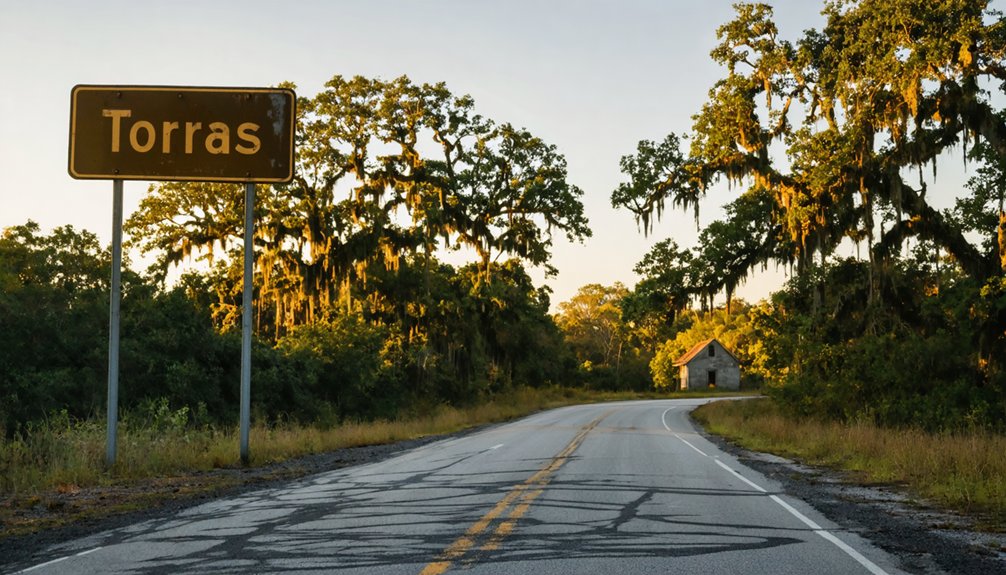
Getting to Torras requires some patience, but the drive itself rewards you with quintessential Louisiana scenery. Head toward Pointe Coupee Parish’s northeast corner, traversing rural highways lined with cypress trees and sugarcane fields.
Your coordinates are 30.9833, -91.6833, so plug those into your GPS before leaving civilization behind.
A few essential travel tips: visit during the dry season when road conditions are most reliable. Louisiana’s back roads can become treacherous after heavy rainfall, and low-lying routes near the Mississippi occasionally flood without warning.
Keep your gas tank full since services are sparse in this remote stretch.
Plan roughly 30 minutes on-site, making this an ideal stop within a larger road trip through Louisiana’s forgotten communities. The journey itself tells the story.
When Is the Best Time to Visit Torras?
When you visit Torras matters more than you might expect. Weather Considerations and Best Seasons directly impact whether you’re exploring dry land or watching a ghost town disappear beneath floodwaters.
The dry season gives you the best shot at actually seeing the site. Here’s what shapes your visit:
- Fall (October–November) offers cooler temperatures and lower water levels.
- Winter stays mild in Louisiana, keeping the site accessible.
- Spring flooding can submerge the entire area without warning.
- Summer heat and humidity make outdoor exploration genuinely miserable.
- Hurricane season (June–November) introduces unpredictable weather risks.
Plan for fall if you want the clearest conditions. Torras doesn’t reward the unprepared traveler, so check local river gauges before you go.
Other Louisiana Ghost Towns Near Torras Worth the Detour
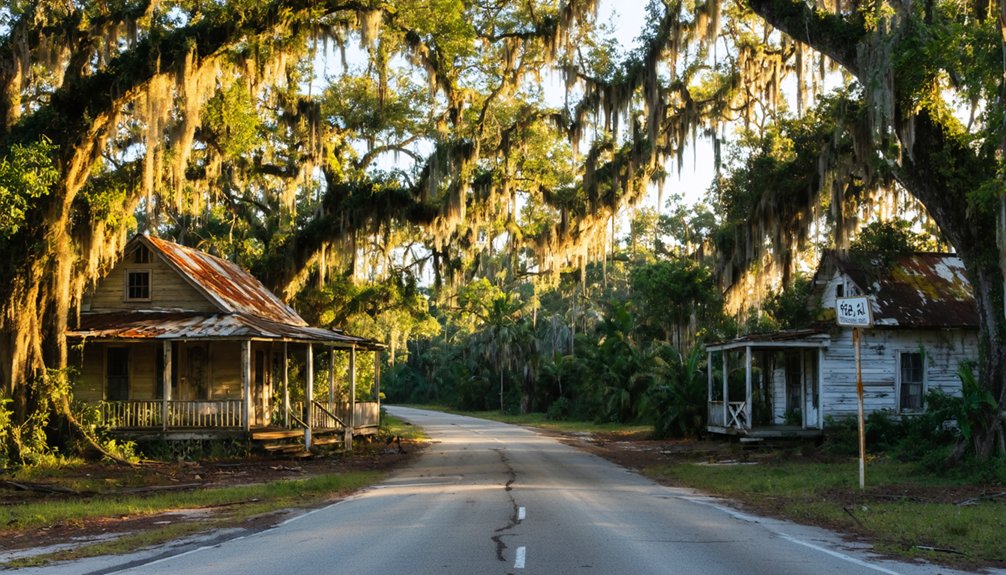
Once you’ve locked in your fall visit and mapped out the drive to Torras, it’s worth stretching that road trip into something bigger.
Louisiana documents 16 ghost towns total, and several others share Torras’s story of flood-driven abandonment and forgotten cultural significance. Pointe Coupee Parish alone holds multiple vanished communities, each representing a different chapter of Louisiana’s complicated relationship with its rivers.
Exploring these sites side by side deepens your understanding of historical preservation challenges unique to this region. Unlike museum exhibits, these open-air remnants let you experience that history firsthand, on your own terms and timeline.
Research neighboring sites before you leave home, plot coordinates, and build a multi-stop itinerary. Louisiana rewards curious travelers who look beyond the obvious destinations.
What Else to See While Driving Through Pointe Coupee Parish
While you’re making your way through Pointe Coupee Parish, keep your eyes open for the stunning antebellum plantation homes that line the historic River Road, offering a vivid glimpse into Louisiana’s complex past.
Pull over at the scenic river overlooks along the way, where the mighty Mississippi commands your full attention and reminds you why this region’s geography shaped everything from its settlements to its ghost towns.
Before you leave, you’ll want to fuel up at one of the local Cajun spots tucked along the route, where the boudin and crawfish étouffée taste like they’ve been perfected over generations.
Historic Plantation Homes Nearby
Since you’ve made the long drive out to Pointe Coupee Parish, it’d be a shame to leave without exploring some of the stunning antebellum plantation homes scattered throughout the region.
Their plantation architecture and historical significance tell stories just as compelling as Torras itself. Look for these nearby gems:
- Parlange Plantation – One of Louisiana’s oldest surviving plantations, still family-owned
- Alma Plantation – A working sugarcane farm with remarkable original structures
- Richland Plantation – Features classic Greek Revival detailing
- Oakland Plantation – Offers preserved outbuildings and slave quarters
- Austerlitz Plantation – A quietly striking example of Creole architecture
Each property offers a raw, unfiltered glimpse into the region’s layered past, making your road trip through Pointe Coupee Parish genuinely worthwhile.
Scenic River Road Stops
Beyond the plantation gates, Pointe Coupee Parish keeps rewarding you with stops worth pulling over for. The River Road hugs the Mississippi’s curves, delivering raw, unfiltered river views that no postcard captures honestly.
Pull off wherever a historical marker catches your eye — they’re scattered along the route, marking battles, floods, and forgotten communities that shaped this region.
New Roads, the parish seat, offers a quick fuel-and-food break before you push toward Torras. The Old River Control Structure looms nearby, a massive federal engineering project that literally redirected the Mississippi’s future.
Standing beside it gives you genuine perspective on why towns like Torras vanished. The land here doesn’t negotiate with water — it simply absorbs the consequences, and the drive makes that truth undeniable.
Local Cajun Food Spots
Pointe Coupee Parish feeds you well if you know where to stop. The region’s Cajun cuisine runs deep, shaped by French Creole roots and river culture.
Hit local markets and roadside spots to fuel your ghost town adventure:
- Syd-N-Ivy’s in New Roads serves authentic crawfish étouffée worth the detour.
- Morel’s Restaurant delivers classic boudin and cracklins locals swear by.
- The False River area offers fresh seafood caught that morning.
- Farmers markets stock homemade pepper jellies, cane syrup, and smoked meats.
- Gas station boudin stops are a Louisiana tradition you shouldn’t skip.
Don’t rush through here on an empty stomach.
These flavors connect you to the same river culture that built and eventually swallowed Torras whole.
Frequently Asked Questions
Who Was Joseph Torras and Where Did He Originally Come From?
Joseph Torras was a Barcelona immigrant who founded a Louisiana town bearing his name in 1900. You’ll find his legacy woven into Torras history, as he transformed a Mississippi plantation into a thriving commerce hub.
What Plantation Was the Town of Torras Originally Built Upon?
You’ll find that Torras’ plantation history runs deep — it’s built upon the Bennet Barton Simmes plantation. This rich foundation shaped the town’s significance, as Joseph Torras transformed that land into a thriving commercial hub.
What Was the Original Name of Torras Before It Was Renamed?
Like a river shedding its old name, Red River Landing was Torras’s original identity before its historical significance grew, honoring founder Joseph Torras. You’ll find its name origins tied directly to the waterways that shaped it.
How Many Documented Ghost Towns Are There in Louisiana Total?
You’ll find 16 documented Ghost Towns scattered across Louisiana’s haunting landscape! These abandoned communities are fascinating chapters of Louisiana History, each telling stories of resilience, natural disaster, and the unstoppable passage of time waiting for you to explore.
What Business Firm Did Joseph Torras Establish When Founding the Town?
When exploring Torras history, you’ll discover Joseph Torras established the M&J Torras firm, which had a tremendous economic impact by leveraging the town’s unique access to major rivers and railroad infrastructure for thriving commerce.
References
- https://k945.com/these-3-louisiana-ghost-towns-are-just-a-road-trip-away/
- https://ghost-towns.close-to-me.com/states/louisiana/torras-la/
- https://classicrock1051.com/16-ghost-towns-in-louisiana/
- https://en.wikipedia.org/wiki/List_of_ghost_towns_in_Louisiana
- https://www.youtube.com/watch?v=vr1-UyWqkJI
- https://www.ezhomesearch.com/blog/ghost-towns-in-louisiana/