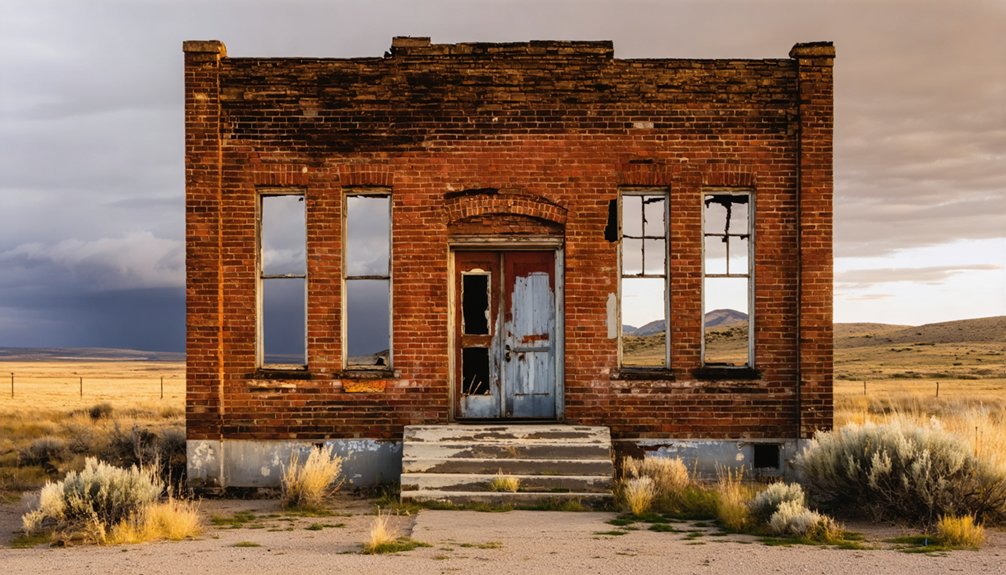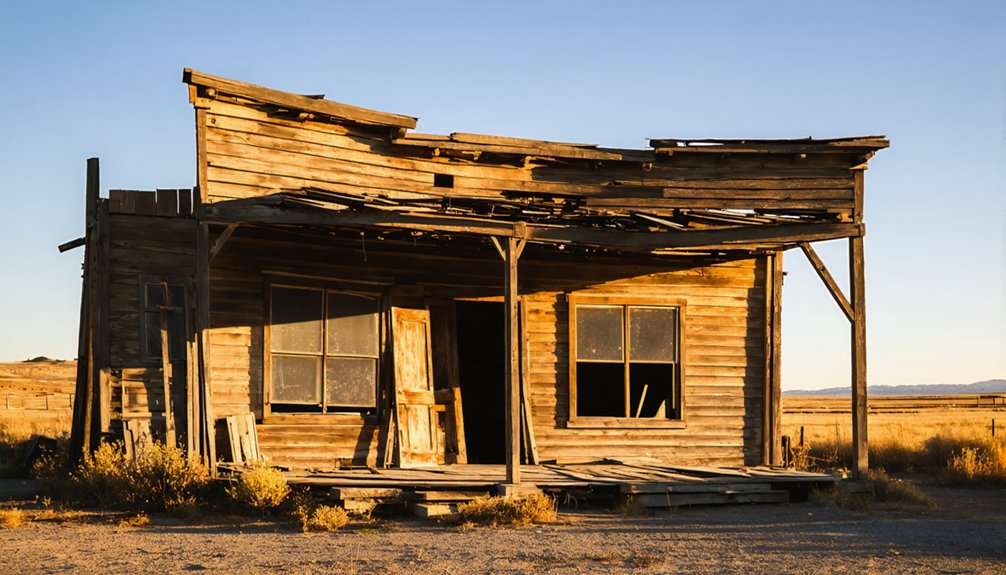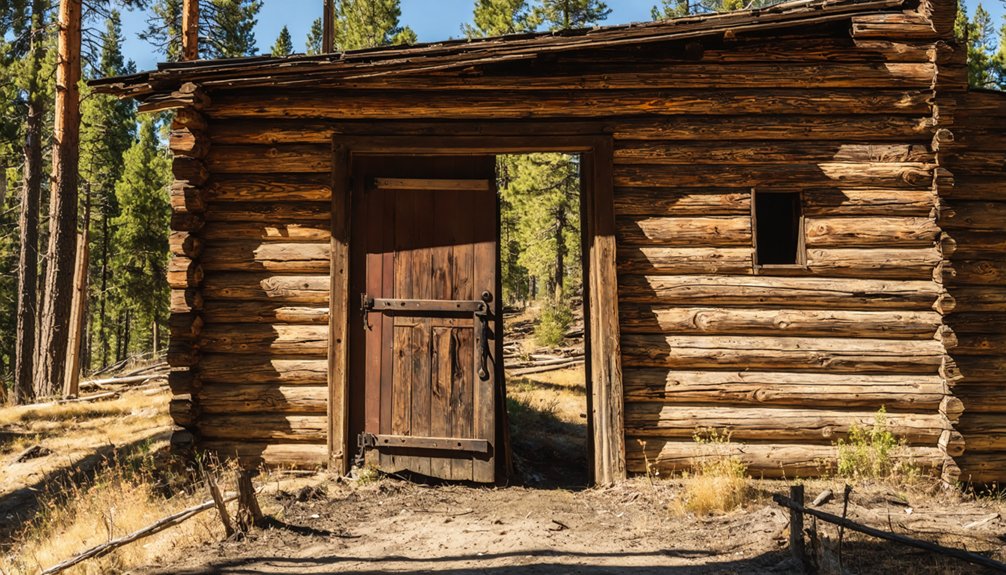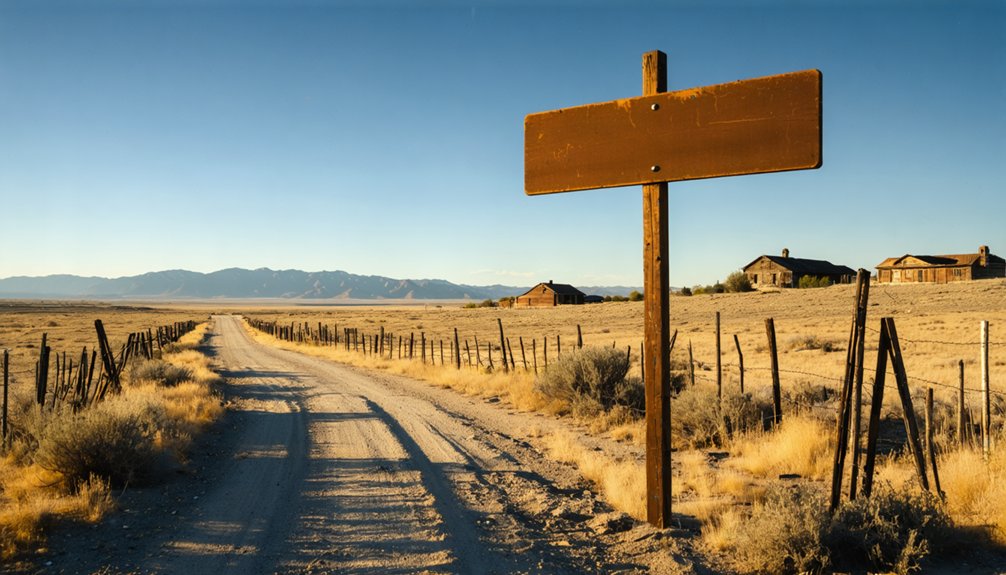
You’ll tackle 26.6 miles of washboarded dirt road off Highway 21 to reach Twin Springs, where a 40-foot Glory Hole still glitters with drusy quartz from the Boise Basin’s $10 million gold rush. Late September through mid-October offers the best conditions, with golden aspens framing your drive past Cottonwood Ranger Station and Willow Creek Campground. Pack sturdy boots, layers, and extra water—you’re heading into true backcountry where cell service vanishes and physical landmarks become your guide to uncovering stories carved deep into Idaho’s mining history.
Key Takeaways
- Take Highway 21 past Mores Creek Bridge, then follow Atlanta signs for 19+ miles on washboarded dirt road requiring high-clearance vehicles.
- Visit late September through mid-October for peak aspen colors; verify road conditions via twinspringsresortidaho@gmail.com before departure.
- Explore the 40-foot Glory Hole pit with glittering drusy quartz walls and active placer mining operations on-site.
- Tour the Twin Springs Historical Society exhibits in the main bar showcasing mining implements, photographs, and pioneer artifacts.
- Pack sturdy footwear, layered clothing, extra water, and detailed maps; avoid GPS and rely on physical landmarks instead.
Getting to Twin Springs: Routes and Road Conditions
The journey to Twin Springs begins on Highway 21, where pavement gives way to adventure about an hour north of Boise. After crossing Mores Creek Bridge, you’ll follow Atlanta signs onto graded dirt road—19+ miles of washboarded, one-lane freedom that’ll test your suspension and reward your wanderlust.
Watch for Cottonwood Ranger Station around mile 12, Willow Creek Campground, and Prairie sign at mile 16. Badger Creek Campground signals you’re close. Your final landmark will be the Welcome to Twin Springs sign, marking your arrival at this historic ghost town destination.
Ditch Google Maps—it’s worthless here. Scout your route beforehand and trust physical landmarks over GPS. A vehicle with decent clearance handles the variable conditions best. The route transitions from an oiled road to a more primitive surface as you approach the campground area. While parking options accommodate various vehicle sizes, accessibility for large vehicles depends on seasonal grading. Contact twinspringsresortidaho@gmail.com before departure to verify current conditions and navigate this remote corridor successfully.
The Glory Hole and Historic Mining Relics
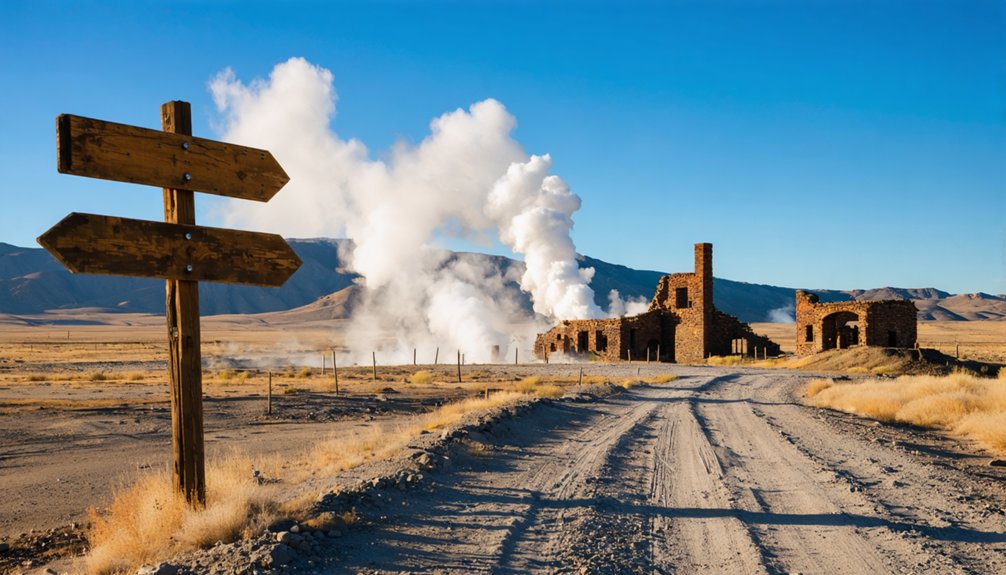
When you crest the final ridge before Twin Springs, you’ll spot what locals call the Glory Hole—a gaping 40-foot-wide pit carved into the mountainside where sheared, altered rock tells stories of gold fever and geological violence. This geological formation features strike N. 40° E. through the granitic Idaho batholith, its walls studded with drusy quartz that glitters in afternoon light. The Boise Basin area yielded over $10 million in gold, and you’re standing in its heart.
Today’s mining claim operations continue the tradition George Castle started here in 1989. Gary Schlunegger and Connie Santos maintain the active 20.66-acre Glory Hole placer claim, working deposits that formed when Miocene magma created collapse structures and fractures—nature’s vault cracked open for those bold enough to explore. The springs once served as a reliable watering spot for nomadic bands traveling between the Inland Sea and the Camass prairie, long before prospectors arrived with their dreams of fortune. To the west, the Owyhee Dam’s own Glory Hole spillway uses a 60-foot diameter tunnel to manage water flow, demonstrating how the region has long relied on ingenious engineering to harness natural resources.
Best Times to Visit and What to Bring
You’ll want to time your Twin Springs adventure for late September through mid-October, when the aspens blaze gold against weathered mine buildings and temperatures hover in that perfect range for exploration.
I learned the hard way that checking road conditions is indispensable—my first attempt in early November met with snowdrifts blocking the final approach, forcing a muddy hike with inadequate boots.
Pack your vehicle like you’re heading into genuine backcountry: sturdy footwear, layered clothing, extra water, and a detailed map, since cell service disappears long before you reach the ghost town. After your ghost town exploration, consider stopping at Miracle and Banbury Hot Springs near Buhl for a relaxing soak with accommodations and dining options nearby. If you’re planning additional haunted destinations, consider booking tickets early for popular attractions like Haunted Mansions of Albion, where tickets sell out quickly during peak season.
Seasonal Access and Conditions
Getting to Twin Springs requires traversing 26.6 miles of dirt road that transforms dramatically with Idaho’s seasons, and I’ve learned the hard way that vehicle choice makes or breaks this journey. You’ll need high-clearance vehicles during winter months when washboarded surfaces and narrow one-lane sections demand careful navigation.
Spring and early summer offer ideal conditions after snowmelt clears the route. The resort’s year round accommodations mean you’re never barred out by season, though variable weather patterns at 3,400 feet elevation require strategic packing. Summer grants access to hiking and river activities, while winter transforms the landscape for snowmobiling and cross-country skiing. The approximately 3.5-hour drive from Twin Falls makes this an achievable weekend escape for those seeking genuine isolation. Located just 45 miles from Boise, the property sits on the Boise River in southwestern Idaho’s backcountry.
Check road conditions before departing—there’s zero services along this remote stretch, and cell phones become expensive paperweights out here.
Essential Gear and Supplies
Your vehicle becomes a mobile base camp for this ghost town adventure, so I pack like I’m prepping for a backcountry expedition—because fundamentally, you are. Suitable camping gear starts with shelter and firewood (available at primitive sites with fire pits). Don’t forget toilet paper—vault toilets provide zero amenities.
Required food supplies should cover your entire stay since you’re 45 miles from civilization with no cell service to call for backup. I learned this after forgetting coffee on my second trip—a mistake I’ll never repeat. Water comes from the Middle Fork Boise River, so bring purification tablets or a filter. Physical maps or downloaded PDFs are non-negotiable when Google Maps fails you at 3,400 feet elevation. If you’re planning activities beyond the resort, pack appropriate gear for gold panning or nature photography depending on the season. For those seeking comfortable amenities, Twin Springs Resort offers lodging options that eliminate the need for extensive camping equipment.
Cash and Safety Considerations
While most ghost towns accept credit cards these days, Twin Springs operates differently—cash remains king in Idaho’s backcountry. Bayhorse Ghost Town charges $7 through a simple dropbox system, though nearby Ghost Town Museum offers more payment options including cards and online booking at $8.50 for adults.
The freedom of exploring abandoned settlements comes with responsibility—stick to marked trails to prevent erosion and respect active mining claims. Bayhorse maintains impressive restroom maintenance with three daily cleanings, a welcome discovery after dusty exploration.
Winter access demands a 4WD vehicle, and you’ll want to verify road conditions before venturing out. Pack extra water regardless of season, and remember: those hot springs might look inviting, but some exceed boiling temperatures. Test carefully before immersing yourself.
Exploring the Twin Springs Historical Society
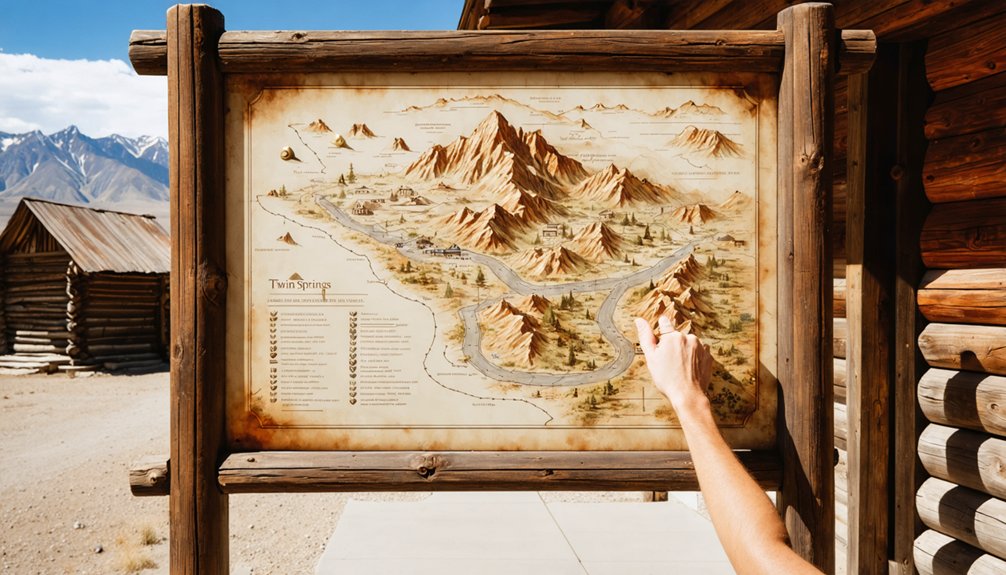
The Twin Springs Historical Society preserves more than a century of mining and pioneer life through exhibits scattered across this remote outpost. You’ll find museum exhibits in the main bar—photographs from the 1800s capturing weathered prospectors and dusty street scenes, plus mining implements that built fortunes from the famous Glory Hole.
That massive pit in the mountainside yielded enough gold to fuel the entire economy until the mid-1900s, and you can still hike to its remains today.
The original cabin that served as store, school, and lodging stands modified but intact. Stop at the bar for oral history accounts and pick up “Story of Last Chance Grocery” for authentic tales from former residents.
Outside, wooden sluice timbers and iron spikes mark where miners moved massive water volumes by hand.
Nearby Ghost Towns Worth Adding to Your Trip
Beyond Twin Springs, several authentic ghost towns cluster within a few hours’ drive, each offering distinct snapshots of Idaho’s mining boom and bust cycles. You’ll find Custer and Bonanza near Stanley, where preserved buildings tell contrasting stories—one restored with guided tours, the other raw and untouched.
Silver City stands out with year-round residents and a seasonal hotel, blending living history with authentic atmosphere. Gilmore’s eight stabilized structures near Leadore survived a catastrophic 1929 power plant explosion.
For easier day trips from Featherville, Rocky Bar and Atlanta offer abandoned facilities, rusting mining equipment, and weathered cemeteries just thirty minutes away. Each site rewards your independent exploration with tangible connections to Idaho’s frontier past, no crowds or commercialization required.
Making a Full Day Adventure With Hot Springs and Kilns
You’ll want to stretch this ghost town journey into a full day by combining your Twin Springs soak with a visit to the historic kilns at Bayhorse.
I discovered that planning an overnight stay works best since Twin Springs doesn’t allow day use—this gives you time to explore the kilns in daylight, then return to your cabin for a long evening soak in your private mineral tub.
The drive between sites takes you through stunning Idaho backcountry, and you can easily pack a cooler since your cabin comes with a full kitchen and refrigerator.
Nearby Hot Springs Stops
Planning out a full day of soaking and exploring requires strategy when you’re venturing into Idaho’s backcountry hot springs territory. Twin Springs Resort offers private hot spring soaks as your home base, but you’ll want to scout additional locations for variety.
Jerry Johnson Hot Springs lies north of Salmon, requiring a manageable 2.6-mile round trip hike through pristine wilderness. Sunbeam Hot Springs sits just ten minutes beyond Boat Box, delivering accessible soaking pools alongside the Salmon River. Pine Flats Hot Springs, roughly 1.5 hours from Boise, provides another solid option with riverside pools perfect for afternoon exploration.
These nearby wilderness hikes connect you to multiple thermal features within reasonable driving distance, letting you craft a personalized hot springs circuit that maximizes your time in Idaho’s remote country.
Historic Kilns at Bayhorse
Since you’re already making the drive out to Twin Springs, the historic Bayhorse kilns sit just 20 minutes north and transform your hot springs day into a genuine backcountry adventure. Five beehive kilns still stand from the 1882 construction, built from native stone without any bracing—testament to historical technological innovations that powered Idaho’s silver boom.
The charcoal production history here is staggering: 48 men produced 80,000 bushels annually to fuel the smelter below. You’ll find these ruins along a short hike from the townsite, part of Land of the Yankee Fork State Park since 2009.
The kilns operated just three years before cheaper coke arrived from Ketchum, making them a fascinating snapshot of frontier industry that burned bright and fast.
Frequently Asked Questions
Are There Any Lodging or Camping Options Near Twin Springs?
You’ll find Twin Springs Resort offers three unique cabin options right on-site, but nearby campgrounds and local bed and breakfasts in the Twin Falls area provide additional freedom. Hotels like Best Western Plus sit just 5.4 miles away for convenience.
Is Cell Phone Service Available in the Twin Springs Area?
Cell phone service isn’t available at Twin Springs Resort—you’ll experience complete coverage limitations on that remote dirt road. Signal strength vanishes 26.6 miles in, so you’ll need to embrace disconnection and use email when you return to civilization.
Are Pets Allowed When Exploring Twin Springs and Surrounding Areas?
Yes, you’ll find welcoming pet policies throughout the area. Twin Springs charges just $20 per pet, while nearby trails like Box Canyon require leashes. These pet-friendly activities let you and your companion explore Idaho’s wilderness together freely.
What Safety Precautions Should I Take When Exploring Old Mine Sites?
Never enter crumbling mines where darkness swallows light and deadly gases lurk silently. Wear protective gear, stay outside unstable structures, and keep your distance from flooded shafts. Your freedom means nothing if you’re trapped underground forever.
Are Guided Tours Available at Twin Springs Historical Society?
No formal guided tours are offered—you’ll enjoy self-guided tours at your own pace. Explore museum exhibits featuring mining relics and historic photographs in the bar, then hike freely to the Glory Hole mining site whenever you choose.
References
- https://www.ghosttowns.com/states/nv/twinsprings.htm
- https://boiseghost.org/resources/forum/topic/the-ghosts-of-twin-falls-downtown-idaho/
- https://www.twinspringsidaho.com/about/
- https://www.youtube.com/watch?v=idZ-VsmDapM
- https://www.hmdb.org/m.asp?m=124144
- https://takingthekids.com/overlooked-ghost-towns-in-idaho-that-are-eerily-beautiful/
- https://983thesnake.com/150-yr-old-kilns-up-the-road-from-hot-springs-north-of-twin-falls/
- https://visitidaho.org/things-to-do/ghost-towns-mining-history/
- https://www.twinspringsidaho.com/getting-here/
- https://thedyrt.com/camping/idaho/idaho-twin-springs-campground