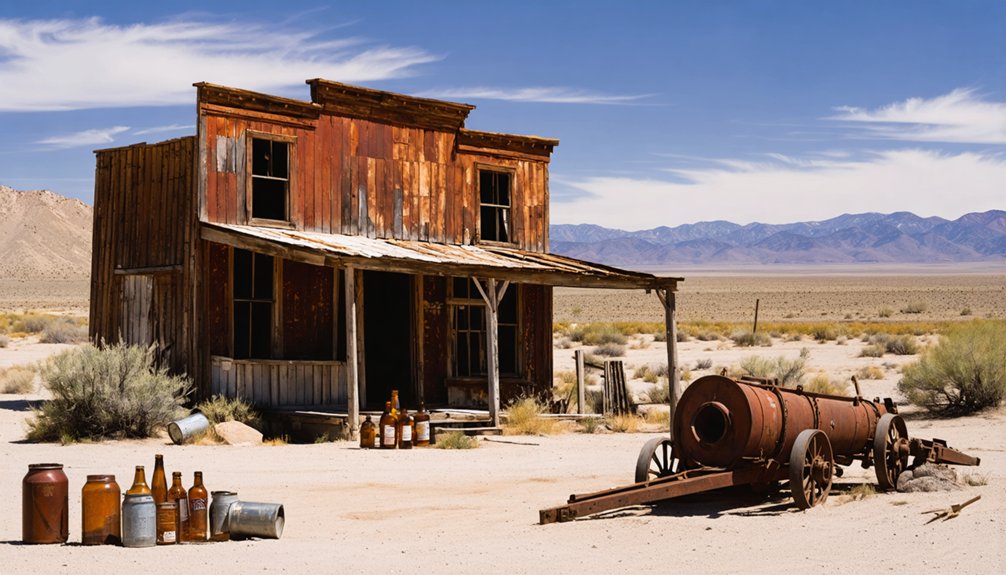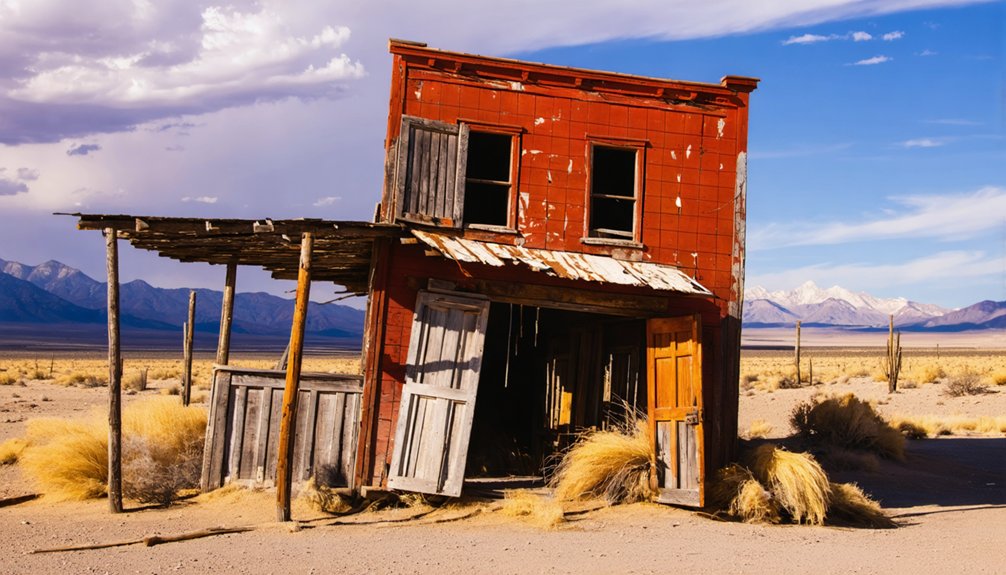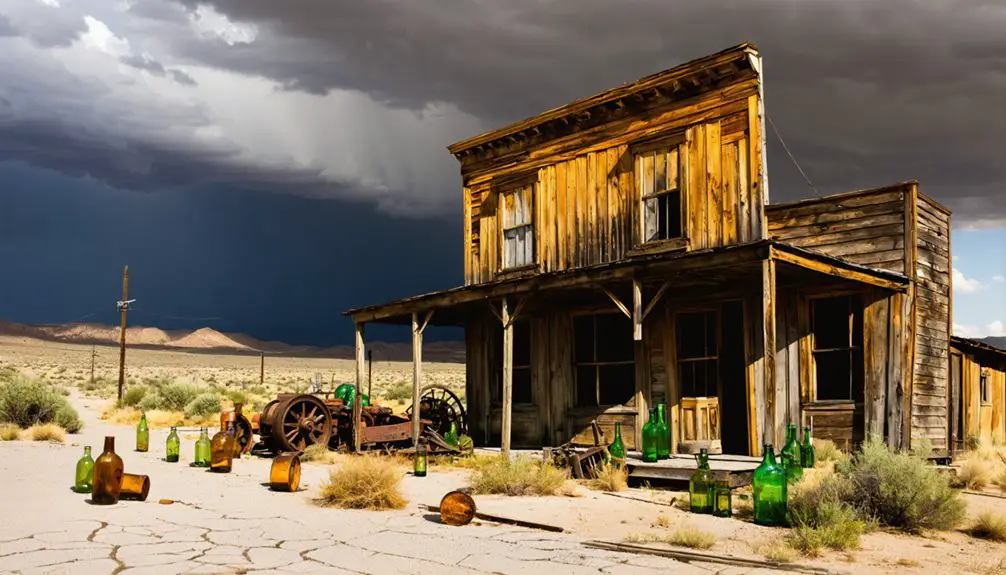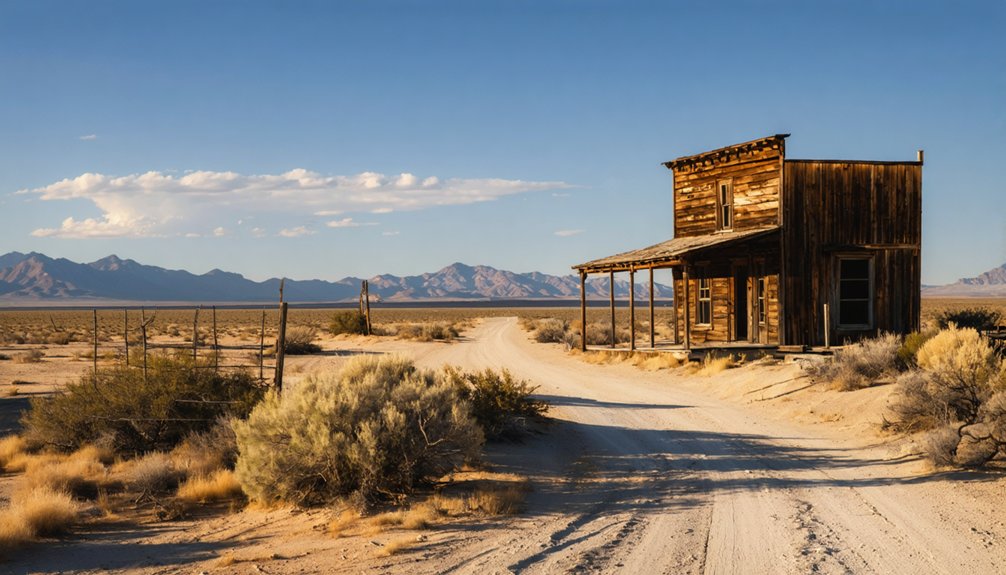
Drive northeast from Winnemucca on NV 400 for 48 miles through sagebrush plains, where gravel patches signal your arrival at Unionville’s canyon. You’ll find Mark Twain’s crumbling cabin, a frozen-in-time schoolhouse clutching 1870s desks, and weathered mining relics dotting hillsides above an unpaved main street. Spring and fall offer ideal conditions, though summer’s mild heat works too—just pack water, survival gear, and respect for the high-clearance gravel approach. The canyon’s echoes hold stories of silver fever, spectacular failure, and stubborn persistence.
Key Takeaways
- Travel 48 miles northeast from Winnemucca on NV 400; refuel there as it’s the last reliable service station.
- Visit during spring or fall for mild temperatures; avoid winter snowstorms and summer heat exceeding 95°F.
- Bring a high-clearance vehicle, offline GPS, water, snacks, layers, and emergency supplies for remote gravel roads.
- Explore Mark Twain’s cabin, the 1870s schoolhouse, crumbling facades, mining relics, and the historic cemetery.
- Expect minimal services in this 20-resident ghost town; plan for self-sufficiency and respect private property.
The Rise and Fall of a Silver Mining Boomtown
When Paiute Indians arrived in Virginia City clutching chunks of lustrous silver ore in 1861, they unknowingly set in motion the birth of a boomtown. Prospectors traced their path back to Buena Vista Canyon, where silver ore discoveries sparked a rush that transformed wilderness into Unionville by 1862.
The town exploded during the 1860s as influential residents established mills and mines, with the Arizona mine becoming the crown jewel of operations. By 1864, you’d have found three ten-stamp mills crushing ore while the population peaked amid the prosperity.
But freedom’s price came due. Mining’s downturn, a catastrophic 1872 fire causing $30,000 in damages, and losing the county seat to Winnemucca in 1873 gutted the town. By 1880, only 200 souls remained among the ruins.
Mark Twain’s Failed Prospecting Adventure
Among the fortune-seekers flooding into Unionville’s canyon in winter 1861, a young Samuel Clemens arrived through a driving snowstorm with dreams as lustrous as the silver ore everyone promised lay scattered on the ground.
He and his brother Orion carved their shelter into Humboldt Mountain’s flank—canvas roof, smoke hole chimney, and sagebrush fires courtesy of local Indians. Reality struck hard when their purchased ten-foot claim yielded only backbreaking labor: shoveling, picking, shaft-sinking through frozen earth.
Three weeks of prospecting disappointment followed, culminating in the crushing discovery that their glittering find was worthless quartz. The lack of silver finds drove Clemens from Unionville’s dusty canyon, but this spectacular failure birthed something greater—he’d trade his pickaxe for a pen, becoming Mark Twain at Virginia City’s Territorial Enterprise.
What Remains of Unionville Today
The canyon that once echoed with hundreds of pickaxes now cradles roughly twenty souls who’ve chosen this profound silence over civilization’s clamor. You’ll find limited commercial operations here—just the Old Pioneer Garden Bed & Breakfast anchoring this unincorporated hamlet.
Weathered cabins lean against time itself, while the one-room schoolhouse stands defiant, its pot-bellied stove and desks frozen in 1870. Twain’s vandalized cabin still beckons the curious down that gravel fork.
The tranquil scenic environment stretches beyond crumbling facades into canyon walls perfect for disappearing into wilderness. That active cemetery north of town? It’s waiting patiently.
The concrete foundation where locals dump their garbage tells you everything about practical mountain living—no pretense, no government interference, just people claiming their right to exist beyond society’s suffocating embrace.
Exploring the Abandoned Structures and Cemetery
Crumbling facades lean into each other like exhausted miners along Unionville’s unpaved main street, their weathered wooden bones creaking secrets to anyone brave enough to listen. You’ll find Mark Twain’s mud-brick cabin near the entrance, its fireplace cold since his 1862 prospecting days. The one-room schoolhouse still clutches student desks within its 1870s walls, though the town preservation status remains nonexistent—nature reclaims what bureaucracy won’t protect.
Peer into the old post office’s dusty mail slots or the saloon where vintage bottles gather shadows on sagging shelves. Mining relics dot the hillsides as dark portals into gold-fevered dreams. North of town, Unionville Cemetery accepts occasional burials, connecting past desperations to present freedoms—a reminder that some choose to stay even after everyone else fled.
Driving Directions From Winnemucca
Before civilization fades completely in your rearview mirror, you’ll want to top off your gas tank in Winnemucca—the last outpost offering reliable services before NV 400 pulls you into Nevada’s high desert solitude. The 48-mile journey northeast unfolds across asphalt ribbons cutting through sagebrush plains, where scenic views along the route reveal mountain ridges brushed with rust and gold. You’ll maintain 55-70 mph through this two-lane corridor, where wildlife occasionally claims right-of-way and winter storms demand respect.
As you approach Unionville, gravel patches announce switch from highway to ghost town. Watch for historic mining equipment found in area—rusted relics standing sentinel among scattered structures. The hour-long drive delivers you from modern convenience into preserved abandonment, where Nevada’s mining legacy waits in the shadows of Buena Vista Canyon.
Best Time to Visit and What to Bring
You’ll find Unionville most welcoming during spring and fall, when mild canyon temperatures transform hiking through sagebrush-dotted ruins into pure pleasure rather than an endurance test against Nevada’s punishing summer heat.
The seven-mile gravel approach demands a high-clearance vehicle and self-sufficiency—pack ample water, snacks, and layers for the temperature swings that send evening chills racing down the canyon walls after blazing afternoon sun.
Winter’s driving snowstorms, the same ones that greeted Mark Twain in 1862, can strand you on impassable roads lined with snow-capped hills that shimmer like distant promises of isolation.
Seasonal Weather Considerations
The high desert climate around Unionville swings wildly between scorching afternoons and bone-chilling nights, a temperature rollercoaster that’ll shape every moment of your ghost town adventure.
Summer delivers ideal summer temperatures hovering between 85-95°F, perfect for exploring abandoned storefronts before retreating to shade during peak heat. You’ll experience minimal annual precipitation—just 8-12 inches yearly—meaning dusty trails and cloudless skies dominate your journey.
Spring’s unpredictable winds whip across open valleys, while fall’s golden light bathes weathered buildings in amber hues.
Winter transforms this landscape into an austere wonderland where sub-freezing nights plunge to 15°F, testing your resolve. Each season writes its own story across these forgotten streets, demanding respect for nature’s extremes while rewarding those bold enough to embrace the elements.
Essential Road Trip Supplies
Timing your Unionville adventure right means the difference between dusty bliss and sunstroke misery. Spring’s mild temperatures let you wander freely through adobe ruins, while fall delivers cooler exploration without summer crowds.
Winter brings snow-locked roads that’ll trap you miles from civilization.
For this remote location awareness, pack smart:
- Vehicle maintenance essentials: Spare tire, jack, tire repair kit, jumper cables, and full fuel tank—you’re an hour from services
- Desert survival gear: One gallon of water per person daily, first aid kit with snake bite provisions, sunscreen, flashlights for dim cabin interiors
- Exploration equipment: Sturdy boots for rocky terrain, camera with extra batteries, trash bags for pack-out waste
Your high-clearance vehicle and offline GPS become lifelines on those gravel roads stretching toward Mark Twain’s old stomping grounds.
Nearby Attractions and Ghost Towns Worth Exploring
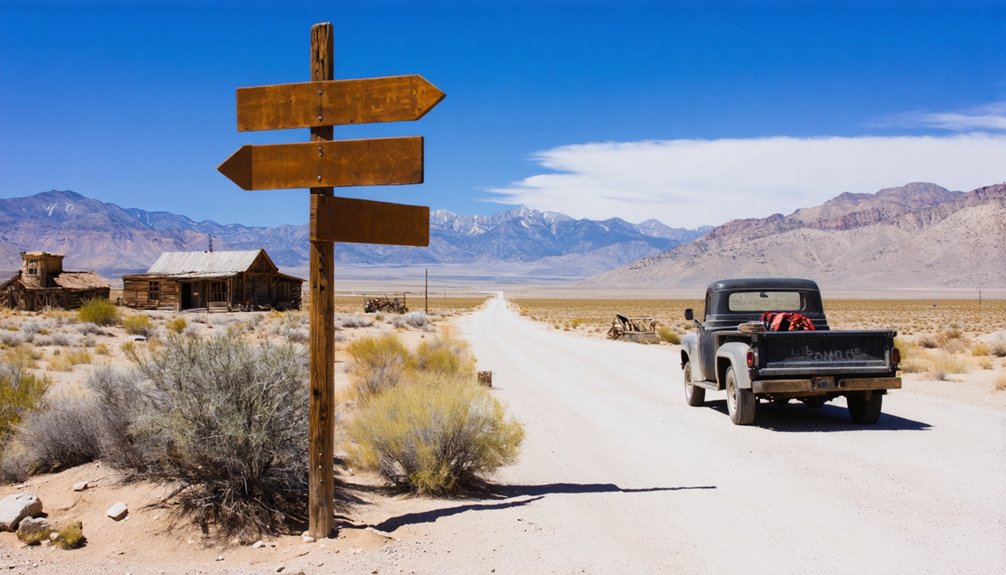
Beyond Unionville’s weathered buildings and sagebrush-dotted hills, Nevada’s backcountry unfolds into a constellation of forgotten mining camps where rusted machinery stands sentinel over silent streets.
You’ll find Rhyolite’s concrete ruins standing defiant against time, while Gold Point’s seven residents welcome wanderers into restored miners’ shacks where pot-bellied stoves still heat rough-hewn rooms. Goldfield’s four-story hotel towers over empty sidewalks, its 150 rooms echoing with boom-era ghosts when 30,000 souls called this desert home.
These destinations offer unmatched photography opportunities—prostitutes’ cribs frozen in 1910, schoolhouses with original desks gathering dust. Each site carries profound cultural significance, preserving Nevada’s mining heritage without sanitized interpretations. Jarbidge’s twenty residents maintain authentic Western character, while Berlin’s preserved structures stand embodiment to dreams that couldn’t outlast depleted veins.
Frequently Asked Questions
Are There Any Restrooms or Facilities Available in Unionville?
You’ll find limited accessibility to restrooms in Unionville—the Old Pioneer Garden Country Inn offers facilities, but abandoned structures present potential safety hazards with broken glass and debris. The nearest public services require an hour’s drive through open Nevada desert.
Is It Safe to Enter the Abandoned Buildings and Structures?
No, you shouldn’t enter—vandalism’s documented here regularly. Structural stability concerns make these buildings dangerous traps. Potential hazards within buildings include rotting floors, collapsing roofs, and hidden debris. Your freedom means respecting boundaries that keep you alive and exploring responsibly.
Can I Camp Overnight in Unionville or Nearby Areas?
You can’t camp in Unionville itself, but nearby BLM lands and state parks welcome overnight stays. You’ll discover stellar scenic viewpoints and hiking trails while enjoying 14-day camping limits that let you explore freely without restrictions.
Do I Need a 4WD Vehicle to Reach the Town?
You won’t need 4WD under normal conditions—the well-maintained dirt roads welcome standard vehicles. However, seasonal accessibility changes dramatically with Nevada’s weather, so check current dirt road conditions before chasing your freedom into Unionville’s remote embrace.
Are There Any Fees or Permits Required to Visit Unionville?
You’re free to explore this time-weathered settlement without opening your wallet. No fees or permits restrict your discovery of Unionville’s historical significance. Just respect cultural preservation by leaving artifacts untouched and honoring private property boundaries during your adventure.