You’ll find Virginia City in Montana’s Ruby River valley, not South Dakota—a common mix-up that’s worth clarifying before you hit the road. This authentic gold rush town sits at 5,680 feet elevation, where wooden boardwalks creak beneath your boots and $100 million in gold once poured from Alder Gulch’s earth. Free parking lines the main street, Victorian-era inns await your arrival, and the 1875 courthouse still functions today. The complete story of vigilante justice and frontier survival unfolds throughout these preserved structures.
Key Takeaways
- Virginia City is located in Montana’s Ruby River valley at 5,680 feet elevation, not South Dakota.
- Free parking is available along Main Street, with the town accessible by car, historic railroad, or foot.
- Stay at historic properties like Fairweather Inn, Nevada City Hotel, or themed cabins at affordable rates.
- Explore preserved structures including the 1875 Madison County Courthouse, wooden boardwalks, and Boot Hill Cemetery.
- The Alder Gulch Shortline railroad connects Nevada City to Virginia City for $10 during a 35-minute ride.
The Rich History of Montana’s Premier Gold Rush Town
When William Fairweather, Henry Edgar, and Barney Hughes dipped their pans into Alder Gulch on May 22, 1863, they couldn’t have imagined the frenzy they’d trigger. Four days later, they’d confirmed Montana Territory’s richest placer strike.
Three prospectors bent over Alder Gulch with tin pans in 1863, unknowingly launching Montana’s greatest gold rush.
Within months, 10,000 fortune-seekers flooded this wilderness, creating an 11-mile chain of camps that became Virginia City and its satellite towns.
You’ll discover a place where $30 million in gold vanished from the earth in just three seasons. Mining technology advancements transformed simple panning into hydraulic operations and hard rock extraction by the 1890s.
Cultural diversity changes followed as Chinese leasers continued working claims after white miners moved on. Virginia City served as territorial capital for nearly a decade, building Montana’s governmental foundation before Helena claimed that prize in 1875.
Getting There: Routes and Access to Alder Gulch
Your journey to this legendary gold rush site begins at the intersection of Montana’s sweeping grasslands and the Rocky Mountain foothills, where Virginia City sits at 5,680 feet elevation in the Ruby River valley. This remote mountain location rewards adventurers willing to venture off the beaten path.
Three Ways to Experience Alder Gulch:
- By Car: Free parking lines the main street—arrive early during summer when 500,000 annual visitors explore the town
- Historic Railroad Infrastructure: The Alder Gulch Shortline connects Nevada City to Virginia City ($10, 35 minutes), built by Charles Bovey using tracks that once served Northern Pacific
- On Foot: Wander the 17-mile-long gulch where $100 million in gold emerged from beneath alder-lined banks
Outside summer, you’ll find empty streets perfect for solitary exploration.
Where to Stay During Your Visit
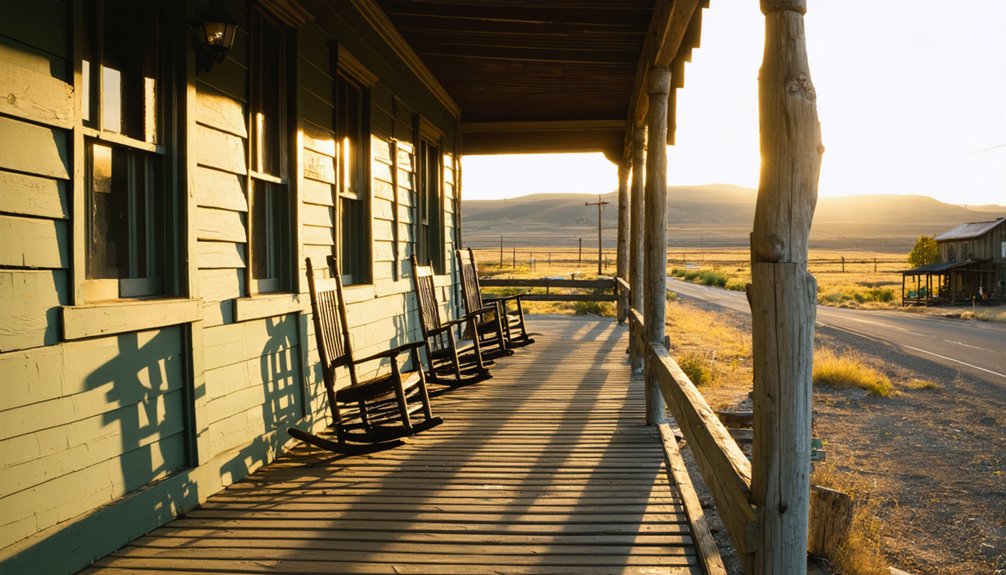
While most ghost towns leave you scrambling for accommodations in distant cities, Virginia City delivers authentic lodging right where history happened. You’ll find the Fairweather Inn just half a mile from town center, showcasing Victorian architecture styles that transport you to the 1860s gold rush era.
Stay where history unfolded—Victorian-era lodging awaits just steps from Virginia City’s gold rush heritage, no distant hotels required.
The Nevada City Hotel sits two miles out with cabins praised for their awesome staff and comfortable setup.
For affordability of lodging options, consider themed rooms at historic properties or cozy VRBO cabins scattered throughout preserved settings. Red Bear Inn guests rave about perfection, while Hangman’s Guest Ranch offers peaceful cabins like Meadowlark and Kingfisher with stunning scenery.
Governor Meagher Cabin provides an immersive historical experience. Peak season runs Memorial through Labor Day, but year-round access means you’re never locked out.
Must-See Historic Sites and Preserved Structures
After settling into your historic lodging, you’ll want to explore the remarkable architectural legacy that makes Virginia City, Montana stand out among America’s ghost towns. Over 100 original buildings await your discovery, preserving the historic mining infrastructure that defined this 1860s gold rush epicenter.
Your essential stops include:
- Madison County Courthouse – Marvel at the 1875 brick structure that’s still functioning as the county seat, a symbol of frontier permanence.
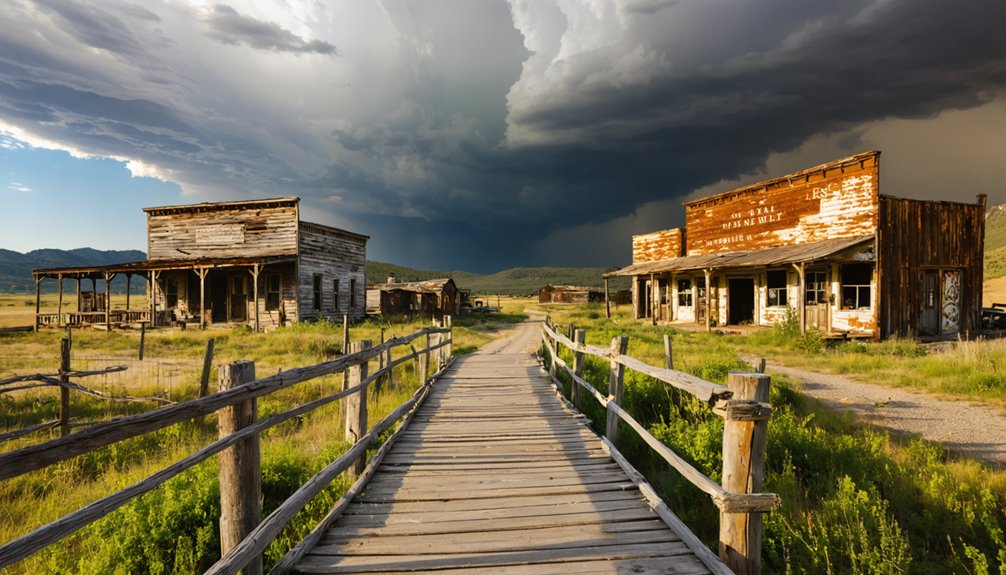
- Main Street’s wooden boardwalks – Wander past authentic false-front facades housing the Pioneer Bar and Fairweather Inn, where you’ll step directly into the Old West.
- Boot Hill Cemetery – Climb to this windswept burial ground for panoramic views across Alder Gulch, where fortune-seekers once struck it rich.
While exploring the Chinese immigrant community’s contributions requires careful research, these structures offer unfiltered glimpses into Montana’s untamed past.
Understanding the Vigilante Era and Frontier Justice
Standing before the weathered cottonwood on Hangman’s Hill in Rapid City, you’ll confront one of the Black Hills’ darkest chapters—a time when rope and mob rule replaced courtrooms and due process. These community based justice systems emerged when formal courts proved absent or inadequate, targeting horse thieves and rustlers with swift, fatal sentences.
You’ll find physical remnants throughout the region—Fiddler’s Tree in Sturgis, the preserved hanging tree on Skyline Drive encased in concrete. Yet the era’s complexity runs deeper than simple frontier necessity. Law enforcement misconduct often matched vigilante violence, with marshals conducting questionable shootings while vigilance committees operated with complete impunity.
Between 1880 and 1905 in Gregory County, not one vigilante faced conviction despite documented lynchings.
Frequently Asked Questions
What Are the Best Months to Visit Virginia City for Weather?
You’ll find September ideal, with daytime highs in the mid-60s°F offering mild temperatures perfect for exploring abandoned buildings. The lack of crowds after summer rush lets you wander freely through weathered storefronts and crumbling homesteads undisturbed.
Are There Restaurants or Dining Options Available in Virginia City?
You’ll find several dining establishments serving hearty meals along C Street. Local cuisine options range from Bonanza Cantina’s Mexican fare to Virginia City Brewery’s craft beers, plus Red Dog Saloon’s Southwest favorites and authentic jerky from the Beef Jerky Company.
Can Visitors Try Gold Panning Activities During Their Visit?
Unfortunately, you won’t strike it rich here—Virginia City lacks self-guided gold panning tours or guided gold panning excursions. For authentic prospecting adventures, you’ll need to venture to nearby Deadwood or Keystone, where freedom-seekers can actually pan for glittering treasures.
Is Virginia City Suitable for Families With Young Children?
Yes, you’ll find Virginia City perfect for young families. Kid-friendly activities like mine tours, shooting galleries, and ghost town walks offer family-friendly amenities at budget prices. Your children will love the animatronics, candle-lit adventures, and Wild West atmosphere throughout town.
How Much Time Should I Allocate for Exploring Virginia City?
You’ll want a full day to soak in Virginia City’s dusty charm. Wander boardwalks at your own pace, catch historical reenactments, and explore guided tours through saloons and museums. Weekend visits offer richer experiences with living history volunteers.