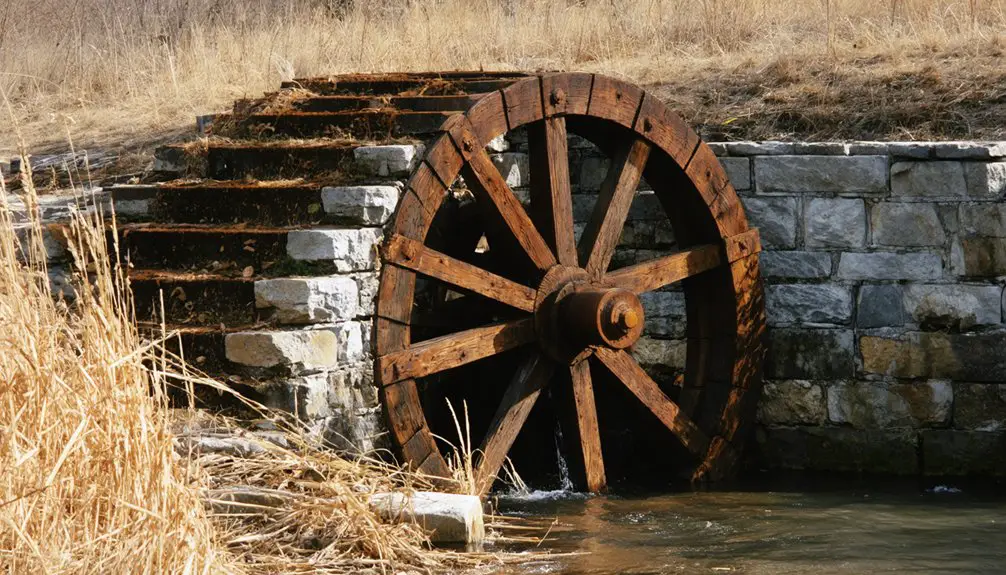
You’ll find Waconda Springs submerged beneath Glen Elder Reservoir’s waters, where Native American tribes once performed sacred ceremonies at the “Great Spirit Spring.” The famous health spa that drew thousands seeking miraculous cures was bulldozed in 1968, its ruins now ghostly beneath the lake. Start your journey at Glen Elder State Park, where you can explore the Waconda Heritage Village featuring a replica spring and historic Hopewell Church, then discover why this drowned town captivated generations with promises of healing and spiritual renewal.
Key Takeaways
- Visit Glen Elder State Park to see Waconda Lake, which submerged the original sacred springs and sanitarium in 1970.
- Explore Waconda Heritage Village featuring a replica spring, historic Hopewell Church, and preserved artifacts from the vanished town.
- Learn about Native American spiritual significance at the “Great Spirit Spring” where tribes performed ceremonies for generations.
- Tour the 1926 Castle Service Station built from native limestone, a surviving landmark from the area’s historic past.
- Plan extended activities at Wilson Neff Park and Chautauqua Fishing Pond for family-friendly experiences near the ghost town site.
The Sacred Legacy of Waconda Springs and Its Native American Roots
Long before settlers dotted the Kansas prairie with homesteads, Waconda Springs pulsed with sacred energy that drew Native American tribes across the Great Plains. You’ll discover this site transcended tribal boundaries—Pawnee, Kanza, Cheyenne, Arapaho, Sioux, and others converged here through unspoken agreements rooted in tribal leadership traditions. They called it “Great Spirit Spring,” where animal spirits dwelled and healing waters flowed.
During buffalo migrations, tribes gathered for sacred rituals and ceremonies, tossing beads and weapons into the mineral-rich waters as offerings. The Pawnee’s “Kitzawitzuk” became the Kanza’s “Wakonda”—Great Spirit—a name echoing reverence across generations. The springs itself was a remarkable 50 feet in diameter pool, formed by mineral deposits pushed upward through artesian pressure from deep below the earth’s surface. Here, warriors and healers alike sought purification and spiritual knowledge at this neutral ground, where ancient wisdom bubbled up from deep within the earth itself. Lieutenant Zebulon M. Pike visited the sacred site in 1806, where he witnessed Pawnees holding regular religious ceremonies at this spiritually significant location.
From Healing Waters to National Fame: The Rise of Waconda’s Health Spa Empire
The sacred springs that once drew pilgrims seeking spiritual communion would soon attract a different kind of believer—those chasing physical healing through mineral-rich waters. Burnham’s bottling operation transformed Waconda into a commercial enterprise, with *Waconda Flier* reaching customers nationwide by the 1890s.
McWilliams’ 1884 purchase brought serious capital, funding a stone sanitarium that took a decade to complete. Cooper’s management turned it into an exclusive 60-room resort offering hydro-therapy, electro-therapy, and dietary treatments. The marketing strategies proved brilliant—a 1904 World’s Fair medal legitimized claims that the water cured arthritis, diabetes, and blood poisoning.
The economic impact was substantial, drawing hundreds annually and supporting three generations of operators until 1964, when progress drowned this empire beneath Waconda Lake. The spa hosted 40 patients per day, with most guests staying for weeks to complete their treatment regimens. The Abrahams-Bingesser family operated the spa during its final decades, maintaining the resort’s reputation until dam construction sealed its fate.
The Tragic Romance Behind the Spring’s Legendary Healing Powers
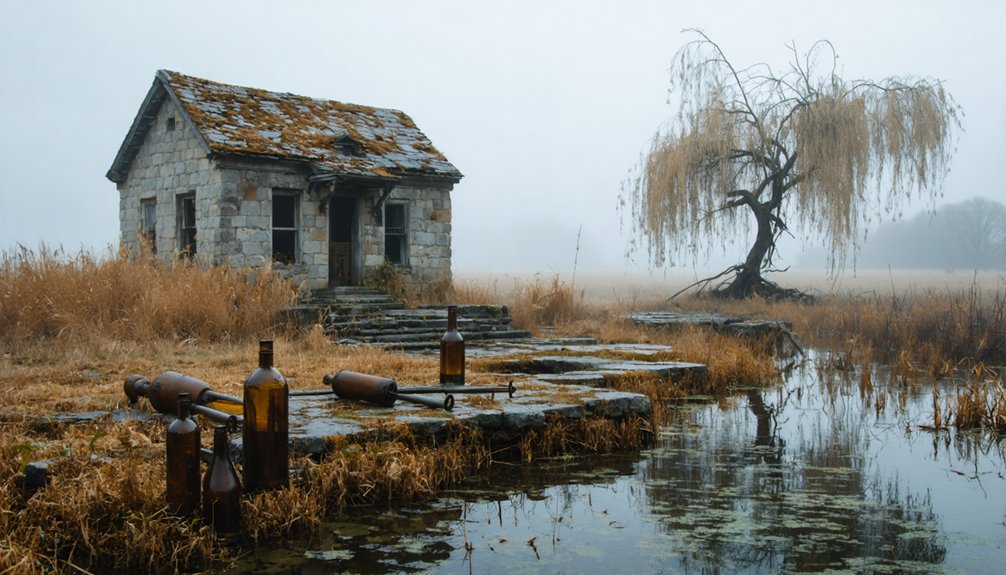
According to tribal memory and settler imagination, a beautiful princess named Waconda once surrendered herself to the spring’s depths for love—though the truth behind this romantic tragedy reveals more about 19th-century colonialism than indigenous spirituality.
The legend tells how Waconda dove after her mortally wounded warrior Takota, never resurfacing from waters believed to hold her spirit. Yet scholars recognize this tale as pure Anglo invention—romantic fiction crafted by white settlers following popular conventions of Longfellow and Cooper.
Central Plains tribes did revere these waters, but not through melodramatic love stories. They performed ceremonies here, making ritualistic offerings to the Great Spirit while seeking spiritual connections with animal spirits dwelling within. Warriors threw tokens into the depths. Healers brought the sick to drink. Practically every Indian tribe visited this sacred site, from the Pawnee and Wichita to the Kaw.
The spring itself was a mineral pool approximately fifty feet in diameter, set within a distinctive limestone basin that caught the eye of both indigenous peoples and later settlers.
The colonizers simply rewrote indigenous reverence into consumable entertainment.
When Progress Drowned History: The Flooding of Waconda Springs
For centuries, these sacred waters bubbled freely from the earth—until bureaucratic blueprints sealed their fate.
The 1951 Kansas floods triggered federal dam project politics that prioritized flood control over cultural preservation. You’ll discover how water resource development tradeoffs erased an irreplaceable landmark:
- 1964: Construction crews broke ground on Glen Elder Dam despite fierce resistance from the Bingesser family
- 1968: The sanitarium fell to bulldozers—ironically operated by John Bingesser himself—with debris dumped into the spring
- 1970: Solomon River waters swallowed Waconda Springs completely, creating a 12,586-acre reservoir
Expert testimony dismissed: Hydrologists confirmed the spring’s global uniqueness, yet bureaucrats called it a “mud hole”
Failed preservation: Even attempts at national monument designation couldn’t stop the government’s agenda
The spring had risen 40 feet above the Solomon River Valley, making it a prominent natural landmark visible for miles across the prairie. Before its destruction, businesses capitalized on the waters’ mystique by bottling the mineral water to sell as tonic to eager customers.
Today, those healing waters rest beneath Waconda Lake’s surface—silenced forever.
Experiencing Waconda Today: Glen Elder State Park and Heritage Village
Where tragedy carved away history, nature has reclaimed the landscape with startling beauty. Glen Elder State Park sprawls across 13,000 land acres surrounding Waconda Lake’s crystalline waters, offering you boundless exploration without the crowds. You’ll discover seasonal recreational activities from swimming and skiing to camping beneath vast prairie skies. Wildlife viewing opportunities abound—bald eagles soar overhead in winter, while white-tailed deer and pheasant roam year-round. Cast your line for walleye, catfish, and bass in these abundant waters.
The Waconda Heritage Village preserves what the lake couldn’t claim. You’ll find a replica of the legendary springs at the park’s highest point, commanding panoramic views. Historic Hopewell Church stands ready for your wedding vows, while compelling displays reveal the area’s vanished past—a living museum honoring resilient spirits. Families can enjoy the Chautauqua Fishing Pond, specially designed for accessibility.
Just east of the park, Wilson Neff Park serves as Glen Elder’s town square, hosting community events around a playground and historic Statue of Liberty donated in 1950. The nearby Castle Service Station, built in 1926 from native limestone, stands as an enduring landmark—its distinctive archways inspired by a Luxembourg castle from World War I, now converted to a private residence.
Frequently Asked Questions
What Is the Best Time of Year to Visit Glen Elder State Park?
You’ll find spring and fall ideal for visiting Glen Elder State Park. During these seasons, you’ll experience exceptional seasonal wildlife viewing with migrating waterfowl, comfortable temperatures for exploration, and stunning autumn foliage display that transforms the landscape into nature’s canvas.
Are There Camping Facilities Available Near the Waconda Springs Replica Site?
You’ll find absolutely endless camping options at Glen Elder State Park surrounding the Waconda Springs replica! Choose from over 300 primitive camping sites or 120 electrical hookups, plus picnic areas nearby for your lakefront adventure.
How Far Is Waconda From Major Kansas Cities Like Wichita or Kansas City?
You’ll find Waconda about 180-200 miles from Wichita and 220-250 miles from Kansas City. The driving distance from major cities means you’re looking at 3-4 hours travel time to Waconda—perfect for a weekend escape into Kansas’s haunting past.
Can Visitors Swim or Boat in Glen Elder Reservoir Today?
You’re in luck—you can boat Glen Elder Reservoir today year-round, enjoying recreational activities on open waters. However, the swimming beach is closed seasonally through late April, so check current water levels before planning aquatic adventures.
Are There Guided Tours Available at the Waconda Heritage Village Museum?
No guided or docent-led tours are currently offered at Waconda Heritage Village Museum. You’ll explore independently through self-guided signage and educational displays. Contact the Waconda Cultural Association at 785-545-3345 for seasonal hours and visiting information.
References
- https://www.glenelder.com/waconda-springs.html
- http://www.lovewellhistory.com/blog/the-great-spirit-lake.html
- https://mywildlifeproperty.com/waconda-lake-a-piece-of-history/
- https://en.wikipedia.org/wiki/Waconda_Spring
- https://ksoutdoors.gov/State-Parks/Locations/Glen-Elder/History
- https://www.youtube.com/watch?v=HkG4vWo5av4
- https://www.waconda.com/early-day-explorers.html
- https://lostkansas.ccrsdigitalprojects.com/sites/lostkansas/files/private_static/2022-12/LT_MC_WacondaSprings_Kelley.pdf
- https://www.humanitieskansas.org/get-involved/kansas-stories/nature/waconda-springs-from-sacred-to-submerged
- https://www.discovermitchellcounty.com/explore-live-grow/waconda-spring-replica-walking-museum/