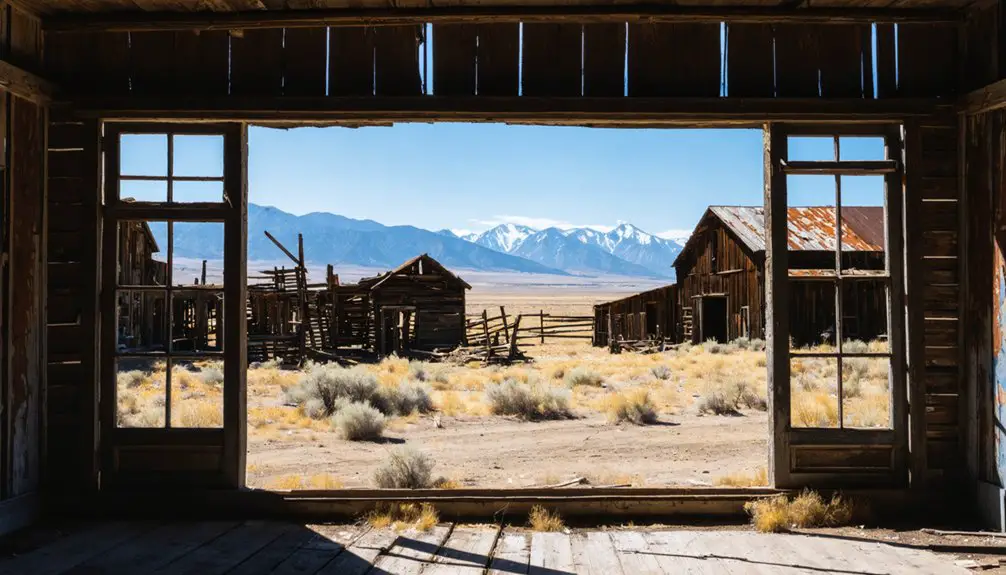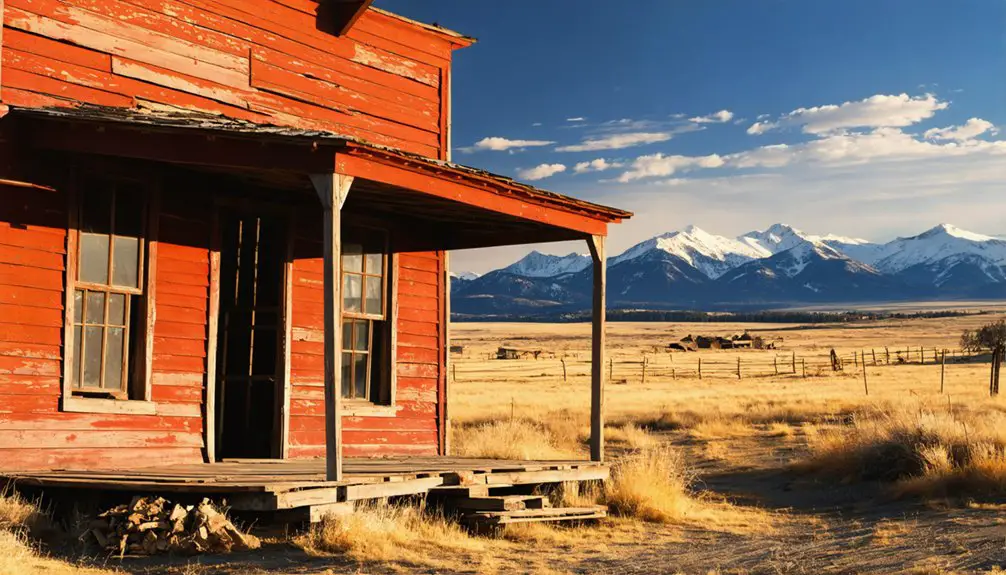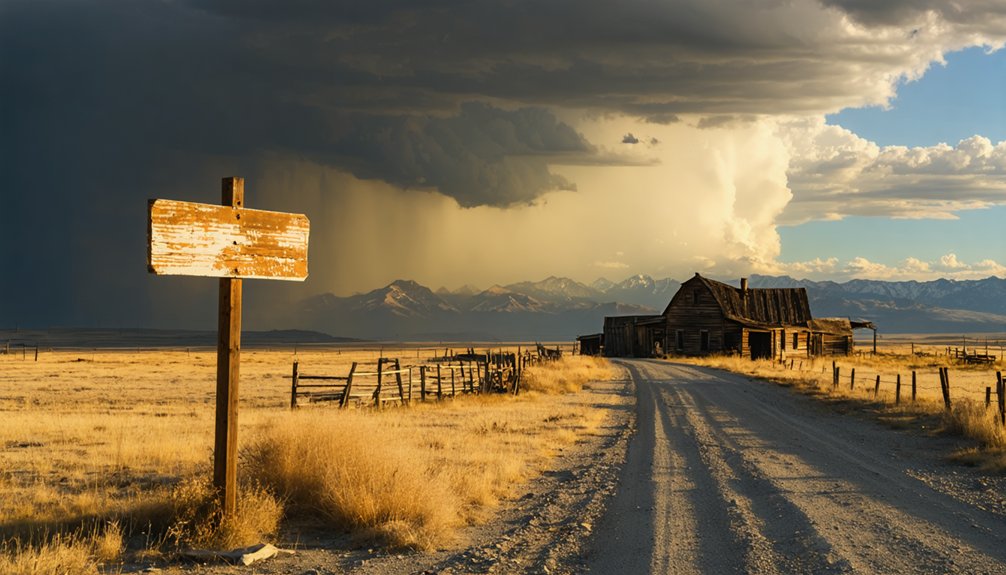
You’ll want to start your Wagner ghost town road trip at Bannack State Park, where you can explore 60+ original gold rush buildings before heading northeast along Montana’s remote Hi-Line. The 400-mile journey takes you through authentic frontier territory to Wagner, where Butch Cassidy’s Wild Bunch pulled their final train heist in 1901. Plan for two days minimum, pack supplies since services are scarce, and time your visit for late July to catch Bannack Days‘ costumed reenactors bringing Wild West history back to life.
Key Takeaways
- Wagner is primarily known for the 1901 train robbery by Butch Cassidy’s Wild Bunch, not as a traditional ghost town destination.
- Combine Wagner with nearby Bannack State Park, Montana’s best-preserved ghost town featuring over 60 original structures to explore freely.
- Visit Bannack’s museum to learn about Wild West history, including Sheriff Henry Plummer’s road agent gang and vigilante justice.
- Plan your trip during late July for Bannack Days, featuring costumed reenactors bringing the frontier era back to life.
- Explore authentic mining-era buildings like the 1874 Masonic Lodge, Hendricks Mill, and gallows without ropes or tourist restrictions.
Why Wagner Deserves a Spot on Your Montana Ghost Town Journey
When gold fever struck Grasshopper Creek in 1862, a remote Montana valley transformed overnight into Bannack—a raucous mining camp that would become the territory’s first capital just two years later.
You’ll discover Montana’s best-preserved ghost town here, where sixty original structures stand ready for your exploration. Unlike typical ruins, this designated state park showcases preserved frontier architecture you can actually walk through—from the old hotel to the one-room schoolhouse where lessons ended in the 1950s.
The on site ghost town museum brings the Wild West’s darker chapters alive, including Sheriff Henry Plummer‘s notorious road agent gang and his eventual hanging by vigilantes in 1864. You’re free to wander at your own pace, touching history without ropes or restrictions blocking your path through authentic mining-era buildings.
The Legendary 1901 Train Robbery That Made Wagner Infamous
As dusk settled over Wagner on July 3, 1901, masked riders galloped toward the Great Northern Transcontinental express No. 3 with Winchesters loaded and dynamite packed in their saddlebags. Three miles east of town, they forced the engineer to stop at Exeter Creek bridge, then blasted the express car safe three times before claiming $60,000-$83,000 in unsigned bank notes.
The robbery sparked railway safety changes nationwide, proving these frontier bandits operated on their own terms until the very end.
Famous robbers’ identities included Kid Curry, Butch Cassidy, and the Sundance Kid—the Wild Bunch‘s final score together. They vanished into the mountains on horseback, leaving brakeman Whiteside wounded and authorities scrambling.
Starting Your Route at Bannack State Park: Montana’s Best-Preserved Ghost Town
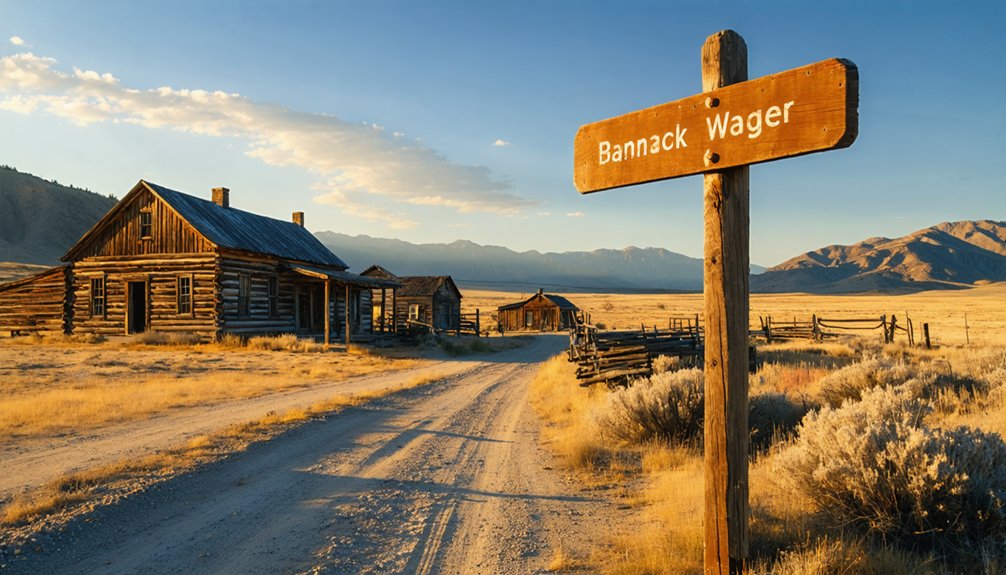
Your Wagner road trip begins where Montana’s story truly started—at Bannack State Park, a remarkably intact 1860s gold rush town frozen in time along Grasshopper Creek. You’ll wander through more than 60 original buildings that haven’t been restored or reconstructed, just carefully stabilized in their weathered state, from the two-story hotel where miners once slept to the schoolhouse where lessons ended in the 1940s.
Plan at least three hours to explore the main street and hillside structures, and if you’re visiting in late July, you’ll catch Bannack Days when costumed reenactors bring the ghost town’s wild past back to life.
Gold Rush History Overview
On July 28, 1862, John White and a group of Pikes Peakers struck gold in Grasshopper Creek, setting off a frenzy that would transform this remote Montana valley into the territory’s first capital. You’ll discover how wagon trains rolled in relentlessly, swelling Bannack’s population from 400 to 5,000 within months.
The prospector lifestyle here was equal parts opportunity and danger:
- Over $500,000 in gold extracted during the first year alone
- Nearly 3,000 residents packed wooden storefronts, saloons, and hotels at its peak
- Sheriff Henry Plummer secretly led the “Innocents” gang of 100+ criminals
- Montana Vigilantes executed 22 men in America’s deadliest vigilante episode
Walk these dusty streets where fortune-seekers once gambled everything for freedom and gold, only to face either prosperity or a vigilante’s noose.
Exploring 60+ Original Buildings
The vigilantes’ ropes are long gone, but their targets’ empty storefronts still stand frozen in time along Bannack’s weathered Main Street. You’ll wander among over 60 well preserved wooden structures, peering through dusty windows at original wallpaper curling from the walls. Push open creaking doors—Skinner’s Saloon, the Meade Hotel, the two-story Masonic Lodge—each revealing historic mining tools on display exactly where miners abandoned them in the 1940s.
Walk the wooden sidewalks to the schoolhouse, its antique desks still awaiting students who never returned. Climb to Boot Hill’s windswept graves, then descend to examine the gallows. Don’t miss the Hendricks Mill tour for gold processing secrets. Unlike typical restorations, Montana State Parks preserves these buildings as-is—no reconstruction, just authentic decay telling outlaw stories your history teacher sanitized.
Planning Your Bannack Visit
Before dawn breaks over the Beaverhead Valley, you’ll want to fuel up in Dillon—Montana’s closest town with proper coffee and breakfast—because Bannack sits 25 miles west on a lonely gravel road where services don’t exist.
Essential Planning Details:
* Self guided tours let you explore at your own pace through 60+ original structures without crowds or schedules
- Camping opportunities include primitive sites within the park (prepare for wind and temperature swings)
- Bannack Days (third July weekend) and October’s Ghost Walk require advance tickets purchased in September
- Cell service vanishes—download maps beforehand and bring cash for day-use fees
- Appointed outlaws Buck Stinson and Ned Ray as his deputies
- Surrounded himself with ruthless clan members like George Ives and Bill Mitchell
- Hijacked gold-laden wagons traveling between mining camps
- Collected intelligence through his official position
- Hunt for quartz crystals at Crystal Park in decomposed granite fields
- Soak trail-weary muscles at Elkhorn Hot Springs
- Explore Charter Oak Mine via good gravel road off Mono Creek
- Wander Coolidge Ghost Town’s remaining structures
- Dial 511 or visit 511mt.net for real-time road conditions and closures
- Check MDT cameras along US-2 for live visuals of pavement and visibility
- Note cross wind restrictions if you’re towing or driving high-profile rigs
- Monitor RWIS stations for temperature shifts and precipitation forecasts
- Daily Empire Builder service connecting 43 cities without transfers
- Comfortable waiting room inside the historic depot
- Station parking availability maintained by BNSF Railway
- Platform access for eastbound and westbound departures
The park maintains “carefully preserved dilapidation,” meaning you’ll experience authentic abandonment rather than sanitized tourist reconstructions. Pack water, weather layers, and respect the stipulation that’s kept Bannack wild since 1954.
What to Explore in Bannack’s 60+ Original Gold Rush Buildings
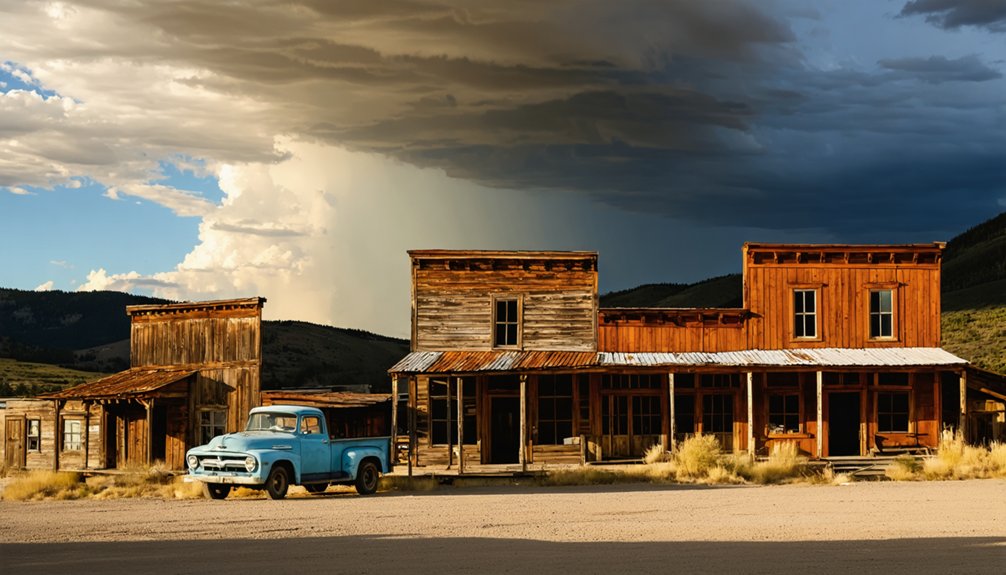
Walking along Bannack’s dusty Main Street, you’ll find yourself surrounded by over 60 weathered buildings that have stood since Montana’s first major gold strike transformed this remote valley in 1862. Start at the Roe/Graves House—Bannack’s first frame structure built in 1866 by William Roe, who filed one of the earliest mining claims. The early residential architecture tells stories of fortune-seekers who traded canvas tents for permanence.
Don’t miss the 1874 Masonic Lodge doubling as a schoolhouse, and Montana’s second brick courthouse where territorial justice unfolded. The Methodist Church reveals how miners craved civilization amid chaos. Tour Hendricks Mill to witness gold processing firsthand, then visit the gallows and cemetery—stark reminders that frontier freedom came with brutal consequences. Each building invites you to wander unguided through authentic Western history.
The Dark History of Sheriff Henry Plummer and the Vigilantes
Standing before Bannack’s weathered gallows, you’ll confront one of the West’s most chilling ironies: the town’s sheriff, Henry Plummer, secretly commanded over 100 road agents who robbed gold-laden stages and murdered at least 20 people during his 1863 reign. His double-barreled shotgun—now preserved in a Helena collection—patrolled the very trails his “Innocents” gang terrorized, stealing $15,000-$20,000 per robbery while he covered their tracks.
On a frigid January night in 1864, vigilantes ended his deception with a rope, though historians still debate whether they hanged a criminal mastermind or simply eliminated a political rival.
Plummer’s Secret Road Agent Gang
The dusty streets of Bannack in 1863 held a chilling secret: the very man sworn to protect its citizens was orchestrating their demise. Sheriff Henry Plummer‘s secret plans created a criminal empire disguised as law enforcement. Within months of his arrival, he’d built the Innocents—a network exceeding 100 road agents who controlled the territory’s gold routes.
Plummer’s gang operations ran with calculated precision:
You’ll find echoes of this organized chaos when exploring Bannack today. Historical records confirm at least 13 robberies and 20 murders during his sheriff tenure, though some accounts claim 100 victims fell to his network.
Vigilante Justice Without Trial
When chaos finally reached its breaking point in December 1863, five Virginia City residents gathered in secret and formed the Vigilance Committee of Alder Gulch. You’ll find this remote Idaho Territory had no formal courts, no law enforcement—just miners desperately protecting their claims.
This secret justice system moved swiftly: fifty to seventy-five vigilantes rounded up Sheriff Plummer and his deputies on that cold January evening. Without trial, without evidence presented, without defense allowed. They hanged him on the very gallows he’d built as sheriff.
The moral ambiguity of vigilantes becomes stark when you consider that over twenty men died by their hands in just one month. Yet robberies stopped immediately. Was it justice or political execution? History can’t definitively answer.
Mapping Your Drive From Bannack Through Montana’s Mining Country
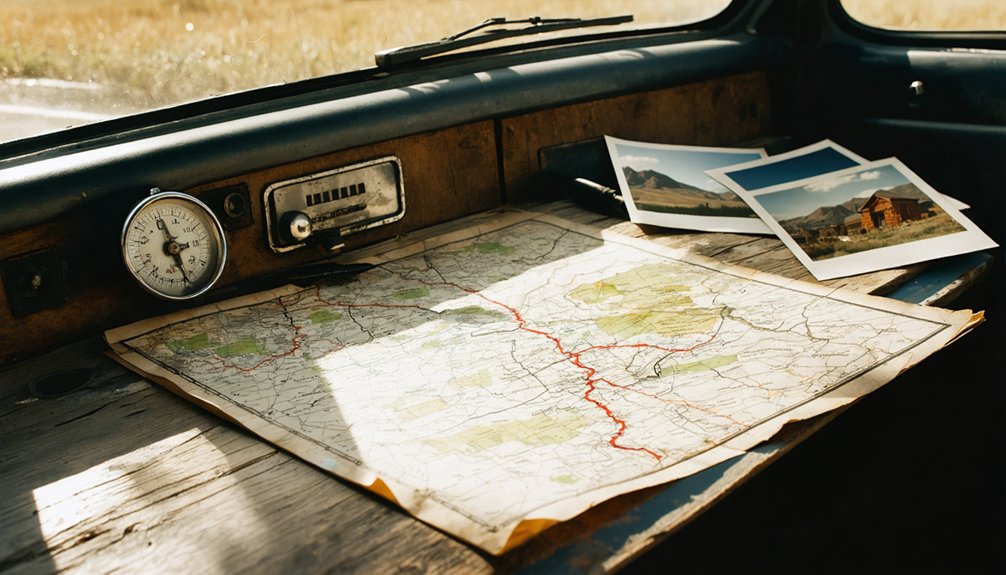
Sixty-plus weathered buildings rise from Bannack’s dusty main street, silent witnesses to Montana’s first major gold strike in 1862. You’ll discover Montana’s rich mining history stretching far beyond this preserved ghost town. The Pioneer Mountain Scenic Byway connects these forgotten settlements through untamed backcountry.
Your route offers these visitor recommendations for Bannack and beyond:
You’ll pay $8 for out-of-state entry at Bannack, where guided tours and gold panning run Memorial Day through Labor Day.
The drive continues toward U.S. 287, threading through wild mining country where fortune-seekers once carved civilization from wilderness.
Additional Ghost Town Stops: Granite and Garnet Along the Way
Beyond Bannack’s dusty streets, two more silver-era settlements await your discovery along Montana’s ghost town corridor. Granite sits three miles east of Philipsburg, where granite remnants cling to steep mountainsides at 46°19′03″N 113°14′40″W. I’ll never forget scrambling through the 100-stamp mill ruins—this place yielded $40 million in silver before the 1893 panic emptied it overnight. You’ll need 4WD to reach the superintendent’s house and Miners Union Hall. The trails wind past foundations where 3,000 souls once lived.
Garnet mining adventures offer similar thrills deeper into the wilderness. Both towns vanished when Sherman Silver Purchase Act repeal crashed prices. Now they’re yours to explore freely, though winter closes roads June through September. Pack water—these peaks don’t forgive the unprepared.
Reaching Wagner on the Hi-Line: What to Expect Today
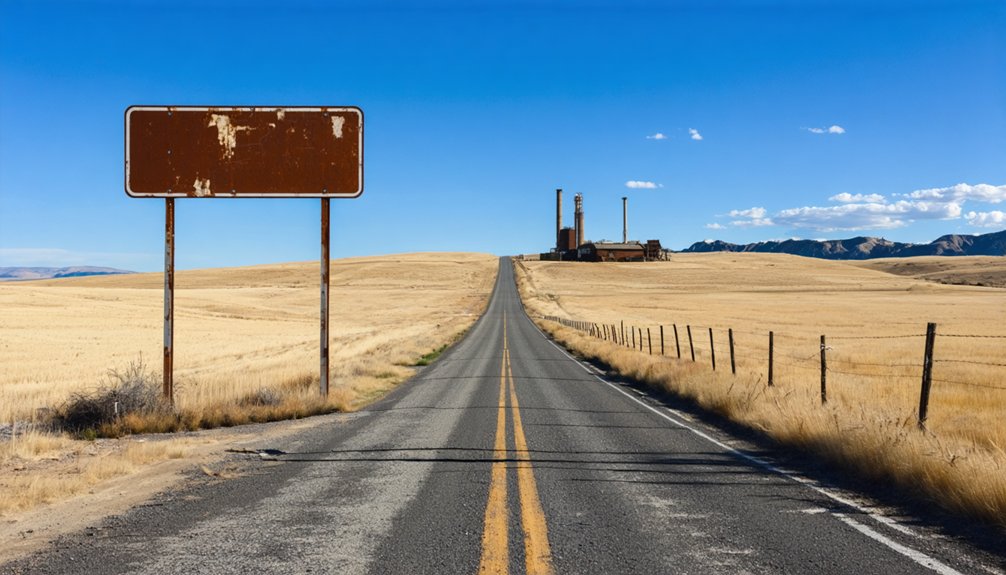
The Hi-Line unspools across northern Montana like a ribbon through wheat country, and US-2 will carry you straight to Wagner’s doorstep with minimal drama. You’ll roll through Havre, Malta, then veer toward this skeletal railroad town roughly 20 miles beyond. March brings variable conditions—dry pavement one hour, gusting crosswinds the next.
US-2 ribbons through wheat country to Wagner—twenty miles past Malta, where March serves dry roads and crosswinds in equal measure.
Before you depart, smart weather monitoring prevents surprises:
Expect flat prairies, two-lane asphalt, and passing lanes where you need them. Wagner waits patiently—no rush, just wide-open road.
Connecting to the Empire Builder: Malta’s Amtrak Station Nearby
If you’re planning to arrive by train, Malta’s Amtrak station sits just 51 miles northeast of Wagner at 51 South 1st Street East, where the Empire Builder stops daily in both directions. You’ll find a modest waiting room inside the BNSF-owned building, and trains typically arrive westbound around 5:28 AM or eastbound in the early afternoon—though I’ve watched that schedule flex by hours on these long-haul routes across Montana’s Hi-Line.
From Malta’s platform, you’re looking at about an hour’s drive southwest through golden prairie to reach Wagner’s weathered ghost town remnants.
Malta Station Access Details
Located just 15 miles southwest of Wagner, Malta’s Amtrak station at 51 South 1st Street East serves as your gateway to the legendary Empire Builder route. The charming Swiss chalet-style depot, built by Great Northern Railway, welcomes you with its distinctive half-timbered walls and protective overhangs—perfect shelter while awaiting your train.
Station accessibility for passengers includes:
BNSF Railway owns and maintains this facility, ensuring reliable access for your adventures. Whether you’re heading to Glacier National Park or exploring Montana’s remote corners, this station offers straightforward departure points. The depot’s simple amenities keep you focused on what matters: hitting the rails.
Empire Builder Route Connections
Rolling westward from Chicago through America’s northern prairie, the Empire Builder carves a 2,206-mile path to the Pacific Northwest—and Malta’s historic depot puts you right in the heart of this legendary route. You’ll find yourself strategically positioned between Glasgow (43 miles east) and Havre (35 miles west), two stops that’ve maintained their historic rail connections since the line’s glory days.
I’ve watched travelers disembark during the overnight segment, stretching their legs under Montana’s vast sky while the train crew changes at nearby small towns. From Malta’s platform, you’re perfectly situated to launch your Wagner expedition—rent a vehicle in Havre or arrange pickup. The Empire Builder doesn’t just transport you; it drops you precisely where paved roads end and ghost town adventures begin.
Best Time to Visit and Planning Your Bannack Days Festival Trip
Planning a trip to Bannack State Park? Target mid-July when the annual Bannack Days festival transforms this ghost town into a living 1860s gold camp. The third full weekend offers ideal summer weather for outdoor adventures, though accommodation options in nearby Dillon (25 miles northeast) book quickly—reserve early.
The 2026 celebration marks the festival’s 50th anniversary, promising enhanced historical reenactments and pioneer demonstrations. Purchase $5 tickets online or bring cash to the entrance. Carpool—parking’s limited and shuttle vans run from remote lots. Leave pets at home during crowded weekend festivities. Grab breakfast at Hotel Meade before exploring.
On-site dining offerings include food vendors throughout the grounds. You’ll pan for gold, watch staged gunfights, and experience authentic frontier life without modern constraints.
Frequently Asked Questions
Are There Camping Facilities Available Near Wagner or Bannack State Park?
Like pioneers seeking untamed horizons, you’ll discover rustic campsites at Wagner Park’s 28 RV spots and primitive areas. Private campgrounds near Bannack offer full hookups at 7th Ranch, plus lakeside sites at White Sandy and Holter for your adventure.
How Long Does the Complete Road Trip From Bannack to Wagner Take?
I cannot determine the exact travel time since specific distance data between Bannack and Wagner isn’t available. You’ll need to check current maps for accurate timing while exploring scenic route options that showcase these historically significant Montana ghost towns’ rugged beauty.
What Cell Phone Coverage Can I Expect in Remote Ghost Town Areas?
Dusty roads fade into signal-dead zones where your phone becomes a useless brick. You’ll find limited cell service across Montana’s ghost towns, making a satellite phone necessity for emergencies when exploring these disconnected, freedom-filled frontiers alone.
Are Any Buildings in Wagner Accessible or Is It Private Property?
Wagner’s property status remains unclear from available records. You’ll need to inquire about local access before exploring. Research the town’s history through county offices or preservation groups to determine if buildings are publicly accessible or privately owned.
Do I Need a High-Clearance Vehicle for the Ghost Town Route?
You’ll need a high-clearance vehicle for most Montana ghost town routes. Road conditions vary dramatically—rocky terrain, steep grades, and loose gravel demand proper vehicle maintenance. Your freedom to explore depends on your rig’s capability and your adventurous spirit.