Start your Walville ghost town adventure from I-5 at Chehalis, then head west on Route 6 toward the wilderness where this 1898 logging settlement once thrived. You’ll find the fenced Japanese cemetery with nine graves marking the town’s most poignant legacy, while grass-covered railroad tracks guide you through meadows where 200 souls once lived. Pack waterproof gear and visit May through September for ideal exploration conditions. The forest holds deeper stories about the sawmill workers who carved civilization from these dense woods, then watched it vanish.
Key Takeaways
- Start from I-5 at Chehalis for last fuel and supplies, then head west on Route 6 toward South Bend.
- Visit between May and September for optimal weather conditions during shoulder season exploration.
- Bring high-clearance vehicle, offline maps, waterproof gear, sturdy boots, insect repellent, water, and first aid supplies.
- Explore the fenced Japanese cemetery with nine marked graves, the town’s most prominent remaining feature.
- Follow grass-covered railroad tracks through meadows to Mill Pond, the former center of this 1898 logging settlement.
The Rise and Fall of a Logging Empire
The dense forests of Lewis County held untapped fortunes in 1898 when two Michigan lumbermen, Walworth and Neville, carved a settlement from the wilderness four miles southwest of Pe Ell. They merged their names into “Walville” and built a thriving company town that would house 200 souls at its peak.
The sawmill across Mill Pond hummed with activity while cattle dragged equipment up ridges and steam-powered skidders transformed virgin timber into lumber. Despite labor dynamics involving segregated communities—including a distinct “Japanese town” near Mill Pond—you’d find surprisingly low racial tensions here.
The management challenges of operating multiple lumber companies paid off handsomely until 1934, when flames consumed the mill. By 1936, the post office closed. Walville’s empire had crumbled.
Getting to Walville: Directions and Access Points
While modern GPS coordinates can pinpoint Walville’s geographic location in Lewis County, reaching this vanished logging settlement requires old-fashioned navigation and careful preparation. You’ll start from I-5 at Chehalis—your last chance for fuel and supplies, as there are no on-site amenities whatsoever.
Head west on Route 6 toward South Bend, following the historic railroad corridor now transformed into a Rails to Trails path.
The town proper sits near Mill Pond, where creek-divided sections once housed distinct communities. You’ll find the fenced Japanese cemetery along your westbound route, marked by nine graves and scattered porcelain fragments. Grass-covered tracks lead from meadow into woods, tracing the mill side of the creek. Pack everything you need—this remote destination demands self-sufficiency and rewards those seeking uncharted exploration.
What Remains: Exploring the Ghost Town Site Today
When you arrive at Walville today, nature has reclaimed most of what once stood—scattered bricks and porcelain fragments peek through the undergrowth where homes and businesses thrived.
The fenced Japanese cemetery with its nine marked graves remains the most prominent feature, while faint traces of the old Chehalis-to-Raymond railroad disappear beneath meadow grass leading into the woods.
You’ll find the clearest path to exploration along the rails-to-trails system, where Mill Pond marks the town’s former center near the old Cow Town gate.
Cemetery and Memorial Sites
Across a quiet creek in what once thrived as Walville’s Japanese community, a fenced graveyard stands sentinel over nine marked graves and countless unmarked ones scattered across the hillside. You’ll find these Japanese worker tributes amid broken ceramic shards and weathered porcelain fragments—poignant reminders of sawmill laborers who found refuge here during an era of widespread persecution.
The site faces significant historical preservation challenges. Neglect has taken its toll, with fragmented pottery and scattered bricks marking where families once honored their dead. A prepared plaque for an infant’s grave hints at recent memorial efforts, yet much restoration work remains needed.
This cemetery tells stories of dozens of workers who vanished with the town itself, their voices echoing through ages in these hillside remnants near Mill Pond.
Railroad and Mill Remnants
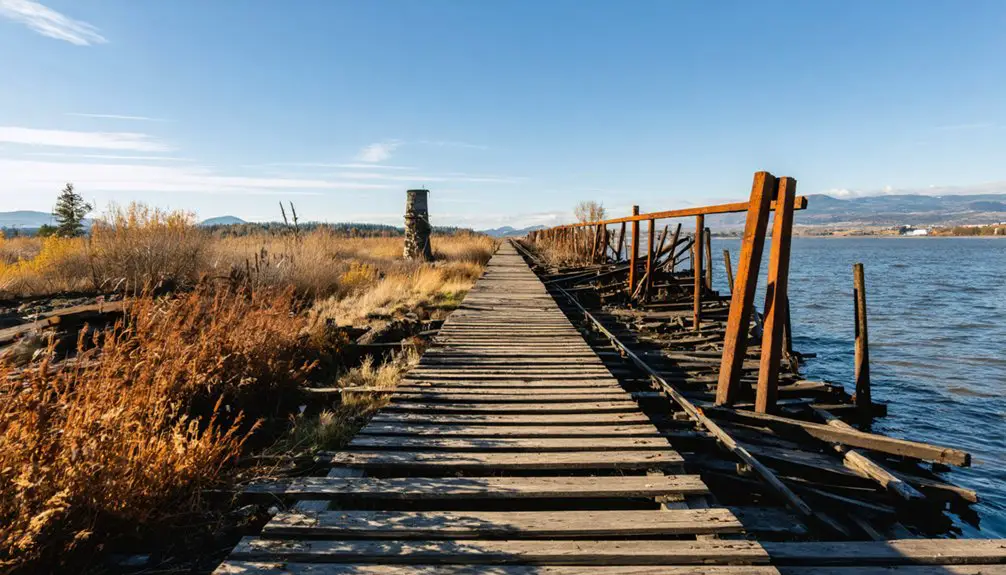
Where thriving industry once dominated the landscape, nature has reclaimed nearly everything. You’ll find overgrown railroad tracks threading from the meadow into dense woods, following the former Chehalis-to-Raymond line that once hauled timber. These grass-covered rails now form part of the Rails to Trails path along the creek’s mill side, barely visible beneath decades of growth.
Across Mill Pond from where town proper stood, you’ll discover the mill ruins—or rather, their absence. The 1934 fire that destroyed the sawmill left virtually nothing behind, sparking the town’s economic collapse. Search carefully and you’ll spot scattered bricks and abundant fragments of white and blue porcelain near the pond and creek.
The cattle that once pulled logging skidders are long gone from Cow Town’s former location.
Access Points and Trails
Today, reaching Walville requires traversing the Willapa Hills State Park Trail, which cuts through this forgotten corner almost exactly where Pacific County begins. You’ll find the trailhead half a mile down Walville Creek Road from the main crossing, where this former Northern Pacific branch railroad welcomes hikers, bikers, and equestrians. The trail maintenance requirements remain minimal—just sturdy boots and determination as you wind through narrow hill openings paralleling Highway 6.
Signage and wayfinding considerations prove straightforward: watch for the small clearing where that slowly collapsing fence marks the cemetery. The trail curves through wildest sections near Fern Creek, where bridges await upgrades, then continues past Frances toward Lebam. You’re following routes that connected logging communities from the 1890s through 1930, now reclaimed by wilderness and silence.
The Japanese Sawmill Workers and Their Forgotten Cemetery
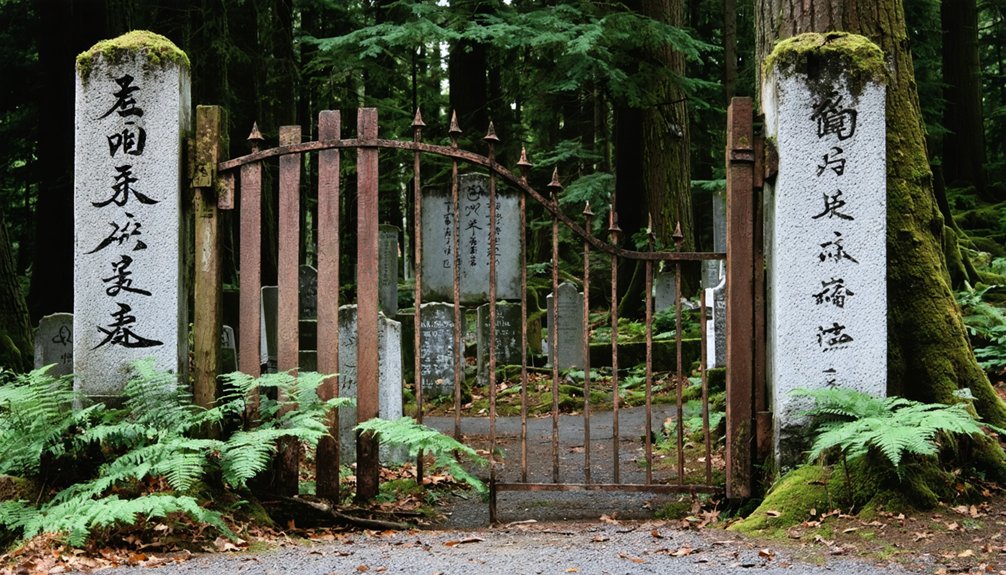
Beyond the remnants of Walville’s main street, a fenced graveyard stands on a hillside near Mill Pond, sheltering nine marked graves and countless unmarked resting places of Japanese sawmill workers who made this remote corner of Washington their final home. These laborers arrived in the early 1900s, hired because they’d work Sundays—a willingness that defied religious customs of other workers yet invited their ostracism.
Despite facing persecution elsewhere, they found relative acceptance here. The 1924 survey noted remarkably low racial tension, with living conditions equal across cultures. Their settlement stood separate from the “cow town” across the creek, though cultural assimilation gradually occurred.
Today, broken pottery shards and an infant’s plaque mark their existence. The cemetery remains well-maintained, a haunting record to those who sought freedom through backbreaking mill work.
Historical Landmarks You Can Still Visit
Few ghost towns offer visitors the tangible remnants that Walville still guards along its weathered landscape. You’ll discover grass-covered railroad tracks threading from the meadow into woods where native wildlife populations now reclaim what early settler narratives once celebrated as industrial triumph.
Near the creek, scattered bricks and blue-painted porcelain fragments mark the Mill Pond Ruins, silent witnesses to 1934’s catastrophic fire. Follow the Rails to Trails path along the former Chehalis-Raymond line, where the post office operated from 1903 to 1936.
At Cow Town, near the current gate, weathered boards from the original fire lookout’s base frame cling to the ridge. These landmarks require no admission fees or guided tours—just your curiosity and respect for abandoned dreams.
Best Time to Visit and What to Bring
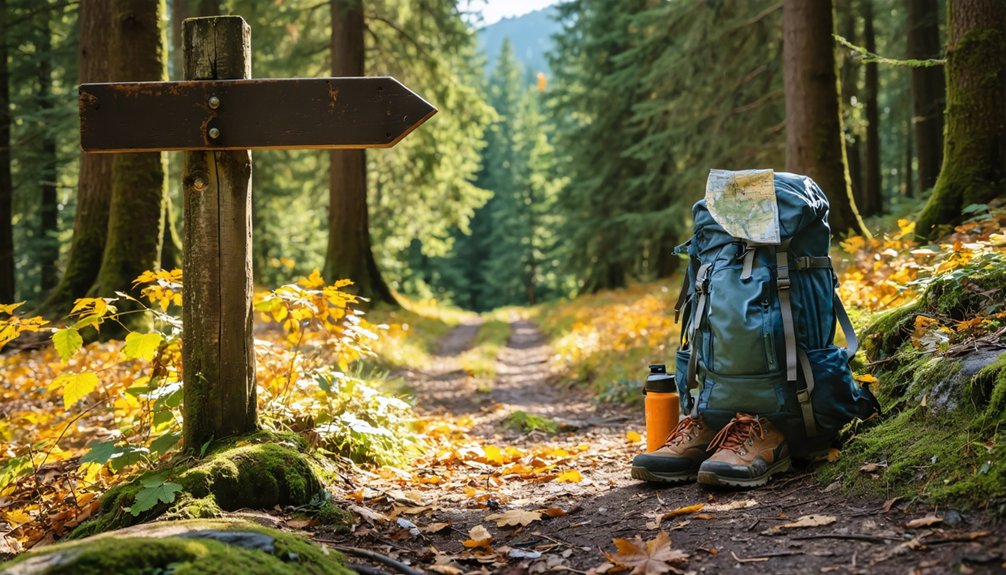
Your adventure to Walville demands timing as deliberate as the pioneers who once settled these forgotten hills. Late spring through early fall offers prime exploration, when average annual precipitation drops and trails firm beneath your boots.
Target May through September for shoulder season visitation—you’ll dodge winter’s 80-plus inches of rain while enjoying blooming wildflowers and vibrant autumn colors.
Pack layered waterproof gear for sudden showers, sturdy hiking boots for muddy brick remnants, and insect repellent for Mill Pond mosquitoes. Bring offline maps, first aid supplies, and plenty of water—no services exist here. High-clearance vehicles handle post-rain access roads best.
A headlamp illuminates shaded graveyard stones, while long pants protect against brush surrounding railroad traces. These abandoned hills reward the prepared wanderer.
Nearby Ghost Towns to Add to Your Route
Why stop at one ghost town when Washington’s forgotten landscapes stretch like abandoned chapters across three distinct regions?
Among these hidden gems, the ghost town history of Disautel offers intriguing tales of forgotten lives and the fleeting nature of prosperity. Once a bustling hub during the gold rush, it now stands as a testimony to the harsh realities of time. Exploring the remnants of Disautel allows visitors to connect with the past and appreciate the stories etched into its landscape.
In the Chehalis River Valley, Dryad’s mill infrastructure and 1903 Baptist church tell stories of lumber’s reign. Head east to Lincoln County where Govan and Sherman—just fifteen minutes apart—preserve schoolhouses and cemeteries amid agricultural remnants of homesteading dreams gone silent.
Two forgotten towns fifteen minutes apart guard the ghosts of wheat country homesteads across Lincoln County’s windswept plains.
Push north to Okanogan County’s border country. Molson’s free museum displays pioneer tools and restored classrooms among rusted farm machinery. Complete your loop at Nighthawk, where the old hotel and mining office overlook the Similkameen River near Enloe Dam’s historic ruins.
Each site offers solitary exploration without admission fees or crowds—just you, gravel roads, and the freedom to wander through Washington’s unguarded past.
Frequently Asked Questions
Are There Any Entrance Fees or Permits Required to Visit Walville?
No entrance fees or permits are required to explore Walville’s haunting remnants. You’ll find parking availability along the Rails to Trails path, offering accessibility for visitors seeking this forgotten Washington ghost town’s crumbling bricks and weathered gravestones freely.
Is the Site Safe for Children and Elderly Visitors?
No, Walville isn’t safe for children or elderly visitors. You’ll navigate overgrown trails obscuring faint railroad tracks, with zero wheelchair accessibility. Scattered bricks, hazardous structures, and hillside terrain create significant trip risks. This adventure demands physical capability and sure-footedness throughout.
Can I Camp Overnight Near the Walville Ghost Town Area?
You can’t camp directly at Walville, but nearby camping options include Ghost Town Hipcamp just miles away. You’ll find local hiking trails along Willapa Hills State Park Trail, plus dispersed camping on surrounding state lands for true freedom.
Are Dogs Allowed on the Trails Leading to Walville?
Dogs are welcome on Walville’s trails, though no official pet-friendly policies exist. You’ll want to keep your canine companion on-leash while exploring the overgrown railroad grades, respecting the historic graveyard and traversing muddy, debris-strewn paths safely.
How Long Should I Plan to Spend Exploring the Site?
You’ll need 1-2 hours to explore Walville’s whispers of the past. Consider what time of year to visit—summer’s ideal. Note there aren’t any restroom facilities available, so plan accordingly before venturing into this forgotten freedom.