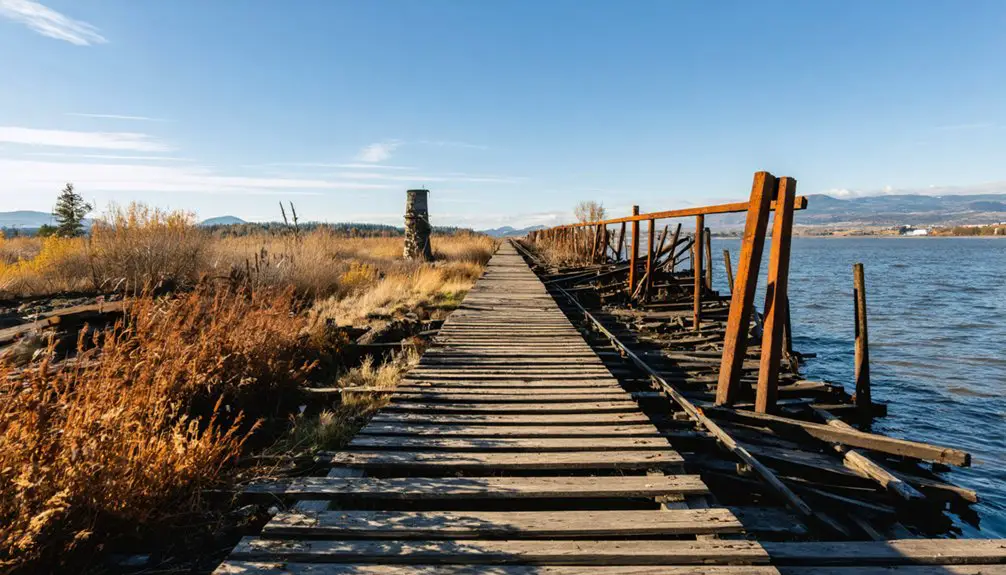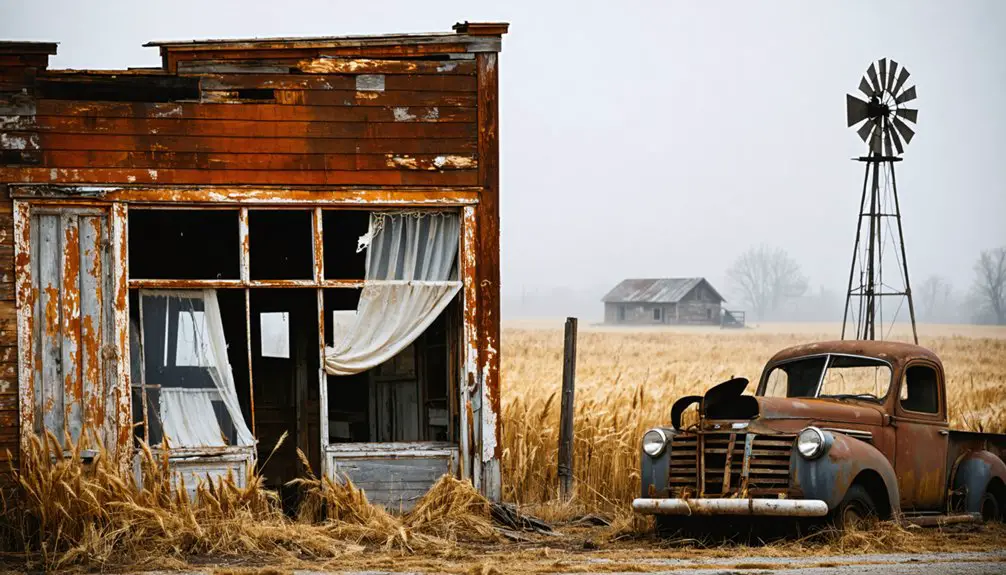
You’ll find Washington-on-the-Brazos 90 minutes northwest of Houston via Highway 290 and Highway 6, where Texas’s independence was declared in 1836. This ghost town offers a reconstructed Independence Hall, Sam Houston’s presidential office, and over 10,000 archaeological artifacts from the Republic era. The site’s open daily with museums operating Wednesday through Sunday, and admission ranges from free to $10. You can explore authentic 1830s streetscapes, visit nearby Barrington Plantation, or taste wines at Chapelton Vineyards to discover how this once-thriving capital became abandoned.
Key Takeaways
- Located at 23400 Park Road 12, Washington-on-the-Brazos is a 90-minute drive from Houston via Highway 290 West and Highway 6.
- Visit Independence Hall Replica, Star of Republic Museum, and historic structures like Morris Family Log Cabin from the $54 million renovation.
- Museums and historic sites open Wednesday through Sunday; admission ranges from free for children under 6 to $10 for adults.
- Explore over 10,000 artifacts from archaeological investigations, including Republic-era coins and traces of Sam Houston’s presidential office.
- Nearby attractions include Fanthorp Inn stagecoach stopover, Barrington Plantation farming demonstrations, and Chapelton Vineyards for wine tasting.
The Birthplace of Texas: Understanding Washington-on-the-Brazos’ Historical Significance
While most Texans can pinpoint the Alamo on a map, far fewer know about the modest settlement where Texas actually declared its independence from Mexico. Washington-on-the-Brazos earned its title as the “birthplace of Texas” on March 2, 1836, when 59 delegates signed the Texas Declaration of Independence in an unfinished frame building.
You’ll discover how these pioneers worked seventeen straight days drafting a constitution while Santa Anna’s army advanced, establishing the Republic of Texas that would last until 1846. The town’s architectural significance extends beyond that historic hall—its location on flood-resistant bluffs above the Brazos River showcases pioneer settlement life, where entrepreneurs built sawmills and ferries, creating a thriving commercial center that briefly served as the Republic’s capital.
What Caused This Once-Thriving Capital to Become a Ghost Town
The Republic of Texas hadn’t even celebrated its independence before Washington-on-the-Brazos began showing cracks in its foundation. Economic diversification failures and political power struggles sealed this once-promising capital’s fate through a series of devastating blows:
Washington-on-the-Brazos: a capital whose demise began before Texas even secured the independence it fought to claim.
- Government Abandonment (1846) – When Austin claimed the capital title after annexation, Washington lost its administrative lifeblood and the prosperity that followed political influence.
- Railroad Rejection (1858) – Your predecessors’ refusal to pay an $11,000 bonus sent the Houston and Texas Central Railroad to Hempstead instead, isolating the town from modern commerce.
- River Commerce Collapse – Devastating Brazos floods combined with rail’s dominance ended steamboat traffic entirely.
- Mass Exodus (1860s) – Residents relocated entire buildings to Brenham and Navasota, leaving cultivated fields where streets once thrived.
Getting to Washington-on-the-Brazos State Historic Site
Though Washington-on-the-Brazos lost its battle with progress over 150 years ago, reaching this historic ghost town remains surprisingly straightforward. You’ll find the 293-acre site at 23400 Park Road 12 in Washington County, nestled where the Brazos and Navasota Rivers meet.
From Houston, take Highway 290 West to Highway 6 at Hempstead, then north to Navasota. Head west on Highway 105 for seven miles, turn left on FM 1155, then left on Park Road 12. The journey takes approximately 90 minutes.
Alternate access routes include FM 912 from Brenham or various approaches from Austin, D/FW, and Waco. While river crossing safety isn’t a concern with modern roadways, you’ll appreciate the scenic drive through Texas backcountry that leads to this preserved piece of independence history.
What Remains: Exploring the Archaeological Remapping and Original Townsite
Upon arrival at Washington-on-the-Brazos, you’ll discover far more than empty fields and historical markers. Archaeological investigations beginning in September 2023 have transformed this ghost town, where over 10,000 artifacts now tell the story of 1,000 former residents who shaped Texas independence.
Artifact analysis has uncovered remarkable treasures:
- Coins from the Republic era, including an 1831 U.S. dime and 1820 Spanish silver piece found in the tavern
- Sam Houston’s presidential office traces, where he moved the capital in 1842
- Intact brick floors and fireplaces from 1830s structures, now preserved within recreated buildings
- Hatfield’s Exchange foundation, marking where Texas’s Republic ended in 1854
The $54 million renovation integrates these findings into permanent exhibits, allowing you to walk authentic grounds where 59 delegates signed the Declaration of Independence.
Must-See Landmarks and Reconstructed Buildings at the Park
You’ll want to start your exploration at the Independence Hall Replica, where 59 delegates signed the Texas Declaration of Independence on March 2, 1836. This centerpiece of the $54 million renovation anchors the reconstructed Washington Townsite, surrounded by authentic period buildings that bring the Republic era to life through immersive storytelling.
Follow the Historic Marker Walking Trail to connect these landmarks and trace the footsteps of Texas founders across the original town layout.
Independence Hall Replica Tour
Standing at the heart of Washington-on-the-Brazos State Historic Site, the Independence Hall replica serves as the crown jewel of this 293-acre complex between Brenham and Navasota. You’ll explore where 59 delegates declared Texas’s independence from Mexico on March 2, 1836. The current structure replaced the original 1910s version in the 1950s-1960s, faithfully recreating the simple frame building that hosted the Convention of 1836 over 17 days.
During your tour, you’ll discover:
- The signing room where delegates forged the Texas Declaration of Independence
- Period furnishings reflecting the austere conditions of 1836
- Interpretive displays explaining the Republic of Texas era (1836-1846)
- Architectural details showing frontier government buildings
The monument stands as Texas’s birthplace, commemorating when Texans chose self-governance over subjugation.
Historic Marker Walking Trail
Beyond Independence Hall, a network of trails guides you through Washington-on-the-Brazos’s 293 acres, connecting reconstructed buildings and historical landmarks that bring the Republic era to life. Site markers along the paths share historical narratives about the vanished townsite, while scenic overlooks of the Brazos River and pond frame your exploration.
You’ll discover Sam Houston’s Presidential Office, where Republic leadership unfolded, and the Morris Family Log Cabin showcasing frontier resilience. Heath’s Carpenter Shop demonstrates 19th-century craftsmanship, while Rucker’s Drug Store features archeology exhibits explaining the town’s eventual decline. These authentic reconstructions create an immersive experience of 1840s Texas.
The trails remain accessible Wednesday through Sunday, 10 a.m.–4:30 p.m., inviting you to walk where Texas independence was forged and explore freedom’s birthplace at your own pace.
The $51 Million Renovation: What’s New for Visitors
The multi-million dollar renovation didn’t just polish old exhibits—it fundamentally transformed how you’ll experience this ghost town’s story.
Through archaeological excavations of the original townsite, historians remapped the settlement and unearthed artifacts that now anchor new displays connecting you directly to Republic-era residents.
You’ll encounter enhanced interpretation that brings real historical figures to life through immersive storytelling, replacing generic historical narratives with personal accounts of the people who actually walked these streets in the 1840s.
Archaeological Remapping and Discovery
Beneath centuries of Texas soil, archaeologists uncovered fragments of the Republic’s birthplace when excavations commenced in October 2023. These discoveries fundamentally reshaped how you’ll experience the Washington Town Site today.
Artifact analysis revealed authentic settlement patterns that guided every reconstruction decision:
- Children’s toys and domestic goods from the 1830s now displayed in the renovated visitor center connect you directly to families who lived through independence
- Excavated foundations determined exact placement of reconstructed buildings like the 1800s drug store
- Material culture findings informed period-accurate architectural details throughout the townsite
- Dig site data shaped your walking paths, ensuring you trace the same routes Republic-era residents traveled
Historian Michael Rugley Moore transformed these underground clues into tangible structures you can explore freely.
Enhanced Historical Interpretation
After two years of transformative work, Washington-on-the-Brazos emerged from its $51 million renovation as Texas’s most technologically advanced historical site. You’ll experience historical interpretation that breaks free from traditional museum constraints through multi-sensory storytelling and floor-to-ceiling video walls that immerse you in 1836’s revolutionary atmosphere.
The Star of Republic Museum’s six new galleries showcase narrative reconstruction that brings real Republic-era Texans to life through rare artifacts, commissioned artwork, and high-tech interactive displays. You’ll explore diverse populations who shaped Texas independence—not just celebrated heroes, but ordinary citizens whose stories previously went untold.
Walk reconstructed townsite streets featuring Independence Hall, Sam Houston’s Presidential Office, and newly added structures like Heath’s Carpenter Shop. This authentic environmental recreation lets you experience daily life in 1830s Washington firsthand.
Planning Your Visit: Hours, Admission, and Facilities
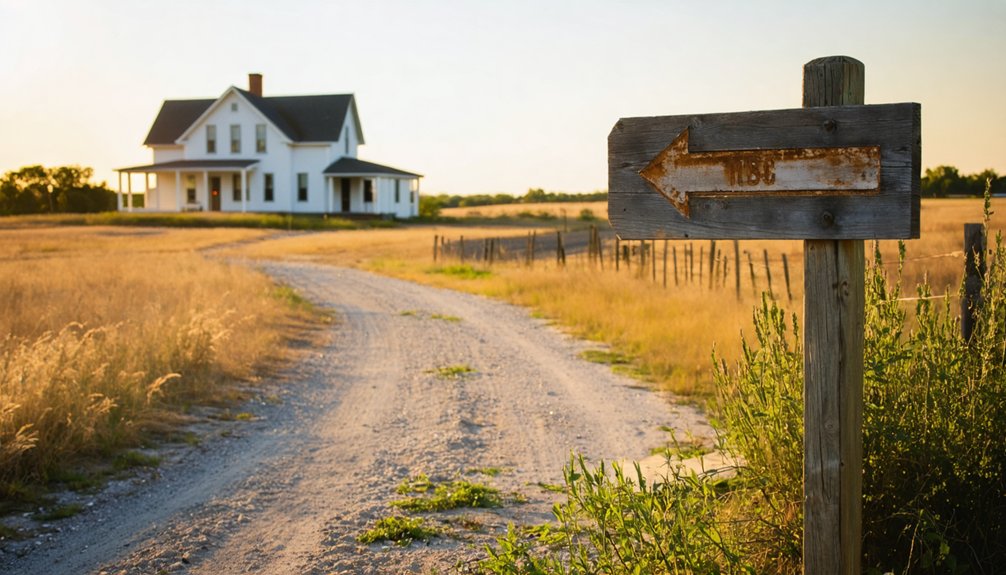
Planning ahead guarantees you’ll make the most of your Washington-on-the-Brazos experience, as operating hours vary throughout the week. The Visitor Center and grounds welcome you daily from 9:30 a.m. to 5 p.m., while museums and historic sites operate Wednesday through Sunday only.
Plan your visit wisely: the Visitor Center opens daily, but museums and historic sites are only accessible Wednesday through Sunday.
Essential visiting information:
- Admission costs range from free for children under 6 to $10 for adults, with affordable ticket packages like the $22 family pass covering two adults and one child
- Monday-Tuesday access is limited to Visitor Center and grounds only—no tickets required
- Audio tour guidance devices are complimentary at the Visitor Center
- Historic sites including Barrington Farm and Independence Hall open 10 a.m. to 4:30 p.m. Wednesday through Sunday
Groups exceeding 20 visitors must arrange tours beforehand.
Nearby Attractions to Complete Your Texas History Road Trip
Your journey through Texas independence history extends far beyond Washington-on-the-Brazos’ borders, with several compelling attractions clustered within minutes of each other. The Star of the Republic Museum sits just four minutes away, offering 10,000 square feet of immersive exhibits spanning Native American heritage through the Revolution.
You’ll discover authentic early Texas travel experience at Fanthorp Inn, a preserved stagecoach stopover from the Republic era. Barrington Plantation, merely one minute distant, brings history alive with mid 19th century farming demonstrations on Dr. Anson Jones’ original homestead, complete with cotton fields and period buildings.
For spiritual reflection, visit the highly-rated Blessed Virgin Mary Catholic Church three miles away. Cap your historical exploration at Chapelton Vineyards, where you’ll taste modern Texas wines amid countryside that witnessed independence.
Frequently Asked Questions
Are There Any Restaurants or Food Services Available at the Historic Site?
No full restaurants operate onsite, but you’ll find the Washington Mercantile offering drinks and snacks. Food vendors appear during special events, and picnic facilities let you bring your own provisions while exploring this historic treasure.
Can Visitors Access the Brazos River for Fishing or Other Activities?
Unfortunately, you won’t find boat launch access or river recreation activities at Washington-on-the-Brazos—the site restricts water contact due to safety concerns. However, you’ll discover excellent upstream alternatives like Hidalgo Falls for your paddling adventures.
Is the Site Wheelchair Accessible for Visitors With Mobility Limitations?
Yes, you’ll find excellent wheelchair accessibility throughout the site. The $54 million renovation prioritized mobility assistance options, including accessible trails, restrooms, parking, and exhibits. Wheelchairs are available first-come, first-served at the visitor center’s front desk.
Are Pets Allowed on the Grounds of the State Historic Site?
Yes, you’ll find welcoming pet policies here—leashed companions under six feet are encouraged to explore. The site accommodations include free grounds access daily from 9:30 a.m.–5 p.m., though indoor areas remain off-limits to furry friends.
What Are the Best Months to Visit for Comfortable Weather Conditions?
You’ll find the best visiting conditions during March through May with mild spring weather, or October through November when fall temperatures cool down. Both seasons offer comfortable exploration without summer’s oppressive heat or winter’s occasional chill.