Your Waterford, Vermont ghost town road trip starts at Moore Dam Reservoir, where an entire drowned village hides beneath the surface. From there, you’ll explore Upper Waterford’s flooded footprint, Lower Waterford’s striking White Village, and West Waterford’s neglected cemetery with its disturbed graves and unearthed bones. Plan your visit for late summer when dropping water levels reveal the sunken road below. There’s far more to this haunted, layered history than first meets the eye.
Key Takeaways
- Waterford, Vermont holds four centuries of history, including Native American settlements, French and British forts, and an American ghost town.
- The Moore Dam Reservoir flooded Upper Waterford between 1928 and 1957, with submerged roads visible during late summer drawdowns.
- Lower Waterford’s “White Village” features Greek Revival architecture, while West Waterford’s neglected cemetery contains disturbed graves and unearthed bones.
- The full ghost town drive covers four key stops, taking less than a day, ending at Second and West Street in West Waterford.
- Pack waterproof boots, trekking poles, polarized sunglasses, binoculars, extra water, a first aid kit, and an offline map for safe exploration.
Why Waterford, Vermont Is Vermont’s Most Layered Ghost Town
When most people hear “ghost town,” they picture a dusty western settlement with tumbleweeds and abandoned saloons — but Waterford, Vermont tells a far stranger and darker story.
Here, you’re not dealing with a single abandoned era. You’re standing on centuries of layered history — Native American settlements, a French fort burned upon retreat, a British fort built atop its ruins, and an American town later swallowed by a reservoir.
The ghostly encounters reported here aren’t random. They’re rooted in the town’s historical significance: disturbed graves, unearthed bones, and headstones torn from a cemetery built directly over earlier burials.
Waterford doesn’t just have one ghost story — it has dozens, stacked generation upon generation, waiting for you to explore them.
Four Centuries of Burials Beneath Waterford’s Villages
Beneath Waterford’s quiet villages, the ground holds far more than most visitors realize. Native Americans first claimed this land, then French soldiers built a fort here, burning it when they left. The British raised their own fort on those same ruins. Americans later settled, farmed, and buried their dead in the same soil.
That’s four centuries of burial practices layered directly beneath your feet.
Four centuries of burial practices rest in these soils — Native, French, British, American — layered and silent beneath every step.
The historical significance becomes visceral when you learn that residents’ grandparents found bone fragments and jewelry while digging through disturbed graves. Headstones were torn from the West Waterford cemetery, leaving the site overgrown and forgotten.
Moore Reservoir eventually swallowed Upper Waterford entirely. You’re not just visiting old buildings here — you’re walking ground that multiple civilizations called sacred.
Upper Waterford: The Village Swallowed by Moore Reservoir
Moore Reservoir didn’t just flood a few fields — it erased an entire village. Upper Waterford once stood here, a living community built on centuries of Native American, French, and British history.
Then came the dams. Between 1928 and 1957, New England Power Company bought out homeowners, and Moore Dam’s rising waters swallowed what remained. Homes, farms, roads — all consumed.
But the submerged history hasn’t completely disappeared. When water levels drop, you can actually spot the old road beneath the reservoir’s surface — a ghost of the village pressing up through the water.
Today, you’ll find a boat launch and solid sport fishing at the site. Come for the recreation, stay for the eerie reminder that entire worlds can vanish beneath still water.
Lower Waterford’s White Village and the Man Who Built It
Just a short drive from the reservoir’s edge, Lower Waterford feels like a different world entirely. White-painted buildings trimmed with green shutters line the village, earning it the nickname “White Village.”
You can thank John W. Davies for that. After purchasing nearly the entire village post-1919, this St. Johnsbury creamery owner from Reading, Massachusetts, transformed the area through his unmistakable architectural influence, creating a cohesive aesthetic that still defines the streetscape today.
Davies’ legacy attracted wealthy seasonal residents throughout the 1930s, and the 1937 Burlington Free Press described it as a premier summer destination.
Stop at the Cutler House at 6888 Route 18 to see a well-preserved example of Greek Revival style that reflects the refined character Davies deliberately cultivated here.
West Waterford’s Forgotten Post Office and the Cemetery Below It
Head further into the backcountry and you’ll find West Waterford, a village that once had its own post office — established January 5, 1856 — before quietly fading from official existence by 1905.
Its post office history reads like a revolving door, with multiple postmasters cycling through, including Amos B. Carpenter, who served across several terms.
But the real discovery waits at the end of Second and West Street. The cemetery there holds darker secrets beneath its surface.
Cemetery discoveries have revealed bone fragments and jewelry from disturbed graves, evidence that the town was literally built atop earlier burials — Native American, French, and British.
Headstones were torn up, the site left to go wild. Walk it carefully; you’re treading on layers of forgotten people.
Bones, Disturbed Graves, and Ghost Stories Along the Waterford Road Trip
As you wind through Waterford’s back roads, you’re traveling over layers of history that go far deeper than the pavement beneath your wheels.
Native Americans, French soldiers, British troops, and early American settlers all left their dead here, and when the town built over those graves, it didn’t go undisturbed — residents’ grandparents reportedly unearthed bone fragments and jewelry from the disrupted burial sites.
Heidi Longstreet of the Waterford Historical Society keeps these unsettling stories alive, connecting the town’s restless past to the apparitions and hauntings that locals have long associated with its forts, flooded villages, and overgrown cemeteries.
Layers Of Disturbed Burials
Beneath the quiet roads and reservoir waters of Waterford lies something deeply unsettling: layer upon layer of disturbed burials.
The town’s burial history reads like an archaeological excavation of conflict and displacement — Native Americans buried first, then French soldiers who burned their own fort upon leaving, then British forces who built directly atop those ruins, and finally American settlers who did the same.
When residents later disturbed the earth, they uncovered the consequences.
Grandparents of current locals reportedly found bone fragments and jewelry scattered through the soil — disturbed remains from generations nobody properly honored.
Headstones got torn up. Cemeteries got abandoned. A town got built atop graves without ceremony or acknowledgment.
You’re not just walking through history here — you’re walking over it.
Local Ghost Legends
Heidi Longstreet of the Waterford Historical Society doesn’t mince words when she talks about the town’s haunted reputation — and given what’s buried here, it’s hard to blame her.
She’ll tell you about ghostly encounters tied to the layered graves beneath Waterford’s soil — Native American, French, British, and American dead, all stacked beneath the same ground you’re walking on.
Residents’ grandparents reportedly unearthed bone fragments and jewelry while digging around old cemetery sites. The headstones are gone, the graves disturbed, and the haunted history of this place lingers in every overgrown corner.
Whether you believe in ghosts or not, standing at these sites — especially near the old fort ruins and collapsed cemeteries — you’ll feel something pulling at you that’s hard to ignore.
Spotting the Sunken Road at Moore Dam
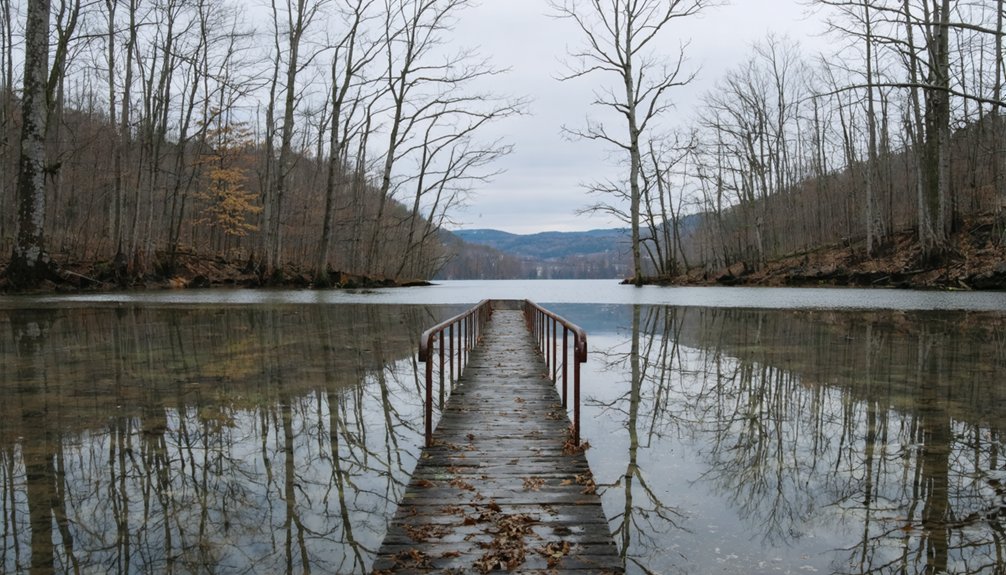
When the water drops low enough at Moore Dam reservoir, you can spot something most visitors never expect: the ghostly outline of an old road that once wound through Upper Waterford.
This sunken road connected homes, farms, and lives that vanished when New England Power Company flooded the valley between 1928 and 1957.
Standing at the boat launch, you’re looking at a community swallowed whole. The haunting legends surrounding this place aren’t just storytelling—they’re rooted in real loss.
Standing at the water’s edge, you’re not just visiting a reservoir—you’re standing on top of someone’s world.
Moore Reservoir also offers solid sport fishing and sweeping views, making it worth the stop regardless of water levels.
But if you catch it at the right moment, that emerging road feels less like a curiosity and more like a message from the people who once called this valley home.
The Full Waterford Ghost Town Drive, Stop by Stop
Pulling together the full Waterford ghost town drive takes less than a day, but it covers centuries of buried history across four distinct stops.
Start at Moore Dam reservoir, where you can spot the sunken road beneath the surface.
Drive next to Upper Waterford’s flooded footprint, where Native American, French, British, and American layers stack beneath the water.
Head into Lower Waterford’s White Village, where Davies’ carefully preserved Greek Revival architecture carries real historical significance worth slowing down for.
Finish at Second and West Street in West Waterford, where cemetery preservation failed completely — headstones torn out, bones disturbed, a town built directly over the dead.
Each stop builds on the last, giving you a raw, unfiltered look at how completely a place can disappear.
When Moore Reservoir Drops Low Enough to See the Sunken Road
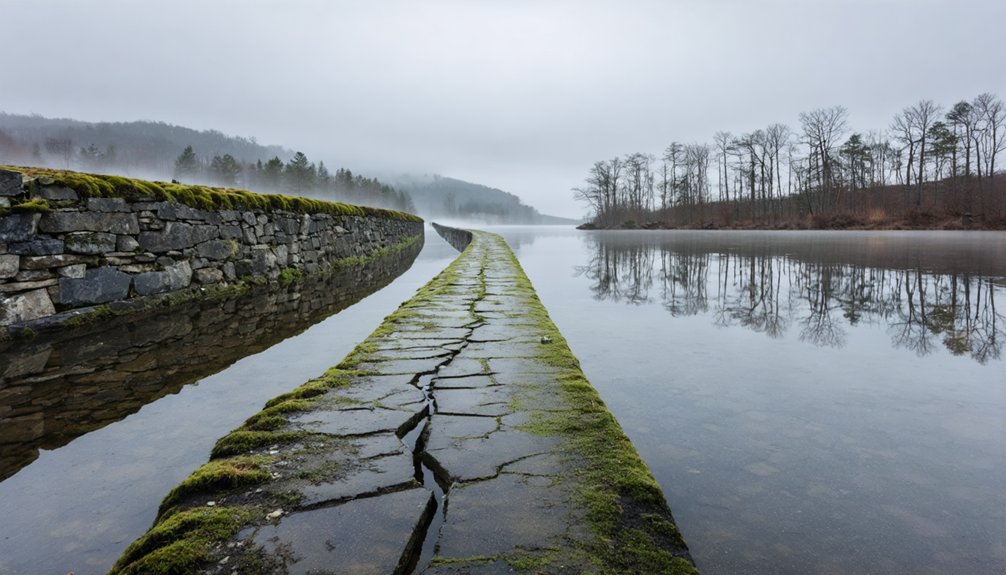
If you time your visit right, you can catch one of Upper Waterford’s most haunting spectacles — the submerged road of the drowned village emerging from beneath Moore Reservoir’s surface.
When water levels drop low enough, the old roadbed reappears like a ghost itself, tracing the path that residents once traveled before the New England Power Company flooded their homes and farms.
Plan your trip for late summer or early fall, when seasonal drawdowns typically lower the reservoir enough to expose the remnants below.
Reservoir Reveals Submerged Road
There’s a strange moment at Moore Reservoir when the water drops low enough to reveal the old road beneath the surface — and suddenly, Upper Waterford isn’t just a story anymore.
You’re looking at submerged history made visible — a ghost town‘s main artery emerging from the depths like a quiet confession.
The haunting beauty of it stops you cold. Homes, farms, and lives once lined that road before New England Power Company acquired the land and the Moore Dam project swallowed everything between 1928 and 1957.
Now the reservoir holds it all underwater, releasing glimpses only when water levels fall.
Hit the boat launch, scan the shoreline, and watch for that road.
When it appears, you’ll understand why people keep coming back here.
Best Times To Visit
Seeing that road means timing your visit right. Late summer through early fall offers your best shot — water levels in Moore Reservoir typically drop enough to expose the sunken road as seasonal events draw down demand on the system.
August and September hit that sweet spot between accessible water levels and comfortable temperatures for exploring the boat launch area.
Plan around a full day. Pair your reservoir visit with a stop for local cuisine in nearby St. Johnsbury, where you’ll find solid options before or after your exploration.
Weekdays work better than weekends — fewer crowds mean more room to scan the shoreline undisturbed.
Check current water levels before you go. The road doesn’t always appear, and driving out for nothing wastes your freedom to explore elsewhere.
What to Pack for Muddy Trails, Low Water, and Submerged Road Spotting
Exploring Waterford’s ghost town remnants means trading dry sidewalks for muddy trails, rocky reservoir edges, and shorelines that shift with the water level.
Muddy shoes are inevitable, so wear waterproof boots with solid ankle support. Your trail essentials should include trekking poles for unstable reservoir banks, a dry bag for your camera, and layered clothing since temperatures shift quickly near the water.
Waterproof boots and trekking poles aren’t optional here — they’re survival basics for shifting banks and relentless mud.
Bring polarized sunglasses to cut glare when you’re scanning the reservoir surface for that submerged Upper Waterford road. Pack binoculars for spotting stonework from a distance.
Carry more water than you think you’ll need, a basic first aid kit, and a downloaded offline map. Cell service out here won’t always cooperate.
Frequently Asked Questions
Can Visitors Access the Old Cemetery Site at Second and West Street?
You can visit the old cemetery site at Second and West Street, where cemetery history runs deep. Explore overgrown grounds tied to chilling ghost stories, uncovered bones, and torn-up headstones that’ll ignite your curiosity and sense of adventure.
Is There an Entrance Fee to Access the Moore Dam Boat Launch?
The knowledge base doesn’t mention an entrance fee, so you’ll want to confirm before visiting. You can freely explore the Moore Dam Boat Launch, cast a line, and spot the eerie submerged road of vanished Upper Waterford below!
Are There Guided Historical Tours Available in Waterford, Vermont?
Like a treasure map awaiting exploration, Waterford’s historical significance unfolds through the Waterford Historical Society, where Heidi Longstreet guides you through local legends, hauntings, and layered histories that’ll ignite your spirit of adventure and freedom.
What Is the Best Time of Year to Visit Waterford?
Summer’s your best season to explore Waterford’s ghost town mysteries! You’ll enjoy Moore Dam’s low waters revealing submerged roads, catch local events, and experience the White Village’s haunting charm at its most vibrant and accessible.
Is the Cutler House at 6888 Route 18 Open to Visitors?
Like a treasure waiting behind closed doors, the Cutler House history isn’t confirmed as open for visitor experiences. You’ll want to admire its stunning Greek Revival architecture from the outside while exploring Route 18’s scenic surroundings.
References
- https://www.youtube.com/watch?v=il-BaexRrRM
- https://vermontcountry.com/2022/09/18/ghost-town/
- https://waterfordvt.gov/town-history.html
- https://en.wikipedia.org/wiki/Waterford
- https://outside.vermont.gov/agency/ACCD/ACCD_Web_Docs/_Drupal 7 ACCD Website Document Library/documents/Historic Preservation/6888 Route 18_Cutler House History Report.pdf
- https://waterford-vt-history.blogspot.com/2014/02/west-waterford-village-that-once-was.html