Plan your Webb visit between March and May when wildflowers soften the desert’s harsh edges, and bring a high-clearance vehicle for twenty miles of rough roads. You’ll find the former post office and schoolhouse standing as private residences near Elfrida—no tourist infrastructure exists here, so secure permissions beforehand and pack extra water and fuel. Webb anchors perfectly into a multi-day loop through Arizona’s five ghost town clusters, each offering distinct landscapes from mine shafts to mountain backdrops that reveal the state’s abandoned railway heritage.
Key Takeaways
- Webb is a remote Cochise County ghost town near Elfrida and McNeal, requiring high-clearance vehicles for access along the abandoned railroad corridor.
- Visit March-May or September-November for comfortable temperatures, blooming wildflowers, and ideal photography conditions in the desert climate.
- The former school and post office buildings remain as private residences, offering an authentic railroad-era settlement experience without tourist infrastructure.
- Use Webb as an anchor stop for multi-day Arizona ghost town expeditions across five distinct regional clusters throughout the state.
- Secure permission before visiting privately-owned ruins and plan access arrangements carefully due to the area’s remote, undeveloped nature.
Discovering Webb’s Forgotten Railway Heritage
Before the rhythmic clatter of steam locomotives echoed across southeastern Arizona’s grasslands, Webb began as a dusty stage stop operated by Robert M. Tyler. When the post office rejected his surname, he named it after his father-in-law, J.D. Webb.
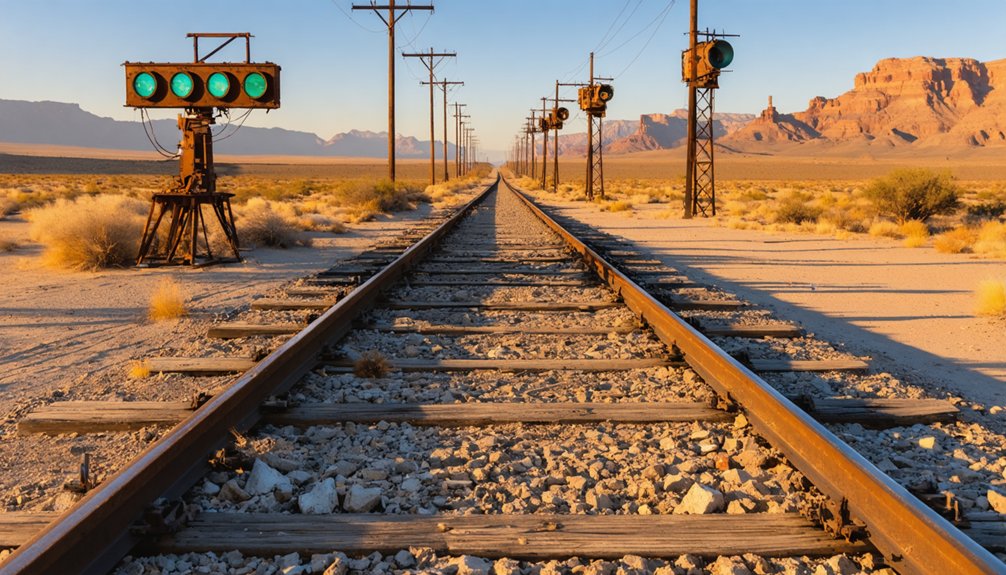
Everything changed when James S. Douglas’s El Paso & Southwestern Railroad pushed its Courtland Branch through in 1902, bringing railroad infrastructure upgrades that transformed local land use dynamics. You’ll find traces of this mining and cattle-hauling legacy in abandoned wells and cattle pens scattered along the old route.
The station served ranchers and miners until 1932, when economic collapse killed the branch line. By 1938, even the post office shuttered, leaving Webb to the desert wind and adventurous souls seeking Arizona’s vanished railway past.
How to Reach This Remote Cochise County Settlement
Tracking down Webb requires striking out from one of several gateway cities that ring this southeastern corner of Arizona, where Cochise County spreads across 6,219 square miles of desert grassland and sky. You’ll launch from Benson, Willcox, or Sierra Vista, coordinating regional logistics through rural roads that demand attention and high-clearance vehicles.
The settlement sits near Elfrida (population 459) and McNeal (238), with MapQuest and Apple Maps providing basic navigation to these sparse communities. Securing remote access means plotting your course carefully—Webb exists in Mountain Standard Time territory where post offices closed in 1938 and railroad tracks vanished by 1932. The abandoned El Paso Southwestern Railroad corridor still traces your path into country where voting centers at ranch roads double as landmarks.
What Remains at the Historic Webb Townsite Today
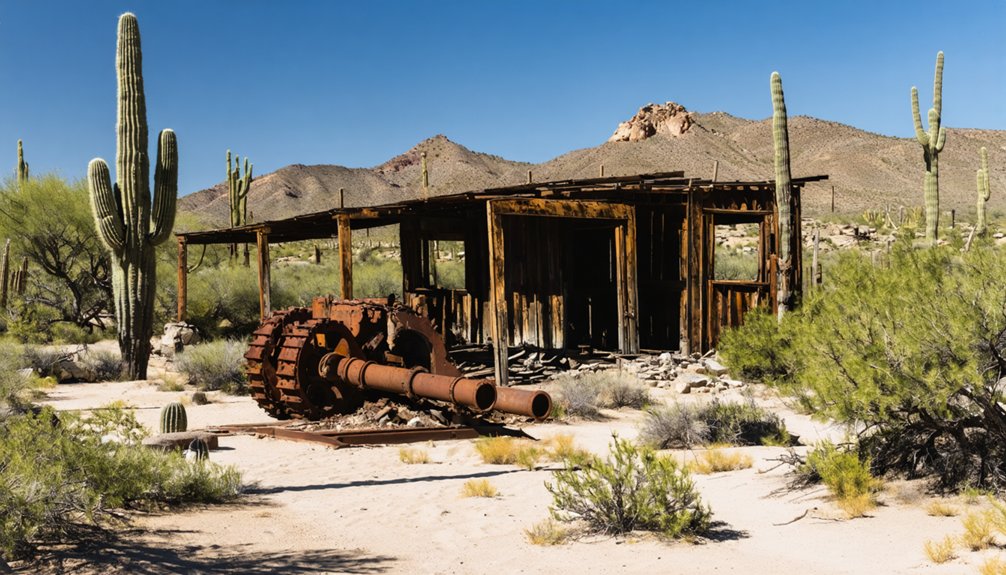
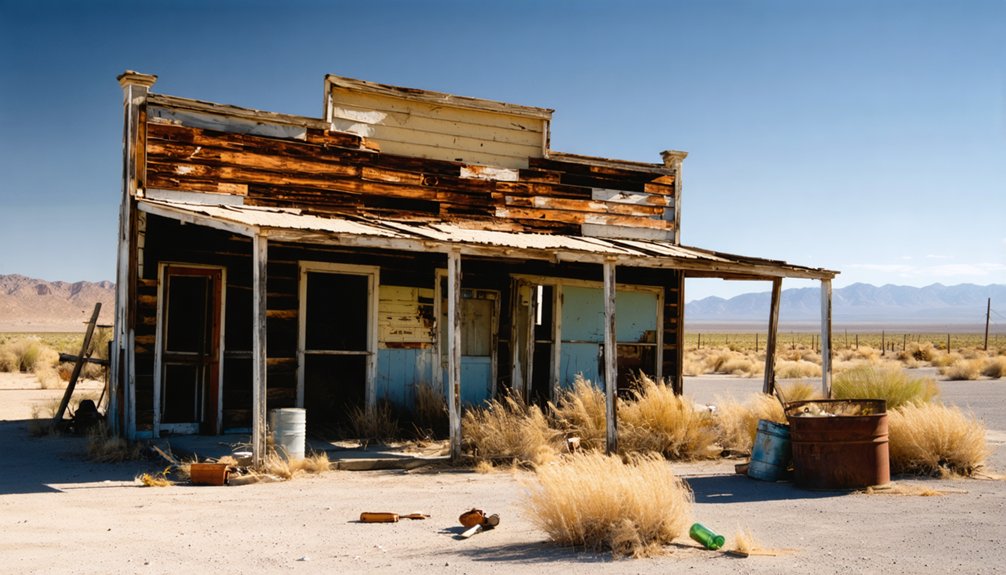
After traversing those demanding backcountry routes, you’ll find Webb stripped down to its barest historical bones—just two structures anchoring a windswept landscape where a railroad town once thrived. The former school building and post office stand as evidence to frontier community essentials, their late 1800s construction weathered but intact.
Both buildings now serve as private residences. You won’t be stepping inside these structures, but exterior observation reveals architectural restoration challenges unique to Arizona’s desert settlements. Preserving residential histories means current occupants maintain these landmarks on their terms, without signage or interpretive displays. This private ownership creates a ghost town experience opposite from heavily commercialized sites—Webb exists quietly, authentically, offering freedom-seekers an unvarnished glimpse into railroad-era settlement patterns without tourist infrastructure constraining your exploration.
Best Times and Seasons for Desert Exploration
Your journey to Webb’s weathered ruins rewards you most generously from March through May, when wildflowers ignite the desert in purple, gold, and crimson while temperatures hover in the comfortable 60s to 80s.
Fall brings a quieter magic—September through November offers golden light across abandoned structures, crisp mornings perfect for photographing crumbling walls, and trails blissfully empty of crowds.
Winter’s cool 42-70°F days let you explore for hours without wilting, though you’ll want layers when frost silvers the saguaros and occasional snow dusts the ghost town’s skeletal remains.
Optimal Weather Windows
The desert’s temperament shifts dramatically with the seasons, and understanding these rhythms can mean the difference between a memorable adventure and a miserable ordeal. Target October through April when temperatures cool and skies clear. December and January bring predictable Pacific storms—82% of annual rainfall west of the 117°W meridian falls during these months. You’ll dodge the brutal May-June dry spell when temperatures spike and only 5% of annual precipitation occurs.
Mid summer precipitation patterns complicate July through September with afternoon thunderstorms triggered by monsoonal surges. Dewpoints can climb above 65°F, transforming dry heat into oppressive humidity. Shoulder season visitation in October-November or March-April offers the sweet spot: moderate temperatures, minimal rainfall, and that crisp desert air that calls to wanderers seeking untrammeled exploration.
Seasonal Wildlife and Flora
Desert wildlife orchestrates its rhythms around Arizona’s rainfall lottery, and if you time your Webb exploration right, you’ll witness nature’s calculated gambles paying dividends.
September through October brings seasonal bird migrations as Gambel’s quail capitalize on monsoon-triggered breeding windows, their late broods scattering across scrublands near abandoned foundations. White-winged doves converge before their early-season opener, while autumn wildflower blooms erupt if summer storms persist through September.
Mearns quail wait for December’s cooler temperatures in higher elevations. Watch javelinas rooting through creosote flats year-round—these desert opportunists don’t observe schedules.
Mule deer descend from mountain forests come October, threading through ghost town arroyos at dawn. Your freedom to explore coincides with nature’s most generous performances when rainfall delivers on its promises.
Creating a Multi-Stop Arizona Ghost Town Itinerary
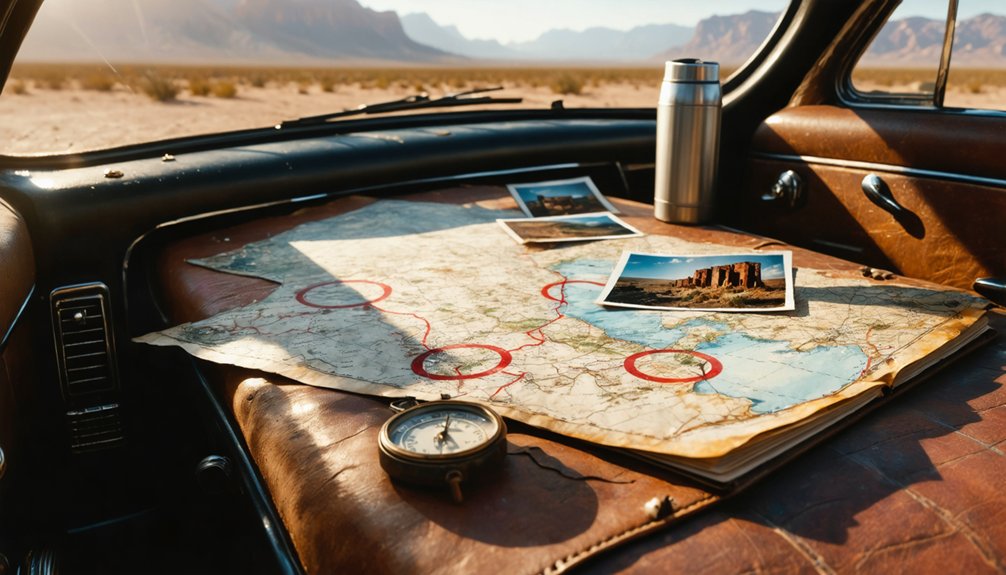
You’ll want to position Webb as your central destination, then build outward to maximize your desert ghost town experience across southern Arizona’s mineral-rich corridors. The region’s abandoned settlements cluster naturally along old mining routes, allowing you to string together four to six stops in a single day if you plan your route strategically.
Starting early gives you the best light for photography and lets you cover the 20-30 mile gaps between towns while avoiding the punishing afternoon heat that makes exploration uncomfortable and even dangerous.
Webb as Anchor Stop
Nestled in Maricopa County’s central corridor, Webb transforms from isolated ruin into the strategic pivot point for your multi-day ghost town expedition. This anchor town significance lies in its positioning—one hour from Vulture City’s preserved structures and equal distance to Swansea’s 1917 adobe cottages. You’ll craft loop routes that bypass Phoenix’s urban sprawl while linking northern Yavapai sites with southern treasures.
Webb’s barren remnants provide authentic desolation between more tourist-enhanced stops like Gold King Mine Museum. Start Day Two here after exploring Vulture’s interpretive exhibits, then push toward Chloride or Jerome’s elevated vistas. The diverse site experiences—from gated mine shafts to Superstition Mountain backdrops—create rhythm in your itinerary. Remember: these privately-owned ruins require permission, so plan access arrangements before departure.
Nearby Ghost Town Clusters
Arizona’s ghost town landscape breaks down into five distinct regional clusters, each offering concentrated exploration within 50-mile radiuses. You’ll find the Southeast Cluster anchoring Charleston, Gleeson, and Pearce—historic mining heritage sites where preserved structures tell stories of copper and silver fortunes.
The Yuma County region radiates from Castle Dome, once housing 3,000 souls in sparsely populated landscapes near the California border. Northwest, Jerome clings to its 50° slope while Oatman maintains semi-tourist status along old Route 66.
Santa Cruz County’s Ruby demands high-clearance vehicles to reach its intact buildings. With over 275 documented sites statewide—plus 400 undocumented locations—you’re spoiled for multi-stop itineraries. Twenty-four ghost towns cluster within 25 miles of Prescott Valley alone, making strategic planning essential.
Optimal Routing and Timing
When plotting a multi-stop ghost town circuit through Arizona’s desert landscapes, strategic routing transforms scattered historical sites into efficient day trips or weekend expeditions. You’ll find Webb pairs naturally with Vulture City—both accessible via I-10 Exit 103, creating a northwestern loop through Wickenburg’s historic corridor.
For eastern adventures, Goldfield Ghost Town complements Apache Junction’s sites along winding mountain roads hugging the Superstition range.
Save waypoints to your Google Maps account, building custom routes that maximize scenic overlooks between destinations. The ghosttownaz.info interactive map streamlines this process—right-click any location for instant directions.
October through May offers ideal conditions, avoiding scorching summer temperatures while Vulture City remains open seven days weekly. Half-day allocations per site prevent rushed exploration, letting you absorb each location’s authentic character without highway fatigue.
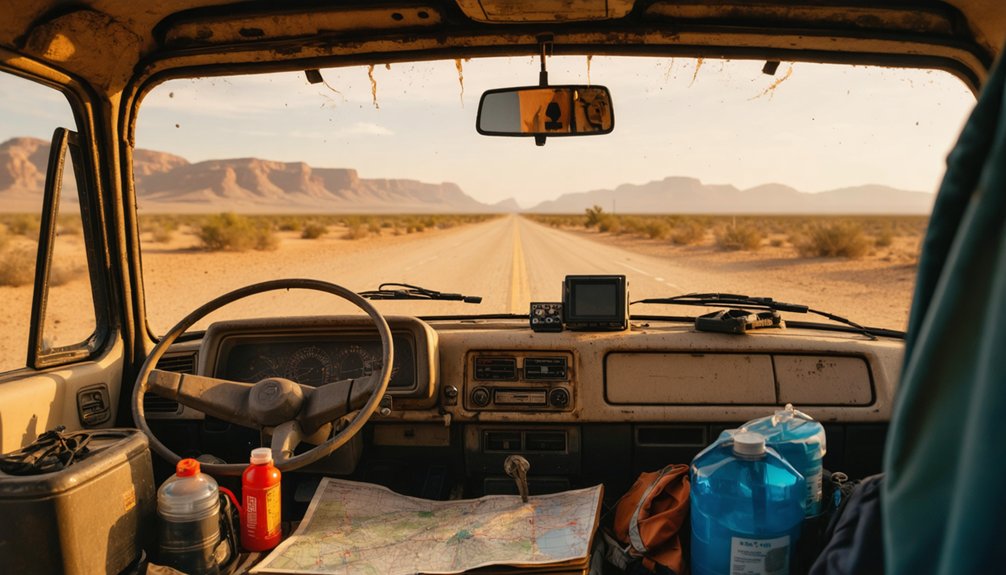
Before your tires ever touch the rutted tracks leading to Webb, you’ll need to sort out Arizona’s OHV requirements—a legal maze that’s easier to navigate than the desert terrain itself. Your machine needs a $25 resident decal mounted on the left rear quarter panel, assuming it weighs under 2,500 pounds unladen.
Approved OHV modifications like rollover protection and occupant retention systems aren’t just safety features—they’re mandatory for certain vehicles. You’ll complete a free 10-minute online safety course before June 2027, answering 20 questions that cover responsible OHV operation.
Pack your mufflers, headlights, and taillights—required equipment that keeps you legal. Non-residents need state titles and Game and Fish permits. Stay on existing roads; habitat damage carries penalties that’ll haunt you longer than Webb’s abandoned structures.
The Story Behind Webb’s Name and Early Settlers
Nestled in the Sulphur Springs Valley, Webb owes its existence—and its name—to a rejected vanity and a familial compromise. When Robert M. Tyler established his stage stop along the El Paso & Southwestern Railroad‘s Courtland Branch, he applied for a post office under his own name. Authorities denied him. Instead, Tyler honored his father-in-law, J.D. Webb, securing approval through these family ties behind Webb’s name. Some maps still show the alternative designation “Caliente,” but Webb stuck.
Tyler’s station served a critical agricultural role in regional economy, shipping produce across Cochise County’s expanding rail network. By 1910, the Black Diamond School District adopted Webb’s name, cementing the settlement’s identity. You’ll find few structures remaining—the railroad abandoned this branch in 1932, and the post office closed six years later.
Nearby Abandoned Towns Worth Adding to Your Route
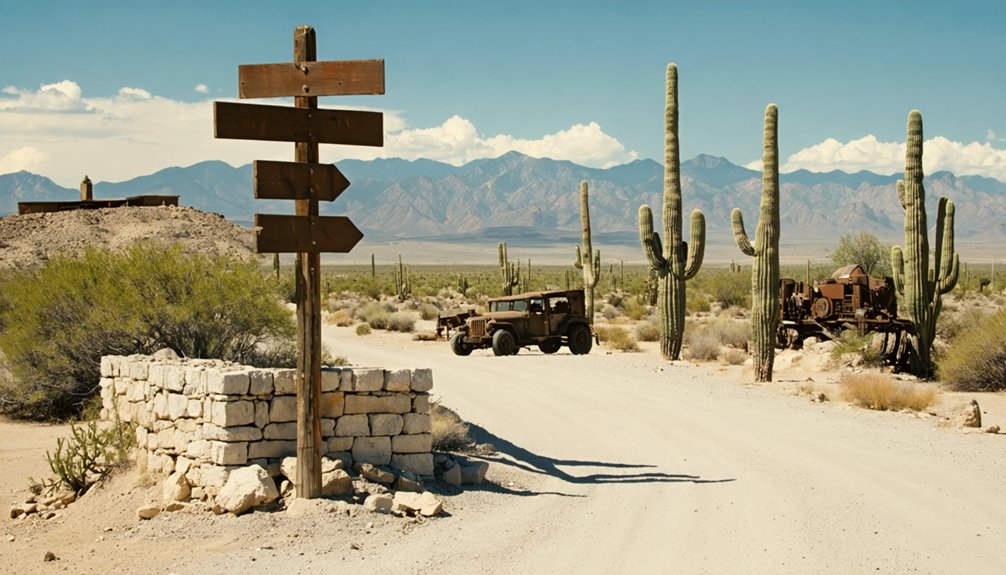
Webb’s skeletal remains tell only part of southern Arizona’s ghost town story. You’ll find Gleeson sixteen miles east, where preserved adobe structures rise from mesquite groves alongside stone store remnants. Hidden pioneer cemeteries mark both towns, their weathered headstones whispering tales of boom-and-bust cycles.
Ruby demands your attention farther west in Santa Cruz County—twenty-five buildings still standing, including the jail and schoolhouse. You’ll need permission and a fee since it’s private property, but the Montana Mine machinery alone justifies the detour.
Harshaw sits nearby, where James Finley’s crumbling adobe walls anchor a hillside cemetery. Charleston hides in riverside brush near Tombstone, requiring determination to reach its trail-less ruins. Each stop adds layers to your understanding of Arizona’s untamed mining frontier.
Frequently Asked Questions
Are There Any Guided Tours Available for Webb Ghost Town Visits?
No guided tours availability exists for Webb Ghost Town—it’s likely abandoned or confused with nearby locations. You’ll need to explore independently, though tour scheduling requirements at Vulture City Ghost Town eighteen miles away offer structured alternatives.
What Photography Equipment Works Best in Desert Ghost Town Conditions?
Dust swirls through sunlit doorways—you’ll need high resolution cameras like the Nikon D850 to capture every weathered detail. Guarantee tripod stability against desert winds, and pack prime lenses plus cleaning kits to protect your gear from relentless sand.
Can I Camp Overnight Near the Webb Townsite Location?
You’ll find excellent camp availability at Ghost Town Road BLM area near Webb townsite. These nearby camping options offer 20 dispersed sites with 14-day limits, perfect for exploring the abandoned ruins at your own pace—completely free.
Are There Restroom Facilities Available at or Near Webb?
Like desert mirages, nearby restroom facilities don’t exist at Webb’s abandoned ruins. You’ll find no portable restrooms available either. Pack your own solutions for this untamed frontier—freedom means self-reliance when exploring Arizona’s forgotten outposts.
Do I Need Special Vehicle Insurance for Off-Road Ghost Town Exploration?
You’ll need specialized off-road insurance since standard auto policies won’t cover trail accidents. Verify your rental vehicle coverage specifically addresses off-road trail conditions—rugged ghost town routes demand protection beyond typical roadway policies for true peace of mind.