Plan your Webster ghost town adventure by following US-54 west from Emporia, where you’ll discover a town that exists beneath Webster Reservoir’s surface—its foundations emerging during seasonal drawdowns. You’ll need GPS coordinates since signage has vanished, and those township roads quickly transform from maintained gravel to challenging tracks. Combine your visit with nearby Monument’s grain elevators and Amy’s 1887 schoolhouse, then catch golden hour at Pawnee Rock’s panoramic overlook. Our guide reveals the best times to spot these submerged ruins and navigate the prairie’s forgotten corridors.
Key Takeaways
- Webster was submerged by Webster Reservoir in 1953; remnants surface during seasonal water drawdowns along the shoreline.
- Access Webster via US-54 and US-56 from Emporia; use GPS coordinates as signage has disappeared over time.
- Visit nearby ghost towns including Monument’s grain elevators, Amy’s 1887 schoolhouse, and abandoned Kingsdown with crumbling structures.
- Explore historical sites like John Brown’s 1858 fort and Pawnee Rock’s Dakota Sandstone precipice with carved pioneer names.
- Best photography at golden hour on Webster Reservoir’s 3,700 acres; November offers eagle watching opportunities with proper equipment.
The Rise and Fall of Webster: From Trading Post to Reservoir Town
In 1825, Cyprian Chouteau secured a trading license and established what would become Kansas’s oldest existing settlement near the Marais des Cygnes River—a fur trading post that doubled as a button factory, grinding mussel shells pulled fresh from the water.
You’ll find this spot, originally called Blooming Grove, became ground zero for early Kansas border conflicts during the 1850s. Pro-slavery forces headquartered here, sparking the 1858 Marais des Cygnes Massacre where Hamilton’s men killed five free-state settlers. John Brown built a protective fort that same year—you can still visit the adjoining stone house today.
Meanwhile, Webster arose separately in 1885 along the Solomon River valley, eight miles west of Stockton, facing different pioneer settlement challenges before a reservoir swallowed it whole after 1953.
What Remains: Exploring the Webster Town Site and Historic Grove
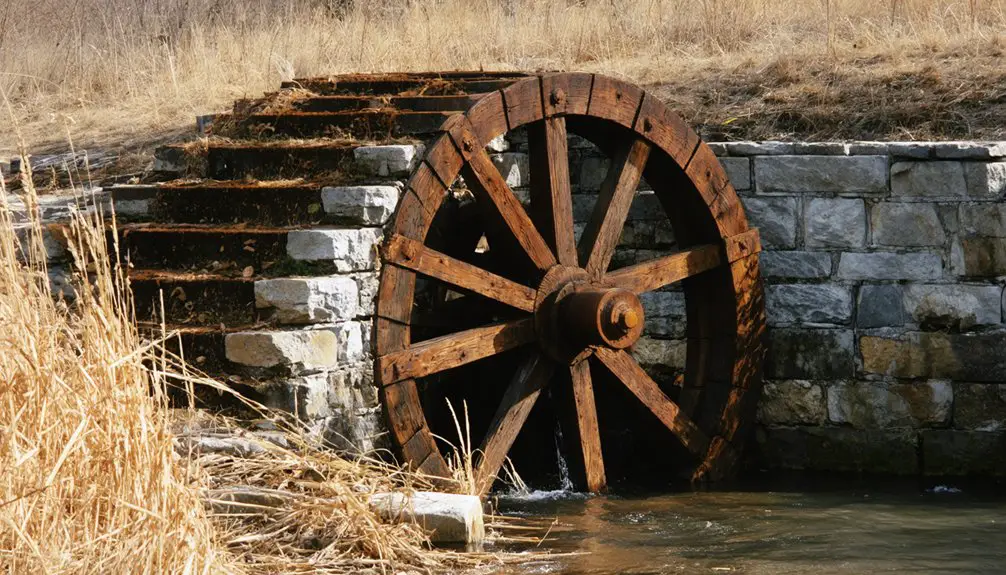
Though Webster itself vanished beneath Webster Reservoir’s waters in 1953, you’ll discover scattered remnants that refuse to stay drowned. When water levels drop, the town’s architectural remains occasionally surface—foundation stones and weathered timbers emerging like ghosts from their liquid grave.
You can’t walk the original streets anymore, but the historic groves surrounding the reservoir still stand sentinel. These towering cottonwoods and oaks once shaded Webster’s residents; now they frame your exploration with natural scenery that predates the town itself.
Pack binoculars and waterproof boots. The shoreline shifts with seasonal drawdowns, revealing different artifacts each visit. Early morning offers the best light for photography, and you’ll likely have these haunting remnants to yourself—no crowds, no restrictions, just pure discovery.
Getting There: Routes and Access to Western Kansas Ghost Towns
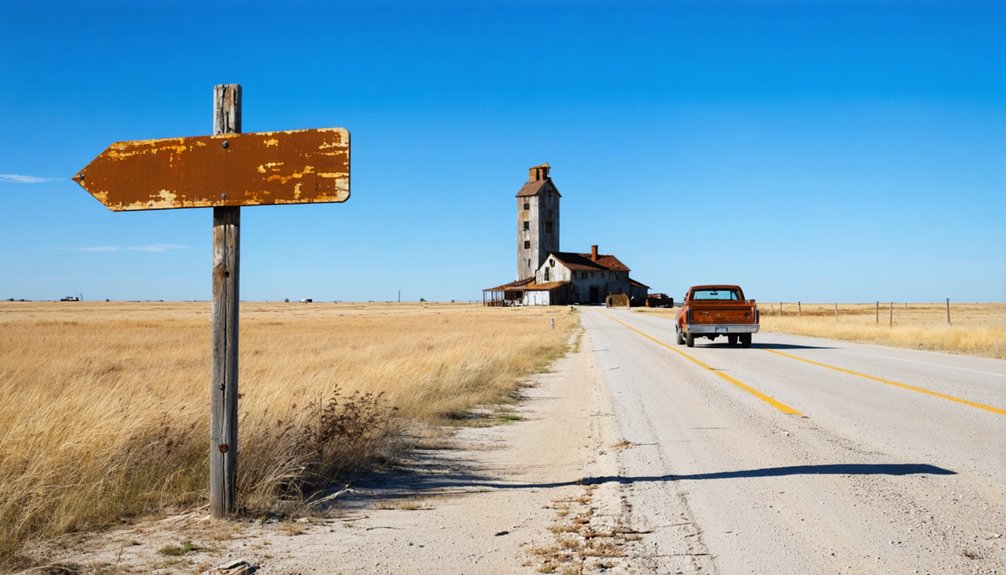
Your journey to Webster and neighboring ghost towns begins where US-54 and US-56 slice through the Flint Hills, ribbons of asphalt connecting Emporia’s modern conveniences to the prairie’s forgotten places. You’ll need recommended GPS coordinates since signage disappeared decades ago—cemeteries make reliable waypoints when structures have vanished. Download offline maps before leaving civilization; cell service becomes sketchy beyond Americus.
Township roads shift from maintained gravel to rutted tracks without warning. Alternative access points exist through neighboring properties, but ask permission first—Kansas farmers respect courtesy. The Santa Fe Railway‘s ghost corridor appears on county atlases as distinctive black lines, guiding you toward clustered settlements. Pack extra water, fuel up in Emporia, and remember: the best discoveries happen when you’re willing to backtrack.
Nearby Abandoned Settlements Worth Adding to Your Journey
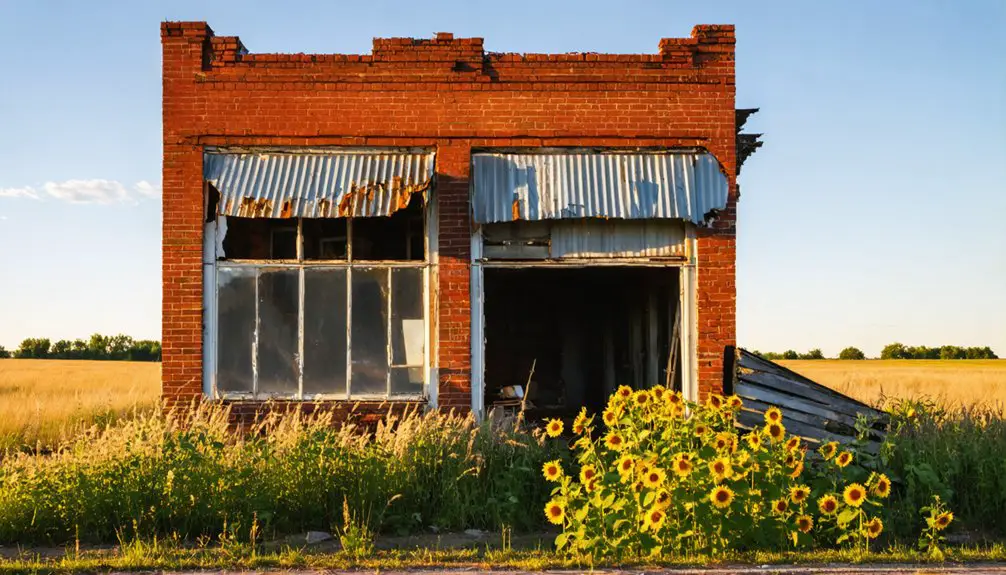
Beyond Webster’s windswept foundations, a constellation of abandoned settlements dots the western Kansas prairie like weathered punctuation marks across an unfinished sentence. Monument’s operational grain elevators serve as lonely sentinels among crumbling structures, while Amy’s 1887 schoolhouse stands defiant against time’s erasure.
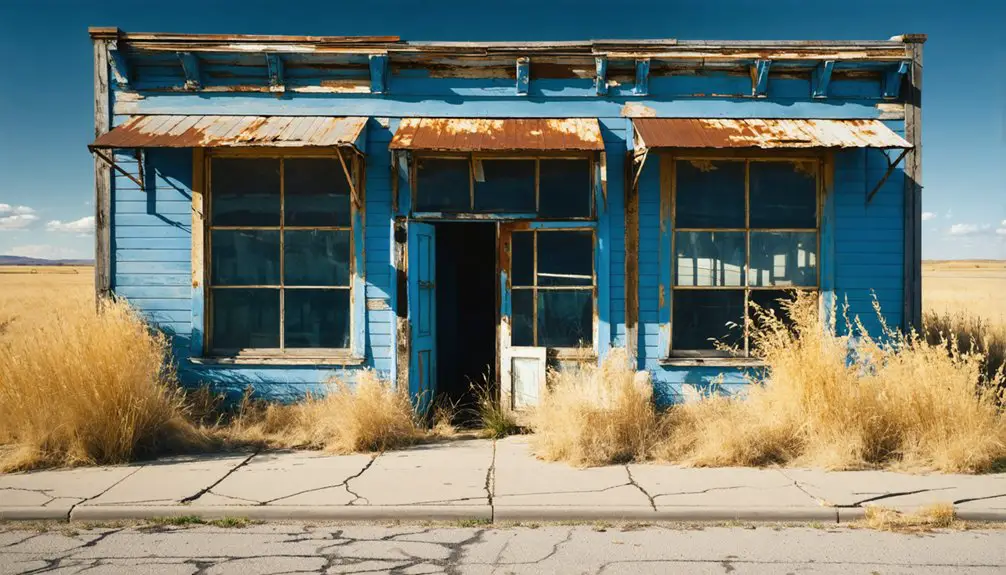
You’ll discover unpopulated railroad towns like Arnold, where the post office closed in 2005, leaving only silence. Kingsdown offers haunting tableaux—an abandoned Chrysler rusting beside 150 empty dreams. Between wheat fields, undiscovered local cemeteries hold forgotten stories worth seeking.
Vesper maintains a pulse with its handful of residents, though decay surrounds them. Each detour reveals agricultural bones—grain elevators, scattered outbuildings—testaments to ambitions that couldn’t outlast drought, economics, and exodus. Pack water, respect private property, and let curiosity guide your wandering.
Best Photography Spots and Historical Landmarks Around Webster Reservoir
When golden hour light spills across Webster Reservoir’s 3,700 acres, you’ll understand why photographers return season after season with fresh memory cards and renewed ambition. The prairie landscape transforms into a canvas of copper and gold, especially during fall migrations when bald eagles punctuate bare cottonwoods.
Where eagles claim bare branches and autumn light turns prairie water to liquid amber, photographers find their most patient inspiration.
Essential stops for capturing historic landmarks and nature photography:
- Pawnee Rock’s Dakota Sandstone precipice – panoramic views where Santa Fe Trail wagons once passed, with pioneer names still carved in soft stone
- Coyote Trail at Webster State Park – year-round access through 880 acres of rolling hills where white-tailed deer emerge at dawn
- Fort Scott’s four historic buildings – architectural details best captured in morning light, connecting Buffalo Soldiers’ legacy with Kansas frontier history
Pack extra batteries; November’s eagle watching demands patience and zoom lenses.
Frequently Asked Questions
Are There Any Facilities or Amenities Available Near the Webster Ghost Town Site?
You’ll find Webster State Park offering excellent camping and picnic areas nearby the submerged ghost town. With over 190 campsites serving as lodging accommodations, you’re free to explore this haunting lake where an entire community once thrived beneath the waters.
What Is the Best Season to Visit Webster and Surrounding Ghost Towns?
You’ll find spring and fall ideal for exploring Webster’s ruins, offering stunning autumn scenery and comfortable temperatures. However, winter solitude provides unmatched freedom—fewer crowds mean you’ll have these haunting sites entirely to yourself for authentic exploration.
Do I Need Special Permits to Explore the Webster Town Site Area?
You won’t need permits for public areas, but ironically, freedom-seekers must respect private property concerns here. Always check land boundaries before exploring, as legal liability considerations mean trespassing charges could derail your adventure into Kansas’s abandoned past.
Are Guided Tours Available for Webster or Other Western Kansas Ghost Towns?
No guided tours exist for Webster or western Kansas ghost towns—you’ll chart your own adventure through windswept ruins. Consider self-guided tours using local maps, or explore community partnerships with historical societies for insider knowledge before venturing out.
As you delve into ghost towns in Kansas history, you’ll discover remnants of a vibrant past marked by the ebb and flow of population and industry. Each deserted building tells a story, revealing the challenges and triumphs faced by the communities that once thrived. Keep your camera ready; the haunting beauty of these locations provides a unique backdrop for exploration and reflection.
What Safety Precautions Should I Take When Exploring Abandoned Town Sites?
You’ll trade bustling highways for eerie silence, but don’t let freedom override caution. Watch for unstable structures that’ll crumble underfoot, be aware of wildlife presence in shadowy corners, wear sturdy boots, and always tell someone your plans.